Michael B. Abbott - Böcker
Visar alla böcker från författaren Michael B. Abbott. Handla med fri frakt och snabb leverans.
5 produkter
5 produkter
2 692 kr
Skickas inom 10-15 vardagar
This is the updated new edition from the founder and inventor of the subject. It provides an account of the principles and a survey of modelling in hydraulic, coastal and offshore engineering.
983 kr
Skickas inom 10-15 vardagar
A major new reference book bringing together wide-ranging expert guidance on coastal engineering, including harbours and estuaries. It covers both traditional engineering topics and the fast developing areas of mathematical modelling and computer simulation.
7 972 kr
Skickas inom 10-15 vardagar
A major new reference book bringing together wide-ranging expert guidance on coastal engineering, including harbours and estuaries. It covers both traditional engineering topics and the fast developing areas of mathematical modelling and computer simulation.
1 578 kr
Skickas inom 10-15 vardagar
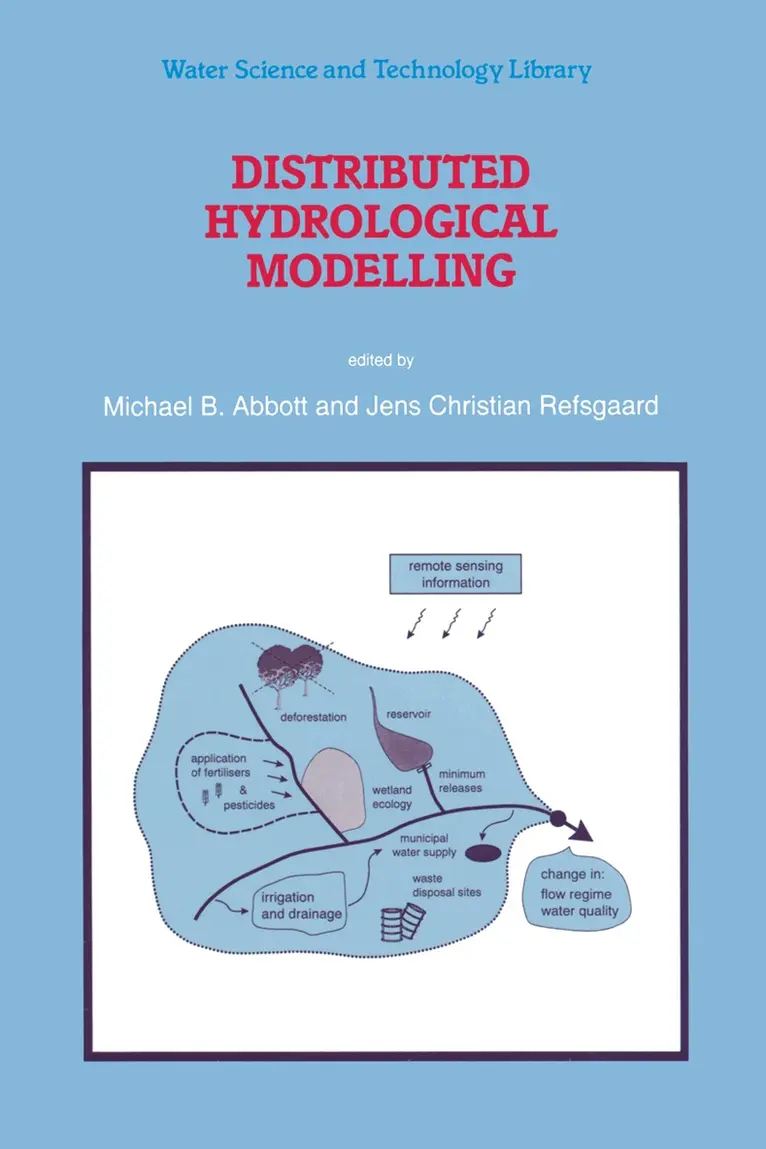
This work covers distributed hydrological modelling. The applicability of the distributed, physically-based approach for addressing environmental issues is dealt with in chapters on modelling of geochemical reactive transport, agricultural pollution and soil erosion. Through definition of a modelling protocol and methodology the book contributes to establishing more rigorous procedures for model setup, calibration, verification and validation. The challenges and future directions in hydrological modelling are addressed in a discussion between one of the principal critics and the editors. The target groups are hydrologists, engineers, water-asset managers and others working with hydrological modelling, either as researchers or practitioners.
1 578 kr
Skickas inom 10-15 vardagar
It is the task of the engineer, as of any other professional person, to do everything that is reasonably possible to analyse the difficulties with which his or her client is confronted, and on this basis to design solutions and implement these in practice. The distributed hydrological model is, correspondingly, the means for doing everything that is reasonably possible - of mobilising as much data and testing it with as much knowledge as is economically feasible - for the purpose of analysing problems and of designing and implementing remedial measures in the case of difficulties arising within the hydrological cycle. Thus the aim of distributed hydrologic modelling is to make the fullest use of cartographic data, of geological data, of satellite data, of stream discharge measurements, of borehole data, of observations of crops and other vegetation, of historical records of floods and droughts, and indeed of everything else that has ever been recorded or remembered, and then to apply to this everything that is known about meteorology, plant physiology, soil physics, hydrogeology, sediment transport and everything else that is relevant within this context. Of course, no matter how much data we have and no matter how much we know, it will never be enough to treat some problems and some situations, but still we can aim in this way to do the best that we possibly can.