Michael Bremer – författare
1 542 kr
Skickas inom 3-6 vardagar
The Six Sigma Operational Methods Series goes beyond simply explaining Six Sigma basics to interested managers, these are hard-core working tools of statistical methods, quantitative and intense, aimed at mathematically sophisticated Six Sigma practitioners unwilling to settle for anything less than peak performance in manufacturing and services.
The authors show how to integrate research and development, manufacturing, human resources, finance, marketing, quality, and customer service with corporate vision, mission, and key strategies.
1 377 kr
Skickas inom 3-6 vardagar
1 150 kr
Läs direkt efter köp
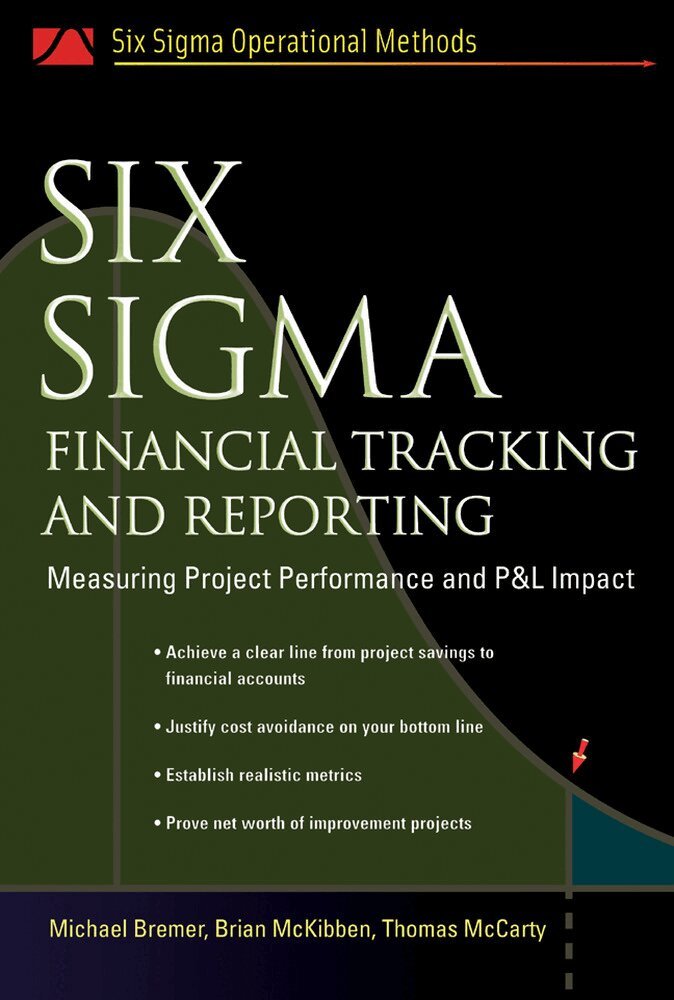
As Six Sigma and Lean Enterprise techniques continue to evolve and become more and more engrained in the business, it is harder and harder to track the impact of savings on a project by project basis. Especially when you have more than one project concentrating on different functional areas, through the use of case studies, worked out examples, and bench marking techniques, Michael Bremer, a Senior Instructor at Motorola University, helps you to put the right infrastructure in place for project identification, project scoping, and financial reporting.
1 640 kr
Läs direkt efter köp
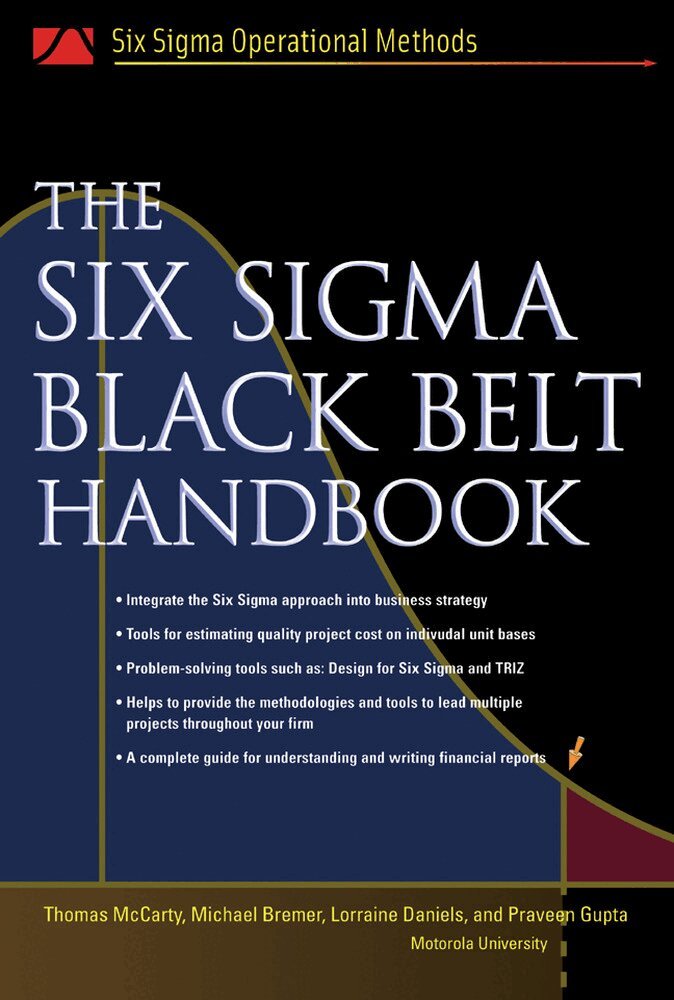
The Six Sigma Operational Methods Series goes beyond simply explaining Six Sigma basics to interested managers--these are hard-core working tools of statistical methods, quantitative and intense, aimed at mathematically sophisticated Six Sigma practitioners unwilling to settle for anything less than peak performance in manufacturing and services.
Written by four instructors from the world-renowned Motorola University, this handbook provides the tools Six Sigma Black Belts and Master Black Belts need to deal with the most intractable business problems. The authors show how to integrate research and development, manufacturing, human resources, finance, marketing, quality, and customer service with corporate vision, mission, and key strategies.
* Tools for estimating quality project cost on a project by project basis* A complete guide to understanding and writing financial reports* Methodologies for leading multiple projects* Problem-solving tools like Design for Six Sigma and TRIZ
Contents: Strategy: Planning for Six Sigma * Project Management * Performance Reporting * Leadership for Six Sigma: Organizing for Six Sigma * Team Leader’s Tools * Team Measurement Concepts * Corporate Initiatives: Six Sigma * Lean Thinking * Human Resources Management: Organizational Alignment * Compensation and Recognition * Methodology Tools: Define * Measure * Analyze * Improve * Triz * Control * Design for Six Sigma * Financial Measurements: Financial * Operational * Reporting * By Industry: Service * Transaction * Manufacturing * Healthcare * Human Resources Management
442 kr
Skickas inom 10-15 vardagar
1 972 kr
Skickas inom 10-15 vardagar
518 kr
Läs direkt efter köp
Most improvement consultants say improvement efforts must be led by the CEO, and that is certainly ideal. But the actual reality is most CEOs do not actively drive/guide improvement. They want it to happen, but they focus most of their energy on other issues. According to surveys from Gallup and others, the number one reason people say, “I am not engaged” is due to the behaviors of their direct boss! Those leaders (in the middle of an organization) have a tremendous amount of leverage; first- and second-line leaders directly touch 80% of the people in their organization. They have a tremendous amount of influence and more power than they might realize. This book focuses on that demographic.
This book describes four key foundations and 25 different actions leaders can practice to become more effective in training their eyes to see things tomorrow that are currently invisible. It helps leaders and managers to become better observers of their current reality by practicing getting better at getting better. The goal is to get better in the way we lead, the way our team performs, and the results we accomplish. If done in the right way, visually posting your improvement targets is the key to driving more personal growth, as well as more cross-functional collaboration and cooperation in your work activities. The most unique aspect of this book is that it suggests leaders use visual tools.
Visual Leadership is the fourth foundational element the author encourages people to practice. The primary purpose of visual performance metrics isn’t to make sure things are working well in your department. It’s to create a thinking environment that makes it easier for multiple departments, teams, and groups to work together. It is relatively easy to come up with performance metrics for your team, but what about metrics that help “us” to work more effectively together? Good visual reporting practices create “information democracy.” They eliminate filters that obscure knowledge between layers of management and between departments. They help to create an environment that is much more robust and open, making it easier to be in touch with the “actual reality.” And perhaps the most exciting of all, visual tools can help an individual learn to lead more effectively. The power of using visuals in this way is underutilized in most organizations.
Whatever new behaviors a leader is trying to accomplish, visual reporting can facilitate progress and ensure accountability in developing those new habits.
518 kr
Läs direkt efter köp
Most improvement consultants say improvement efforts must be led by the CEO, and that is certainly ideal. But the actual reality is most CEOs do not actively drive/guide improvement. They want it to happen, but they focus most of their energy on other issues. According to surveys from Gallup and others, the number one reason people say, “I am not engaged” is due to the behaviors of their direct boss! Those leaders (in the middle of an organization) have a tremendous amount of leverage; first- and second-line leaders directly touch 80% of the people in their organization. They have a tremendous amount of influence and more power than they might realize. This book focuses on that demographic.
This book describes four key foundations and 25 different actions leaders can practice to become more effective in training their eyes to see things tomorrow that are currently invisible. It helps leaders and managers to become better observers of their current reality by practicing getting better at getting better. The goal is to get better in the way we lead, the way our team performs, and the results we accomplish. If done in the right way, visually posting your improvement targets is the key to driving more personal growth, as well as more cross-functional collaboration and cooperation in your work activities. The most unique aspect of this book is that it suggests leaders use visual tools.
Visual Leadership is the fourth foundational element the author encourages people to practice. The primary purpose of visual performance metrics isn’t to make sure things are working well in your department. It’s to create a thinking environment that makes it easier for multiple departments, teams, and groups to work together. It is relatively easy to come up with performance metrics for your team, but what about metrics that help “us” to work more effectively together? Good visual reporting practices create “information democracy.” They eliminate filters that obscure knowledge between layers of management and between departments. They help to create an environment that is much more robust and open, making it easier to be in touch with the “actual reality.” And perhaps the most exciting of all, visual tools can help an individual learn to lead more effectively. The power of using visuals in this way is underutilized in most organizations.
Whatever new behaviors a leader is trying to accomplish, visual reporting can facilitate progress and ensure accountability in developing those new habits.
892 kr
Läs direkt efter köp
2 753 kr
Skickas inom 10-15 vardagar
802 kr
Skickas inom 10-15 vardagar
892 kr
Läs direkt efter köp
210 kr
Skickas inom 3-6 vardagar
Thermal Design and Thermal Behaviour of Radio Telescopes and their Enclosures
1 630 kr
Skickas inom 10-15 vardagar
1 977 kr
Läs direkt efter köp
Radio telescopes as well as communication antennas operate under the influence of gravity, temperature and wind. Among those, temperature influences may degrade the performance of a radio telescope through transient changes of the focus, pointing, path length and sensitivity, often in an unpredictable way. Thermal Design and Thermal Behaviour of Radio Telescopes and their Enclosures reviews the design and construction principles of radio telescopes in view of thermal aspects and heat transfer with the variable thermal environment; it explains supporting thermal model calculations and the application and efficiency of thermal protection and temperature control; it presents many measurements illustrating the thermal behaviour of telescopes in the environment of their observatory sites.
The book benefits scientists and radio/communication engineers, telescope designers and construction firms as well as telescope operators, observatory staff, but also the observing astronomer who is directly confronted with the thermal behaviour of a telescope.
Thermal Design and Thermal Behaviour of Radio Telescopes and their Enclosures
1 630 kr
Skickas inom 10-15 vardagar
303 kr
Skickas inom 3-6 vardagar
489 kr
Skickas inom 3-6 vardagar