Michael Breuß - Böcker
Visar alla böcker från författaren Michael Breuß. Handla med fri frakt och snabb leverans.
3 produkter
3 produkter
1 582 kr
Skickas inom 10-15 vardagar
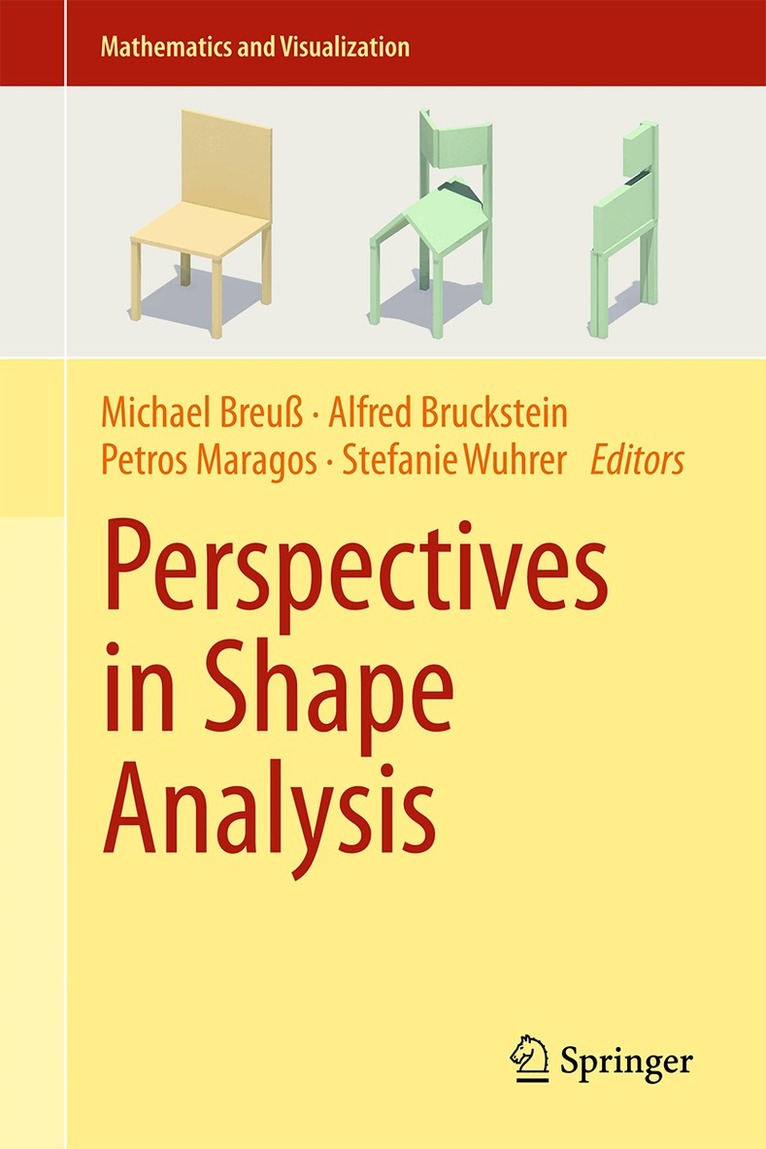
This book presents recent advances in the field of shape analysis. Written by experts in the fields of continuous-scale shape analysis, discrete shape analysis and sparsity, and numerical computing who hail from different communities, it provides a unique view of the topic from a broad range of perspectives.Over the last decade, it has become increasingly affordable to digitize shape information at high resolution. Yet analyzing and processing this data remains challenging because of the large amount of data involved, and because modern applications such as human-computer interaction require real-time processing. Meeting these challenges requires interdisciplinary approaches that combine concepts from a variety of research areas, including numerical computing, differential geometry, deformable shape modeling, sparse data representation, and machine learning. On the algorithmic side, many shape analysis tasks are modeled using partial differential equations, which can be solved using tools from the field of numerical computing. The fields of differential geometry and deformable shape modeling have recently begun to influence shape analysis methods. Furthermore, tools from the field of sparse representations, which aim to describe input data using a compressible representation with respect to a set of carefully selected basic elements, have the potential to significantly reduce the amount of data that needs to be processed in shape analysis tasks. The related field of machine learning offers similar potential.The goal of the Dagstuhl Seminar on New Perspectives in Shape Analysis held in February 2014 was to address these challenges with the help of the latest tools related to geometric, algorithmic and numerical concepts and to bring together researchers at the forefront of shape analysis who can work together to identify open problems and novel solutions. The book resulting from this seminar will appeal to researchers in the field of shape analysis,image and vision, from those who want to become more familiar with the field, to experts interested in learning about the latest advances.
1 073 kr
Skickas inom 10-15 vardagar
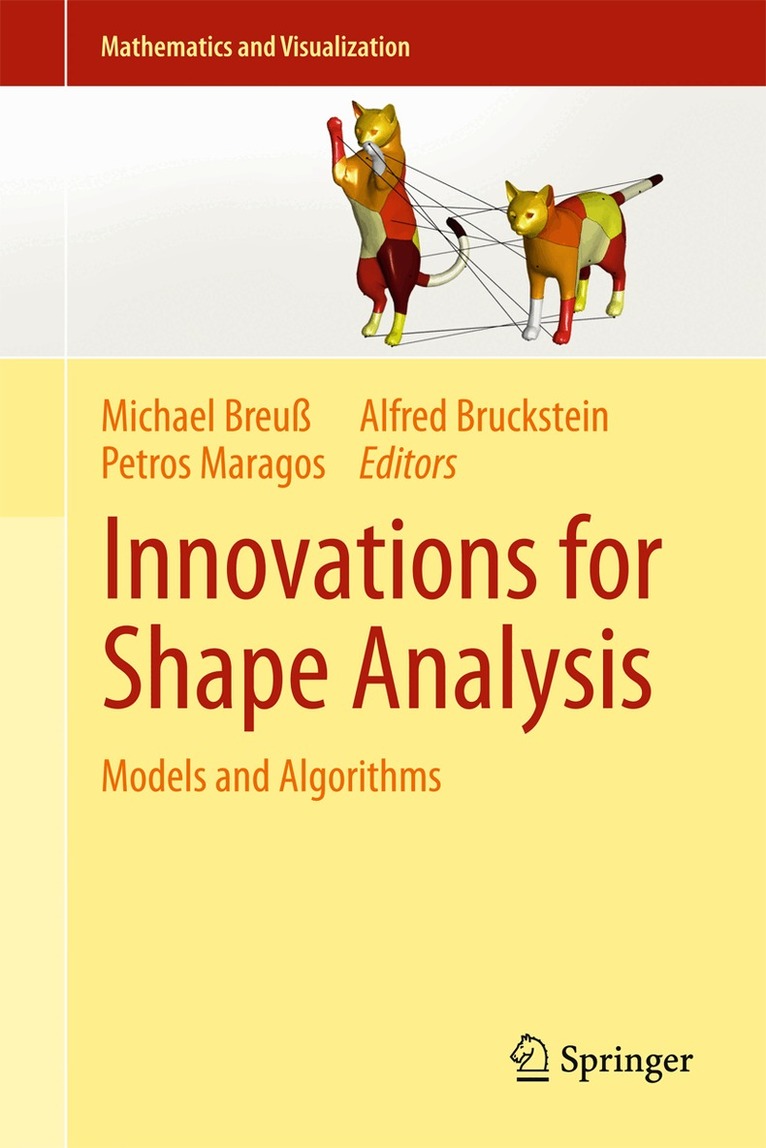
The concept of 'shape' is at the heart of image processing and computer vision, yet researchers still have some way to go to replicate the human brain's ability to extrapolate meaning from the most basic of outlines. This volume reflects the advances of the last decade, which have also opened up tough new challenges in image processing. Today's applications require flexible models as well as efficient, mathematically justified algorithms that allow data processing within an acceptable timeframe.Examining important topics in continuous-scale and discrete modeling, as well as in modern algorithms, the book is the product of a key seminar focused on innovations in the field. It is a thorough introduction to the latest technology, especially given the tutorial style of a number of chapters. It also succeeds in identifying promising avenues for future research. The topics covered include mathematical morphology, skeletonization, statistical shape modeling, continuous-scale shape models such as partial differential equations and the theory of discrete shape descriptors. Some authors highlight new areas of enquiry such as partite skeletons, multi-component shapes, deformable shape models, and the use of distance fields.Combining the latest theoretical analysis with cutting-edge applications, this book will attract both academics and engineers.
1 073 kr
Skickas inom 10-15 vardagar
The concept of 'shape' is at the heart of image processing and computer vision, yet researchers still have some way to go to replicate the human brain's ability to extrapolate meaning from the most basic of outlines. This volume reflects the advances of the last decade, which have also opened up tough new challenges in image processing. Today's applications require flexible models as well as efficient, mathematically justified algorithms that allow data processing within an acceptable timeframe.Examining important topics in continuous-scale and discrete modeling, as well as in modern algorithms, the book is the product of a key seminar focused on innovations in the field. It is a thorough introduction to the latest technology, especially given the tutorial style of a number of chapters. It also succeeds in identifying promising avenues for future research. The topics covered include mathematical morphology, skeletonization, statistical shape modeling, continuous-scale shape models such as partial differential equations and the theory of discrete shape descriptors. Some authors highlight new areas of enquiry such as partite skeletons, multi-component shapes, deformable shape models, and the use of distance fields.Combining the latest theoretical analysis with cutting-edge applications, this book will attract both academics and engineers.