Michael C. Corballis – författare
Visar alla böcker från författaren Michael C. Corballis. Handla med fri frakt och snabb leverans.
16 produkter
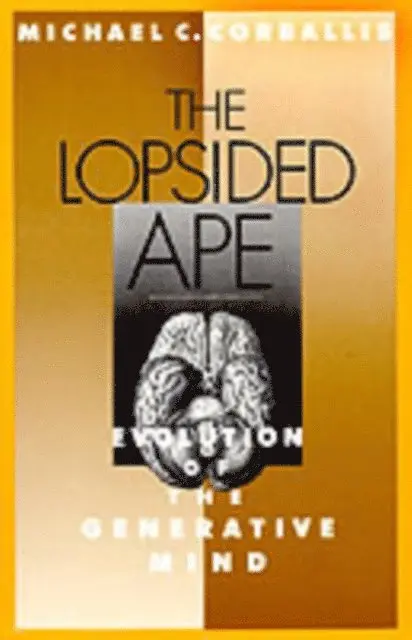
Lopsided Ape
The Evolution of the Generative Mind
E-bok, 1993
489 kr
Lägg i varukorg
How great is the evolutionary distance between humans and apes, and what is it that creates that gulf? Philosophers and scientists have debated the question for centuries, but Michael Corballis finds the mystery revealed in our right hands. For humans are the only primates who are predominantly …
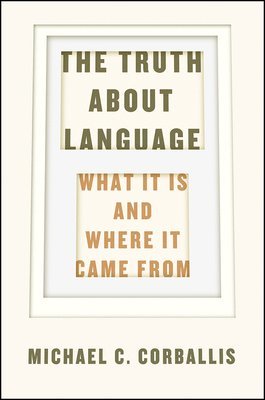
Truth about Language – What It Is and Where It Came From
Inbunden, 2017
381 kr
Lägg i varukorg
Evolutionary science has long viewed language as, basically, a fortunate accident a crossing of wires that happened to be extraordinarily useful, setting humans apart from other animals and onto a trajectory that would see their brains (and the products of those brains) become increasingly complex. …
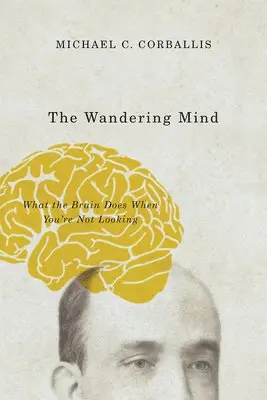
Wandering Mind
What the Brain Does When You're Not Looking
Häftad, 2016
173 kr
Lägg i varukorg
If we've done our job well and, let's be honest, if we're lucky you'll read to the end of this description. Most likely, however, you won't. Somewhere in the middle of the next paragraph, your mind will wander off. Minds wander. That's just how it is. That may be bad news for me, but is it bad news …
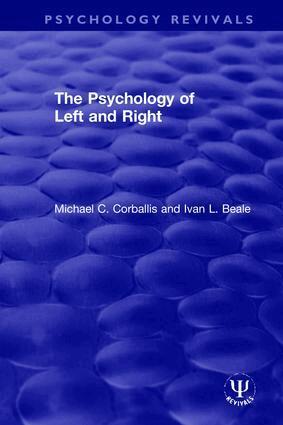
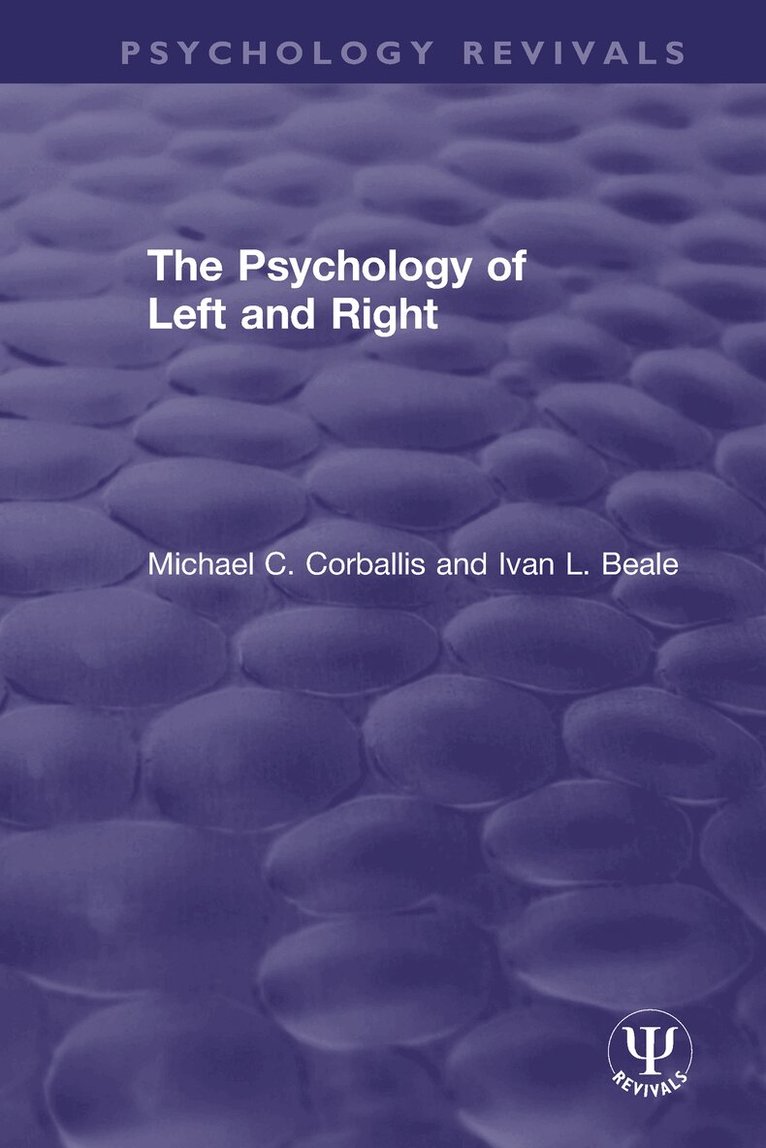
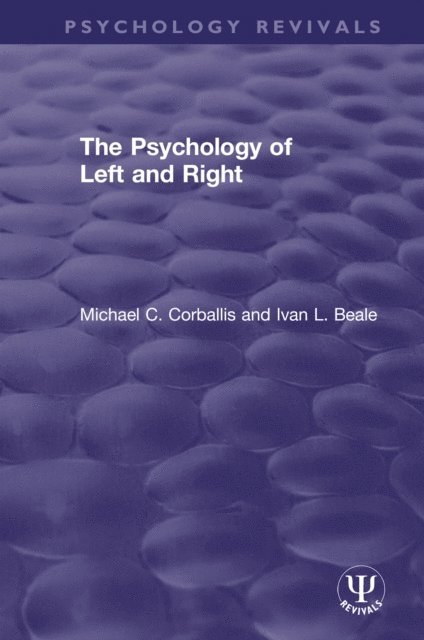
Psychology of Left and Right
Av Michael C. Corballis, Ivan L. Beale
Inbunden, 2020
1779 kr
Lägg i varukorg
Originally published in 1976, this title deals with the problem of how we tell left from right. The authors argue that the ability to tell left from right depends ultimately on a bodily asymmetry, such as preference for one or the other hand, or dominance of one side of the brain. This has …
Psychology of Left and Right
Av Michael C. Corballis, Ivan L. Beale
Häftad, 2022
531 kr
Lägg i varukorg
Originally published in 1976, this title deals with the problem of how we tell left from right. The authors argue that the ability to tell left from right depends ultimately on a bodily asymmetry, such as preference for one or the other hand, or dominance of one side of the brain. This has …
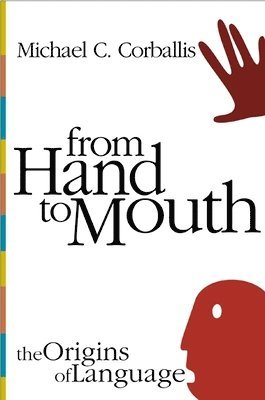
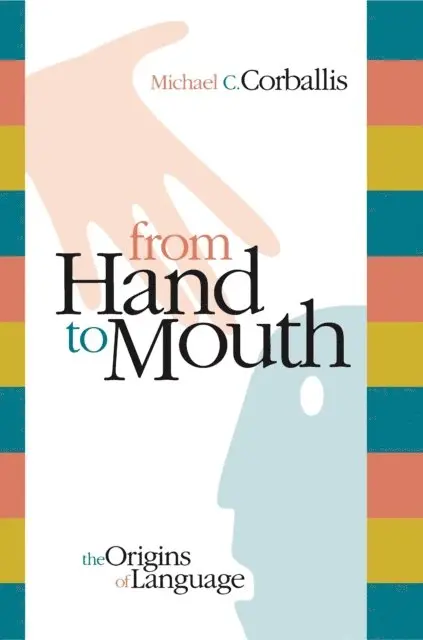
From Hand to Mouth
The Origins of Language
Häftad, 2003
391 kr
Lägg i varukorg
It is often said that speech is what distinguishes us from other animals. But are we all talk? What if language was bequeathed to us not by word of mouth, but as a hand-me-down? The notion that language evolved not from animal cries but from manual and facial gestures--that, for most of human …
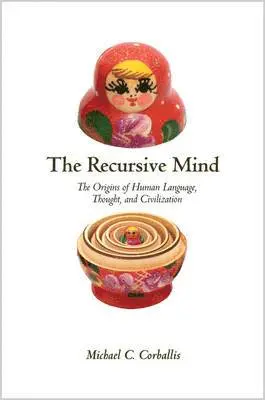
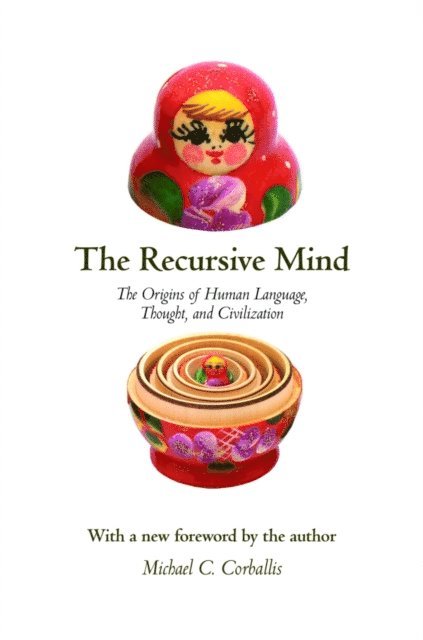
Recursive Mind
The Origins of Human Language, Thought, and Civilization
Inbunden, 2011
2,0 utav 5 stjärnor. Totalt antal röster: (1)
388 kr
Lägg i varukorg
The Recursive Mind challenges the commonly held notion that language is what makes us uniquely human. In this compelling book, Michael Corballis argues that what distinguishes us in the animal kingdom is our capacity for recursion: the ability to embed our thoughts within other thoughts. "I think, …
Recursive Mind
The Origins of Human Language, Thought, and Civilization - Updated Edition
Häftad, 2014
244 kr
Lägg i varukorg
The Recursive Mind challenges the commonly held notion that language is what makes us uniquely human. In this compelling book, Michael Corballis argues that what distinguishes us in the animal kingdom is our capacity for recursion: the ability to embed our thoughts within other thoughts. "I think, …
From Hand to Mouth
The Origins of Language
E-bok, 2020
500 kr
Lägg i varukorg
A groundbreaking theory of how language arose from primate gestures It is often said that speech is what distinguishes us from other animals. But are we all talk? What if language was bequeathed to us not by word of mouth, but as a hand-me-down? The notion that language evolved not from animal …
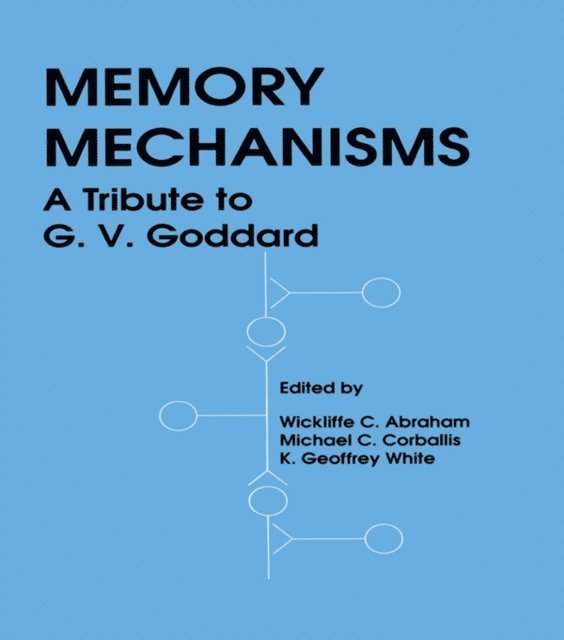
Memory Mechanisms
A Tribute To G.v. Goddard
Av K. Geoffrey White, Wickliffe C. Abraham m. fl.
Inbunden, 1990
2591 kr
Lägg i varukorg
Presenting the work of researchers who are at the forefront of the study of memory mechanisms, this volume addresses a wide range of topics including: physiological and biophysical studies of synaptic plasticity, neural models of information storage and recall, functional and structural …
Memory Mechanisms
A Tribute To G.v. Goddard
Av Michael Corballis, K. Geoffrey White m. fl.
Häftad, 1990
1044 kr
Lägg i varukorg
Presenting the work of researchers who are at the forefront of the study of memory mechanisms, this volume addresses a wide range of topics including: physiological and biophysical studies of synaptic plasticity, neural models of information storage and recall, functional and structural …
Psychology of Left and Right
Av Ivan L. Beale, Michael C. Corballis
E-bok, 2020
623 kr
Lägg i varukorg
Originally published in 1976, this title deals with the problem of how we tell left from right. The authors argue that the ability to tell left from right depends ultimately on a bodily asymmetry, such as preference for one or the other hand, or dominance of one side of the brain. This has …
Psychology of Left and Right
Av Ivan L. Beale, Michael C. Corballis
E-bok, 2020
623 kr
Lägg i varukorg
Originally published in 1976, this title deals with the problem of how we tell left from right. The authors argue that the ability to tell left from right depends ultimately on a bodily asymmetry, such as preference for one or the other hand, or dominance of one side of the brain. This has …
Memory Mechanisms
A Tribute To G.v. Goddard
Av Michael C. Corballis, Wickliffe C. Abraham m. fl.
E-bok, 2014
1204 kr
Lägg i varukorg
Presenting the work of researchers who are at the forefront of the study of memory mechanisms, this volume addresses a wide range of topics including: physiological and biophysical studies of synaptic plasticity, neural models of information storage and recall, functional and structural …
Memory Mechanisms
A Tribute To G.v. Goddard
Av Michael C. Corballis, Wickliffe C. Abraham m. fl.
E-bok, 2014
1231 kr
Lägg i varukorg
Presenting the work of researchers who are at the forefront of the study of memory mechanisms, this volume addresses a wide range of topics including: physiological and biophysical studies of synaptic plasticity, neural models of information storage and recall, functional and structural …
Recursive Mind
The Origins of Human Language, Thought, and Civilization - Updated Edition
E-bok, 2014
313 kr
Lägg i varukorg
A groundbreaking theory of what makes the human mind unique The Recursive Mind challenges the commonly held notion that language is what makes us uniquely human. In this compelling book, Michael Corballis argues that what distinguishes us in the animal kingdom is our capacity for recursion: the …