Michael C. Kalton - Böcker
Visar alla böcker från författaren Michael C. Kalton. Handla med fri frakt och snabb leverans.
4 produkter
4 produkter
Four-Seven Debate
An Annotated Translation of the Most Famous Controversy in Korean Neo-Confucian Thought
Inbunden, Engelska, 1994
1 057 kr
Tillfälligt slut
This book is an annotated translation, with introduction and commentary, of the correspondence between Yi Hwang (T'oegye, 1500-1570) and Ki Taesung (Kobong, 1527-1572) and between Yi I (Yulgok, 1536-1584) and Song Hon (Ugye, 1535-1598), known as the Four-Seven Debate, the most famous philosophical controversy in Korean Neo-Confucian thought. The most complex issues and difficult tensions in the great Neo-Confucian synthesis are at the juncture between the metaphysics of the cosmos and the human psyche. The Four-Seven Debate is perhaps the most searching examination of this tension ever carried out.
Four-Seven Debate
An Annotated Translation of the Most Famous Controversy in Korean Neo-Confucian Thought
Häftad, Engelska, 1994
382 kr
Tillfälligt slut
This book is an annotated translation, with introduction and commentary, of the correspondence between Yi Hwang (T'oegye, 1500-1570) and Ki Taesung (Kobong, 1527-1572) and between Yi I (Yulgok, 1536-1584) and Song Hon (Ugye, 1535-1598), known as the Four-Seven Debate, the most famous philosophical controversy in Korean Neo-Confucian thought. The most complex issues and difficult tensions in the great Neo-Confucian synthesis are at the juncture between the metaphysics of the cosmos and the human psyche. The Four-Seven Debate is perhaps the most searching examination of this tension ever carried out.
800 kr
Skickas inom 10-15 vardagar
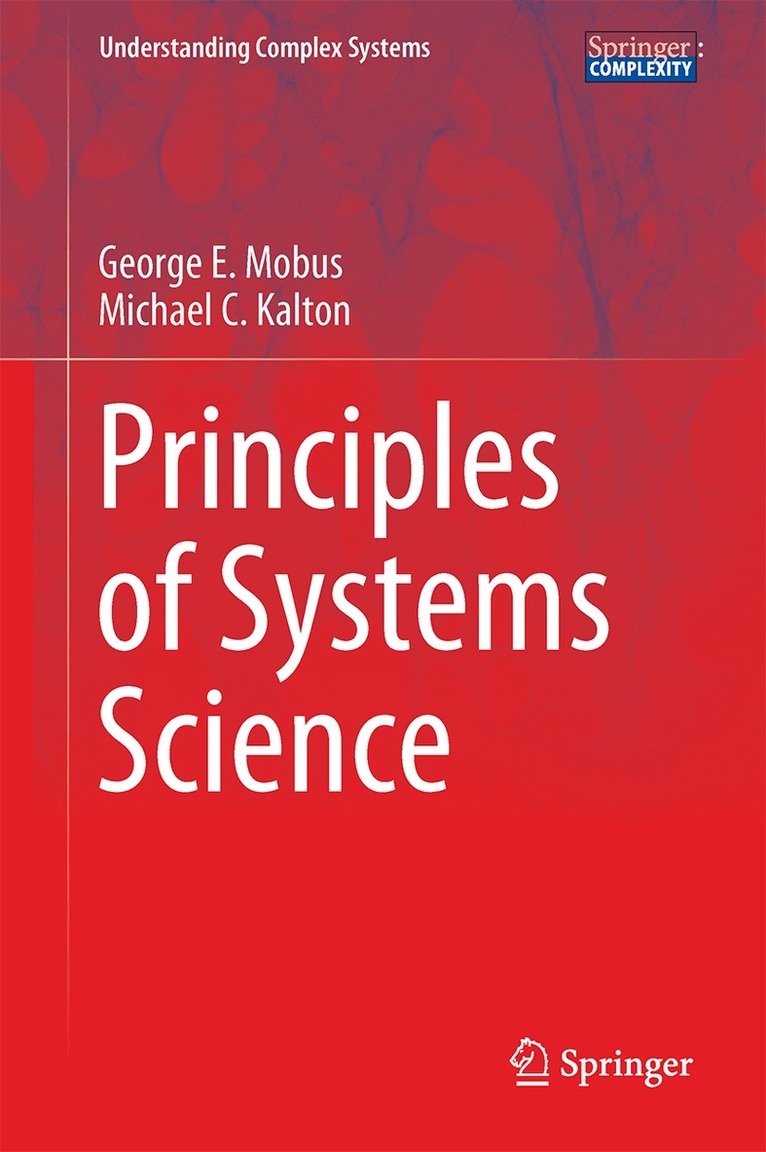
This pioneering text provides a comprehensive introduction to systems structure, function, and modeling as applied in all fields of science and engineering. Systems understanding is increasingly recognized as a key to a more holistic education and greater problem solving skills, and is also reflected in the trend toward interdisciplinary approaches to research on complex phenomena. While the concepts and components of systems science will continue to be distributed throughout the various disciplines, undergraduate degree programs in systems science are also being developed, including at the authors’ own institutions. However, the subject is approached, systems science as a basis for understanding the components and drivers of phenomena at all scales should be viewed with the same importance as a traditional liberal arts education.Principles of Systems Science contains many graphs, illustrations, side bars, examples, and problems to enhance understanding. Frombasic principles of organization, complexity, abstract representations, and behavior (dynamics) to deeper aspects such as the relations between information, knowledge, computation, and system control, to higher order aspects such as auto-organization, emergence and evolution, the book provides an integrated perspective on the comprehensive nature of systems. It ends with practical aspects such as systems analysis, computer modeling, and systems engineering that demonstrate how the knowledge of systems can be used to solve problems in the real world. Each chapter is broken into parts beginning with qualitative descriptions that stand alone for students who have taken intermediate algebra. The second part presents quantitative descriptions that are based on pre-calculus and advanced algebra, providing a more formal treatment for students who have the necessary mathematical background. Numerous examples of systems from every realm of life, including the physical and biological sciences,humanities, social sciences, engineering, pre-med and pre-law, are based on the fundamental systems concepts of boundaries, components as subsystems, processes as flows of materials, energy, and messages, work accomplished, functions performed, hierarchical structures, and more. Understanding these basics enables further understanding both of how systems endure and how they may become increasingly complex and exhibit new properties or characteristics.Serves as a textbook for teaching systems fundamentals in any discipline or for use in an introductory course in systems science degree programsAddresses a wide range of audiences with different levels of mathematical sophisticationIncludes open-ended questions in special boxes intended to stimulate integrated thinking and class discussion Describes numerous examples of systems in science and societyCaptures the trend towards interdisciplinary research and problem solving
588 kr
Skickas inom 10-15 vardagar
This pioneering text provides a comprehensive introduction to systems structure, function, and modeling as applied in all fields of science and engineering. Systems understanding is increasingly recognized as a key to a more holistic education and greater problem solving skills, and is also reflected in the trend toward interdisciplinary approaches to research on complex phenomena. While the concepts and components of systems science will continue to be distributed throughout the various disciplines, undergraduate degree programs in systems science are also being developed, including at the authors’ own institutions. However, the subject is approached, systems science as a basis for understanding the components and drivers of phenomena at all scales should be viewed with the same importance as a traditional liberal arts education.Principles of Systems Science contains many graphs, illustrations, side bars, examples, and problems to enhance understanding. Frombasic principles of organization, complexity, abstract representations, and behavior (dynamics) to deeper aspects such as the relations between information, knowledge, computation, and system control, to higher order aspects such as auto-organization, emergence and evolution, the book provides an integrated perspective on the comprehensive nature of systems. It ends with practical aspects such as systems analysis, computer modeling, and systems engineering that demonstrate how the knowledge of systems can be used to solve problems in the real world. Each chapter is broken into parts beginning with qualitative descriptions that stand alone for students who have taken intermediate algebra. The second part presents quantitative descriptions that are based on pre-calculus and advanced algebra, providing a more formal treatment for students who have the necessary mathematical background. Numerous examples of systems from every realm of life, including the physical and biological sciences,humanities, social sciences, engineering, pre-med and pre-law, are based on the fundamental systems concepts of boundaries, components as subsystems, processes as flows of materials, energy, and messages, work accomplished, functions performed, hierarchical structures, and more. Understanding these basics enables further understanding both of how systems endure and how they may become increasingly complex and exhibit new properties or characteristics.Serves as a textbook for teaching systems fundamentals in any discipline or for use in an introductory course in systems science degree programsAddresses a wide range of audiences with different levels of mathematical sophisticationIncludes open-ended questions in special boxes intended to stimulate integrated thinking and class discussion Describes numerous examples of systems in science and societyCaptures the trend towards interdisciplinary research and problem solving