Michael Charles Tobias - Böcker
Visar alla böcker från författaren Michael Charles Tobias. Handla med fri frakt och snabb leverans.
19 produkter
19 produkter
471 kr
Skickas inom 3-6 vardagar
268 kr
Skickas inom 5-8 vardagar
326 kr
Skickas inom 10-15 vardagar
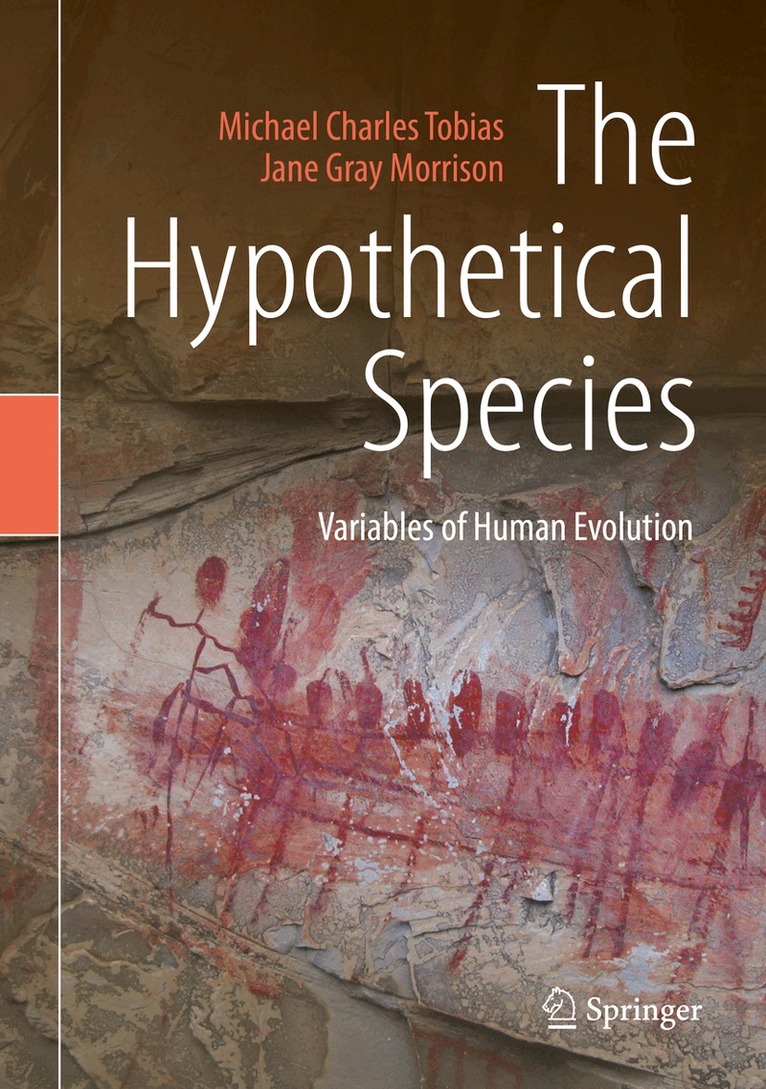
This book is a provocative and invigorating real-time exploration of the future of human evolution by two of the world’s leading interdisciplinary ecologists – Michael Charles Tobias and Jane Gray Morrison.
1 693 kr
Skickas inom 10-15 vardagar
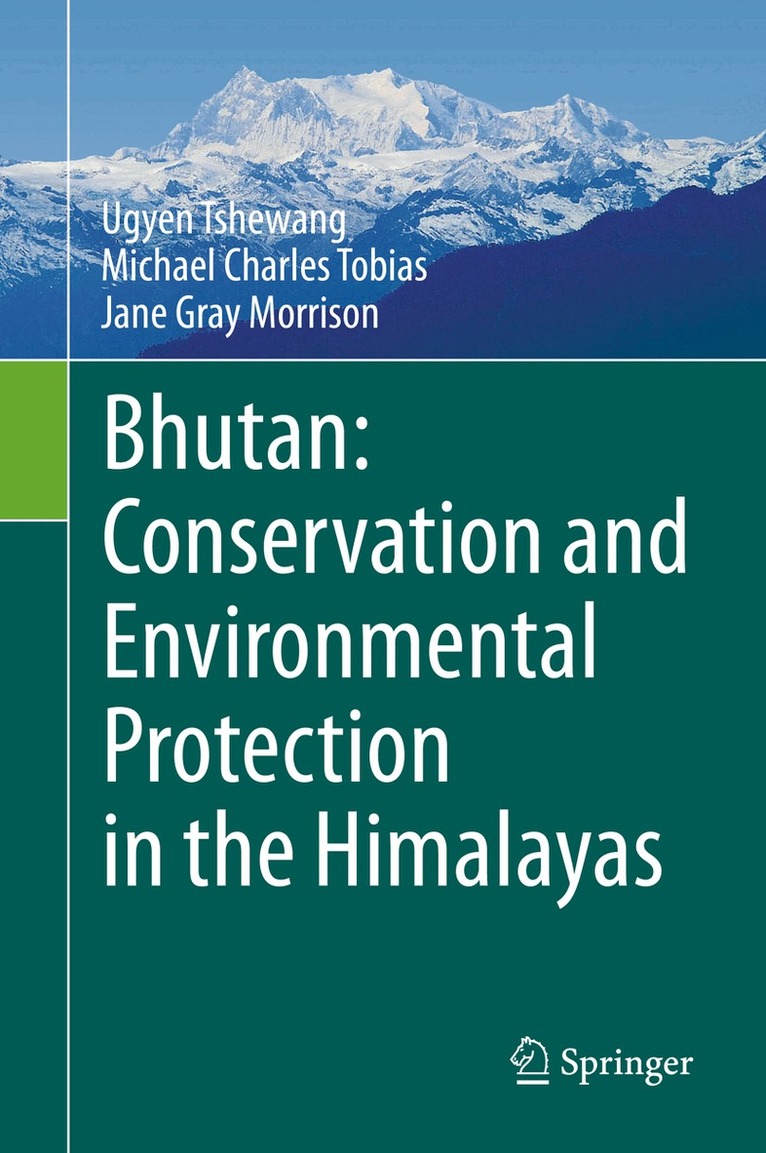
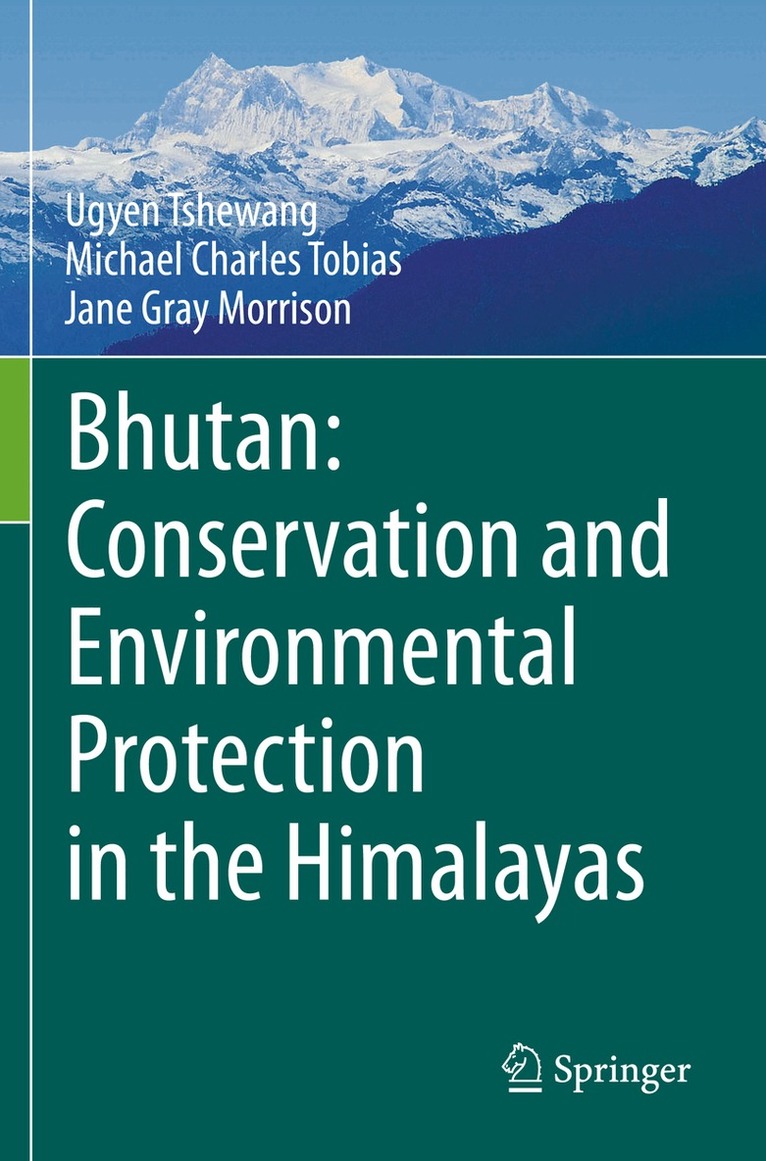
Located in the heart of the Eastern Himalayas, Bhutan practices the philosophy of Gross National Happiness (“GNH”) that embraces environmental conservation as one of the main building blocks for its sustainable development goals. Bhutan’s conservation strategies and success are largely driven by the strong political will and visionary leadership of His Majesty the King of Bhutan The nation’s Buddhist perspectives regarding a deep and abiding respect for nature; and the strategic enforcement of a wide-ranging stringent set of internal regulations and controls have helped ensure ecological gold standards in Bhutan. Moreover, the country is an active member of the international conservation community by fulfilling its implementation of various Multilateral Environment Agreements. While it emerged into the 21st century as one of the 36 global terrestrial “hotspots” in biological diversity conservation ranks, Bhutan’s sheer commitment with more than 51% of its territory being managed under the explicit status of a protected area network, and more than 70% of the land under forest cover, represents Bhutan’s exemplary dedication to protect the planet despite its smallness in size and economy, and the biological fragility exemplified by its hotspot situation. In the face of imminent severe threats of global warming, Bhutan nonetheless exemplifies the truth that “a small country with a big conservation commitment” can make an enormous contribution to the global community.At the regional level, Bhutan is intent upon protecting the Water Towers of Asia (that glacial expanse of the Himalayas) which is a critical resource bulwark for about one-fifth of the global population downstream in South Asia. Such protections invariably help mitigate climate change by acting as a nation-wide carbon sink through its carbon neutral policies. In short, Bhutan has long represented one of the world’s foremost national guardians of biodiversity conservation, ecological good governance, and societal sustainability at a period when the world has entered the Anthropocene – an epoch of mass extinctions.We envision this publication to be ecologically and ethically provocative and revealing for the concerned scientific communities, and governments. Through an extensive review of the scientific and anthropological literature, as well as the research team's own data, the Author's have set forth timely recommendations for conservation policies, strategies and actions. This book provides technical and deeply considered assessments of the state of Bhutan’s environment, its multiple, human-induced stressors and pressures; as well as extremely sound, practical techniques that would address conservation strategies in the Himalayas and, by implication, worldwide.
1 693 kr
Skickas inom 10-15 vardagar
Located in the heart of the Eastern Himalayas, Bhutan practices the philosophy of Gross National Happiness (“GNH”) that embraces environmental conservation as one of the main building blocks for its sustainable development goals. Bhutan’s conservation strategies and success are largely driven by the strong political will and visionary leadership of His Majesty the King of Bhutan The nation’s Buddhist perspectives regarding a deep and abiding respect for nature; and the strategic enforcement of a wide-ranging stringent set of internal regulations and controls have helped ensure ecological gold standards in Bhutan. Moreover, the country is an active member of the international conservation community by fulfilling its implementation of various Multilateral Environment Agreements. While it emerged into the 21st century as one of the 36 global terrestrial “hotspots” in biological diversity conservation ranks, Bhutan’s sheer commitment with more than 51% of its territory being managed under the explicit status of a protected area network, and more than 70% of the land under forest cover, represents Bhutan’s exemplary dedication to protect the planet despite its smallness in size and economy, and the biological fragility exemplified by its hotspot situation. In the face of imminent severe threats of global warming, Bhutan nonetheless exemplifies the truth that “a small country with a big conservation commitment” can make an enormous contribution to the global community.At the regional level, Bhutan is intent upon protecting the Water Towers of Asia (that glacial expanse of the Himalayas) which is a critical resource bulwark for about one-fifth of the global population downstream in South Asia. Such protections invariably help mitigate climate change by acting as a nation-wide carbon sink through its carbon neutral policies. In short, Bhutan has long represented one of the world’s foremost national guardians of biodiversity conservation, ecological good governance, and societal sustainability at a period when the world has entered the Anthropocene – an epoch of mass extinctions.We envision this publication to be ecologically and ethically provocative and revealing for the concerned scientific communities, and governments. Through an extensive review of the scientific and anthropological literature, as well as the research team's own data, the Author's have set forth timely recommendations for conservation policies, strategies and actions. This book provides technical and deeply considered assessments of the state of Bhutan’s environment, its multiple, human-induced stressors and pressures; as well as extremely sound, practical techniques that would address conservation strategies in the Himalayas and, by implication, worldwide.
538 kr
Skickas inom 10-15 vardagar
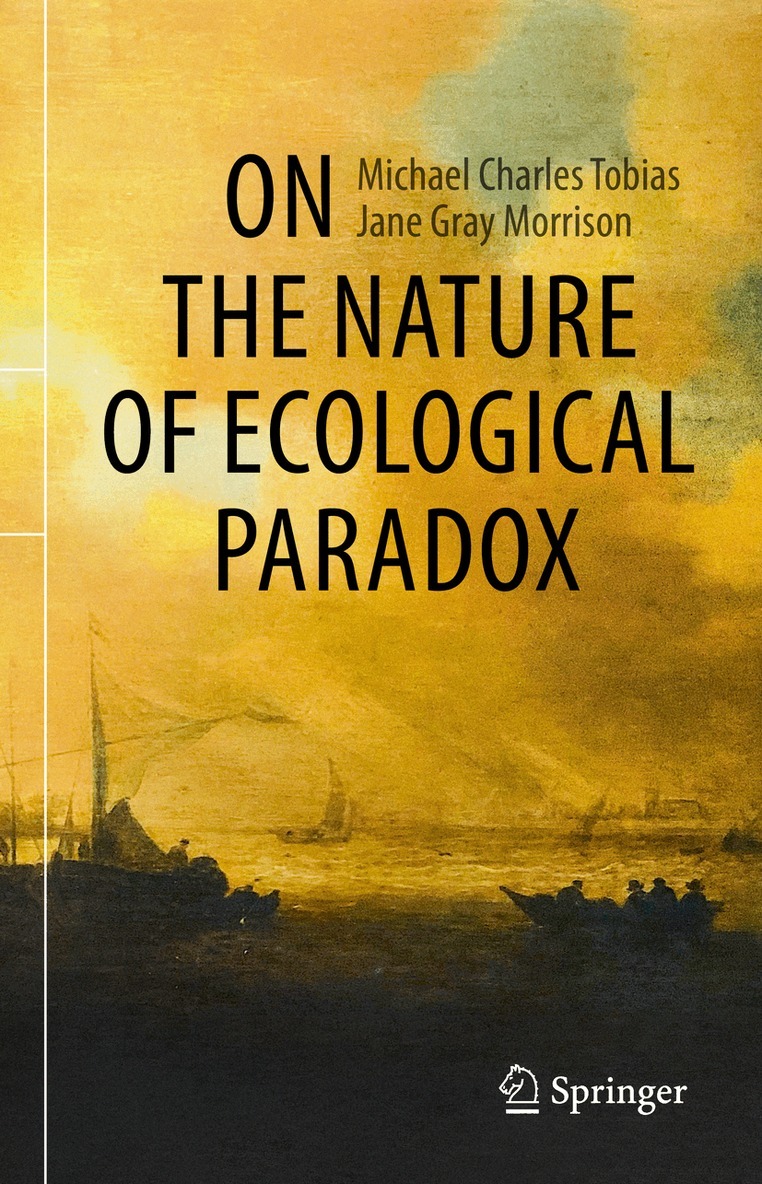
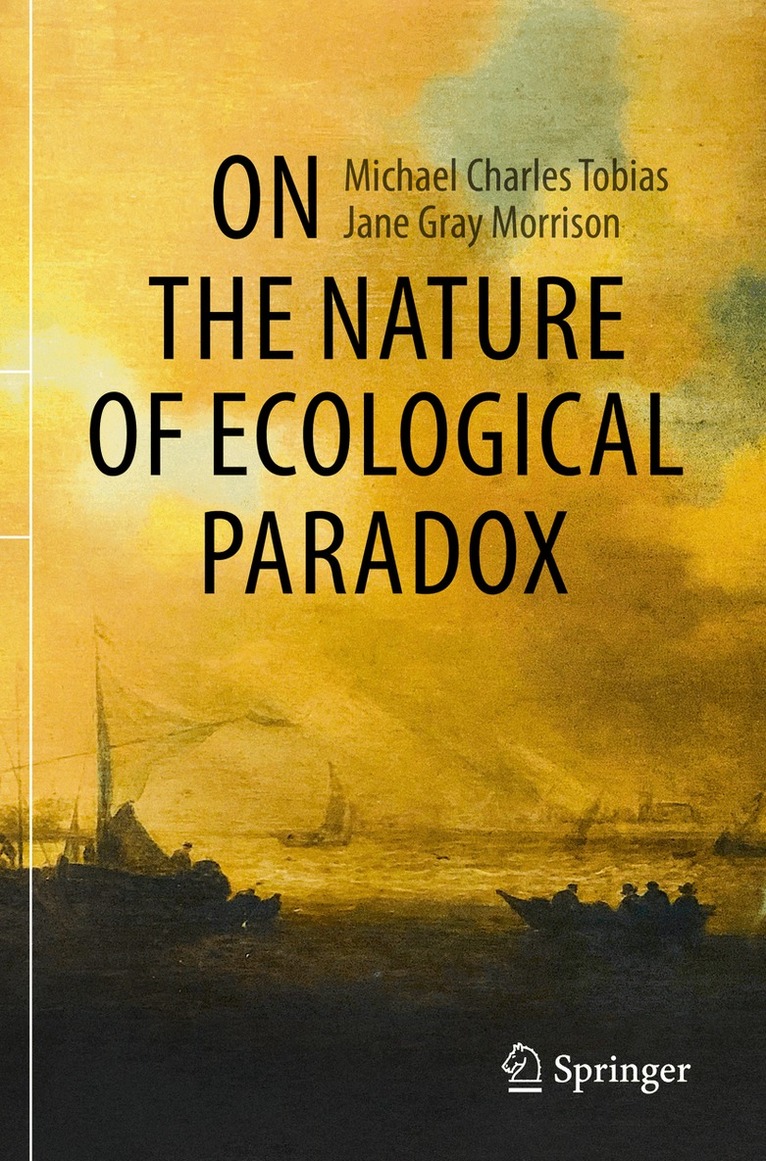
This work is a large, powerfully illustrated interdisciplinary natural sciences volume, the first of its kind to examine the critically important nature of ecological paradox, through an abundance of lenses: the biological sciences, taxonomy, archaeology, geopolitical history, comparative ethics, literature, philosophy, the history of science, human geography, population ecology, epistemology, anthropology, demographics, and futurism. The ecological paradox suggests that the human biological–and from an insular perspective, successful–struggle to exist has come at the price of isolating H. sapiens from life-sustaining ecosystem services, and far too much of the biodiversity with which we find ourselves at crisis-level odds. It is a paradox dating back thousands of years, implicating millennia of human machinations that have been utterly ruinous to biological baselines. Those metrics are examined from numerous multidisciplinary approaches in this thoroughly original work, which aids readers, particularly natural history students, who aspire to grasp the far-reaching dimensions of the Anthropocene, as it affects every facet of human experience, past, present and future, and the rest of planetary sentience.With a Preface by Dr. Gerald Wayne Clough, former Secretary of the Smithsonian Institution and President Emeritus of the Georgia Institute of Technology. Foreword by Robert Gillespie, President of the non-profit, Population Communication.
538 kr
Skickas inom 10-15 vardagar
This work is a large, powerfully illustrated interdisciplinary natural sciences volume, the first of its kind to examine the critically important nature of ecological paradox, through an abundance of lenses: the biological sciences, taxonomy, archaeology, geopolitical history, comparative ethics, literature, philosophy, the history of science, human geography, population ecology, epistemology, anthropology, demographics, and futurism. The ecological paradox suggests that the human biological–and from an insular perspective, successful–struggle to exist has come at the price of isolating H. sapiens from life-sustaining ecosystem services, and far too much of the biodiversity with which we find ourselves at crisis-level odds. It is a paradox dating back thousands of years, implicating millennia of human machinations that have been utterly ruinous to biological baselines. Those metrics are examined from numerous multidisciplinary approaches in this thoroughly original work, which aids readers, particularly natural history students, who aspire to grasp the far-reaching dimensions of the Anthropocene, as it affects every facet of human experience, past, present and future, and the rest of planetary sentience.With a Preface by Dr. Gerald Wayne Clough, former Secretary of the Smithsonian Institution and President Emeritus of the Georgia Institute of Technology. Foreword by Robert Gillespie, President of the non-profit, Population Communication.
325 kr
Skickas inom 10-15 vardagar
Petrus van Stijn’s world is besieged by two prime engines of destruction: massive geomagnetic storms caused by unprecedented solar storms – protracted coronal mass ejections (CME), and climate change wreaking unprecedented, but predictable collapse of the Antarctic ice shelves.
246 kr
Skickas
Petrus van Stijn’s world is besieged by two prime engines of destruction: massive geomagnetic storms caused by unprecedented solar storms – protracted coronal mass ejections (CME), and climate change wreaking unprecedented, but predictable collapse of the Antarctic ice shelves.
316 kr
Skickas inom 5-8 vardagar
Their field research across the disciplines of comparative literature, anthropology, the history of science and philosophy, ecology and ethics, in over 80 countries, has served as a telling example of what two people – deeply in love with one another – can accomplish in spreading that same unconditional love to others – of all species.

410 kr
Skickas inom 10-15 vardagar
A tense plot deals with devastating scientific, secret intelligence and geopolitical issues. “You alright, Professor?” Mal asked in a whisper. “Yeah, I’ll be alright.”World renowned ecologist, UCLA Professor David Lev, aged 84, has just begun a contemporary odyssey.
281 kr
Skickas inom 10-15 vardagar
Their field research across the disciplines of comparative literature, anthropology, the history of science and philosophy, ecology and ethics, in over 80 countries, has served as a telling example of what two people – deeply in love with one another – can accomplish in spreading that same unconditional love to others – of all species.
635 kr
Skickas inom 10-15 vardagar
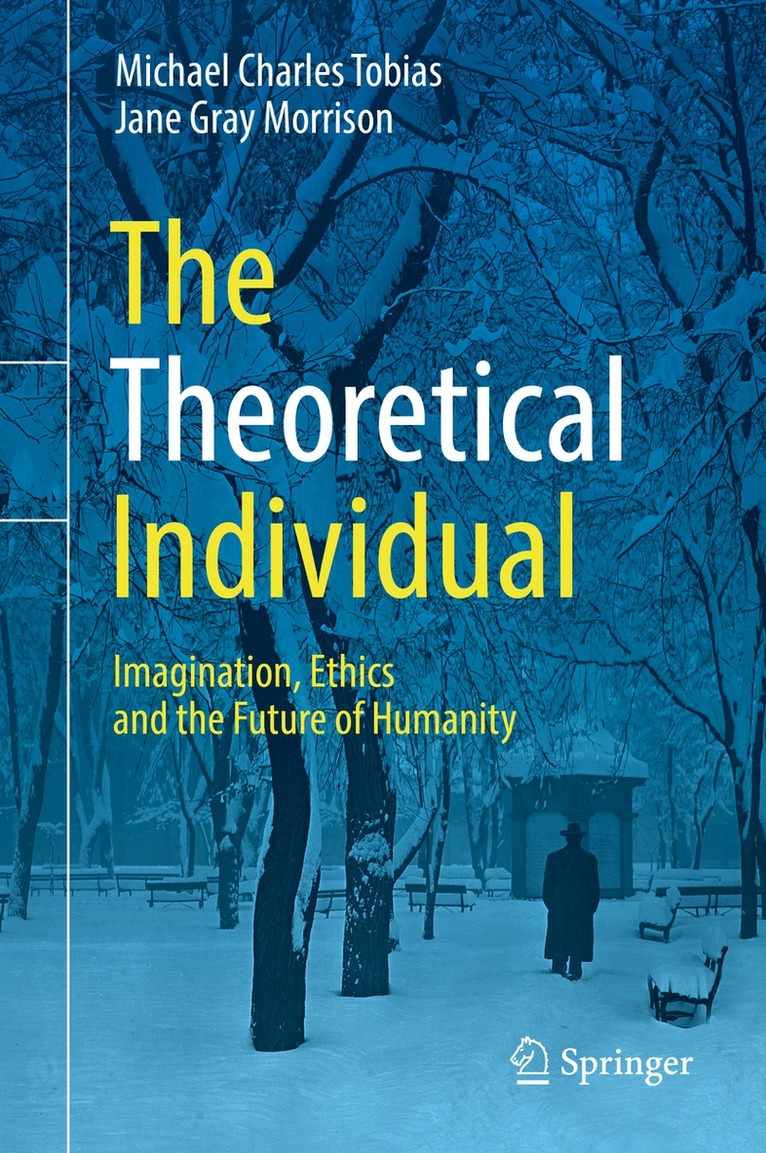
This groundbreaking work of both theoretical and experiential thought by two leading ecological philosophers and animal liberation scientists ventures into a new frontier of applied ethical anthrozoological studies. Through lean and elegant text, readers will learn that human interconnections with other species and ecosystems are severely endangered precisely because we lack - by our evolutionary self-confidence - the very coherence that is everywhere around us abundantly demonstrated. What our species has deemed to be superior is, according to Tobias and Morrison, the cumulative result of a tragically tenuous argument predicated on the brink of our species’ self-destruction, giving rise to a most unique proposition: We either recognize the miracle of other sentient intelligence, sophistication, and genius, or risk enshrining the shortest lived epitaph of any known vertebrate in earth’s 4.1 billion years of life.Tobias and Morrison drawon 45 years of research in fields ranging from ecological anthropology, animal protection and comparative ethics to literature and spirituality - and beyond. They deploy research in animal and plant behavior, biocultural heritage contexts from every continent and they bring to bear a deeply metaphysical array of perspectives that set this book apart from any other. The book departs from most work in such fields as animal rights, ecological aesthetics, comparative ethology or traditional animal and plant behaviorist work, and yet it speaks to readers with an interest in those fields. A deeply provocative book of philosophical premises and hypotheses from two of the world’s most influential ecological philosophers, this text is likely to stir uneasiness and debate for many decades to come.
393 kr
Skickas inom 10-15 vardagar
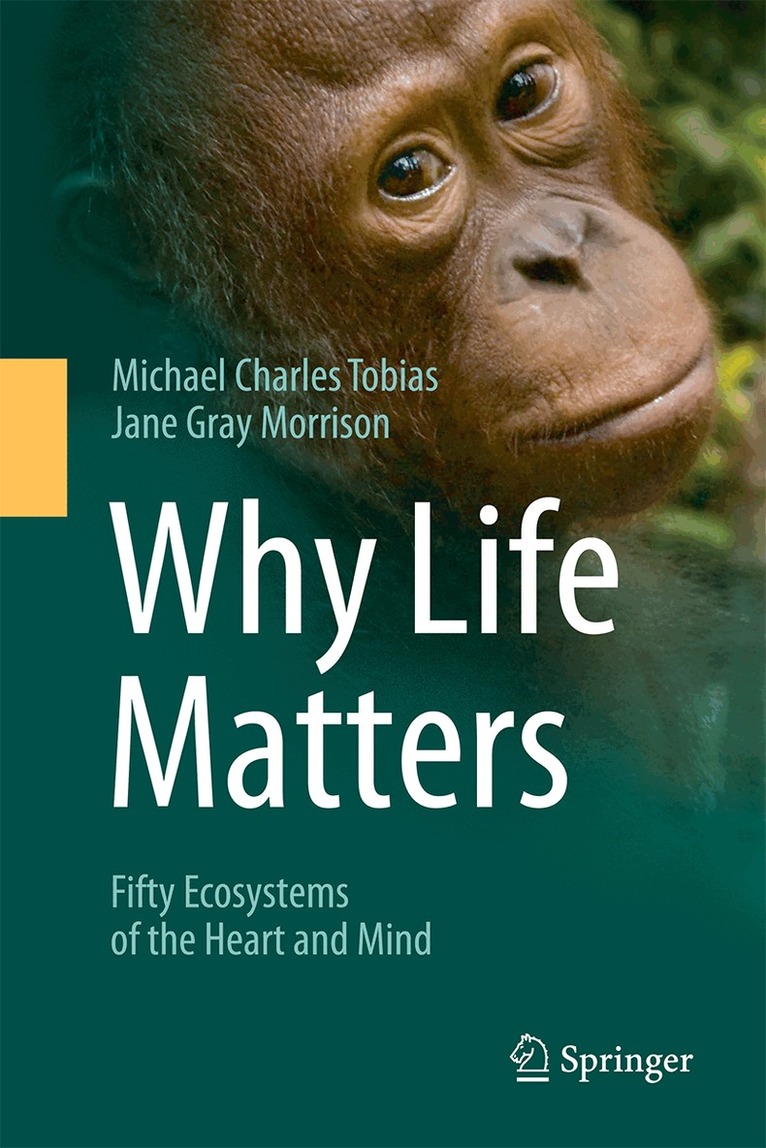
How can the one influence the many? From posing seminal questions about what comprises a human individual, to asking whether human evolution is alive and well, favoring individuals or the species, this work is a daring, up-to-the-minute overview of an urgent, multidisciplinary premise. It explores the extent to which human history provides empirical evidence for the capacity of an individual to exert meaningful suasion over their species, and asks: Can an individual influence the survival of the human species and the planet? If there are to be cultures of transformation dedicated to seeing us all through the Sixth Extinction Spasm, the Anthropocene, inflicting as little biological havoc as possible, what might such orientations—a collective, widespread biophilia, or reverence for nature—look like? In this powerful work, with a combination of data and direct observation, the authors invite readers to explore how such transformations might resonate throughout the human community; in what ways a person might overcome the seemingly insurmountable environmental tumult our species has unleashed; the clear and salient motives, ethics, aspirations and pragmatic idealism he/she might mirror and embrace in order to effect a profound difference—at the individual level—for all of life and life’s myriad habitats. Chapters illuminate an ambitiously broad digest of research from two-dozen disciplines. Those include ecodynamics, biosemiotics, neural plasticity, anthropology, paleontology and the history of science, among others. All converge upon a set of ethics-based scenarios for mitigating ecological damage to ourselves and other life forms. This highly readable and tightly woven treatise speaks to scientists, students and all those who are concerned about ethical activism and the future of the biosphere.Michael Charles Tobias and Jane Gray Morrison are ecological philosophers and animal liberation activists who have worked for decades to help enrich our understanding of ecosystem dynamics and humanity’s ambiguous presence amid that great orchestra that is nature.
410 kr
Skickas inom 10-15 vardagar
A tense plot deals with devastating scientific, secret intelligence and geopolitical issues. “You alright, Professor?” Mal asked in a whisper. “Yeah, I’ll be alright.”World renowned ecologist, UCLA Professor David Lev, aged 84, has just begun a contemporary odyssey.
461 kr
Skickas inom 10-15 vardagar
This groundbreaking work of both theoretical and experiential thought by two leading ecological philosophers and animal liberation scientists ventures into a new frontier of applied ethical anthrozoological studies. Through lean and elegant text, readers will learn that human interconnections with other species and ecosystems are severely endangered precisely because we lack - by our evolutionary self-confidence - the very coherence that is everywhere around us abundantly demonstrated. What our species has deemed to be superior is, according to Tobias and Morrison, the cumulative result of a tragically tenuous argument predicated on the brink of our species’ self-destruction, giving rise to a most unique proposition: We either recognize the miracle of other sentient intelligence, sophistication, and genius, or risk enshrining the shortest lived epitaph of any known vertebrate in earth’s 4.1 billion years of life.Tobias and Morrison drawon 45 years of research in fields ranging from ecological anthropology, animal protection and comparative ethics to literature and spirituality - and beyond. They deploy research in animal and plant behavior, biocultural heritage contexts from every continent and they bring to bear a deeply metaphysical array of perspectives that set this book apart from any other. The book departs from most work in such fields as animal rights, ecological aesthetics, comparative ethology or traditional animal and plant behaviorist work, and yet it speaks to readers with an interest in those fields. A deeply provocative book of philosophical premises and hypotheses from two of the world’s most influential ecological philosophers, this text is likely to stir uneasiness and debate for many decades to come.
320 kr
Skickas inom 5-8 vardagar
How can the one influence the many? From posing seminal questions about what comprises a human individual, to asking whether human evolution is alive and well, favoring individuals or the species, this work is a daring, up-to-the-minute overview of an urgent, multidisciplinary premise. It explores the extent to which human history provides empirical evidence for the capacity of an individual to exert meaningful suasion over their species, and asks: Can an individual influence the survival of the human species and the planet? If there are to be cultures of transformation dedicated to seeing us all through the Sixth Extinction Spasm, the Anthropocene, inflicting as little biological havoc as possible, what might such orientations—a collective, widespread biophilia, or reverence for nature—look like? In this powerful work, with a combination of data and direct observation, the authors invite readers to explore how such transformations might resonate throughout the human community; in what ways a person might overcome the seemingly insurmountable environmental tumult our species has unleashed; the clear and salient motives, ethics, aspirations and pragmatic idealism he/she might mirror and embrace in order to effect a profound difference—at the individual level—for all of life and life’s myriad habitats. Chapters illuminate an ambitiously broad digest of research from two-dozen disciplines. Those include ecodynamics, biosemiotics, neural plasticity, anthropology, paleontology and the history of science, among others. All converge upon a set of ethics-based scenarios for mitigating ecological damage to ourselves and other life forms. This highly readable and tightly woven treatise speaks to scientists, students and all those who are concerned about ethical activism and the future of the biosphere.Michael Charles Tobias and Jane Gray Morrison are ecological philosophers and animal liberation activists who have worked for decades to help enrich our understanding of ecosystem dynamics and humanity’s ambiguous presence amid that great orchestra that is nature.
879 kr
Skickas inom 10-15 vardagar
This compact and elegant work (equally fitting for both academic as well as the trade audiences) provides a readily accessible and highly readable overview of Bhutan’s unique opportunities and challenges; all her prominent environmental legislation, regulatory statutes, ecological customs and practices, both in historic and contemporary terms. At the same time, Bionomics places the ecological context, including a section on animal rights in Bhutan, within the nation’s Buddhist spiritual and ethical setting. Historic contextualization accents the book’s rich accounting of every national park and scientific reserve, as well as providing up-to-the-minute climate-change related hurdles for the country.Merging the interdisciplinary sciences, engineering and humanities data in a compelling up-to-date portrait of the country, the authors have presented this dramatic compendium against the backdrop of an urgent, global ecological time-frame. It thus becomes clearthat the articulated stakes for Bhutan, like her neighboring Himalayan and Indian sub-continental countries (China, India, Bangladesh and Myanmar) are immense, as the Anthropocene epoch unfolds, affecting every living being across the planet. Because Bhutan’s two most rewarding revenue streams derive from the sale of hydro-electric power and from tourism, the complexities of modern pressures facing a nation that prides herself on maintaining traditional customs in what has been a uniquely isolated nation are acute.
2 574 kr
Kommande