Michaël de Saint Cheron – författare
Visar alla böcker från författaren Michaël de Saint Cheron. Handla med fri frakt och snabb leverans.
10 produkter
Evil and Exile
Revised Edition
Av Michaël de Saint Cheron, Elie Wiesel
Häftad, 2000
524 kr
Lägg i varukorg
Two interviews have been added to this second edition, in which Wiesel discusses religious faith in the face of evil and love, the moral responsibilities of Jews and non-Jews, the plight of the exiled, Jewish-Christian relations, antisemitism, and mystery and the ineffable.
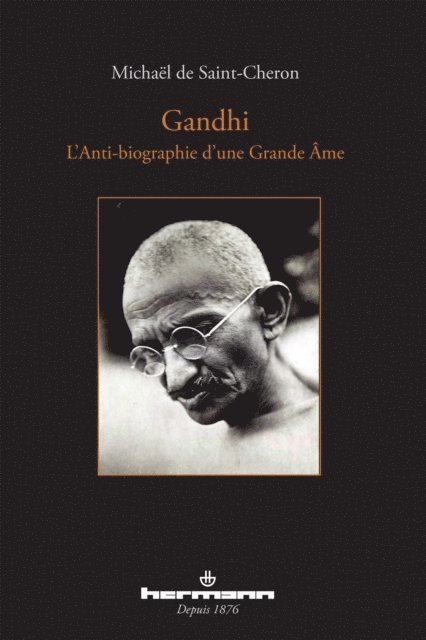
Gandhi
Anti-Biography of a Great Soul
Häftad, 2024
738 kr
Lägg i varukorg
This book is not just another biography of Gandhi. It is valuable because it offers us a French view--- and Jewish too perhaps---- of a man and times so familiar to us and yet which acquires another dimension as it is represented through another culture.There are eloquent accounts in this book of …
Gandhi
Anti-Biography of a Great Soul
Inbunden, 2017
2682 kr
Lägg i varukorg
This book is not just another biography of Gandhi. It is valuable because it offers us a French view--- and Jewish too perhaps---- of a man and times so familiar to us and yet which acquires another dimension as it is represented through another culture.There are eloquent accounts in this book of …
Gandhi
Anti-Biography of a Great Soul
E-bok, 2017
864 kr
Lägg i varukorg
This book is not just another biography of Gandhi. It is valuable because it offers us a French view--- and Jewish too perhaps---- of a man and times so familiar to us and yet which acquires another dimension as it is represented through another culture. There are eloquent accounts in this book of …
Gandhi
Anti-Biography of a Great Soul
E-bok, 2017
814 kr
Lägg i varukorg
This book is not just another biography of Gandhi. It is valuable because it offers us a French view--- and Jewish too perhaps---- of a man and times so familiar to us and yet which acquires another dimension as it is represented through another culture. There are eloquent accounts in this book of …
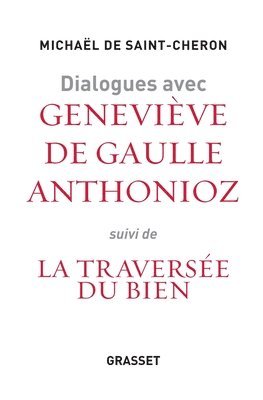
Dialogues avec Geneviève de Gaulle Anthonioz: Suivis de La traversée du bien
Häftad, 2019
450 kr
Lägg i varukorg
Autour de Élie Wiesel
Une parole pour l’avenir
E-bok, 1996
198 kr
Lägg i varukorg
Au lendemain du cinquantième anniversaire de la libération des camps et alors qu''Élie Wiesel publie le second volet de ses Mémoires, on peut s''interroger sur la place exceptionnelle de cet écrivain dans la conscience de son époque. En quoi Élie Wiesel est-il un homme universel, porteur d''une …
Gandhi
L''anti-biographie d''une grande âme
E-bok, 2011
347 kr
Lägg i varukorg
Au XXe siècle, au milieu des révolutions, des totalitarismes de droite ou de gauche, l''Inde apporta au monde la seule révolution basée sur une non-violence fondamentale : l''ahimsâ (mot sanskrit signifiant en particulier l''action de ne causer de dommage à personne, d''où l''idée de non-violence), …
Réflexions sur la Honte
De Rousseau à Levinas
E-bok, 2017
295 kr
Lägg i varukorg
Depuis la Bible hébraïque, qui lui donna un relief particulier, la honte fut pensée d’abord par Platon et Aristote comme concept, puis traversa la littérature mondiale. Relisant Rousseau à la lumière de Levinas, Kafka à celle de Benjamin ou George Steiner, Celan à celle de Blanchot, ou le génocide …