Michael Drmota – författare
Visar alla böcker från författaren Michael Drmota. Handla med fri frakt och snabb leverans.
11 produkter
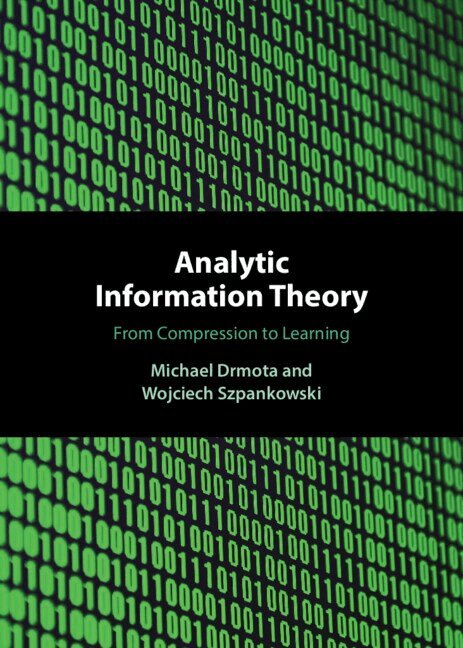
Analytic Information Theory
From Compression to Learning
Av Michael Drmota, Wojciech Szpankowski
Inbunden, 2023
2204 kr
Lägg i varukorg
Through information theory, problems of communication and compression can be precisely modeled, formulated, and analyzed, and this information can be transformed by means of algorithms. Also, learning can be viewed as compression with side information. Aimed at students and researchers, this book …
Analytic Information Theory
From Compression to Learning
Av Wojciech Szpankowski, Michael Drmota
E-bok, 2023
2009 kr
Lägg i varukorg
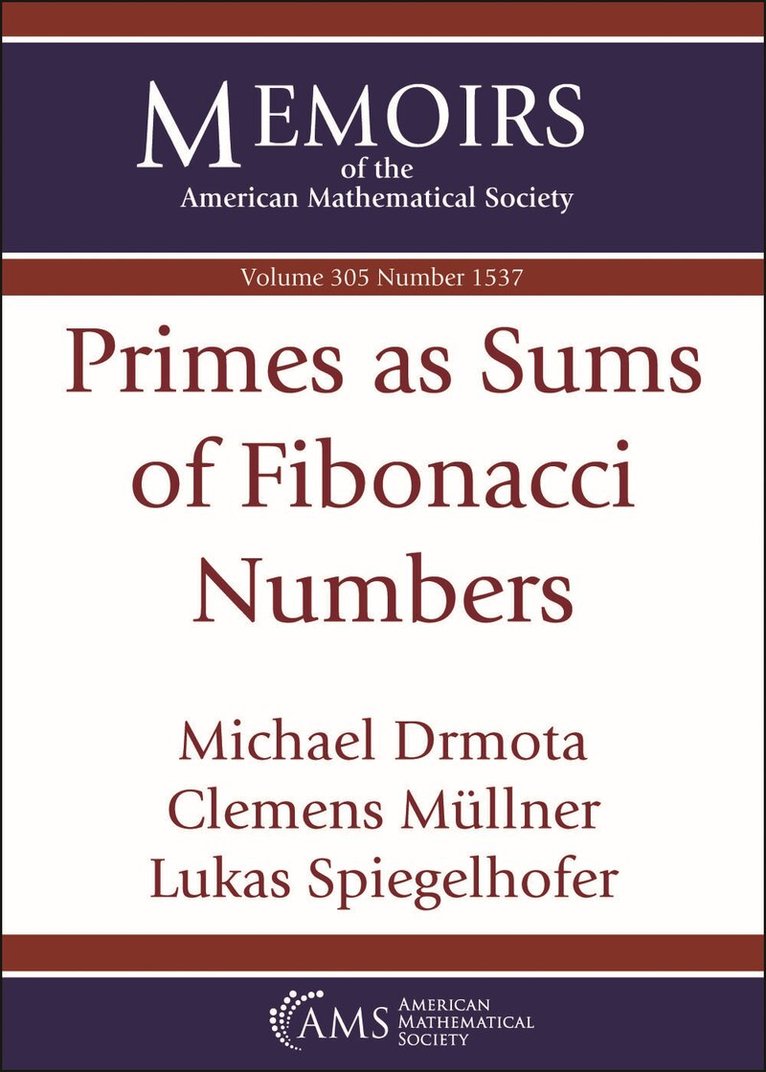
Primes As Sums of Fibonacci Numbers
Av Michael Drmota, Clemens Mullner m. fl.
Häftad, 2025
1028 kr
Lägg i varukorg
The Memoirs of the AMS is devoted to the publication of new research in all areas of pure and applied mathematics. The Memoirs is designed particularly to publish long papers of groups of cognate papers in book form, and is under the supervision of the Editorial Committee of the AMS journal …
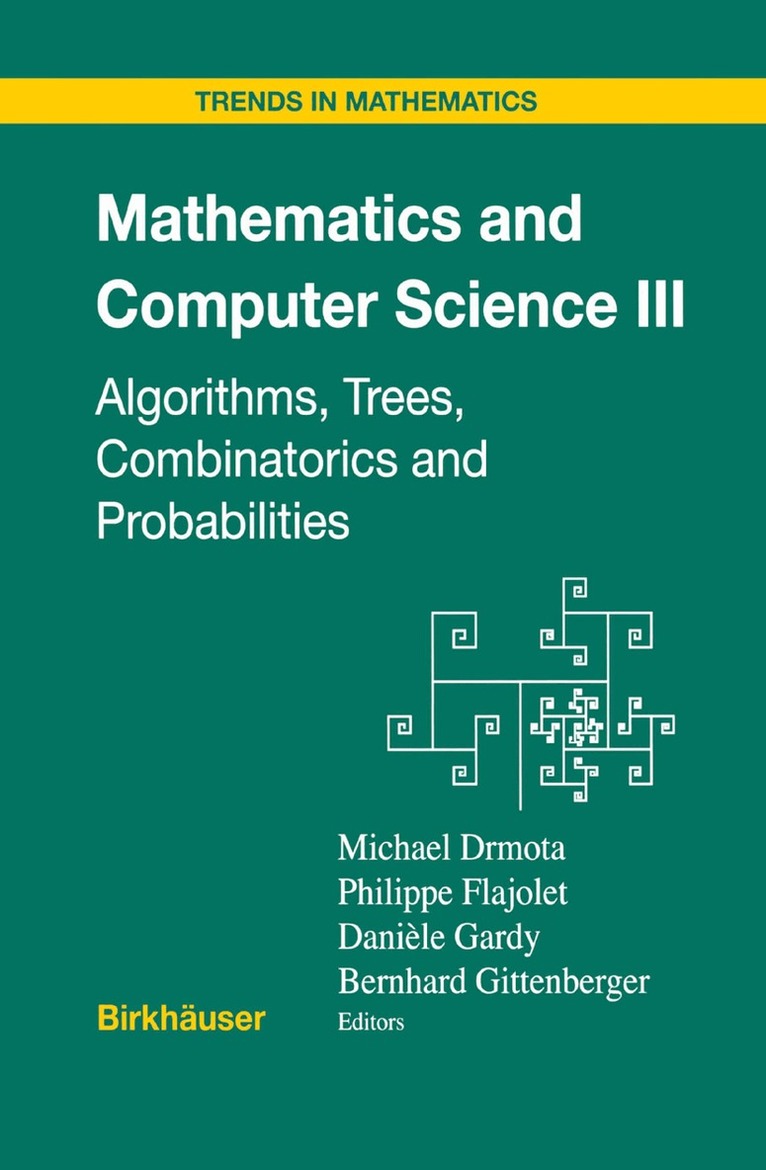
Mathematics and Computer Science III
Algorithms, Trees, Combinatorics and Probabilities
Av Bernhard Gittenberger, Daniele Gardy m. fl.
E-bok, 2012
1427 kr
Lägg i varukorg
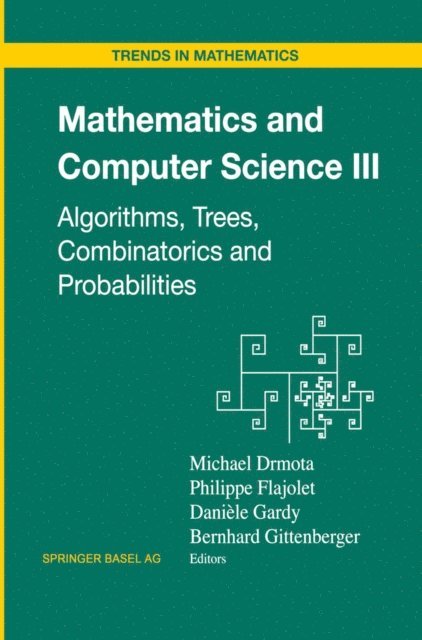
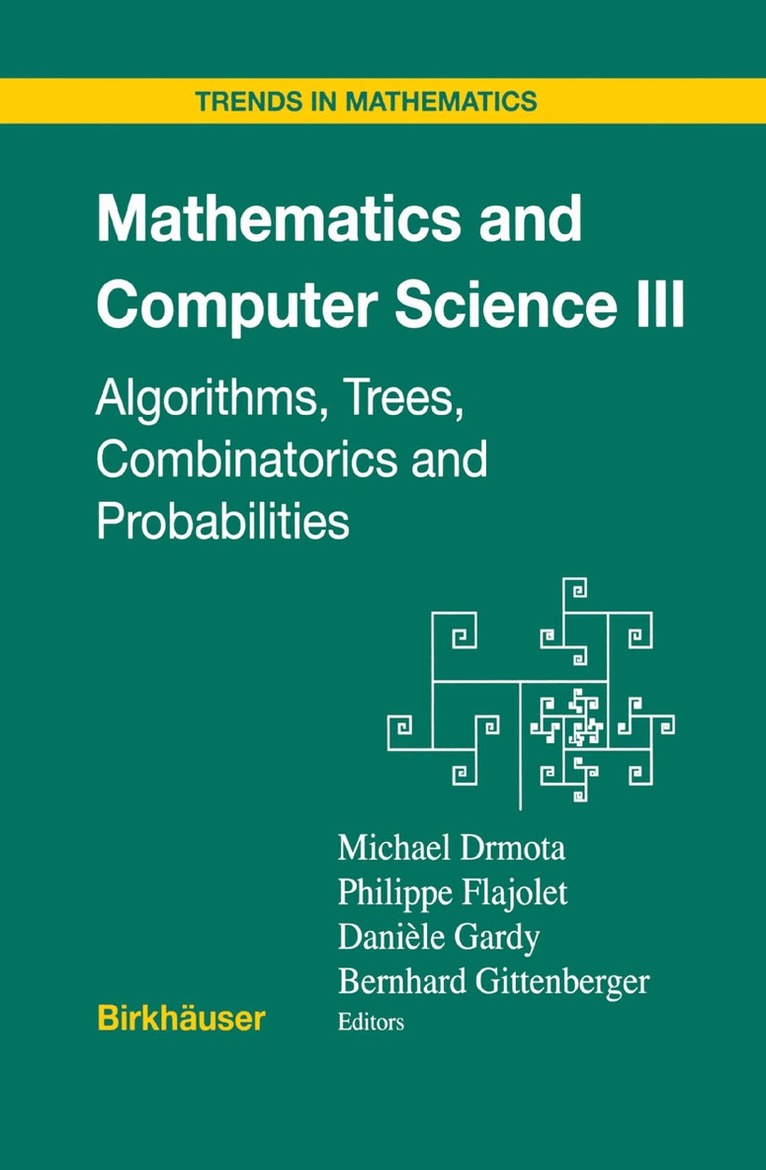
Mathematics and Computer Science III
Algorithms, Trees, Combinatorics and Probabilities
Av Michael Drmota, Philippe Flajolet m. fl.
Häftad, 2013
1093 kr
Lägg i varukorg
Mathematics and Computer Science III contains invited and contributed papers on combinatorics, random graphs and networks, algorithms analysis and trees, branching processes, constituting the Proceedings of the Third International Colloquium on Mathematics and Computer Science, held in Vienna in …
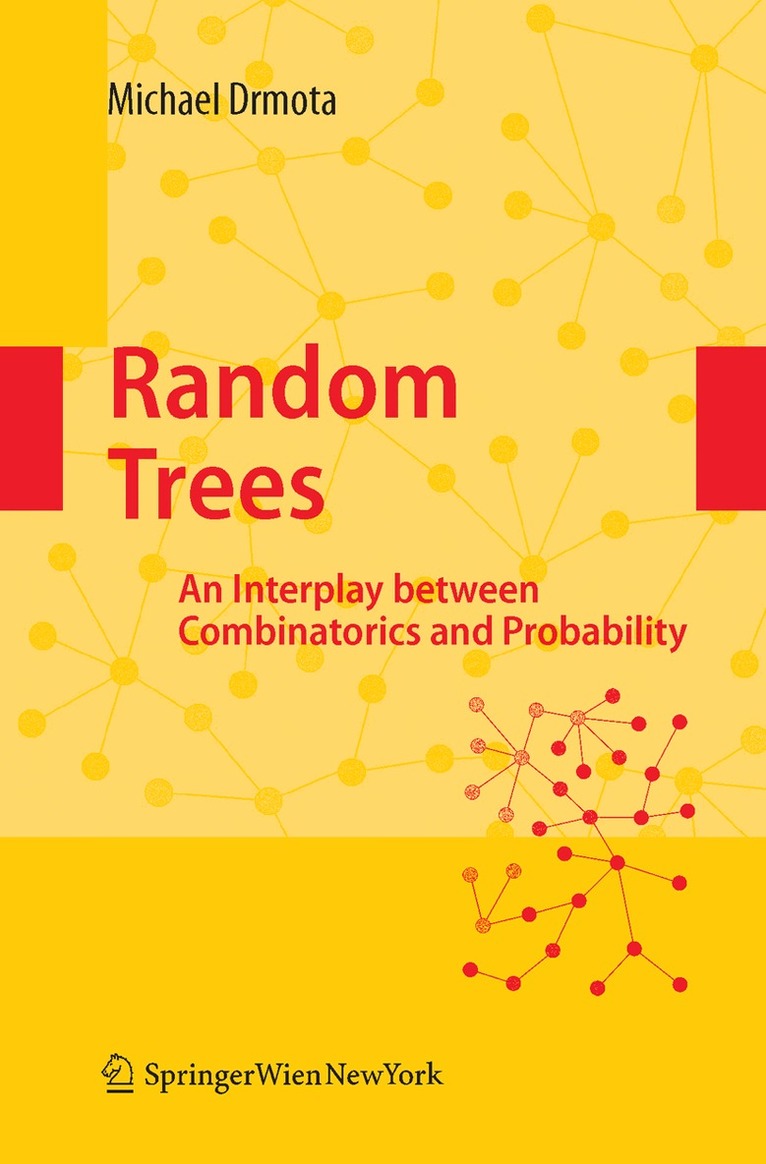
Random Trees
An Interplay between Combinatorics and Probability
Inbunden, 2008
1527 kr
Lägg i varukorg
Trees are a fundamental object in graph theory and combinatorics as well as a basic object for data structures and algorithms in computer science. During thelastyearsresearchrelatedto(random)treeshasbeenconstantlyincreasing and several asymptotic and probabilistic techniques have been developed in …
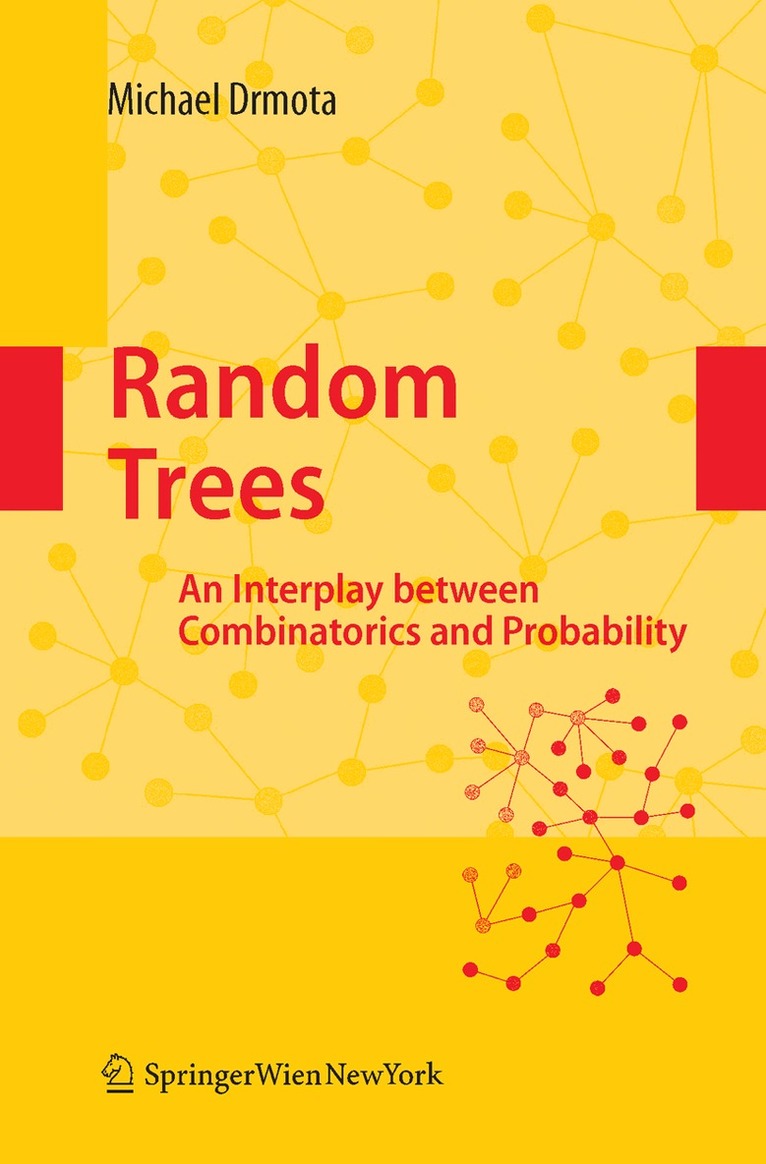
Random Trees
An Interplay between Combinatorics and Probability
Häftad, 2010
1527 kr
Lägg i varukorg
Trees are a fundamental object in graph theory and combinatorics as well as a basic object for data structures and algorithms in computer science. During thelastyearsresearchrelatedto(random)treeshasbeenconstantlyincreasing and several asymptotic and probabilistic techniques have been developed in …
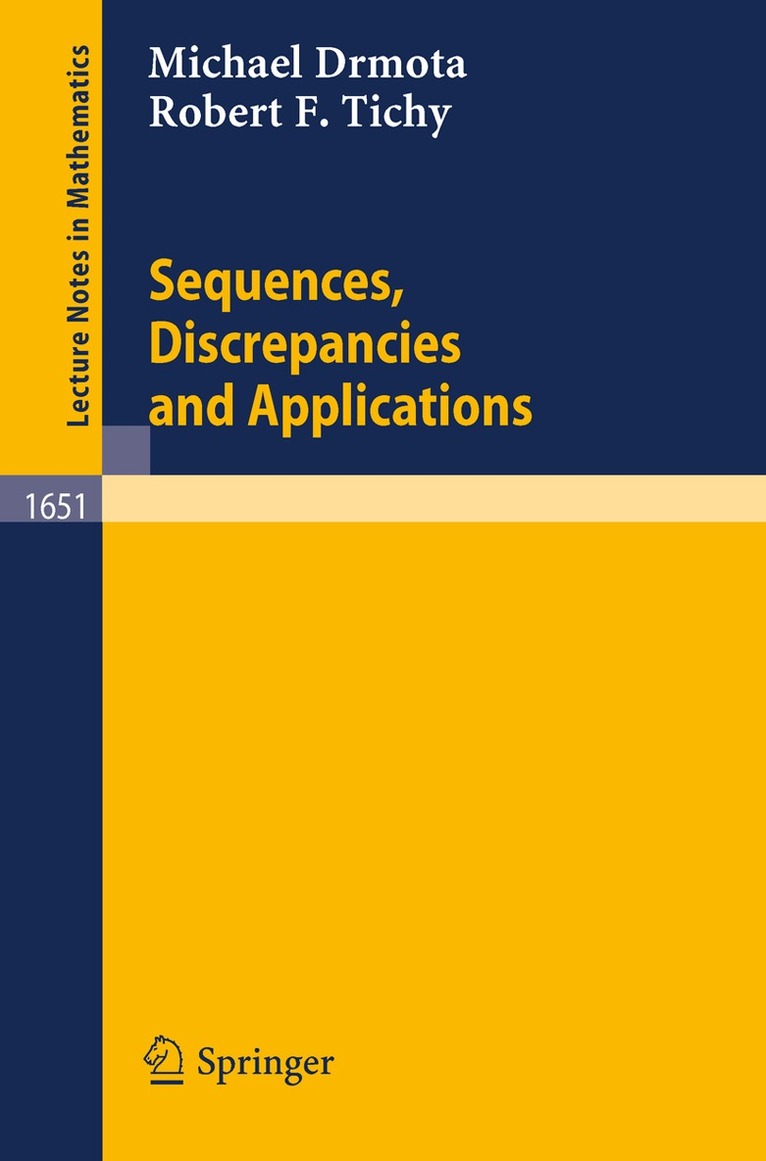
Sequences, Discrepancies and Applications
Av Michael Drmota, Robert F. Tichy
Häftad, 1997
930 kr
Lägg i varukorg
The main purpose of this book is to give an overview of the developments during the last 20 years in the theory of uniformly distributed sequences. The authors focus on various aspects such as special sequences, metric theory, geometric concepts of discrepancy, irregularities of distribution, …
Sequences, Discrepancies and Applications
Av Robert F. Tichy, Michael Drmota
E-bok, 2006
1214 kr
Lägg i varukorg
The main purpose of this book is to give an overview of the developments during the last 20 years in the theory of uniformly distributed sequences. The authors focus on various aspects such as special sequences, metric theory, geometric concepts of discrepancy, irregularities of distribution, …
Mathematics and Computer Science III
Algorithms, Trees, Combinatorics and Probabilities
Av Michael Drmota, Philippe Flajolet m. fl.
Inbunden, 2004
1129 kr
Lägg i varukorg
Mathematics and Computer Science III contains invited and contributed papers on combinatorics, random graphs and networks, algorithms analysis and trees, branching processes, constituting the Proceedings of the Third International Colloquium on Mathematics and Computer Science, held in Vienna in …