Michael F. A'Hearn – författare
Visar alla böcker från författaren . Handla med fri frakt och snabb leverans.
3 produkter
3 produkter
Inbunden, Engelska, 1995
544 kr
Skickas inom 10-15 vardagar
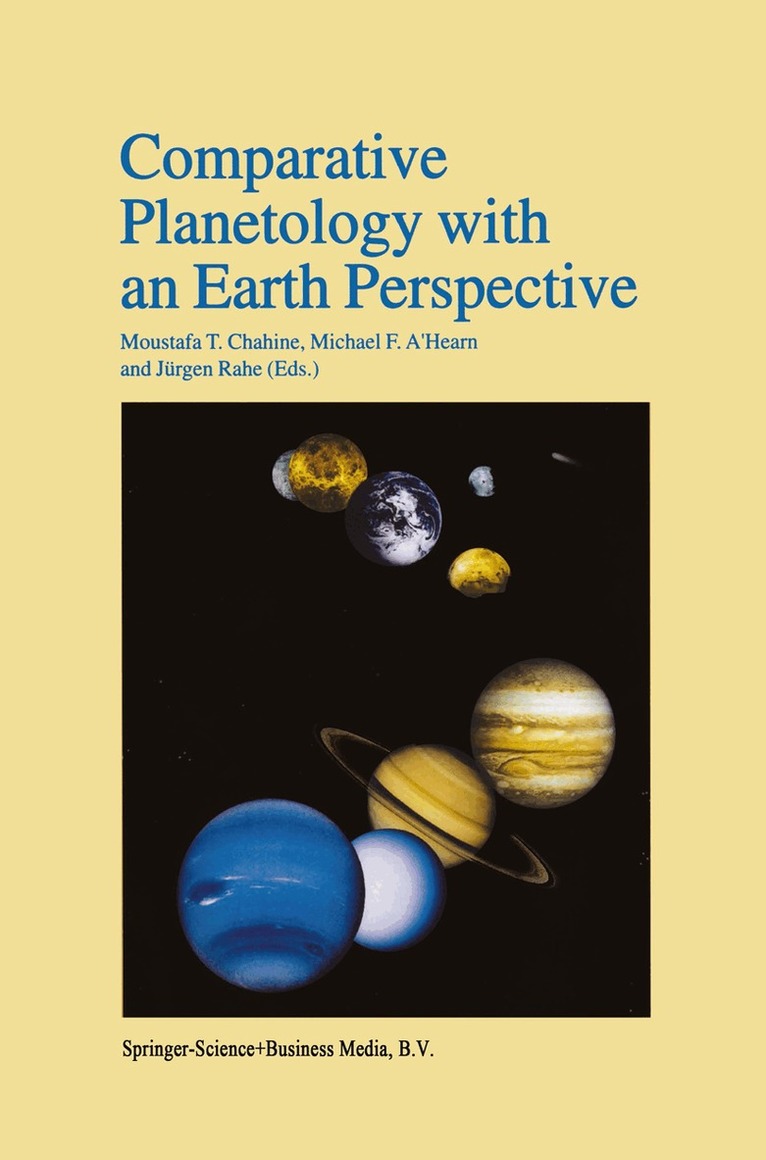
The systematic study of the planets has experienced a slow but steady progress from the efforts of a single individual (Galileo Galilei, 1564-1642) to nations that individually and collectively create whole agencies and complex infrastructures devoted to the exploration and understanding of our solar system. This quest for knowledge continues in earnest today as we attempt to understand Earth's unique place among its closest neighbors. Known diversities emphasize fractionation processes that may have occurred in the nebula during early solar system formation, and the vastly different evolutionary paths taken by the planets and their satellites. The discovery of similarities and differences among the planets has given rise to a discipline of "Comparative Planetology. " Here terrestrial properties and giant planet atmospheres are viewed and probed, surface geologies are related to atmospheres and oceans, interior structures are envisioned, magnetic fields mapped, and bizarre differences in satellites and ring systems continue to enlighten, amaze and confound the detectives of planetary science. A science organizing committee with international participation was formed to develop a conference program to address the basic issues and the fundamental processes that are common among the planets. The goals of the meeting were twofold: first the production of a reference source on comparative planetology for academia, and second, the provision of an impetus for NASA to begin a program devoted to this emerging science discipline. The conference program accommodated seventeen invited papers and nineteen poster presentations.
Häftad, Engelska, 2010
545 kr
Skickas inom 10-15 vardagar
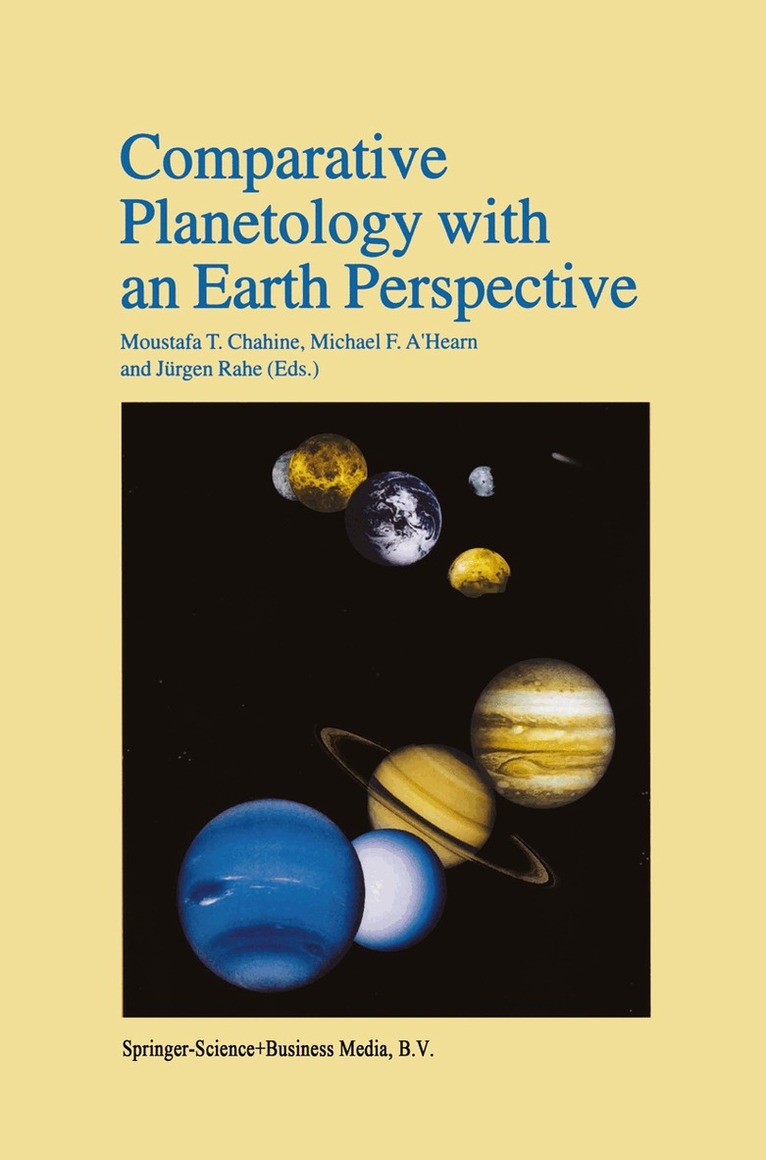
The systematic study of the planets has experienced a slow but steady progress from the efforts of a single individual (Galileo Galilei, 1564-1642) to nations that individually and collectively create whole agencies and complex infrastructures devoted to the exploration and understanding of our solar system. This quest for knowledge continues in earnest today as we attempt to understand Earth's unique place among its closest neighbors. Known diversities emphasize fractionation processes that may have occurred in the nebula during early solar system formation, and the vastly different evolutionary paths taken by the planets and their satellites. The discovery of similarities and differences among the planets has given rise to a discipline of "Comparative Planetology. " Here terrestrial properties and giant planet atmospheres are viewed and probed, surface geologies are related to atmospheres and oceans, interior structures are envisioned, magnetic fields mapped, and bizarre differences in satellites and ring systems continue to enlighten, amaze and confound the detectives of planetary science. A science organizing committee with international participation was formed to develop a conference program to address the basic issues and the fundamental processes that are common among the planets. The goals of the meeting were twofold: first the production of a reference source on comparative planetology for academia, and second, the provision of an impetus for NASA to begin a program devoted to this emerging science discipline. The conference program accommodated seventeen invited papers and nineteen poster presentations.
E-bok
PDF, Engelska, 2013712 kr
Läs direkt efter köp
The systematic study of the planets has experienced a slow but steady progress from the efforts of a single individual (Galileo Galilei, 1564-1642) to nations that individually and collectively create whole agencies and complex infrastructures devoted to the exploration and understanding of our solar system. This quest for knowledge continues in earnest today as we attempt to understand Earth''s unique place among its closest neighbors. Known diversities emphasize fractionation processes that may have occurred in the nebula during early solar system formation, and the vastly different evolutionary paths taken by the planets and their satellites. The discovery of similarities and differences among the planets has given rise to a discipline of "Comparative Planetology. " Here terrestrial properties and giant planet atmospheres are viewed and probed, surface geologies are related to atmospheres and oceans, interior structures are envisioned, magnetic fields mapped, and bizarre differences in satellites and ring systems continue to enlighten, amaze and confound the detectives of planetary science. A science organizing committee with international participation was formed to develop a conference program to address the basic issues and the fundamental processes that are common among the planets. The goals of the meeting were twofold: first the production of a reference source on comparative planetology for academia, and second, the provision of an impetus for NASA to begin a program devoted to this emerging science discipline. The conference program accommodated seventeen invited papers and nineteen poster presentations.