Michael Gavin – författare
Visar alla böcker från författaren Michael Gavin. Handla med fri frakt och snabb leverans.
10 produkter
10 produkter
2 040 kr
Kommande
Moving beyond familiar discussions of ethnic conflict, this Handbook presents a bold rethinking of how language shapes identity, power, and violence. With contributions from leading scholars in linguistics, political science, and public policy, it presents global case studies alongside new analytic tools for the study of language and global politics. It introduces "language conflict" as a clearer and more useful framework-one that brings linguistic structure, institutional policy, and communicative inequality into focus. Split into four sections, chapters cover topics such as hate speech, language rights, transitional justice, education policy, and postcolonial literature, spanning contexts from Cameroon to Catalonia, and from Guatemala to Sri Lanka. Together, these chapters show how language is not simply a cultural marker, but a political force that shapes collective identities, nationalism, and resistance. It is essential reading for anyone interested in language policy, multilingual governance, and the deep entanglement of language with political life.
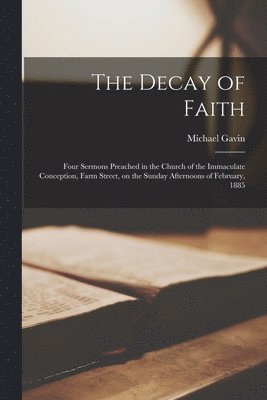
Decay of Faith
Four Sermons Preached in the Church of the Immaculate Conception, Farm Street, on the Sunday Afternoons of February, 1885
Häftad, Engelska, 2021
177 kr
Skickas inom 5-8 vardagar
Sacrifice of the Mass, an Explanation of its Doctrine, Rubrics and Prayers, With an Introductory Chapter
Inbunden, Engelska, 2023
378 kr
Skickas inom 5-8 vardagar
Sacrifice of the Mass, an Explanation of its Doctrine, Rubrics and Prayers, With an Introductory Chapter
Häftad, Engelska, 2023
258 kr
Skickas inom 5-8 vardagar
1 438 kr
Skickas inom 7-10 vardagar
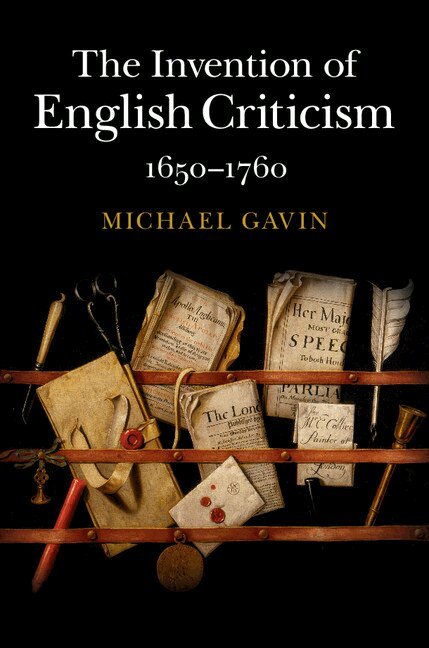
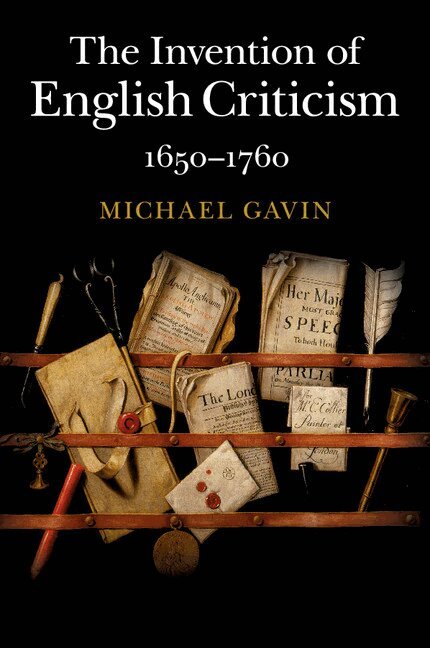
Early literary criticism was undisciplined. Unlike the staid essays and monographs of later academic scholarship, English criticism first appeared in the contentious world of the London theater: dramatists and other poets argued about their craft in contending prefaces and dedications, and their disputes spilled into the public sphere in pamphlet wars, mock epics, lampoons, and even novels. Across these forms, criticism was personal, political, and unconcerned with analysis for its own sake. Yet this unruly discourse laid the groundwork both for modern literary criticism and for the discipline of literary studies. The Invention of English Criticism explores the earliest uses of criticism and the attempts by some to convert a field of literary debate into an archive of useful knowledge. Criticism's undisciplined past thus illuminates its contested, ambivalent, and never fully disciplined present.
520 kr
Skickas inom 7-10 vardagar
Early literary criticism was undisciplined. Unlike the staid essays and monographs of later academic scholarship, English criticism first appeared in the contentious world of the London theater: dramatists and other poets argued about their craft in contending prefaces and dedications, and their disputes spilled into the public sphere in pamphlet wars, mock epics, lampoons, and even novels. Across these forms, criticism was personal, political, and unconcerned with analysis for its own sake. Yet this unruly discourse laid the groundwork both for modern literary criticism and for the discipline of literary studies. The Invention of English Criticism explores the earliest uses of criticism and the attempts by some to convert a field of literary debate into an archive of useful knowledge. Criticism's undisciplined past thus illuminates its contested, ambivalent, and never fully disciplined present.
1 106 kr
Skickas inom 5-8 vardagar
Across the humanities and social sciences, scholars increasingly use quantitative methods to study textual data. Considered together, this research represents an extraordinary event in the long history of textuality. More or less all at once, the corpus has emerged as a major genre of cultural and scientific knowledge. In Literary Mathematics, Michael Gavin grapples with this development, describing how quantitative methods for the study of textual data offer powerful tools for historical inquiry and sometimes unexpected perspectives on theoretical issues of concern to literary studies. Student-friendly and accessible, the book advances this argument through case studies drawn from the Early English Books Online corpus. Gavin shows how a copublication network of printers and authors reveals an uncannily accurate picture of historical periodization; that a vector-space semantic model parses historical concepts in incredibly fine detail; and that a geospatial analysis of early modern discourse offers a surprising panoramic glimpse into the period's notion of world geography. Across these case studies, Gavin challenges readers to consider why corpus-based methods work so effectively and asks whether the successes of formal modeling ought to inspire humanists to reconsider fundamental theoretical assumptions about textuality and meaning. As Gavin reveals, by embracing the expressive power of mathematics, scholars can add new dimensions to digital humanities research and find new connections with the social sciences.
359 kr
Skickas inom 5-8 vardagar
Across the humanities and social sciences, scholars increasingly use quantitative methods to study textual data. Considered together, this research represents an extraordinary event in the long history of textuality. More or less all at once, the corpus has emerged as a major genre of cultural and scientific knowledge. In Literary Mathematics, Michael Gavin grapples with this development, describing how quantitative methods for the study of textual data offer powerful tools for historical inquiry and sometimes unexpected perspectives on theoretical issues of concern to literary studies. Student-friendly and accessible, the book advances this argument through case studies drawn from the Early English Books Online corpus. Gavin shows how a copublication network of printers and authors reveals an uncannily accurate picture of historical periodization; that a vector-space semantic model parses historical concepts in incredibly fine detail; and that a geospatial analysis of early modern discourse offers a surprising panoramic glimpse into the period's notion of world geography. Across these case studies, Gavin challenges readers to consider why corpus-based methods work so effectively and asks whether the successes of formal modeling ought to inspire humanists to reconsider fundamental theoretical assumptions about textuality and meaning. As Gavin reveals, by embracing the expressive power of mathematics, scholars can add new dimensions to digital humanities research and find new connections with the social sciences.
210 kr
Skickas inom 5-8 vardagar
329 kr
Skickas inom 5-8 vardagar