Michael Greenberg – författare
1 504 kr
Skickas inom 3-6 vardagar
279 kr
Skickas inom 3-6 vardagar
751 kr
Skickas inom 10-15 vardagar
534 kr
Skickas inom 7-10 vardagar
860 kr
Läs direkt efter köp
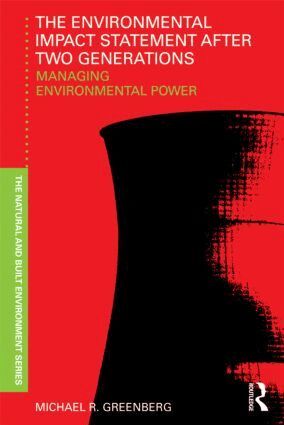
This book is about a subject that Michael Greenberg has worked on and lived with for almost forty years. He was brought up in the south Bronx at a time when his neighborhood suffered from terrible air and noise pollution, and domestic waste went untreated into the Hudson River. For him, the National Environmental Policy Act (NEPA) was a blessing. It included an ethical position about the environment, and the law required some level of accountability in the form of an environmental impact statement, or EIS.
After forty years of thinking about and working with NEPA and the EIS process, Greenberg decided to conduct his own evaluation from the perspective of a person trained in science who focuses on environmental and environmental health policies. This book of carefully chosen real case studies goes beyond the familiar checklists of what to do, and shows students and practitioners alike what really happens during the creation and implementation of an EIS.
860 kr
Läs direkt efter köp
This book is about a subject that Michael Greenberg has worked on and lived with for almost forty years. He was brought up in the south Bronx at a time when his neighborhood suffered from terrible air and noise pollution, and domestic waste went untreated into the Hudson River. For him, the National Environmental Policy Act (NEPA) was a blessing. It included an ethical position about the environment, and the law required some level of accountability in the form of an environmental impact statement, or EIS.
After forty years of thinking about and working with NEPA and the EIS process, Greenberg decided to conduct his own evaluation from the perspective of a person trained in science who focuses on environmental and environmental health policies. This book of carefully chosen real case studies goes beyond the familiar checklists of what to do, and shows students and practitioners alike what really happens during the creation and implementation of an EIS.
2 253 kr
Skickas inom 10-15 vardagar
751 kr
Skickas inom 10-15 vardagar
866 kr
Läs direkt efter köp
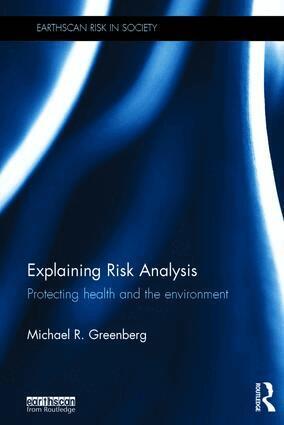
Risk analysis is not a narrowly defined set of applications. Rather, it is widely used to assess and manage a plethora of hazards that threaten dire implications. However, too few people actually understand what risk analysis can help us accomplish and, even among experts, knowledge is often limited to one or two applications.
Explaining Risk Analysis frames risk analysis as a holistic planning process aimed at making better risk-informed decisions and emphasizing the connections between the parts. This framework requires an understanding of basic terms, including explanations of why there is no universal agreement about what risk means, much less risk assessment, risk management and risk analysis. Drawing on a wide range of case studies, the book illustrates the ways in which risk analysis can help lead to better decisions in a variety of scenarios, including the destruction of chemical weapons, management of nuclear waste and the response to passenger rail threats. The book demonstrates how the risk analysis process and the data, models and processes used in risk analysis will clarify, rather than obfuscate, decision-makers’ options.
This book will be of great interest to students and scholars of risk assessment, risk management, public health, environmental science, environmental economics and environmental psychology.
866 kr
Läs direkt efter köp
Risk analysis is not a narrowly defined set of applications. Rather, it is widely used to assess and manage a plethora of hazards that threaten dire implications. However, too few people actually understand what risk analysis can help us accomplish and, even among experts, knowledge is often limited to one or two applications.
Explaining Risk Analysis frames risk analysis as a holistic planning process aimed at making better risk-informed decisions and emphasizing the connections between the parts. This framework requires an understanding of basic terms, including explanations of why there is no universal agreement about what risk means, much less risk assessment, risk management and risk analysis. Drawing on a wide range of case studies, the book illustrates the ways in which risk analysis can help lead to better decisions in a variety of scenarios, including the destruction of chemical weapons, management of nuclear waste and the response to passenger rail threats. The book demonstrates how the risk analysis process and the data, models and processes used in risk analysis will clarify, rather than obfuscate, decision-makers’ options.
This book will be of great interest to students and scholars of risk assessment, risk management, public health, environmental science, environmental economics and environmental psychology.
891 kr
Skickas inom 11-20 vardagar
114 kr
Läs direkt efter köp
110 kr
Läs direkt efter köp
1 006 kr
Läs direkt efter köp
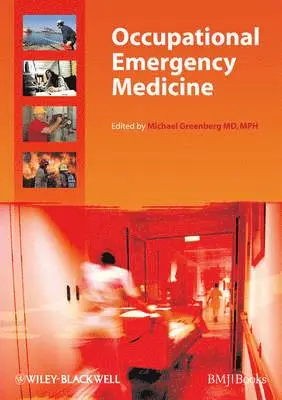
This burden of work means occupational disorders impact the whole of the emergency department. Michael Greenberg addresses your questions and concerns about the management of these patients:
from triage to discharge, and beyond for all work-place injuries or disorders, whether office-based, agricultural or industrial and their employment regulationsOccupational Emergency Medicine is an essential reference for emergency physicians and trainees, featuring comprehensive information on legal issues involving the physician, and advice on managing occupational health admissions.
1 006 kr
Läs direkt efter köp
This burden of work means occupational disorders impact the whole of the emergency department. Michael Greenberg addresses your questions and concerns about the management of these patients:
from triage to discharge, and beyond for all work-place injuries or disorders, whether office-based, agricultural or industrial and their employment regulationsOccupational Emergency Medicine is an essential reference for emergency physicians and trainees, featuring comprehensive information on legal issues involving the physician, and advice on managing occupational health admissions.
Nuclear Waste Management, Nuclear Power, and Energy Choices
Public Preferences, Perceptions, and Trust
1 086 kr
Skickas inom 10-15 vardagar
1 416 kr
Läs direkt efter köp
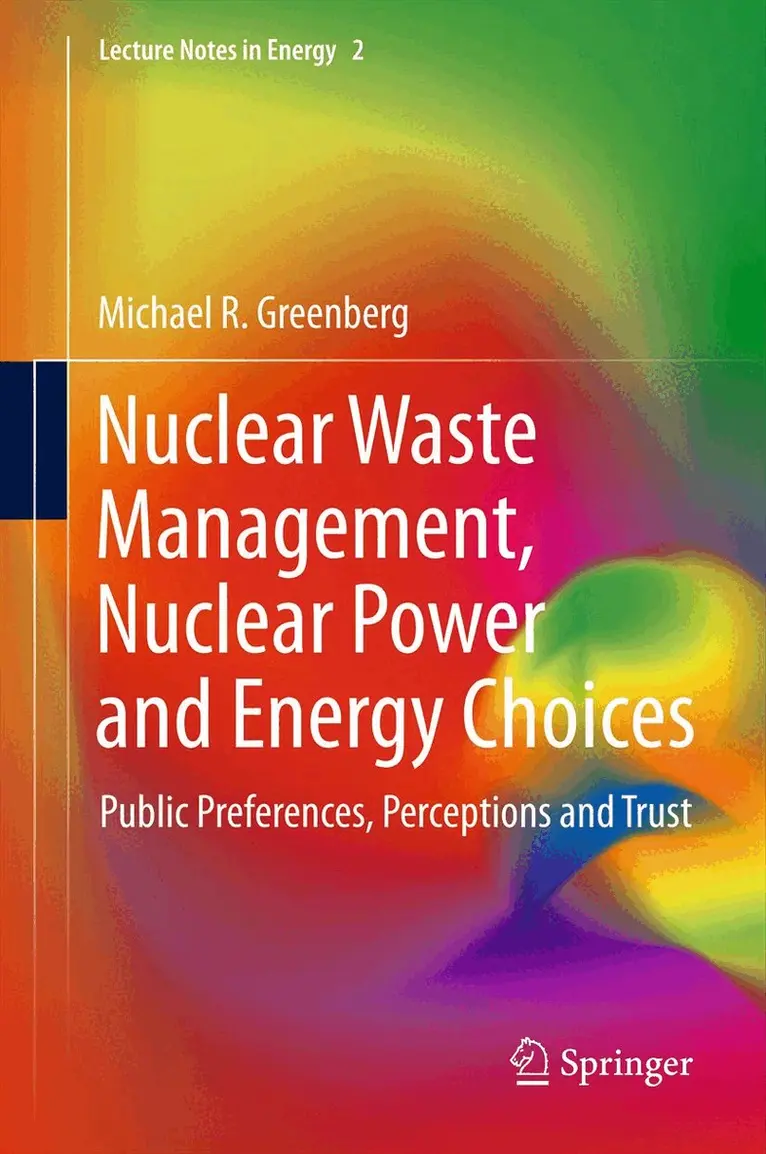
Hundreds of studies have investigated public perceptions and preferences about nuclear power, waste management, and technology. However there is clear lack of uniformity in the style, aims and methods applied. Consequently, the body of results is inconsistent and it is difficult to isolate relevant patterns or interpretations. Nuclear Waste Management, Nuclear Power and Energy Choices: Public Preferences, Perceptions and Trust presents a theoretical base for public reactions then classifies and reviews the large body of surveys carried out over the past decade.
Particular focus is placed on residents within 50 miles US nuclear waste facilities due to the disproportionate presence of nuclear factors in their lives such as the legacy of nuclear waste disposal and job dependency. The motivations and reasons for their views such as fear, attraction to the economic benefits, trust of site managers and federal agencies, cultural views, personal history, and demographic attributes of the people are also considered to provide a balanced and detailed overview. Nuclear Waste Management, Nuclear Power and Energy Choices: Public Preferences, Perceptions and Trust includes a comprehensive treatment of the theories and literature, and most important is grounded in surveys in 2005, 2008, 2009, 2010, and 2011 which includes questions considering the impact of Fukushima on US public opinion.
By including real life data alongside the analysis, Nuclear Waste Management, Nuclear Power, and Energy Choices: Public Preferences, Perceptions and Trust provides a relevant and concise reference for nuclear industry professionals. It also acts a resource for students and researchers studying nuclear-related topics including political, social and environmental factors.
Particular focus is placed on residents within 50 miles US nuclear waste facilities due to the disproportionate presence of nuclear factors in their lives such as the legacy of nuclear waste disposal and job dependency. The motivations and reasons for their views such as fear, attraction to the economic benefits, trust of site managers and federal agencies, cultural views, personal history, and demographic attributes of the people are also considered to provide a balanced and detailed overview. Nuclear Waste Management, Nuclear Power and Energy Choices: Public Preferences, Perceptions and Trust includes a comprehensive treatment of the theories and literature, and most important is grounded in surveys in 2005, 2008, 2009, 2010, and 2011 which includes questions considering the impact of Fukushima on US public opinion.
By including real life data alongside the analysis, Nuclear Waste Management, Nuclear Power, and Energy Choices: Public Preferences, Perceptions and Trust provides a relevant and concise reference for nuclear industry professionals. It also acts a resource for students and researchers studying nuclear-related topics including political, social and environmental factors.
Particular focus is placed on residents within 50 miles US nuclear waste facilities due to the disproportionate presence of nuclear factors in their lives such as the legacy of nuclear waste disposal and job dependency. The motivations and reasons for their views such as fear, attraction to the economic benefits, trust of site managers and federal agencies, cultural views, personal history, and demographic attributes of the people are also considered to provide a balanced and detailed overview. Nuclear Waste Management, Nuclear Power and Energy Choices: PublicPreferences, Perceptions and Trust includes a comprehensive treatment of the theories and literature, and most important is grounded in surveys in 2005, 2008, 2009, 2010, and 2011 which includes questions considering the impact of Fukushima on US public opinion.
By including real life data alongside the analysis, Nuclear Waste Management, Nuclear Power, and Energy Choices: Public Preferences, Perceptions and Trust provides a relevant and concise reference for nuclear industry professionals. It also acts a resource for students and researchers studying nuclear-related topics including political, social and environmental factors.
Nuclear Waste Management, Nuclear Power, and Energy Choices
Public Preferences, Perceptions, and Trust
1 086 kr
Skickas inom 10-15 vardagar
165 kr
Kommande
272 kr
Skickas inom 5-8 vardagar
1 416 kr
Skickas inom 10-15 vardagar
1 733 kr
Läs direkt efter köp
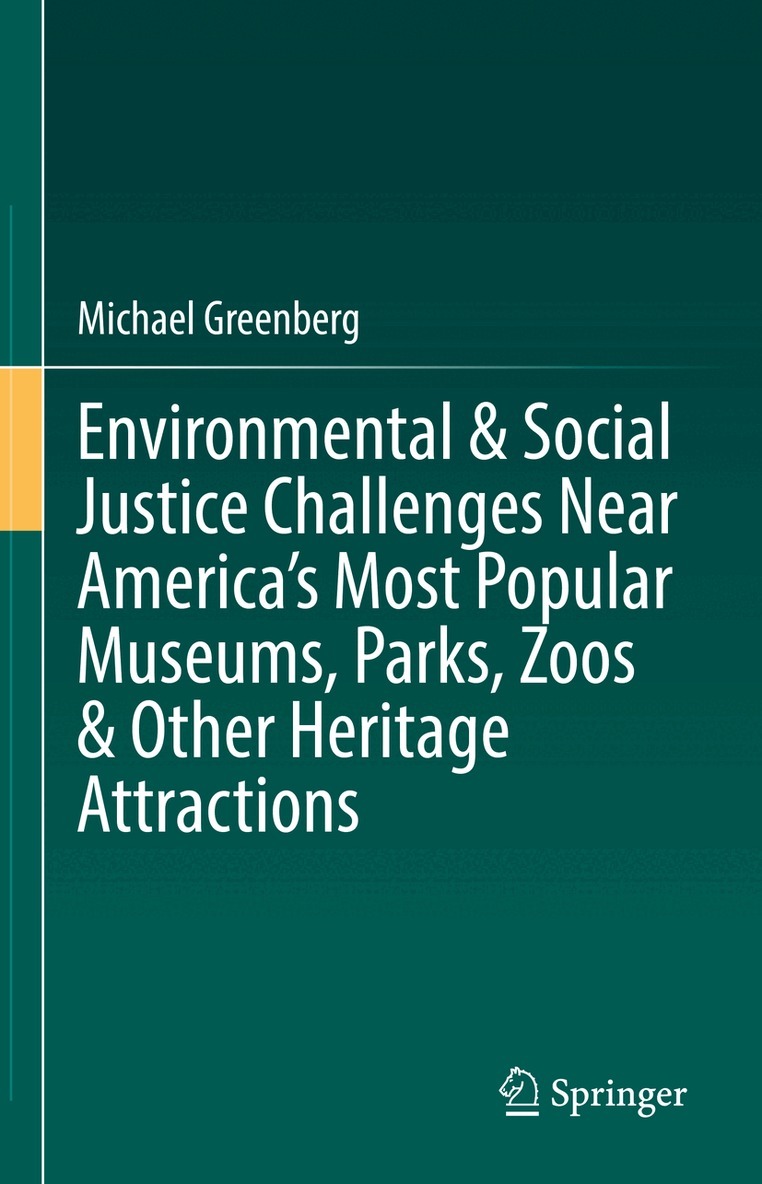
This book examines environmental and social justice challenges near America''s most popular heritage attractions. These include over 100 places that host national parks (e.g., Glacier, Yellowstone), zoos (e.g., Bronx, Henry Doorly), urban parks (e.g., Central Park, Fairmount), grand concourses (e.g., 5th Avenue, Massachusetts Avenue), and multiple museums and galleries (e.g., National Gallery, Getty). The book includes measurements of demographics, air quality/distance from hazards, health outcomes, and urban assets in the areas immediately surrounding these heritage sites and compares them with adjacent areas and their host cities or states. It considers the history of justice-related-issues near the sites and evaluates what owners, managers and communities are doing to address gentrification, displacement, the legacy of redlining and other challenges, such as the animal rights movement, climate change/sustainability, and tight budgets. The book examines what some host cities are doing about affordable housing and what some heritage sites have done in establishing constructive relationships with surrounding communities.
The book should have two primary audiences. One is the strong and growing social and environmental justice community that has increasingly been scrutinizing parks and other icons for evidence of injustice. This book will interest them, even though all the results do not necessarily support their positions. The second audience is businesses, not-for-profits, and government agencies who manage parks, zoos, museums, and other attractions and need to understand what is happening near their sites and what they can do to be better neighbours.1 416 kr
Skickas inom 10-15 vardagar
169 kr
Skickas inom 3-6 vardagar
102 kr
Läs direkt efter köp
122 kr
Skickas inom 5-8 vardagar
1 789 kr
Tillfälligt slut
254 kr
Tillfälligt slut
219 kr
Tillfälligt slut
219 kr
Tillfälligt slut