Michael I. Handel - Böcker
Visar alla böcker från författaren Michael I. Handel. Handla med fri frakt och snabb leverans.
14 produkter
14 produkter
2 299 kr
Skickas inom 10-15 vardagar
Published in 1996, Clausewitz and Modern Strategy is a valuable contribution to the field of Military Strategic Studies. The magnum opus of Carl von Clausewitz, On War, is a work frequently quoted (usually the one famous quotation) but often superficially read. The essays in this book were presented at an international conference 'On Clausewitz' held at the US Army War College in Carlisle Barracks, Pennsylvania in April 1985.
2 369 kr
Skickas inom 10-15 vardagar
Investigating the logic, conduct and nature of war on the highest political and strategic levels, these essays put less emphasis on operational and tactical aspects. They look at the impact of technology on warfare, the political nature of war and the limits of rational analysis in studying war.
2 369 kr
Skickas inom 10-15 vardagar
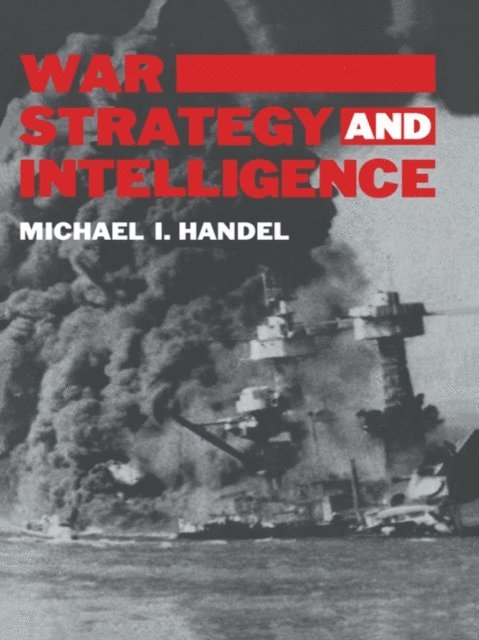
First Published in 1987. New information obtained from the declassification of Ultra intercepts and other Second World War documents as well as from recent scholarly research has credited Allied deception operations with an even more important contribution to winning the war than was previously supposed. Yet deception is only one factor in the achievement of victory; it cannot guarantee success. It must be fully understood and exploited by the highest levels of command. Most histories of deception operations during the Second World War have focused on those that were successful. Instances in which deception operations failed to achieve their objectives are discussed by John Campbell, who describes an early attempt to convince the Germans that the Allies intended to invade at Pas de Calais in the summer of 1943, and by Katherine Herbig, who gives the first detailed description of US deception operations in the Pacific. Klaus-Jurgen Moiier questions the actual effectiveness of deception operations against the Germans. He argues that many successes attributed to the Allies' use of deception were in fact achieved by independent considerations on the German side. Professor Moiier builds a particularly strong case in challenging the success of Operation Fortitude North, in which the Allies tried to divert German troops to Norway before invading Normandy. Although very little is known of Soviet deception operations on the Eastern Front, it must be remembered that they were conducted on a much larger scale than those of either the British in Europe or the Americans in the Pacific. Colonel David Glantz's account of Soviet deception and covert activities offers a version of the historiography of the war between the USSR and Germany which may explain some of the monumental German failures. Tom Cubbage not only contributes a synthesis of the primary and secondary sources available on the deception operations preceding Overlord, but also reviews the so-called Hesketh Report - Fortitude: A History of Strategic Deception in North Western Europe April 1943 to May 1945, Colonel Roger Hesketh's official report on Allied deception operations against the Germans in north-west Europe which was declassified in 1976, yet remains unpublished. It indicates that Professor Muller's suspicions that the Allies over-estimated the impact of Fortitude are unfounded. Edited and with a comprehensive introduction by Michael Handel, these important and original studies put the entire deception effort during the Second World War into a more balanced and accurate perspective.
2 230 kr
Skickas inom 10-15 vardagar
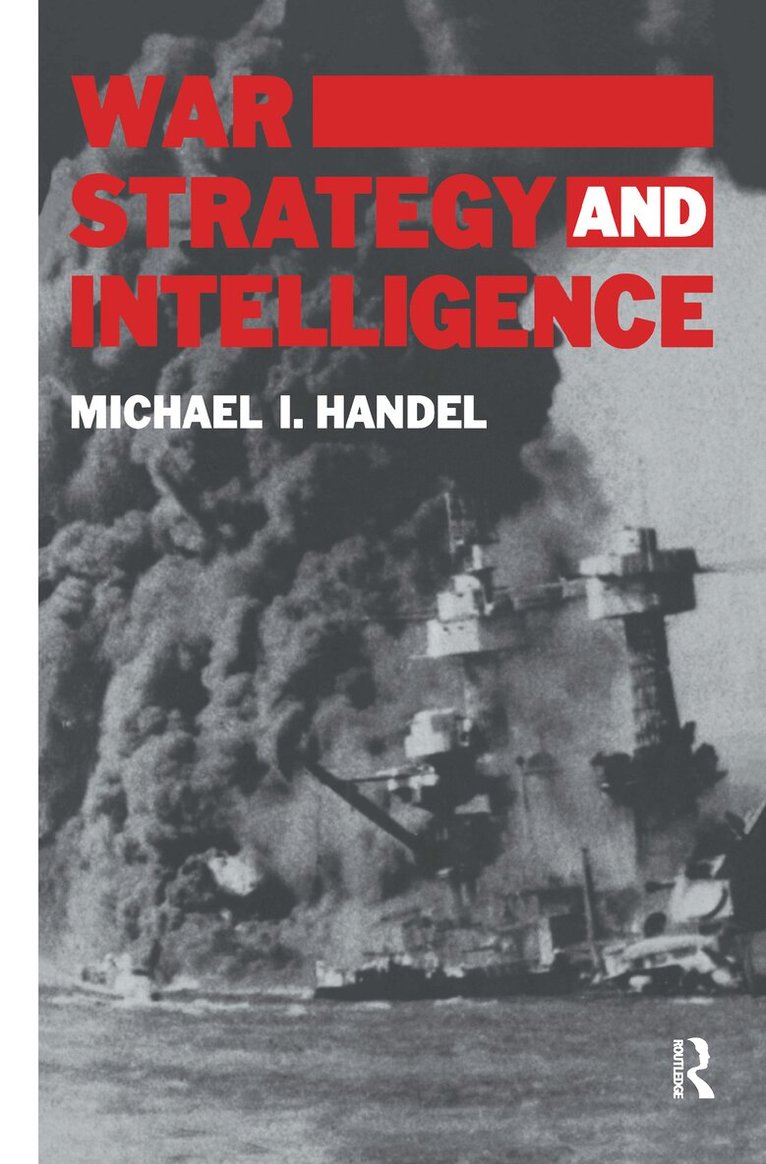
From a systematic point of view, all intelligence work can be studied on three levels: Acquisition, analysis, and acceptance. The author focuses on the third of these levels, studying the attitudes and behavioural patterns developed by leaders during their political careers, their willingness to consider information and ideas contrary to their own, their ability to admit mistakes and change course in the implementation of a failing policy and their capacity to cooperate.
1 429 kr
Tillfälligt slut
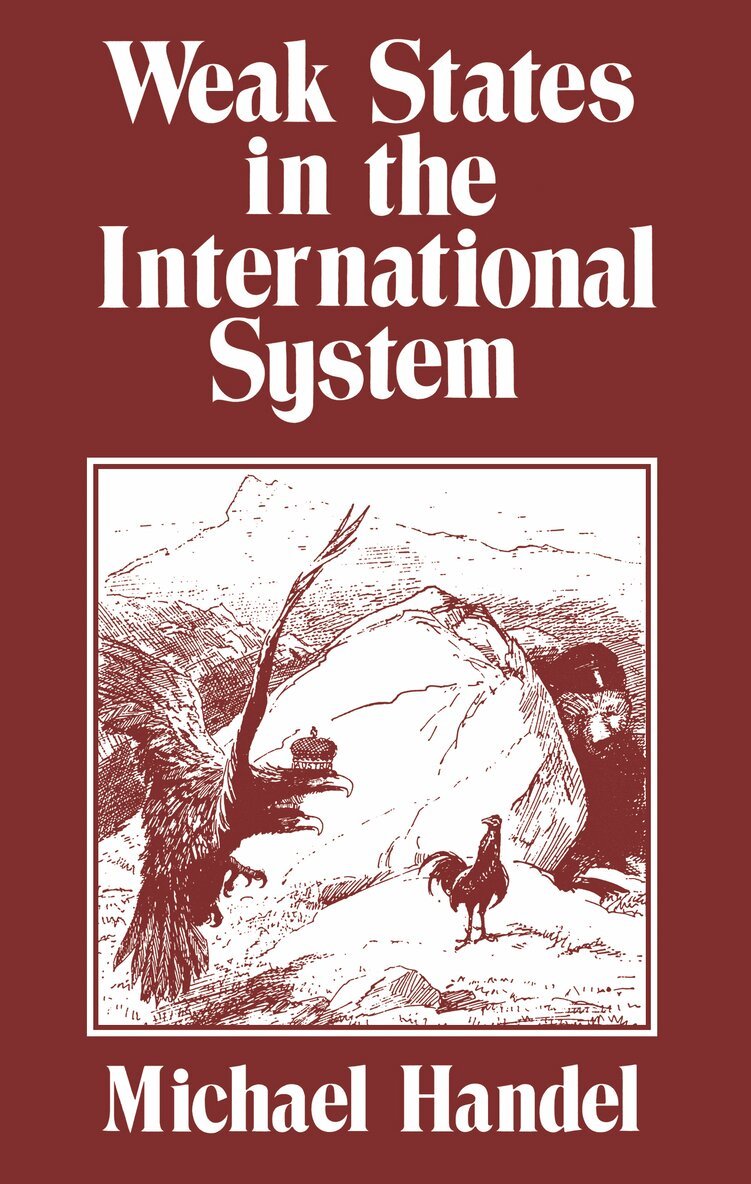
This work defines weak states and their strengths and weaknesses. It examines why they are weak and their position in different international systems as well as their economic positions.
694 kr
Skickas inom 10-15 vardagar
Published in 1996, Clausewitz and Modern Strategy is a valuable contribution to the field of Military Strategic Studies. The magnum opus of Carl von Clausewitz, On War, is a work frequently quoted (usually the one famous quotation) but often superficially read. The essays in this book were presented at an international conference 'On Clausewitz' held at the US Army War College in Carlisle Barracks, Pennsylvania in April 1985.
665 kr
Skickas inom 10-15 vardagar
First Published in 1987. New information obtained from the declassification of Ultra intercepts and other Second World War documents as well as from recent scholarly research has credited Allied deception operations with an even more important contribution to winning the war than was previously supposed. Yet deception is only one factor in the achievement of victory; it cannot guarantee success. It must be fully understood and exploited by the highest levels of command. Most histories of deception operations during the Second World War have focused on those that were successful. Instances in which deception operations failed to achieve their objectives are discussed by John Campbell, who describes an early attempt to convince the Germans that the Allies intended to invade at Pas de Calais in the summer of 1943, and by Katherine Herbig, who gives the first detailed description of US deception operations in the Pacific. Klaus-Jurgen Moiier questions the actual effectiveness of deception operations against the Germans. He argues that many successes attributed to the Allies' use of deception were in fact achieved by independent considerations on the German side. Professor Moiier builds a particularly strong case in challenging the success of Operation Fortitude North, in which the Allies tried to divert German troops to Norway before invading Normandy. Although very little is known of Soviet deception operations on the Eastern Front, it must be remembered that they were conducted on a much larger scale than those of either the British in Europe or the Americans in the Pacific. Colonel David Glantz's account of Soviet deception and covert activities offers a version of the historiography of the war between the USSR and Germany which may explain some of the monumental German failures. Tom Cubbage not only contributes a synthesis of the primary and secondary sources available on the deception operations preceding Overlord, but also reviews the so-called Hesketh Report - Fortitude: A History of Strategic Deception in North Western Europe April 1943 to May 1945, Colonel Roger Hesketh's official report on Allied deception operations against the Germans in north-west Europe which was declassified in 1976, yet remains unpublished. It indicates that Professor Muller's suspicions that the Allies over-estimated the impact of Fortitude are unfounded. Edited and with a comprehensive introduction by Michael Handel, these important and original studies put the entire deception effort during the Second World War into a more balanced and accurate perspective.
849 kr
Skickas inom 10-15 vardagar
From a systematic point of view, all intelligence work can be studied on three levels: Acquisition, analysis, and acceptance. The author focuses on the third of these levels, studying the attitudes and behavioural patterns developed by leaders during their political careers, their willingness to consider information and ideas contrary to their own, their ability to admit mistakes and change course in the implementation of a failing policy and their capacity to cooperate.
750 kr
Skickas inom 10-15 vardagar
Investigating the logic, conduct and nature of war on the highest political and strategic levels, these essays put less emphasis on operational and tactical aspects. They look at the impact of technology on warfare, the political nature of war and the limits of rational analysis in studying war.
810 kr
Skickas inom 10-15 vardagar
This work defines weak states and their strengths and weaknesses. It examines why they are weak and their position in different international systems as well as their economic positions.
3 272 kr
Skickas inom 10-15 vardagar
This is the first comprehensive study based on a detailed textual analysis of the classical works on war by Clausewitz, Sun Tzu, Mao Tse-tung, and to a lesser extent, Jomini and Machiavelli. Brushing stereotypes aside, the author takes a fresh look at what these strategic thinkers actually said—not what they are widely believed to have said. He finds that despite their apparent differences in terms of time, place, cultural background, and level of material/technological development, all had much more in common than previously supposed. In fact, the central conclusion of this book is that the logic of waging war and of strategic thinking is as universal and timeless as human nature itself.This third, revised and expanded edition includes five new chapters and some new charts and diagrams.
933 kr
Skickas inom 10-15 vardagar
This is the first comprehensive study based on a detailed textual analysis of the classical works on war by Clausewitz, Sun Tzu, Mao Tse-tung, and to a lesser extent, Jomini and Machiavelli. Brushing stereotypes aside, the author takes a fresh look at what these strategic thinkers actually said—not what they are widely believed to have said. He finds that despite their apparent differences in terms of time, place, cultural background, and level of material/technological development, all had much more in common than previously supposed. In fact, the central conclusion of this book is that the logic of waging war and of strategic thinking is as universal and timeless as human nature itself.This third, revised and expanded edition includes five new chapters and some new charts and diagrams.
Diplomacy of Surprise
Hitler, Nixon, Sadat, Harvard Studies in International Affairs, Number 44
Häftad, Engelska, 1984
1 006 kr
Skickas inom 10-15 vardagar
Today even strong democratic leaders do not hesitate to employ unorthodox means to achieve swift policy changes. The diplomacy of surprise is their most effective tool. This pioneering work explores the differences between diplomatic and military surprise, and examines the theory, practice, and international implications. Originally published in 1981 by the Harvard University Center for International Affairs.
295 kr
Tillfälligt slut