Michael Ihringer - Böcker
Visar alla böcker från författaren Michael Ihringer. Handla med fri frakt och snabb leverans.
5 produkter
5 produkter
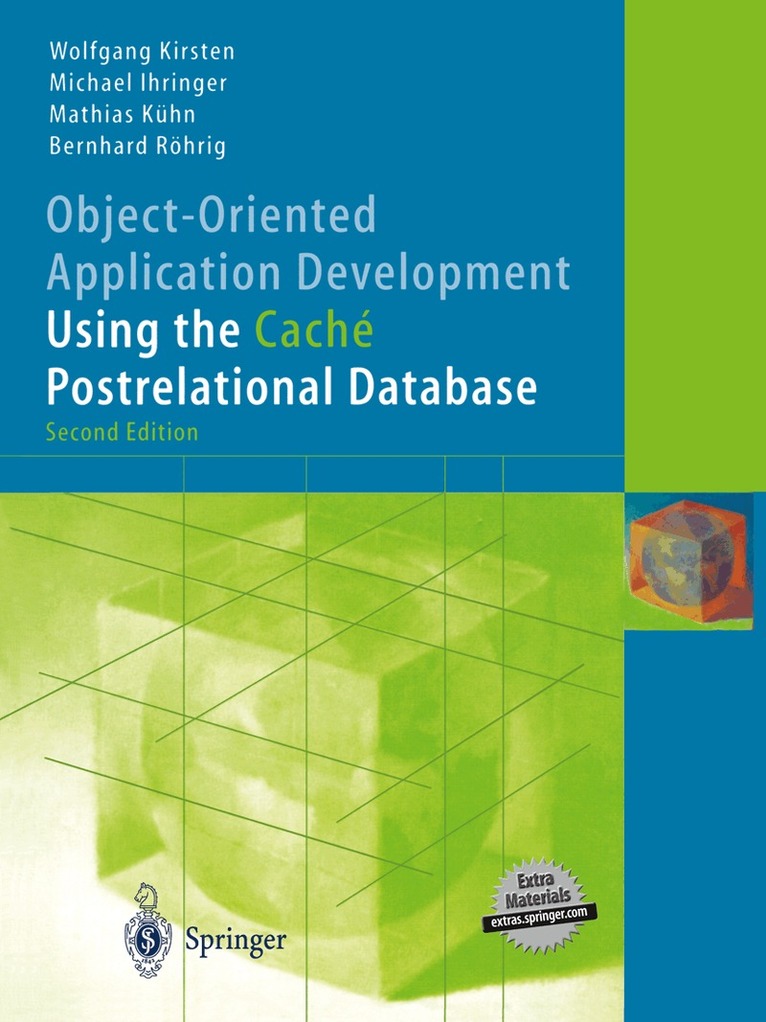
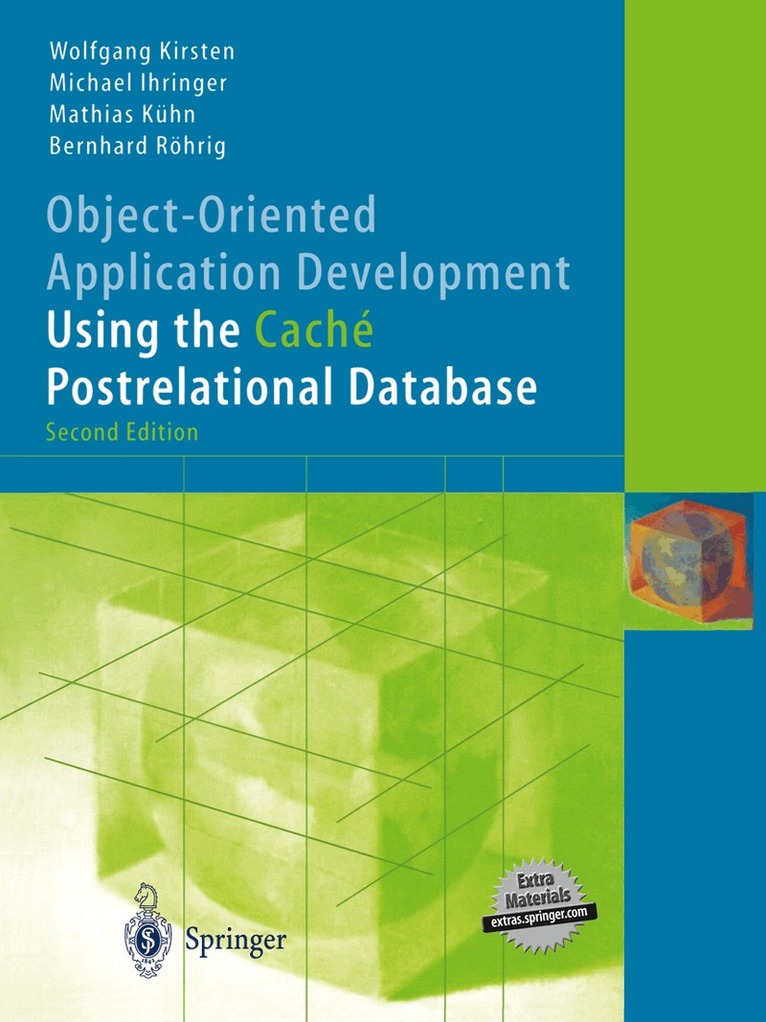
Object-Oriented Application Development Using the Caché Postrelational Database
Inbunden, Engelska, 2003
551 kr
Skickas inom 10-15 vardagar
Nowadays, newly developed software packages are often obsolete already at the time of their introduction. Object-oriented software development is a possible?if not the only?solution to this dilemma: applications are modeled as software objects that describe the properties and the behavior of real-world entities. Such objects are encapsulated, in that they hide?behind a publicly known interface?the complexity of their internal data structures and behaviors. This enables objects to be used in a wide range of program packages without needing to know the details of their internal implementation.Linking object-oriented modeled applications with a database places special demands on a database management system and development environment when the usual performance and semantics losses are to be avoided. This book provides a detailed description of the object model of the Cache postrelational database. This second, revised and expanded edition includes the many new features of Cache 5. There is a comprehensive description of the new Cache Studio with its improvements for developing and debugging applications as well as a whole new chapter about XML and SOAP based Web Services.The chapters about Java, ActiveX and the SQL manager have undergone a complete revision. The accompanying CD-ROM contains the complete associated software as well as a searchable PDF version of the book.System requirementsPC with Intel CPU (Pentium or better), Windows 95, 98, ME, NT 4.0 (SP4, 5 or 6), 2000 (SP2) or XP, 128 MB main memory, 100 MB free disk space, CD-ROM drive.
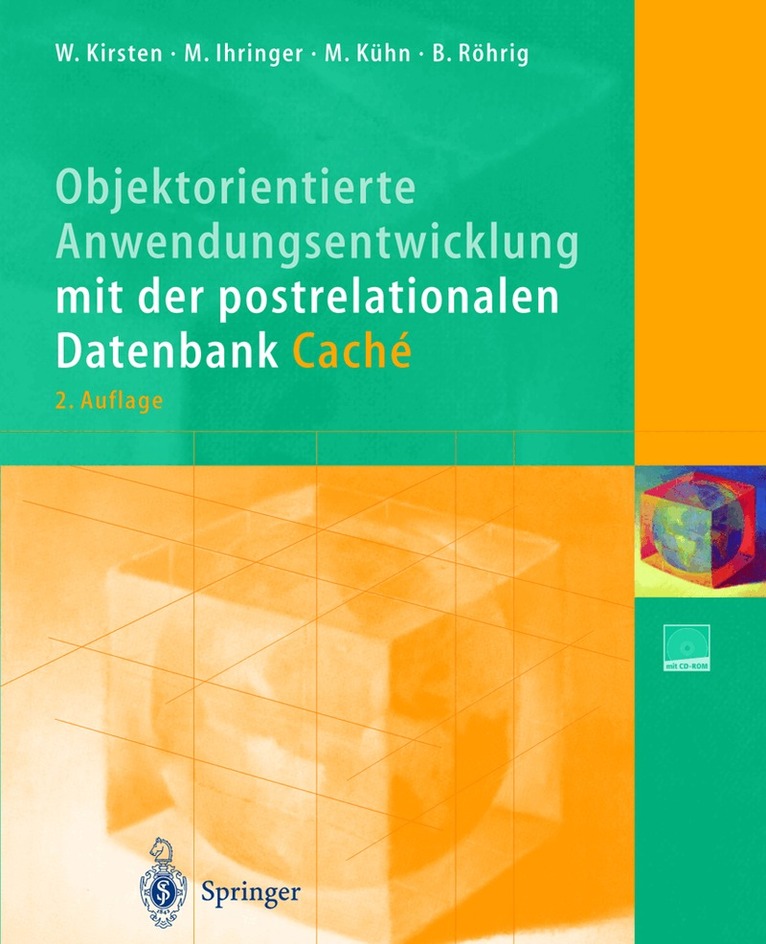
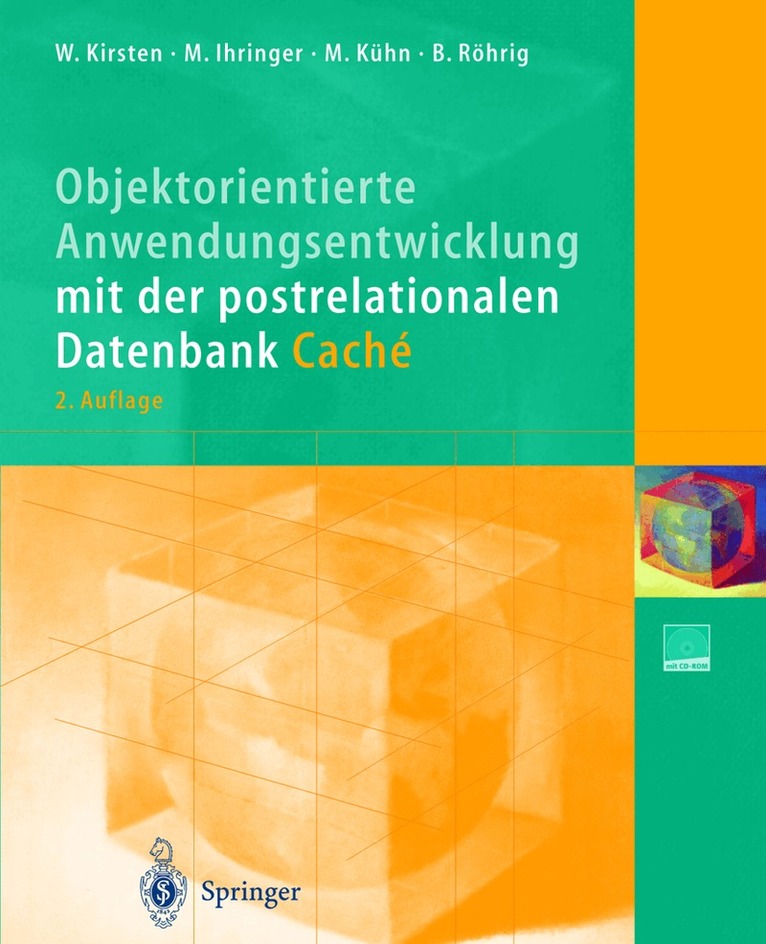
Objektorientierte Anwendungsentwicklung mit der postrelationalen Datenbank Caché
Inbunden, Tyska, 2003
1 024 kr
Skickas inom 10-15 vardagar
Neuentwickelte Software ist heute oft schon zum Zeitpunkt Ihrer Einführung veraltet. Einen Ausweg aus dieser Krise bietet der objektorientierte Ansatz: Anwendungen werden als Software-Objekte modelliert, die sowohl die Eigenschaften als auch das Verhalten von Objekten aus der realen Welt beschreiben. Solche Objekte sind gekapselt und verbergen die innere Komplexität hinter einer öffentlich bekannt gegebenen Schnittstelle. Dadurch können Objekte in den verschiedensten Programmpaketen verwendet werden, ohne dass die interne Realisierung bekannt sein muss. Die Verbindung objektorientiert modellierter Anwendungen mit einer Datenbank stellt besondere Anforderungen an DBMS und Entwicklungsumgebung, will man die üblichen Performance- und Semantikverluste vermeiden. Dieses Buch behandelt ausführlich das Objektmodell der postrelationalen Datenbank Caché. Zudem wird der Leser Schritt für Schritt bei der Entwicklung einer ersten postrelationalen Applikation begleitet. Die komplette Software hierzu einschließlich einer Single-User-Version von Caché 5 ist auf der beigefügten CD-ROM enthalten. Die vorliegende zweite, überarbeitete und erweiterte Auflage berücksichtigt die zahlreichen Neuerungen der Caché-Version 5. Die Beschreibungen der Java- und ActiveX-Anbindung und des SQL-Managers von Caché wurden grundlegend überarbeitet und erweitert. Neu hinzugekommen sind eine ausführliche Beschreibung des neuen Caché Studio mit seinen umfassenden Verbesserungen für die Anwendungsentwicklung sowie Kapitel über die Web-Entwicklung mit den Caché Server Pages (CSP), den Datenaustausch mit XML und die Entwicklung von SOAP-basierten WebServices.
Object-Oriented Application Development Using the Caché Postrelational Database
Häftad, Engelska, 2013
551 kr
Skickas inom 10-15 vardagar
Nowadays, newly developed software packages are often obsolete already at the time of their introduction. Object-oriented software development is a possible—if not the only—solution to this dilemma: applications are modeled as software objects that describe the properties and the behavior of real-world entities. Such objects are encapsulated, in that they hide—behind a publicly known interface—the complexity of their internal data structures and behaviors. This enables objects to be used in a wide range of program packages without needing to know the details of their internal implementation.Linking object-oriented modeled applications with a database places special demands on a database management system and development environment when the usual performance and semantics losses are to be avoided. This book provides a detailed description of the object model of the Caché postrelational database. This second, revised and expanded edition includes the many new features of Caché 5. There is a comprehensive description of the new Caché Studio with its improvements for developing and debugging applications as well as a whole new chapter about XML and SOAP based Web Services. The chapters about Java, ActiveX and the SQL manager have undergone a complete revision.
963 kr
Skickas inom 10-15 vardagar
Neuentwickelte Software ist heute oft schon zum Zeitpunkt Ihrer Einführung veraltet. Einen Ausweg aus dieser Krise bietet der objektorientierte Ansatz: Anwendungen werden als Software-Objekte modelliert, die sowohl die Eigenschaften als auch das Verhalten von Objekten aus der realen Welt beschreiben. Solche Objekte sind gekapselt und verbergen die innere Komplexität hinter einer öffentlich bekannt gegebenen Schnittstelle. Dadurch können Objekte in den verschiedensten Programmpaketen verwendet werden, ohne dass die interne Realisierung bekannt sein muss. Die Verbindung objektorientiert modellierter Anwendungen mit einer Datenbank stellt besondere Anforderungen an DBMS und Entwicklungsumgebung, will man die üblichen Performance- und Semantikverluste vermeiden. Dieses Buch behandelt ausführlich das Objektmodell der postrelationalen Datenbank Caché. Zudem wird der Leser Schritt für Schritt bei der Entwicklung einer ersten postrelationalen Applikation begleitet. Die komplette Software hierzu einschließlich einer Single-User-Version von Caché 5 ist auf der beigefügten CD-ROM enthalten. Die vorliegende zweite, überarbeitete und erweiterte Auflage berücksichtigt die zahlreichen Neuerungen der Caché-Version 5. Die Beschreibungen der Java- und ActiveX-Anbindung und des SQL-Managers von Caché wurden grundlegend überarbeitet und erweitert. Neu hinzugekommen sind eine ausführliche Beschreibung des neuen Caché Studio mit seinen umfassenden Verbesserungen für die Anwendungsentwicklung sowie Kapitel über die Web-Entwicklung mit den Caché Server Pages (CSP), den Datenaustausch mit XML und die Entwicklung von SOAP-basierten WebServices.
Object-Oriented Application Development Using the Caché Postrelational Database
Häftad, Engelska, 2012
551 kr
Skickas inom 10-15 vardagar
Nowadays, newly developed software packages are often obsolete already at the time of their introduction. Object-oriented software development is a possible—if not the only—solution to this dilemma: applications are modeled as software objects that describe the properties and the behavior of real-world entities. Such objects are encapsulated, in that they hide—behind a publicly known interface—the complexity of their internal data structures and behaviors. This enables objects to be used in a wide range of program packages without needing to know the details of their internal implementation.Linking object-oriented modeled applications with a database places special demands on a database management system and development environment when the usual performance and semantics losses are to be avoided. This book provides a detailed description of the object model of the Caché postrelational database. In addition, it guides the reader step-by-step through the development of postrelational applications. The accompanying CD-ROM contains the complete associated software: InterSystems Caché™ 4.0 Single-User© 1997-2000 InterSystems Corporation. All rights reserved. Microsoft® Visual Basic® 6 Working Model Edition© 1997-1999 Microsoft Corporation. All rights reserved. Microsoft® Internet Explorer® 5.5 Service Pack 1© 1995-2000 Microsoft Corporation. All rights reserved. The use of this licensed software is governed by an end user license agreement contained in the software.System requirementsPC with Intel CPU (Pentium or better), CD-ROM drive, Windows 95/98/Me or Windows NT/2000, 64 MB main memory (128 MB recommended), 100 MB free disk space.