Michael K. Connors - Böcker
Visar alla böcker från författaren Michael K. Connors. Handla med fri frakt och snabb leverans.
4 produkter
4 produkter
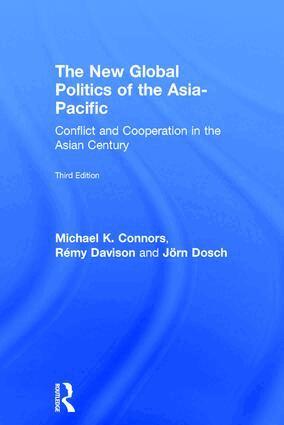
New Global Politics of the Asia-Pacific
Conflict and Cooperation in the Asian Century
Inbunden, Engelska, 2017
2 370 kr
Skickas inom 10-15 vardagar
Now in its new and fully updated third edition, The New Global Politics of the Asia Pacific continues to provide a compelling analysis of a region undergoing dramatic changes. Based on new research and offering fresh interpretation, this edition evaluates the prospects for continuing US dominance in the ‘Asian Century’. Whilst presenting evidence for a multifaceted ‘Beijing Strategy', which aims to counter the US by building an alternative regional order, it also explains Japan’s definitive departure from its limited military role. Providing an introductory guide for the main frameworks needed to understand the region, including realism, liberalism and critical theory, this new edition is reader-friendly, and offers sophisticated competing explanations. Key content includes: Intra-regional conflicts in the South China Sea and the Korean peninsula, The different responses within the Asia-Pacific to the globalization of Western ideas of democracy and political economy, The underappreciated success of the Association of Southeast Asian Nations in building a regional identity, The European Union’s soft power in the region.A highly topical account, which offers an overview of the main actors, institutions and contemporary issues in the Asia-Pacific, the book will be essential reading for undergraduate students of Asian Studies, International Politics, and anyone interested in the region.
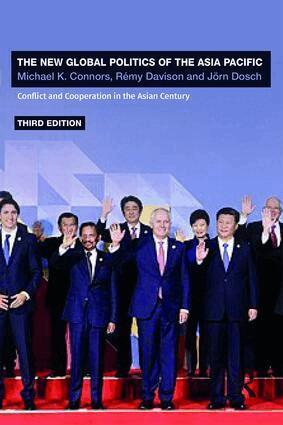
New Global Politics of the Asia-Pacific
Conflict and Cooperation in the Asian Century
Häftad, Engelska, 2017
628 kr
Skickas inom 10-15 vardagar
Now in its new and fully updated third edition, The New Global Politics of the Asia Pacific continues to provide a compelling analysis of a region undergoing dramatic changes. Based on new research and offering fresh interpretation, this edition evaluates the prospects for continuing US dominance in the ‘Asian Century’. Whilst presenting evidence for a multifaceted ‘Beijing Strategy', which aims to counter the US by building an alternative regional order, it also explains Japan’s definitive departure from its limited military role. Providing an introductory guide for the main frameworks needed to understand the region, including realism, liberalism and critical theory, this new edition is reader-friendly, and offers sophisticated competing explanations. Key content includes: Intra-regional conflicts in the South China Sea and the Korean peninsula, The different responses within the Asia-Pacific to the globalization of Western ideas of democracy and political economy, The underappreciated success of the Association of Southeast Asian Nations in building a regional identity, The European Union’s soft power in the region.A highly topical account, which offers an overview of the main actors, institutions and contemporary issues in the Asia-Pacific, the book will be essential reading for undergraduate students of Asian Studies, International Politics, and anyone interested in the region.
Del 10 - Asia Insights
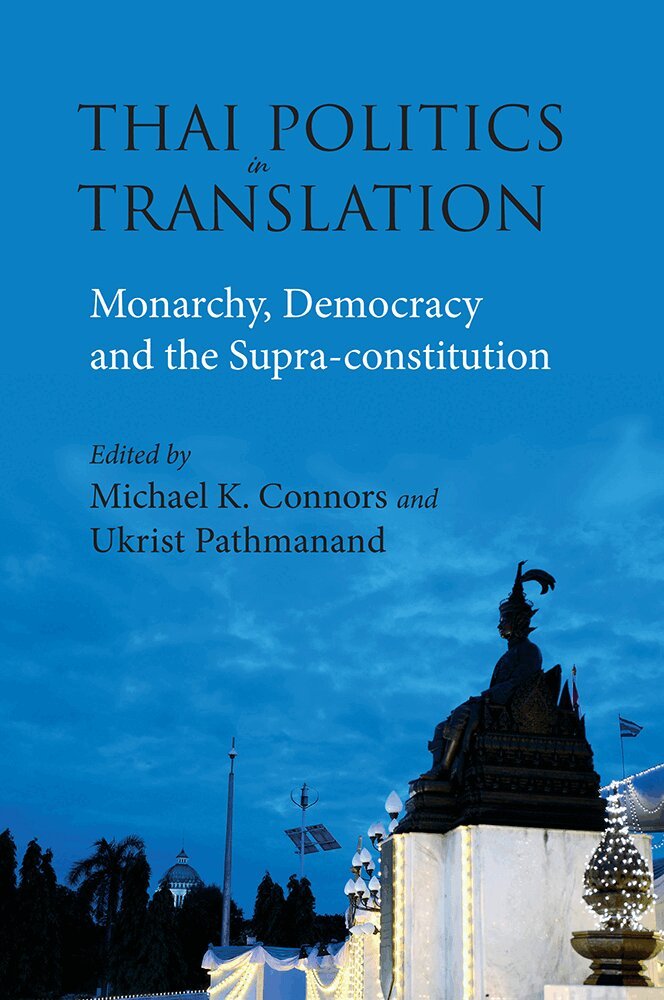
Thai Politics in Translation
Monarchy, Democracy and the Supra-constitution
Inbunden, Engelska, 2020
793 kr
Skickas inom 7-10 vardagar
Since Thailand's prolonged political crisis began with royalist mobilization against prime minister Thaksin Shinawatra in 2005, international observers have been treated to easy cliches about reactionary Thai elites. The chapters in this book invite readers to hold back quick judgement and instead engage with the conservative norms of sections of the middle class, the military, intellectuals and state ideologues. The opening chapter by the editors provides a historical overview of relevant themes and introduces the translated pieces. It also argues that the concept of a supra-constitution - first introduced by legal scholar Somchai Preechasilpakul in a brilliant lecture to the Pridi Banomyong Institute in 2007 - is a powerful frame for interpreting conservative Thai politics. Somchai's lecture, now translated here, explains that an unwritten supra-constitution sits above the many failed constitutions that litter Thai history. Like a guiding spirit it contains evolving norms on military and monarchical power which circumscribe democratic political contest. Other translations include chapters from Nakharin Metrairat's seminal Thoughts, Knowledge and Political Power in the Siamese Revolution (1990) and the unsurpassed Political Thought of the Thai Military (1990) by Chalermkiat Phi-nuan. Nakarin's account of vibrant traditionalist thought and Chalermkiat's interrogation of the cosmological underpinnings of military thought offer profound insights unavailable in English-language scholarship. On royalism, the translation of Kramol Thongthammachat's "National Ideology" illuminates how an important state ideologue co-developed a cross-class royalist ideology that emerged as a powerful force after the polarized 1970s. The Thai politician Pramuan Rajunaseri's sensational book Royal Powers, in part translated here, helped in 2005 to mobilize royalist sentiment against Thaksin. Work by Saichon Sattayanurak and Pasuk Phongpaichit, both national award-winning scholars, complete the collection. Pasuk's prescient contribution, originally written in English, warned about new forms of bureaucratic-political patronage emerging during the 1990s that limited civil society activism. Relatedly, Saichon explores how Sino-Thai middle-class dependency on royal power and the judiciary emerges from its historical experience of political insecurity.This is a must-have reference, one that enables a better understanding of the forces that have shaped Thailand's democracy struggles.
Del 10 - Asia Insights
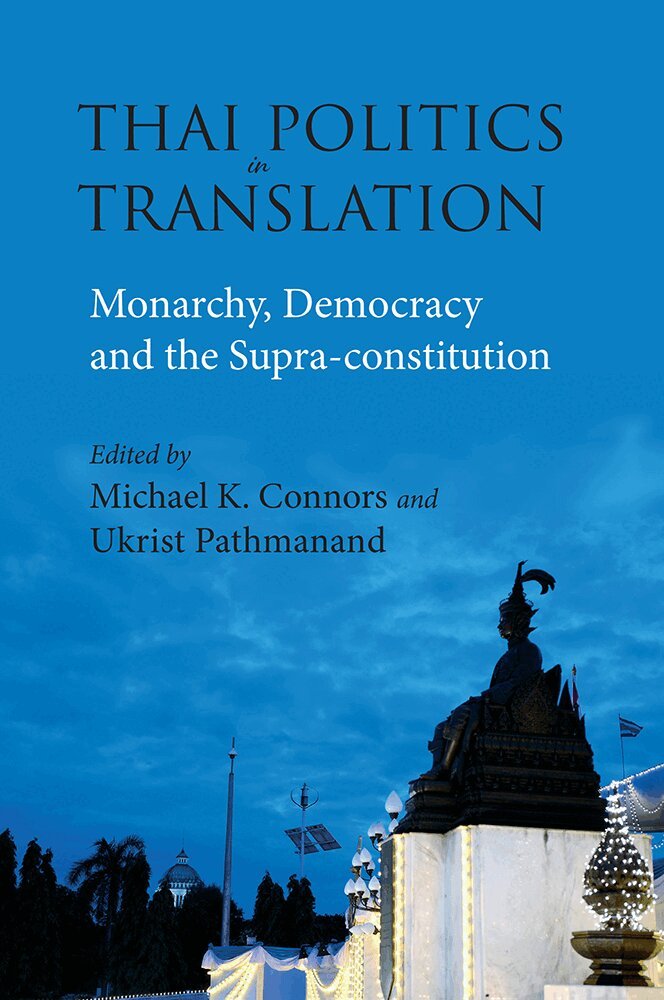
Thai Politics in Translation
Monarchy, Democracy and the Supra-constitution
Häftad, Engelska, 2021
246 kr
Skickas inom 11-20 vardagar
Since Thailand's prolonged political crisis began with royalist mobilization against prime minister Thaksin Shinawatra in 2005, international observers have been treated to easy cliches about reactionary Thai elites. The chapters in this book invite readers to hold back quick judgement and instead engage with the conservative norms of sections of the middle class, the military, intellectuals and state ideologues. The opening chapter by the editors provides a historical overview of relevant themes and introduces the translated pieces. It also argues that the concept of a supra-constitution - first introduced by legal scholar Somchai Preechasilpakul in a brilliant lecture to the Pridi Banomyong Institute in 2007 - is a powerful frame for interpreting conservative Thai politics. Somchai's lecture, now translated here, explains that an unwritten supra-constitution sits above the many failed constitutions that litter Thai history. Like a guiding spirit it contains evolving norms on military and monarchical power which circumscribe democratic political contest. Other translations include chapters from Nakharin Metrairat's seminal Thoughts, Knowledge and Political Power in the Siamese Revolution (1990) and the unsurpassed Political Thought of the Thai Military (1990) by Chalermkiat Phi-nuan. Nakarin's account of vibrant traditionalist thought and Chalermkiat's interrogation of the cosmological underpinnings of military thought offer profound insights unavailable in English-language scholarship. On royalism, the translation of Kramol Thongthammachat's "National Ideology" illuminates how an important state ideologue co-developed a cross-class royalist ideology that emerged as a powerful force after the polarized 1970s. The Thai politician Pramuan Rajunaseri's sensational book Royal Powers, in part translated here, helped in 2005 to mobilize royalist sentiment against Thaksin. Work by Saichon Sattayanurak and Pasuk Phongpaichit, both national award-winning scholars, complete the collection. Pasuk's prescient contribution, originally written in English, warned about new forms of bureaucratic-political patronage emerging during the 1990s that limited civil society activism. Relatedly, Saichon explores how Sino-Thai middle-class dependency on royal power and the judiciary emerges from its historical experience of political insecurity. This is a must-have reference, one that enables a better understanding of the forces that have shaped Thailand's democracy struggles.