Michael K. MacKenzie - Böcker
Visar alla böcker från författaren Michael K. MacKenzie. Handla med fri frakt och snabb leverans.
3 produkter
3 produkter
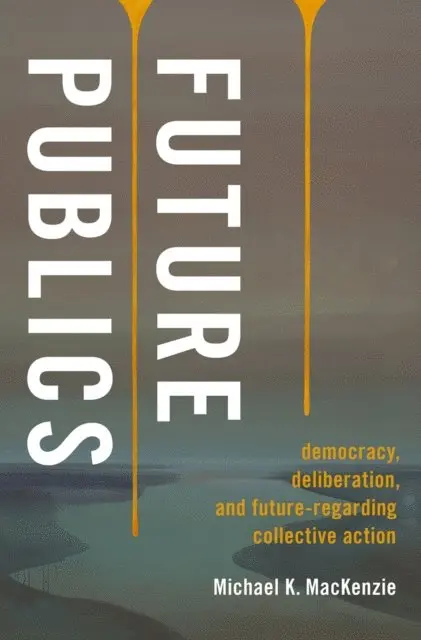
Future Publics
Democracy, Deliberation, and Future-Regarding Collective Action
Inbunden, Engelska, 2021
1 010 kr
Skickas inom 5-8 vardagar
Scholars have often claimed that democracies, whatever their virtues, are functionally short-sighted. The evidence is clear: we have been unable to manage many long-term issues including climate change, nuclear waste disposal, natural disaster preparedness, infrastructure maintenance, and budget deficits. If voters and influential actors, such as interest groups and corporations, have dominant short-term interests, it may be difficult for elected politicians to act in the long-term interests of society, even if they think that it would be the right thing to do. To solve long-term problems, do we need political systems that are less democratic, or even authoritarian? This idea, which Michael K. MacKenzie calls the "democratic myopia thesis," is a sort of conventional wisdom; it is an idea that scholars and pundits take for granted as a truth about democracy without subjecting it to adequate critical scrutiny. In Future Publics, MacKenzie challenges this conventional wisdom and articulates a deliberative, democratic theory of future-regarding collective action. Specifically, MacKenzie argues that each part of the democratic myopia problem can be addressed through democratic--rather than authoritarian--means. At a more fundamental level, once we recognize that democratic practices are world-making activities that empower us to make our shared worlds together, they should also be understood as future-making activities. Despite the short-term dynamics associated with electoral democracy, MacKenzie asserts that we need more inclusive and deliberative democracies if we are going to make shared futures that will work for us all.
1 886 kr
Skickas inom 3-6 vardagar
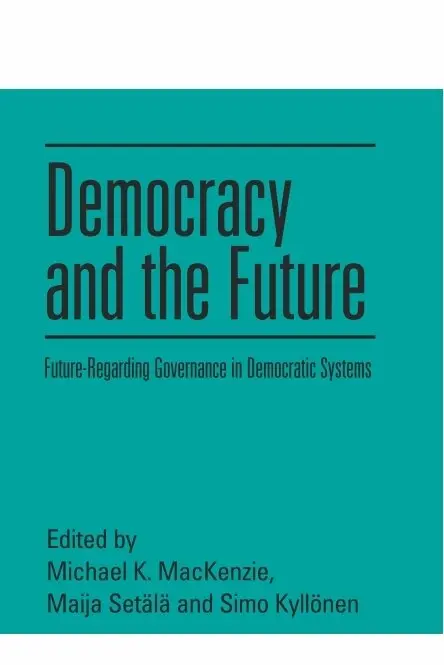
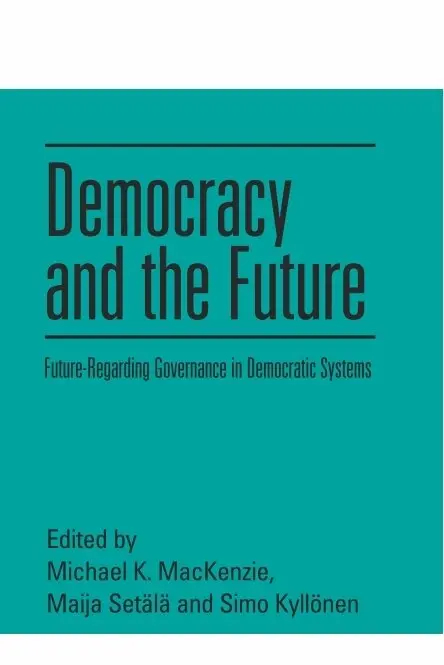
Explores the challenges and possibilities of long-term governance in democratic systemsOffers an in-depth analysis of the problem of short-termism in representative democracyProvides an overview of different aspects of future-regarding governanceProvides systematic examination of different designs for future-regarding institutions and their role in broader democratic systemIncludes in-depth case studies of FinlandThis book brings together political philosophers, democratic theorists, empirical political scientists and policy experts to examine how democratic systems might be designed so that the long-term consequences of our decisions are considered in policymaking processes. It examines these topics from many different perspectives it is interdisciplinary and globally oriented but it also explores Finland as an example of how future-regarding governance might be done.Finland has one of the most advanced governmental foresight systems in the world, including a unique parliamentary institution called the 'Committee for the Future', and it has enjoyed a stable, multiparty government for decades. The contributors identify tensions between the present and the future, as well as between reversibility and commitment, independence and politicisation, and trust and critique, which have to be navigated in order to achieve long-term, collective goals. The book concludes that elite-driven institutions should be complemented by robust institutions for public participation and deliberation in order to retain responsiveness while at the same time forging public commitments for future-regarding action.
288 kr
Skickas
This book brings together political philosophers, democratic theorists, empirical political scientists and policy experts to examine how democratic systems might be designed so that the long-term consequences of our decisions are considered in policymaking processes. It examines these topics from many different perspectives it is interdisciplinary and globally oriented but it also explores Finland as an example of how future-regarding governance might be done. Finland has one of the most advanced governmental foresight systems in the world, including a unique parliamentary institution called the 'Committee for the Future', and it has enjoyed a stable, multiparty government for decades. The contributors identify tensions between the present and the future, as well as between reversibility and commitment, independence and politicisation, and trust and critique, which have to be navigated in order to achieve long-term, collective goals. The book concludes that elite-driven institutions should be complemented by robust institutions for public participation and deliberation in order to retain responsiveness while at the same time forging public commitments for future-regarding action.