Michael Kreyling - Böcker
Visar alla böcker från författaren Michael Kreyling. Handla med fri frakt och snabb leverans.
5 produkter
5 produkter
274 kr
Skickas inom 3-6 vardagar
584 kr
Skickas inom 7-10 vardagar
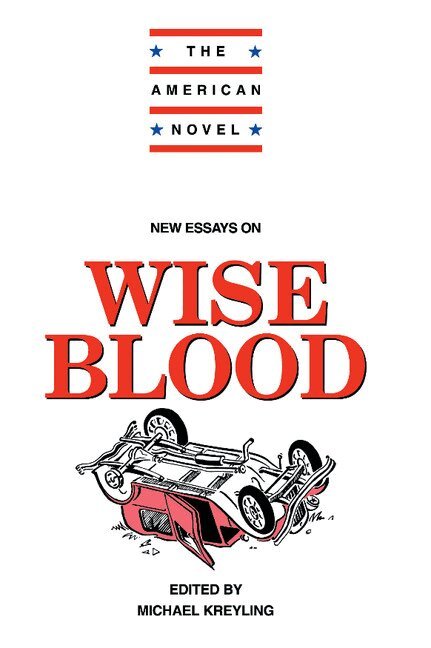
This 1995 volume of critical essays on Wise Blood, Flannery O'Connor's explosive first novel, not only questions our understanding of the 'Southern Gothic,' but launches an inquiry into the nature and history of O'Connor's critical reputation. Perceived as a 'classic' American writer despite the double setbacks of being a woman and a twentieth-century author, O'Connor continues to speak with striking clarity and disturbing vision to successive generations. Michael Kreyling's introduction explores the nature and history of O'Connor's literary reputation using quotations from her letters, works, and from critical reviews and articles covering the history of her presence in the canon. Robert Brinkmeyer Jr, who has written on O'Connor from a more or less traditional theological view in the past, writes a re-evaluative essay from that point of view. Patricia Yaeger's feminist/psychoanalytical essay explores the construction of the narrative voice in Wise Blood. James Mellard links O'Connor and Lacan, exploring territory that O'Connor herself found dangerous and irresistible: psychology and psychoanalysis. Jon Lance Bacon places O'Connor in the milieu of her times, American popular culture of the 1950s.
370 kr
Skickas inom 7-10 vardagar
This 1995 volume of critical essays on Wise Blood, Flannery O'Connor's explosive first novel, not only questions our understanding of the 'Southern Gothic,' but launches an inquiry into the nature and history of O'Connor's critical reputation. Perceived as a 'classic' American writer despite the double setbacks of being a woman and a twentieth-century author, O'Connor continues to speak with striking clarity and disturbing vision to successive generations. Michael Kreyling's introduction explores the nature and history of O'Connor's literary reputation using quotations from her letters, works, and from critical reviews and articles covering the history of her presence in the canon. Robert Brinkmeyer Jr, who has written on O'Connor from a more or less traditional theological view in the past, writes a re-evaluative essay from that point of view. Patricia Yaeger's feminist/psychoanalytical essay explores the construction of the narrative voice in Wise Blood. James Mellard links O'Connor and Lacan, exploring territory that O'Connor herself found dangerous and irresistible: psychology and psychoanalysis. Jon Lance Bacon places O'Connor in the milieu of her times, American popular culture of the 1950s.
420 kr
Skickas inom 10-15 vardagar
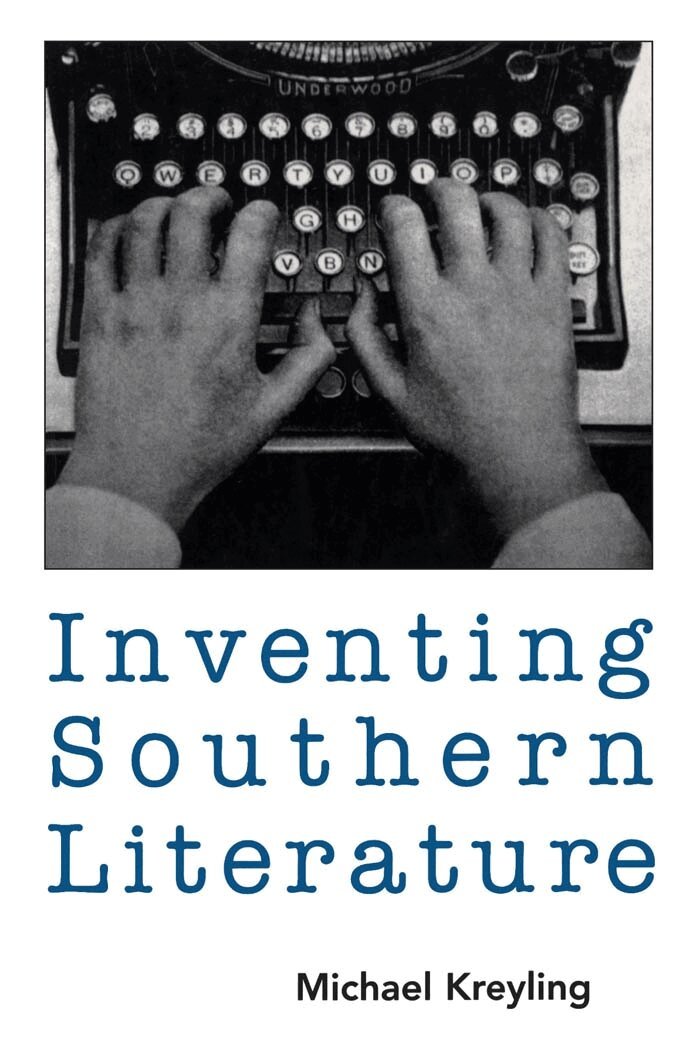
I take...an outward route, arguing that the Agrarian project was and must be seen as a willed campaign on the part of one elite to establish and control 'the South' in a period of intense cultural maneuvering. The principal organizers of I'll Take My Stand knew full well there were other 'Souths' than the one they touted; they deliberately presented a fabricated South as the one and only real thing."" In Inventing Southern Literature Michael Kreyling casts a penetrating ray upon the traditional canon of southern literature and questions the modes by which it was created. He finds that it was, indeed, an invention rather than a creation. In the 1930s the foundations were laid by the Fugitive-Agrarian group, a band of poet-critics that wished not only to design but also to control the southern cultural entity in a conservative political context. From their heyday to the present, Kreyling investigates the historical conditions under which literary and cultural critics have invented ""the South"" and how they have chosen its representations. Through his study of these choices, Kreyling argues that interested groups have shaped meanings that preserve ""a South"" as ""the South."" As the Fugitive-Agrarians molded the region according to their definition in I'll Take My Stand, they professed to have developed a critical method that disavowed any cultural or political intent or content, a claim that Kreyling disproves. He shows that their torch was taken by Richard Weaver on the Right and Louis D. Rubin, Jr., on the Center-Left and that both critics tried to preserve the Fugitive-Agrarian credo despite the severe stresses imposed during the era of desegregation. As the southern literary paradigm has been attacked and defended, certain issues have remained in the forefront. Kreyling takes on three: reconciling the imperatives of race with the traditional definitions of the South;testing the ways white women writers of the South have negotiated space within or outside the paradigm; andanalyzing the critics' use and abuse of William Faulkner (the major figure of southern literature) as they have relied on his achievement to anchor the total project called Southern Literature. Michael Kreyling, a professor of English at Vanderbilt University, is the author of several books, including Eudora Welty's Achievement of Order and Author and Agent: Eudora Welty and Diarmuid Russell.
267 kr
Skickas inom 10-15 vardagar
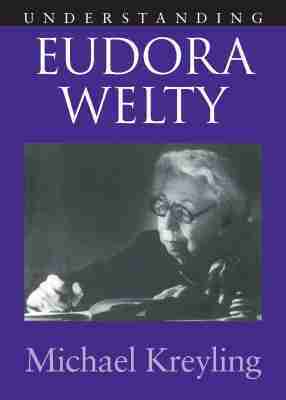
Provides close readings of Eudora Welty's novels and short stories and the memoir One Writer's Beginnings. Sifting through contemporary reviews and recent criticism, it argues that understanding the critical history of her canon is almost as important as understanding the works themselves.