Michael Kwet – författare
Visar alla böcker från författaren Michael Kwet. Handla med fri frakt och snabb leverans.
5 produkter
5 produkter
Häftad, Engelska, 2024
225 kr
Skickas inom 5-8 vardagar
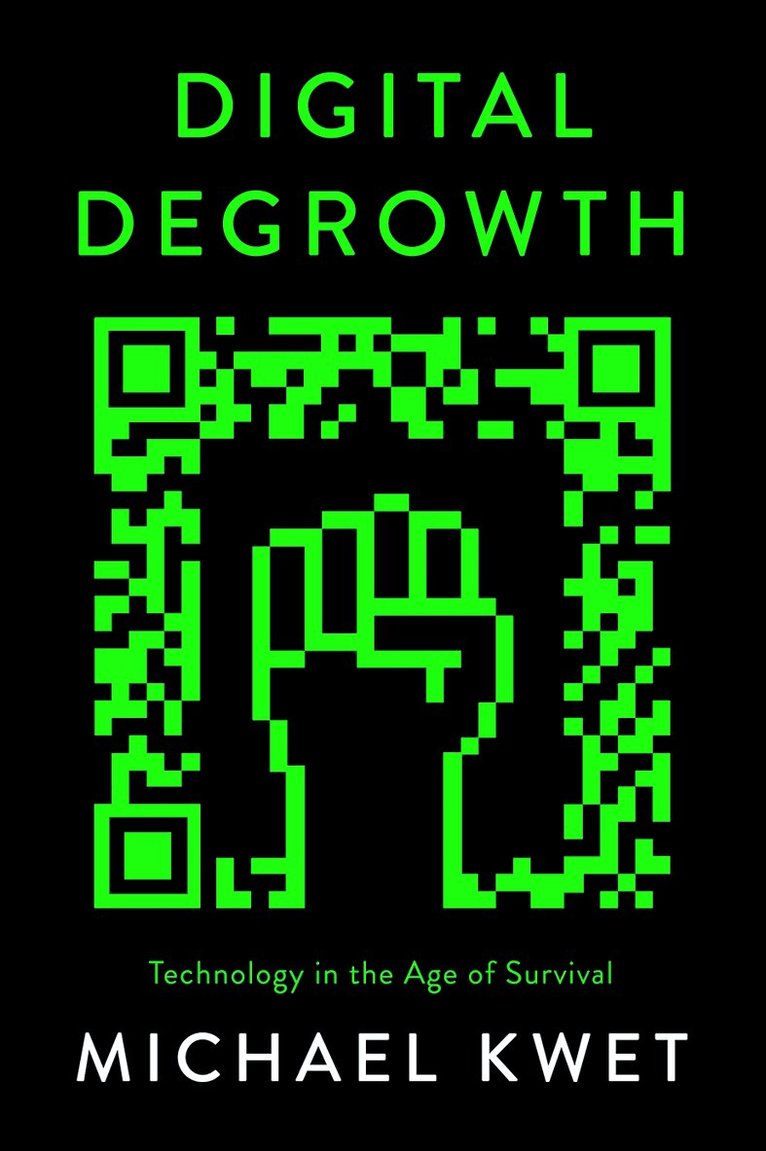
'A fascinating book that takes degrowth in new directions' - Jason Hickel, author of Less is More'A must-read for anyone who wants to know the brutal truth of digital colonialism driven by the American empire' - Kohei Saito, author of Slow DownThe world is racing toward an irreversible ecological catastrophe. Environmental science makes clear that humans must reduce total material resource use, requiring a radical redistribution of wealth within and between countries. Yet little attention has been paid to how the digital economy fits into this equation.Michael Kwet, a leading expert on digital colonialism, presents a new paradigm for the digital society. Merging the science of degrowth with a global analysis of the high-tech economy, he argues that digital capitalism and colonialism must be abolished quickly. In Digital Degrowth, Kwet maps out a path to a people’s tech future. He calls for direct action against Silicon Valley, US imperialism and power elites everywhere in order to realize a radically egalitarian digital society that fosters equality in harmony with nature.
Häftad, Engelska, 2025
315 kr
Skickas inom 7-10 vardagar
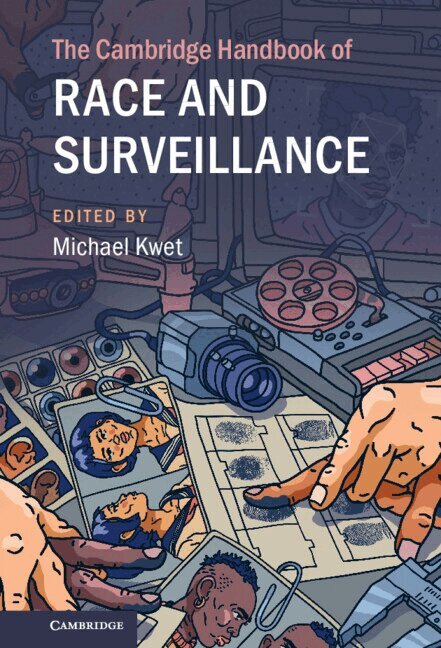
Featuring chapters authored by leading scholars in the fields of criminology, critical race studies, history, and more, The Cambridge Handbook of Race and Surveillance cuts across history and geography to provide a detailed examination of how race and surveillance intersect throughout space and time. The volume reviews surveillance technology from the days of colonial conquest to the digital era, focusing on countries such as the United States, Canada, the UK, South Africa, the Philippines, India, Brazil, and Palestine. Weaving together narratives on how technology and surveillance have developed over time to reinforce racial discrimination, the book delves into the often-overlooked origins of racial surveillance, from skin branding, cranial measurements, and fingerprinting to contemporary manifestations in big data, commercial surveillance, and predictive policing. Lucid, accessible, and expertly researched, this handbook provides a crucial investigation of issues spanning history and at the forefront of contemporary life.
E-bok
PDF, Engelska, 2023380 kr
Läs direkt efter köp
Inbunden, Engelska, 2023
1 616 kr
Skickas inom 7-10 vardagar
Featuring chapters authored by leading scholars in the fields of criminology, critical race studies, history, and more, The Cambridge Handbook of Race and Surveillance cuts across history and geography to provide a detailed examination of how race and surveillance intersect throughout space and time. The volume reviews surveillance technology from the days of colonial conquest to the digital era, focusing on countries such as the United States, Canada, the UK, South Africa, the Philippines, India, Brazil, and Palestine. Weaving together narratives on how technology and surveillance have developed over time to reinforce racial discrimination, the book delves into the often-overlooked origins of racial surveillance, from skin branding, cranial measurements, and fingerprinting to contemporary manifestations in big data, commercial surveillance, and predictive policing. Lucid, accessible, and expertly researched, this handbook provides a crucial investigation of issues spanning history and at the forefront of contemporary life.
E-bok
Engelska, 2025315 kr
Läs direkt efter köp
The Fourth Industrial Revolution (4IR) has been described as the next big leap in digital capitalism. Digital technologies such as artificial intelligence, quantum computing, 3D printing and robotisation, we are led to believe, will bring more progress, growth and development while also helping us to resolve the deep and multiple crises the world is in. Billions are being invested in these technologies, accompanied by sharp geopolitical rivalries to secure an edge in the control over them. Volume 8 in the Democratic Marxism series invites readers to think more deeply and critically about digital capitalism and its limits. While most governments in the world, including South Africa, have accepted a techno-nationalist narrative and have deliberated on the risks for the planet and humanity, the volume interrogates the effects and consequences of advances in artificial intelligence and heightened technological innovation and industrialisation on employment, democracy and the climate. Viewing the grand social engineering of 4IR through a Marxist lens, the volume contributors engage critically with the class project of digital monopoly capitalism and its powerful totalitarian tendencies. They question the dangerous technotopian imaginary shaping this digital techno-shift, the implications of algorithmic data extractivism, the securitisation of already weak market democracies, the social consequences of digital learning, lack of regulation, and the power dynamics in the labour process. Anchored in techno-realism, the interdisciplinary perspective captured in this volume puts forward alternatives for democratisation and a just transition to protect human and non-human life.