Michael Lerner – författare
Visar alla böcker från författaren Michael Lerner. Handla med fri frakt och snabb leverans.
7 produkter
7 produkter
Häftad, Engelska, 1996
339 kr
Skickas inom 3-6 vardagar
Inbunden, Engelska, 2019
214 kr
Skickas inom 5-8 vardagar
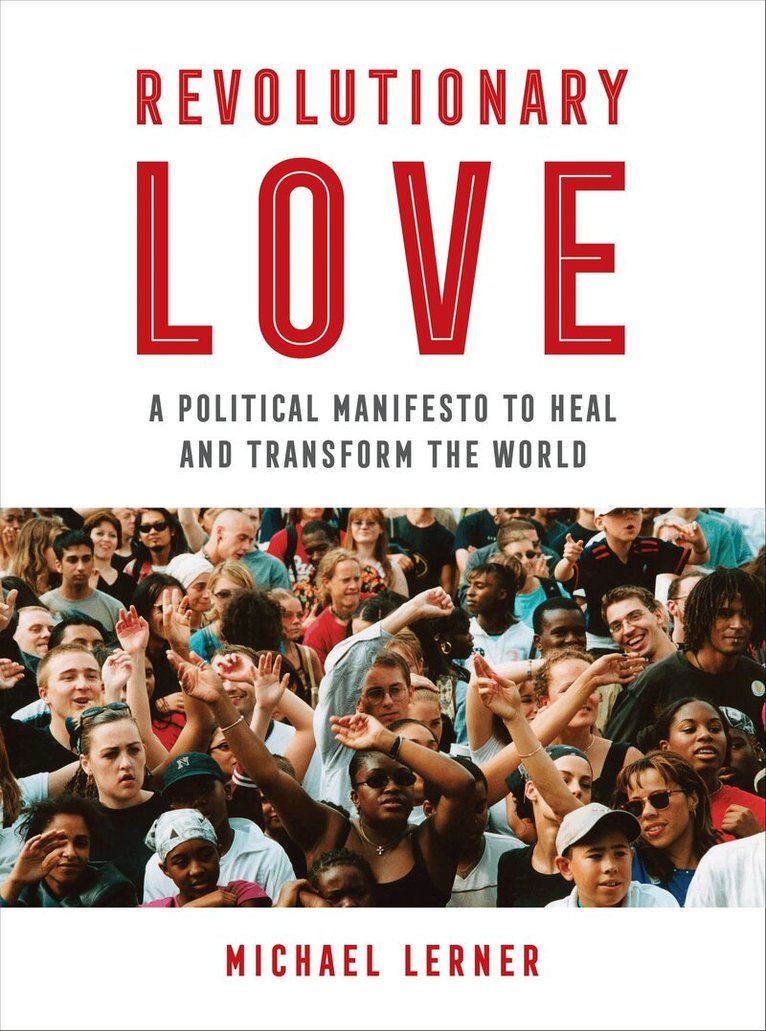
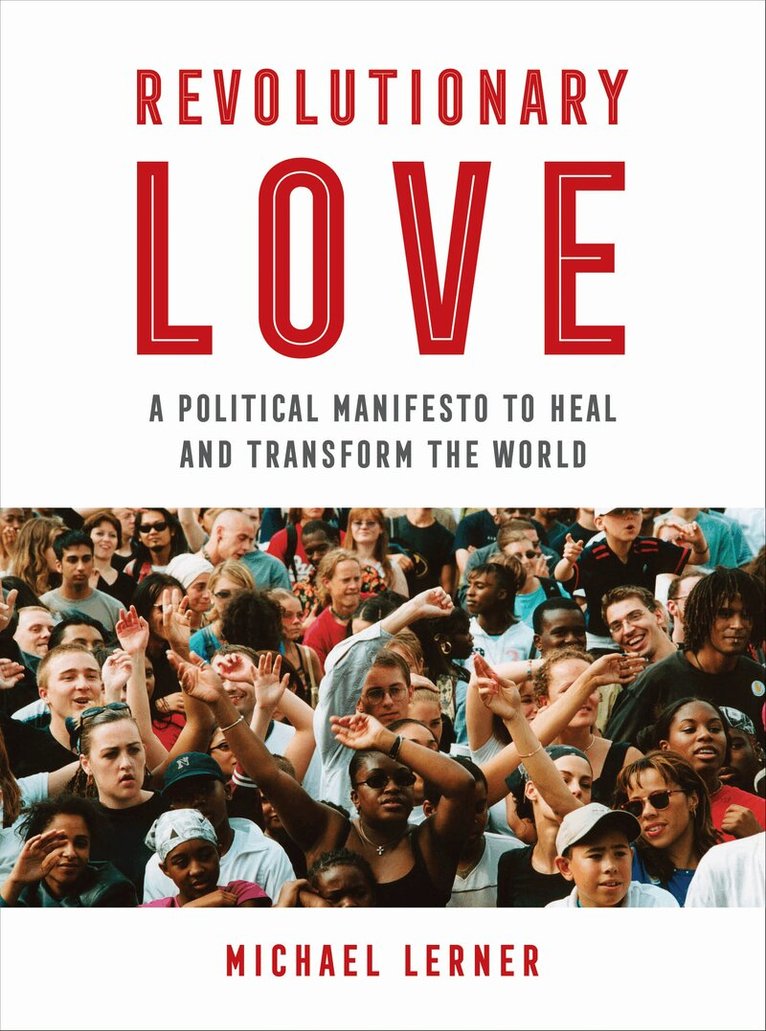
From social theorist and psychotherapist Rabbi Michael Lerner comes a strategy for a new socialism built on love, kindness, and compassion for one another. Revolutionary Love proposes a method to replace what Lerner terms the "capitalist globalization of selfishness" with a globalization of generosity, prophetic empathy, and environmental sanity.Lerner challenges liberal and progressive forces to move beyond often weak-kneed and visionless politics to build instead a movement that can reverse the environmental destructiveness and social injustice caused by the relentless pursuit of economic growth and profits. Revisiting the hidden injuries of class, Lerner shows that much of the suffering in our society—including most of its addictions and the growing embrace of right-wing nationalism and reactionary versions of fundamentalism—is driven by frustrated needs for community, love, respect, and connection to a higher purpose in life. Yet these needs are too often missing from liberal discourse. No matter that progressive programs are smartly constructed—they cannot be achieved unless they speak to the heart and address the pain so many people experience.Liberals and progressives need coherent alternatives to capitalism, but previous visions of socialism do not address the yearning for anything beyond material benefits. Inspired by Herbert Marcuse, Erich Fromm, and Carol Gilligan, Revolutionary Love offers a strategy to create the "Caring Society." Lerner details how a civilization infused with love could put an end to global poverty, homelessness, and hunger, while democratizing the economy, shifting to a twenty-eight-hour work week, and saving the life-support system of Earth. He asks that we develop the courage to stop listening to those who tell us that fundamental social transformation is "unrealistic."
Häftad, Engelska, 2022
214 kr
Skickas inom 5-8 vardagar
From social theorist and psychotherapist Rabbi Michael Lerner comes a strategy for a new socialism built on love, kindness, and compassion for one another. Revolutionary Love proposes a method to replace what Lerner terms the "capitalist globalization of selfishness" with a globalization of generosity, prophetic empathy, and environmental sanity.Lerner challenges liberal and progressive forces to move beyond often weak-kneed and visionless politics to build instead a movement that can reverse the environmental destructiveness and social injustice caused by the relentless pursuit of economic growth and profits. Revisiting the hidden injuries of class, Lerner shows that much of the suffering in our society—including most of its addictions and the growing embrace of right-wing nationalism and reactionary versions of fundamentalism—is driven by frustrated needs for community, love, respect, and connection to a higher purpose in life. Yet these needs are too often missing from liberal discourse. No matter that progressive programs are smartly constructed—they cannot be achieved unless they speak to the heart and address the pain so many people experience.Liberals and progressives need coherent alternatives to capitalism, but previous visions of socialism do not address the yearning for anything beyond material benefits. Inspired by Herbert Marcuse, Erich Fromm, and Carol Gilligan, Revolutionary Love offers a strategy to create the "Caring Society." Lerner details how a civilization infused with love could put an end to global poverty, homelessness, and hunger, while democratizing the economy, shifting to a twenty-eight-hour work week, and saving the life-support system of Earth. He asks that we develop the courage to stop listening to those who tell us that fundamental social transformation is "unrealistic."
Häftad, Engelska, 2001
237 kr
Skickas inom 5-8 vardagar
Jewish culture, identity, and spirituality through the eyes of the brightest and best authors Best Contemporary Jewish Writing is a treasure trove of short stories, poetry, and essays from such renowned contributors as Naomi Wolf, U.S. Senator Joseph Lieberman, William Safire, and Marge Piercy. Dive into this rich arrayof writing and you ll see that the Jewish experience reflects universal themes. The writers in this collection have something to say to Jews, not only to those struggling with their Jewish identity, and also to the wider world. Whether your main interest is in poetry or politics, spirituality or cultural identity, social healing or individual transformation, you ll find Best Contemporary Jewish Writing to be a collection that inspires, excites, and provokes. It also reflects the diversity of thought, opinion, and sensibility of today s best known Jewish thinkers and writers. This volume is the first in the much anticipated annual series "Best Jewish Writing."
Häftad, Engelska, 2001
314 kr
Skickas inom 5-8 vardagar
Jewish culture, identity, and spirituality through the eyes of the brightest and best authors Best Contemporary Jewish Writing is a treasure trove of short stories, poetry, and essays from such renowned contributors as Naomi Wolf, U.S. Senator Joseph Lieberman, William Safire, and Marge Piercy. Dive into this rich arrayof writing and you ll see that the Jewish experience reflects universal themes. The writers in this collection have something to say to Jews, not only to those struggling with their Jewish identity, and also to the wider world. Whether your main interest is in poetry or politics, spirituality or cultural identity, social healing or individual transformation, you ll find Best Contemporary Jewish Writing to be a collection that inspires, excites, and provokes. It also reflects the diversity of thought, opinion, and sensibility of today s best known Jewish thinkers and writers. This volume is the first in the much anticipated annual series "Best Jewish Writing."
E-bok
Engelska, 2011197 kr
Läs direkt efter köp
A major modern conundrum is how the Arab/Israel conflict remains unresolved and, seemingly, unresolvable. In this inspirational book, Rabbi Michael Lerner suggests that a change in consciousness is crucial. With clarity and honesty, he examines how the mutual demonization and discounting of each sides’ legitimate needs drive the debate, and he points to new ways of thinking that can lead to a solution. Lerner emphasizes that this new approach to the issue requires giving primacy to love, kindness, and generosity. It calls for challenging the master narratives in both Israel and Palestine as well as the false idea that “homeland security” can be achieved through military, political, economic, or media domination. Lerner makes the case that a lasting peace must prioritize helping people on all sides (including Europe and the U.S.) and that real security is best achieved through an ethos of caring and generosity toward “the other.” As many spiritual leaders have taught, problems like these cannot be solved at the same level at which they originated—one must seek higher ground, and that becomes a central task for anyone who wants a sustainable peace. Embracing Israel/Palestine is written for those looking for positive, practical solutions to this ongoing dilemma.From the Trade Paperback edition.
E-bok
PDF, Tyska, 2014166 kr
Läs direkt efter köp
»Antisemitismus als Orientierungsprinzip ist tatsächlich in der europäischen Gesellschaftsgeschichte verankert. Von Europa aus hat der dynamische Kapitalismus als einziges universales Gesellschaftsmodell seinen Siegeszug angetreten und mit ihm hat sich auch der Antisemitismus weltweit verbreitet. Die Produkte der Kulturindustrie, die global kommuniziert werden, treffen auf ein gesellschaftlich präfomiertes Alltagsbewusstsein, das für diese alltagsreligiösen Interpretationsmuster empfänglich ist. Man banalisiert in der Tat das Böse, wenn man es auf menschliche Aggression reduziert. Die Frage aber, wie Gewalt sozialisiert wird, ist eine Frage nach der Gesellschaft, die Auschwitz möglich machte und die antisemitische Vorstellungen auch nach Auschwitz immer wieder hervorbringt.«Detlev Claussen