Michael Lieb – författare
Visar alla böcker från författaren Michael Lieb. Handla med fri frakt och snabb leverans.
13 produkter
13 produkter
E-bok
PDF, Engelska, 2013553 kr
Läs direkt efter köp
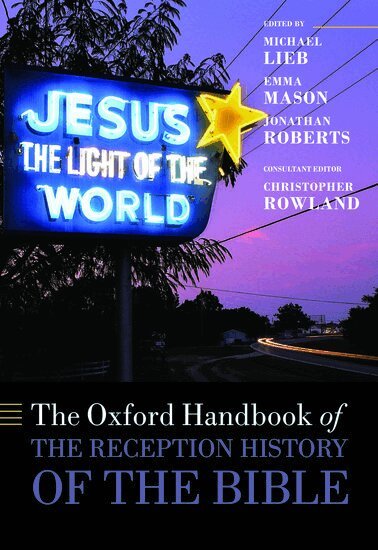
In recent decades, reception history has become an increasingly important and controversial topic of discussion in biblical studies. Rather than attempting to recover the original meaning of biblical texts, reception history focuses on exploring the history of interpretation. In doing so it locates the dominant historical-critical scholarly paradigm within the history of interpretation, rather than over and above it. At the same time, the breadth of material and hermeneutical issues that reception history engages with questions any narrow understanding of the history of the Bible and its effects on faith communities. The challenge that reception history faces is to explore tradition without either reducing its meaning to what faith communities think is important, or merely offering anthologies of interesting historical interpretations. This major new handbook addresses these matters by presenting reception history as an enterprise (not a method) that questions and understands tradition afresh. The Oxford Handbook of the Reception History of the Bible consciously allows for the interplay of the traditional and the new through a two-part structure. Part I comprises a set of essays surveying the outline, form, and content of twelve key biblical books that have been influential in the history of interpretation. Part II offers a series of in-depth case studies of the interpretation of particular key biblical passages or books with due regard for the specificity of their social, cultural or aesthetic context. These case studies span two millennia of interpretation by readers with widely differing perspectives. Some are at the level of a group response (from Gnostic readings of Genesis, to Post-Holocaust Jewish interpretations of Job); others examine individual approaches to texts (such as Augustine and Pelagius on Romans, or Gandhi on the Sermon on the Mount). Several chapters examine historical moments, such as the 1860 debate over Genesis and evolution, while others look to wider themes such as non-violence or millenarianism. Further chapters study in detail the works of popular figures who have used the Bible to provide inspiration for their creativity, from Dante and Handel, to Bob Dylan and Dan Brown.
E-bok
Engelska, 2013553 kr
Läs direkt efter köp
In recent decades, reception history has become an increasingly important and controversial topic of discussion in biblical studies. Rather than attempting to recover the original meaning of biblical texts, reception history focuses on exploring the history of interpretation. In doing so it locates the dominant historical-critical scholarly paradigm within the history of interpretation, rather than over and above it. At the same time, the breadth of material and hermeneutical issues that reception history engages with questions any narrow understanding of the history of the Bible and its effects on faith communities. The challenge that reception history faces is to explore tradition without either reducing its meaning to what faith communities think is important, or merely offering anthologies of interesting historical interpretations. This major new handbook addresses these matters by presenting reception history as an enterprise (not a method) that questions and understands tradition afresh. The Oxford Handbook of the Reception History of the Bible consciously allows for the interplay of the traditional and the new through a two-part structure. Part I comprises a set of essays surveying the outline, form, and content of twelve key biblical books that have been influential in the history of interpretation. Part II offers a series of in-depth case studies of the interpretation of particular key biblical passages or books with due regard for the specificity of their social, cultural or aesthetic context. These case studies span two millennia of interpretation by readers with widely differing perspectives. Some are at the level of a group response (from Gnostic readings of Genesis, to Post-Holocaust Jewish interpretations of Job); others examine individual approaches to texts (such as Augustine and Pelagius on Romans, or Gandhi on the Sermon on the Mount). Several chapters examine historical moments, such as the 1860 debate over Genesis and evolution, while others look to wider themes such as non-violence or millenarianism. Further chapters study in detail the works of popular figures who have used the Bible to provide inspiration for their creativity, from Dante and Handel, to Bob Dylan and Dan Brown.
Inbunden, Engelska, 2011
1 973 kr
Skickas inom 5-8 vardagar
In recent decades, reception history has become an increasingly important and controversial topic of discussion in biblical studies. Rather than attempting to recover the original meaning of biblical texts, reception history focuses on exploring the history of interpretation. In doing so it locates the dominant historical-critical scholarly paradigm within the history of interpretation, rather than over and above it. At the same time, the breadth of material and hermeneutical issues that reception history engages with questions any narrow understanding of the history of the Bible and its effects on faith communities.The challenge that reception history faces is to explore tradition without either reducing its meaning to what faith communities think is important, or merely offering anthologies of interesting historical interpretations. This major new handbook addresses these matters by presenting reception history as an enterprise (not a method) that questions and understands tradition afresh. The Oxford Handbook of the Reception History of the Bible consciously allows for the interplay of the traditional and the new through a two-part structure. Part I comprises a set of essays surveying the outline, form, and content of twelve key biblical books that have been influential in the history of interpretation. Part II offers a series of in-depth case studies of the interpretation of particular key biblical passages or books with due regard for the specificity of their social, cultural or aesthetic context. These case studies span two millennia of interpretation by readers with widely differing perspectives. Some are at the level of a group response (from Gnostic readings of Genesis, to Post-Holocaust Jewish interpretations of Job); others examine individual approaches to texts (such as Augustine and Pelagius on Romans, or Gandhi on the Sermon on the Mount). Several chapters examine historical moments, such as the 1860 debate over Genesis and evolution, while others look to wider themes such as non-violence or millenarianism. Further chapters study in detail the works of popular figures who have used the Bible to provide inspiration for their creativity, from Dante and Handel, to Bob Dylan and Dan Brown.
Häftad, Engelska, 2013
549 kr
Skickas inom 5-8 vardagar
In recent decades, reception history has become an increasingly important and controversial topic of discussion in biblical studies. Rather than attempting to recover the original meaning of biblical texts, reception history focuses on exploring the history of interpretation. In doing so it locates the dominant historical-critical scholarly paradigm within the history of interpretation, rather than over and above it. At the same time, the breadth of material and hermeneutical issues that reception history engages with questions any narrow understanding of the history of the Bible and its effects on faith communities.The challenge that reception history faces is to explore tradition without either reducing its meaning to what faith communities think is important, or merely offering anthologies of interesting historical interpretations. This major new handbook addresses these matters by presenting reception history as an enterprise (not a method) that questions and understands tradition afresh. The Oxford Handbook of the Reception History of the Bible consciously allows for the interplay of the traditional and the new through a two-part structure. Part I comprises a set of essays surveying the outline, form, and content of twelve key biblical books that have been influential in the history of interpretation. Part II offers a series of in-depth case studies of the interpretation of particular key biblical passages or books with due regard for the specificity of their social, cultural or aesthetic context. These case studies span two millennia of interpretation by readers with widely differing perspectives. Some are at the level of a group response (from Gnostic readings of Genesis, to Post-Holocaust Jewish interpretations of Job); others examine individual approaches to texts (such as Augustine and Pelagius on Romans, or Gandhi on the Sermon on the Mount). Several chapters examine historical moments, such as the 1860 debate over Genesis and evolution, while others look to wider themes such as non-violence or millenarianism. Further chapters study in detail the works of popular figures who have used the Bible to provide inspiration for their creativity, from Dante and Handel, to Bob Dylan and Dan Brown.
Häftad, Engelska, 2023
514 kr
Skickas inom 5-8 vardagar
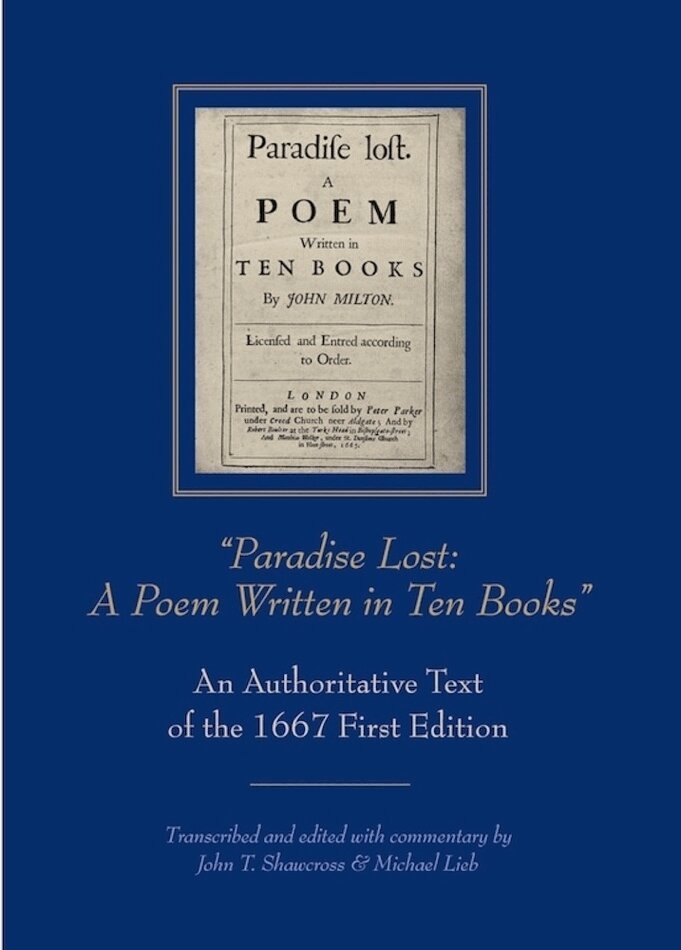
This authoritative text of the first edition of John Milton’s Paradise Lost transcribes the original 10-book poem, records its textual problems and numerous differences from the second edition, and discusses in critical commentary the importance of these issues.
Häftad, Engelska, 2023
451 kr
Skickas inom 5-8 vardagar
Appearing in tandem with the publication of an authoritative text of the first edition of John Milton’s Paradise Lost, these insightful essays by ten Miltonists establish the significant differences between the text, context, and effect of the poem’s first edition (1667) and those of the now-standard second edition. In bringing together essays by various hands, editors Michael Lieb and John T. Shawcross seek to map what may be termed a new frontier in Milton studies, one that acknowledges the importance of what Milton himself considered to be the work of a lifetime when he offered Paradise Lost to readers in 1667.While the scholars writing here do not claim that the first edition of Milton’s epic should be viewed as supplanting the second and later editions, they do seek to demonstrate the importance of coming to terms with the original ten-book edition both as a work with its own identity and value and as a source of fundamental insight into the nature of the editions that would follow in its wake. Paradise Lost cannot be fully understood without an awareness of the dynamic and ever-changing nature of the forces through which it made its first and subsequent appearances in the world at large.
Häftad, Engelska, 2011
774 kr
Skickas inom 10-15 vardagar
With full attention to the classical, medievel, and Renaissance traditions that constituted the milieu in which Milton wrote, Lieb explores the sacral basis of Milton's thought. He argues that Milton's responsiveness to the holy as the most fundamental of experiences caused his outlook to transcend immediate doctrinal concerns. Acccordingly, Lieb contends that the consecratory impulse not only underlined Milton's point of view but infused all aspects of his work.A UNC Press Enduring Edition -- UNC Press Enduring Editions use the latest in digital technology to make available again books from our distinguished backlist that were previously out of print. These editions are published unaltered from the original, and are presented in affordable paperback formats, bringing readers both historical and cultural value.
Häftad, Engelska, 1998
384 kr
Skickas inom 3-6 vardagar
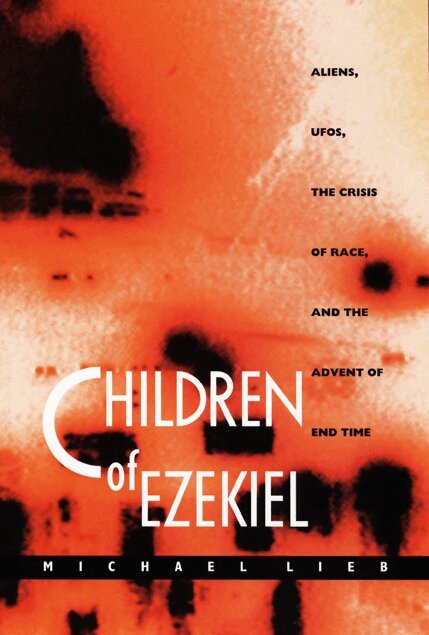
Are Milton’s Paradise Lost, Ronald Reagan’s “Star Wars” missile defense program, our culture’s fascination with UFOs and alien abductions, and Louis Farrakhan’s views on racial Armageddon somehow linked? In Children of Ezekiel Michael Lieb reveals the connections between these phenomena and the way culture has persistently related the divine to the technological. In a work of special interest at the approach of the millennium, Lieb traces these and other diverse cultural moments-all descended from the prophet Ezekiel’s vision of a fiery divine chariot in the sky-from antiquity to the present, across high and low culture, to reveal the pervasive impact of this visionary experience on the modern world.Beginning with the merkabah chariot literature of Hebrew and Gnostic mysticism, Lieb shows how religiously inspired people concerned with annihilating their heretical enemies seized on Ezekiel’s vision as revealing the technologically superior instrument of God’s righteous anger. He describes how many who seek to know the unknowable that is the power of God conceive it in technological terms-and how that power is associated with political aims and a heralding of the end of time. For Milton, Ezekiel’s chariot becomes the vehicle in which the Son of God does battle with the rebellious angels. In the modern age, it may take the form of a locomotive, tank, airplane, missile, or UFO. Technology itself is seen as a divine gift and an embodiment of God in the temporal world. As Lieb demonstrates, the impetus to produce modern technology arises not merely from the desire for profit or military might but also from religious-spiritual motives.Including discussions of conservative evangelical Christian movements, Reagan’s ballistic shooting gallery in the sky, and the Nation of Islam’s vision of the “mother plane” as the vehicle of retribution in the war against racial oppression, Children of Ezekiel will enthrall readers who have been captivated, either through religious belief or intellectual interests, by a common thread uniting millennial religious beliefs, racial conflict, and political and militaristic aspirations.
E-bok
PDF, Engelska, 1998553 kr
Läs direkt efter köp
Are Milton’s Paradise Lost, Ronald Reagan’s “Star Wars” missile defense program, our culture’s fascination with UFOs and alien abductions, and Louis Farrakhan’s views on racial Armageddon somehow linked? In Children of Ezekiel Michael Lieb reveals the connections between these phenomena and the way culture has persistently related the divine to the technological. In a work of special interest at the approach of the millennium, Lieb traces these and other diverse cultural moments—all descended from the prophet Ezekiel’s vision of a fiery divine chariot in the sky—from antiquity to the present, across high and low culture, to reveal the pervasive impact of this visionary experience on the modern world.Beginning with the merkabah chariot literature of Hebrew and Gnostic mysticism, Lieb shows how religiously inspired people concerned with annihilating their heretical enemies seized on Ezekiel’s vision as revealing the technologically superior instrument of God’s righteous anger. He describes how many who seek to know the unknowable that is the power of God conceive it in technological terms—and how that power is associated with political aims and a heralding of the end of time. For Milton, Ezekiel’s chariot becomes the vehicle in which the Son of God does battle with the rebellious angels. In the modern age, it may take the form of a locomotive, tank, airplane, missile, or UFO. Technology itself is seen as a divine gift and an embodiment of God in the temporal world. As Lieb demonstrates, the impetus to produce modern technology arises not merely from the desire for profit or military might but also from religious-spiritual motives.Including discussions of conservative evangelical Christian movements, Reagan’s ballistic shooting gallery in the sky, and the Nation of Islam’s vision of the “mother plane” as the vehicle of retribution in the war against racial oppression, Children of Ezekiel will enthrall readers who have been captivated, either through religious belief or intellectual interests, by a common thread uniting millennial religious beliefs, racial conflict, and political and militaristic aspirations.
E-bok
Engelska, 2017774 kr
Läs direkt efter köp
With full attention to the classical, medievel, and Renaissance traditions that constituted the milieu in which Milton wrote, Lieb explores the sacral basis of Milton''s thought. He argues that Milton''s responsiveness to the holy as the most fundamental of experiences caused his outlook to transcend immediate doctrinal concerns. Acccordingly, Lieb contends that the consecratory impulse not only underlined Milton''s point of view but infused all aspects of his work.Originally published in 1981.A UNC Press Enduring Edition -- UNC Press Enduring Editions use the latest in digital technology to make available again books from our distinguished backlist that were previously out of print. These editions are published unaltered from the original, and are presented in affordable paperback formats, bringing readers both historical and cultural value.
E-bok
PDF, Tyska, 2020145 kr
Läs direkt efter köp
Studienarbeit aus dem Jahr 2020 im Fachbereich Geschichte Europas - Mittelalter, Fruhe Neuzeit, Note: 2,0, Karl-Franzens-Universitat Graz, Sprache: Deutsch, Abstract: Diese Proseminararbeit versucht unter Bezugnahme auf zwei zeitgenossische Quellen sowie die wesentliche Sekundarliteratur zur Thematik die Motive der Wiener Gesera herauszuarbeiten. Folgende Forschungsfrage wird daher im Zuge dieser Arbeit thematisiert: Welches waren die Motive bzw. magebenden Faktoren fur die Wiener Gesera in den Jahren 1420 und 1421? Mit der zentralen Forschungsfrage einhergehend wird folgende Frage beantwortet: Welche Motive lassen sich anhand der Quelle sowie der Literatur, welche wiederum weitere Quellen berucksichtigt, erkennen? Grundsatzlich besteht Konsens daruber, dass die Wiener Gesera, vom Ablauf her, eine Geschichte der Gewalt gegen eine religiose Minderheit war. Uber die konkreten Motive sowie die ma gebenden Faktoren besteht in der Forschung allerdings nicht unbedingt Konsens. Die letztendliche Begrundung stellt heute noch eine offene Forschungsfrage dar, die jedoch schwer eindeutig zu beantworten ist. Es werden Kombinationen aus finanziellen, religiosen und politischen Motiven angenommen, wobei unterschiedliche Historiker-innen das ein oder anderer Motive starker betonen als andere. Einige neue Forschungsansatze vermuten ausschlie lich finanzielle Motive hinter der Wiener Gesera.
Häftad, Tyska, 2014
889 kr
Skickas inom 3-6 vardagar
E-bok
PDF, Engelska, 2017571 kr
Läs direkt efter köp
With full attention to the classical, medievel, and Renaissance traditions that constituted the milieu in which Milton wrote, Lieb explores the sacral basis of Milton''s thought. He argues that Milton''s responsiveness to the holy as the most fundamental of experiences caused his outlook to transcend immediate doctrinal concerns. Acccordingly, Lieb contends that the consecratory impulse not only underlined Milton''s point of view but infused all aspects of his work.Originally published in 1981.A UNC Press Enduring Edition -- UNC Press Enduring Editions use the latest in digital technology to make available again books from our distinguished backlist that were previously out of print. These editions are published unaltered from the original, and are presented in affordable paperback formats, bringing readers both historical and cultural value.