Michael McCahill – författare
2 069 kr
Skickas inom 10-15 vardagar
795 kr
Läs direkt efter köp
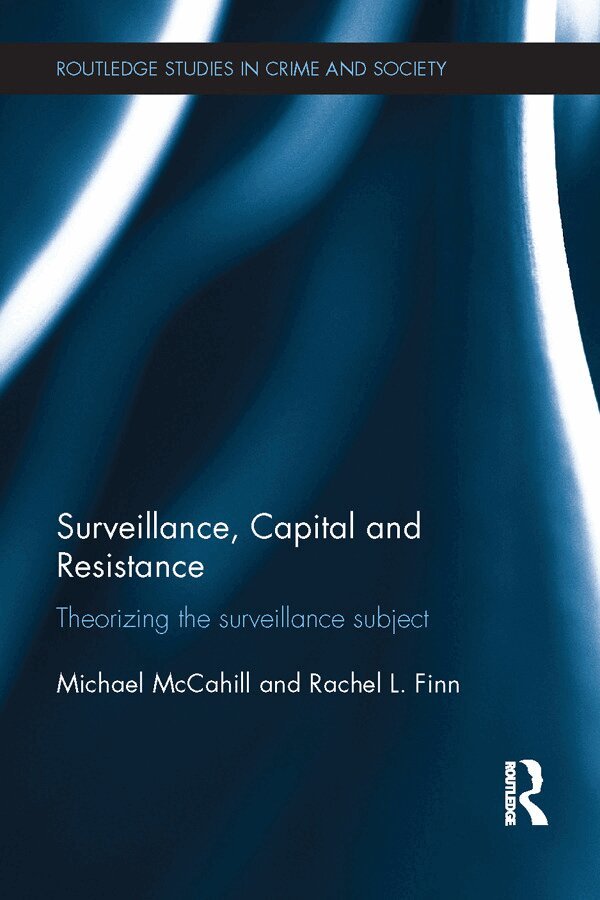
Surveillance, Capital and Resistance is a major contribution to current debates on the subjective experience of surveillance. Based on a large research project undertaken in a Northern City in the UK and focusing mainly on the use of surveillance in the context of policing and security, the book explores how a diverse range of social groups (‘school children’, ‘political protesters’, ‘offenders’, ‘unemployed people’, ‘migrants’, and ‘police officers’) experience and respond to being monitored by ‘new surveillance’ technologies such as CCTV surveillance cameras and computers.
The book interweaves surveillance theory with the work of Pierre Bourdieu to argue that the distribution of various forms of ‘capital’ – economic, social, cultural and symbolic – in any given ‘field’ operate as a range of goods or resources that structure the dynamics of surveillance practices and power relations, including the ability to contest surveillance. The term surveillance capital is introduced to refer to the tacit knowledge and everyday forms of cultural know-how that allow surveillance subjects to contest surveillance in a variety of local and specific settings.
The book is essential reading for anyone that might be interested in how people experience and respond to the new surveillance measures currently used in the crime control field. It will be key reading for students and academics interested in surveillance studies, childhood studies, media studies, criminal justice and migration studies.
802 kr
Läs direkt efter köp
Surveillance, Capital and Resistance is a major contribution to current debates on the subjective experience of surveillance. Based on a large research project undertaken in a Northern City in the UK and focusing mainly on the use of surveillance in the context of policing and security, the book explores how a diverse range of social groups (‘school children’, ‘political protesters’, ‘offenders’, ‘unemployed people’, ‘migrants’, and ‘police officers’) experience and respond to being monitored by ‘new surveillance’ technologies such as CCTV surveillance cameras and computers.
The book interweaves surveillance theory with the work of Pierre Bourdieu to argue that the distribution of various forms of ‘capital’ – economic, social, cultural and symbolic – in any given ‘field’ operate as a range of goods or resources that structure the dynamics of surveillance practices and power relations, including the ability to contest surveillance. The term surveillance capital is introduced to refer to the tacit knowledge and everyday forms of cultural know-how that allow surveillance subjects to contest surveillance in a variety of local and specific settings.
The book is essential reading for anyone that might be interested in how people experience and respond to the new surveillance measures currently used in the crime control field. It will be key reading for students and academics interested in surveillance studies, childhood studies, media studies, criminal justice and migration studies.
638 kr
Skickas inom 10-15 vardagar
611 kr
Läs direkt efter köp
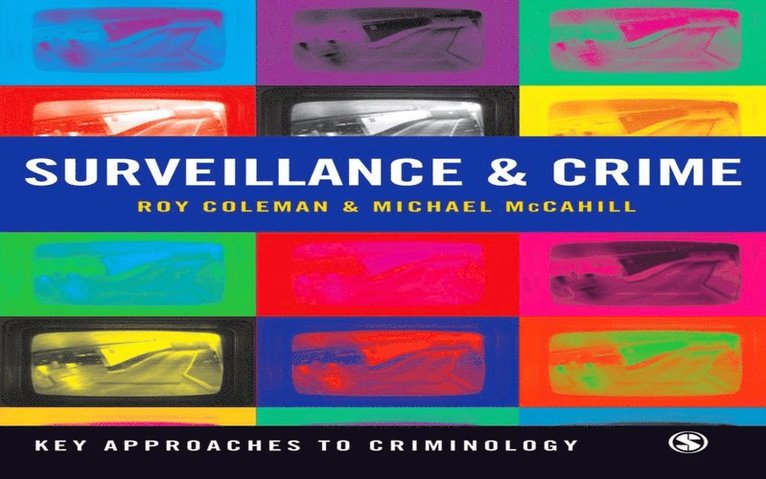
Surveillance has a long-standing relationship with crime and its identification, prevention, detection and punishment. With information on each citizen spanning up to 700 databases, and over 4 million CCTV cameras in the United Kingdom alone, this book explores how new technologies have given rise to new forms of monitoring and control.
Offering a comprehensive understanding of the relationship between surveillance, crime and criminal justice, this book explores:
the development of surveillance technologies within a broad historical context how new surveillance technologies are shaped by existing social relations, political practices, cultural traditions and organizational contexts the implications of the use of surveillance in responding to crime (including biometrics, DNA samples and electronic monitoring) how ′new′ surveillance technologies reinforce ′old′ social divisions - particularly along the lines of class, race, gender and age.The book draws upon theoretical debates from a range of disciplines to shed light on this topical subject. Engaging and authoritative, this is an important read for advanced students and academics in criminology, criminal justice, social policy and sociology.
The Key Approaches to Criminology series celebrates the removal of traditional barriers between disciplines and, specifically, reflects criminology’s interdisciplinary nature and focus. It brings together some of the leading scholars working at the intersections of criminology and related subjects. Each book in the series helps readers to make intellectual connections between criminology and other discourses, and to understand the importance of studying crime and criminal justice within the context of broader debates.
The series is intended to have appeal across the entire range of undergraduate and postgraduate studies and beyond, comprising books which offer introductions to the fields as well as advancing ideas and knowledge in their subject areas.