Michael Mcmillan – författare
306 kr
Skickas inom 5-8 vardagar
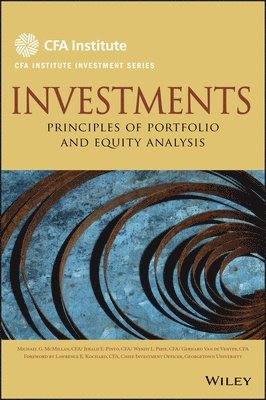
Investments
Principles of Portfolio and Equity Analysis
1 177 kr
Skickas inom 5-8 vardagar
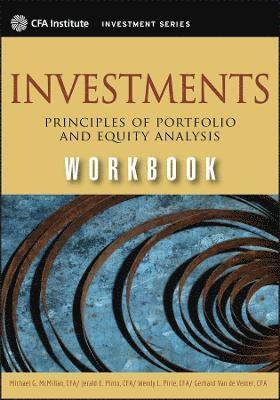
Investments Workbook
Principles of Portfolio and Equity Analysis
497 kr
Skickas inom 5-8 vardagar
739 kr
Läs direkt efter köp
735 kr
Skickas inom 7-10 vardagar
761 kr
Skickas inom 7-10 vardagar
626 kr
Skickas inom 7-10 vardagar
1 206 kr
Skickas inom 7-10 vardagar
1 716 kr
Skickas inom 3-6 vardagar
`It is an honour to be asked to write a foreword for this new book by Michael McMillan. I have been excited about this book ever since I read early drafts of its first two chapters some time ago at the birth of the project. At different times thereafter I have read other parts and my consistent impression has been that this is an author who has both a sophisticated academic understanding of the material and a great skill in communicating that widely. Those two qualities do not often go together!
The book is about change. After a first chapter in which the author introduces us to the person-centred concept of the person, chapter two is devoted to the change process within the client, including a very accessible description of Rogers' process model. Chapter three goes on to explore why and how change occurs in the human being, while chapter four introduces the most up-to-date person-centred theory in relation to the nature of the self concept and its changing process. Chapters five and six explore why change occurs in therapy and the conditions that facilitate that change, while chapter seven looks beyond the core conditions to focus on the particular quality of presence, begging the question as to whether this is a transpersonal/transcendental quality or an intense experiencing of the core conditions themselves.
This is an intensely modern book particularly in its postmodern emphasis. Rogers is sometimes characterised as coming from modernist times but he can also be seen as one of the early post modernists in his emphasis on process more than outcome and relationship more than personal striving. The modern nature of the book is also emphasised by a superb analysis of the relationship between focussing and person-centred therapy in Chapter five, linking also with Polanyi's notion of indwelling in this and other chapters. In suggesting that in both focussing and person-centred therapy the therapist is inviting the client to 'indwell' himself or herself, the author provides a framework for considering many modern perceptions of the approach including notions such as 'presence' and ' relational depth'. Also, the link with focussing is modern in the sense that the present World Association for the approach covers a fairly broad family including traditional person-centred therapists, experiential therapists, focussing-oriented therapists and process-guiding therapists. Important in this development is the kind of dialogue encouraged by the present book' - Dave Mearns, Strathclyde University
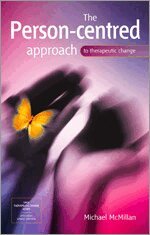
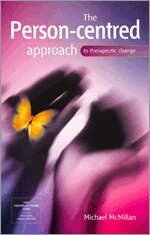
The belief that change occurs during the therapeutic process is central to all counselling and psychotherapy. The Person-Centred Approach to Therapeutic Change examines how change can be facilitated by the counsellor offering empathy, unconditional positive regard and congruence.
The Person-Centred Approach to Therapeutic Change outlines the main theoretical cornerstones of the person-centred approach and then, applying these, describes why change occurs as a result of a person-centred therapeutic encounter. The author explores the counselling relationship as an environment in which clients can open themselves up to experiences they have previously found difficult to acknowledge and to move forward.
Integral to the person-centred approach is Carl Rogers' radical view that change should be seen as an ongoing process rather than an alteration from one fixed state to another. In Rogers' view psychological health is best achieved by the person who is able to remain in a state of continual change. Such a person is open to all experiences and is therefore able to assimilate and adapt to new experiences, whether 'good' or 'bad'.
By focusing explicitly on how change is theorized and facilitated in counselling, this book goes to the heart of person-centred theory and practice, making it essential reading for trainees and practitioners alike.
224 kr
Skickas inom 5-8 vardagar
234 kr
Skickas inom 3-6 vardagar
298 kr
Skickas inom 3-6 vardagar
991 kr
Läs direkt efter köp
In a world of specialization, no other profession likely requires such broad, yet in-depth knowledge than that of financial analyst. Financial analysts must not only possess a broad understanding of the financial markets-including structure, organization, efficiency, portfolio management, risk and return, and planning and construction-but they must also have a strong sense of how to evaluate industries and companies prior to engaging in an analysis of a specific stock. Investments: Principles of Portfolio and Equity Analysis provides the broad-based knowledge professionals and students of the markets need to manage money and maximize return. The book
Details market structure and functions, market anomalies, secondary market basics, and regulation Describes investment assets and asset classes, types of positions and orders, as well as forecasting methodologies Discusses return and risk characteristics, portfolio diversification and management, the basics of both technical analysis and major technical indicators, and much more A companion Workbook, which includes learning outcomes, summary overviews, and problems and solutions sections is available and sold separatelyInvestments provides readers unparalleled access to the best in professional quality information on investment analysis and portfolio management.
1 015 kr
Läs direkt efter köp
In a world of specialization, no other profession likely requires such broad, yet in-depth knowledge than that of financial analyst. Financial analysts must not only possess a broad understanding of the financial markets-including structure, organization, efficiency, portfolio management, risk and return, and planning and construction-but they must also have a strong sense of how to evaluate industries and companies prior to engaging in an analysis of a specific stock. Investments: Principles of Portfolio and Equity Analysis provides the broad-based knowledge professionals and students of the markets need to manage money and maximize return. The book
Details market structure and functions, market anomalies, secondary market basics, and regulation Describes investment assets and asset classes, types of positions and orders, as well as forecasting methodologies Discusses return and risk characteristics, portfolio diversification and management, the basics of both technical analysis and major technical indicators, and much more A companion Workbook, which includes learning outcomes, summary overviews, and problems and solutions sections is available and sold separatelyInvestments provides readers unparalleled access to the best in professional quality information on investment analysis and portfolio management.
413 kr
Läs direkt efter köp
In a world of specialization, no other profession likely requires such broad, yet in-depth knowledge than that of financial analyst. Investments: Principles of Portfolio and Equity Analysis provides the broad-based knowledge professionals and students of the markets need to manage money and maximize return. This companion Workbook, also edited by experts from the CFA Institute, allows busy professionals to gain a stronger understanding of core investment topics. The Workbook
Includes learning outcomes, summaries, and problems and solutions sections for each chapter in the main book Blends theory and practice Provides access to the highest quality information on investment analysis and portfolio managementWith Investments: Analysis and Portfolio Management Workbook, busy professionals can reinforce what they''ve learned in reading Investments, while doing so at their own pace.
440 kr
Läs direkt efter köp
In a world of specialization, no other profession likely requires such broad, yet in-depth knowledge than that of financial analyst. Investments: Principles of Portfolio and Equity Analysis provides the broad-based knowledge professionals and students of the markets need to manage money and maximize return. This companion Workbook, also edited by experts from the CFA Institute, allows busy professionals to gain a stronger understanding of core investment topics. The Workbook
Includes learning outcomes, summaries, and problems and solutions sections for each chapter in the main book Blends theory and practice Provides access to the highest quality information on investment analysis and portfolio managementWith Investments: Analysis and Portfolio Management Workbook, busy professionals can reinforce what they''ve learned in reading Investments, while doing so at their own pace.
739 kr
Läs direkt efter köp
594 kr
Läs direkt efter köp
`It is an honour to be asked to write a foreword for this new book by Michael McMillan. I have been excited about this book ever since I read early drafts of its first two chapters some time ago at the birth of the project. At different times thereafter I have read other parts and my consistent impression has been that this is an author who has both a sophisticated academic understanding of the material and a great skill in communicating that widely. Those two qualities do not often go together!
The book is about change. After a first chapter in which the author introduces us to the person-centred concept of the person, chapter two is devoted to the change process within the client, including a very accessible description of Rogers′ process model. Chapter three goes on to explore why and how change occurs in the human being, while chapter four introduces the most up-to-date person-centred theory in relation to the nature of the self concept and its changing process. Chapters five and six explore why change occurs in therapy and the conditions that facilitate that change, while chapter seven looks beyond the core conditions to focus on the particular quality of presence, begging the question as to whether this is a transpersonal/transcendental quality or an intense experiencing of the core conditions themselves.
This is an intensely modern book particularly in its postmodern emphasis. Rogers is sometimes characterised as coming from modernist times but he can also be seen as one of the early post modernists in his emphasis on process more than outcome and relationship more than personal striving. The modern nature of the book is also emphasised by a superb analysis of the relationship between focussing and person-centred therapy in Chapter five, linking also with Polanyi′s notion of indwelling in this and other chapters. In suggesting that in both focussing and person-centred therapy the therapist is inviting the client to ′indwell′ himself or herself, the author provides a framework for considering many modern perceptions of the approach including notions such as ′presence′ and ′ relational depth′. Also, the link with focussing is modern in the sense that the present World Association for the approach covers a fairly broad family including traditional person-centred therapists, experiential therapists, focussing-oriented therapists and process-guiding therapists. Important in this development is the kind of dialogue encouraged by the present book′ - Dave Mearns, Strathclyde University
The belief that change occurs during the therapeutic process is central to all counselling and psychotherapy. The Person-Centred Approach to Therapeutic Change examines how change can be facilitated by the counsellor offering empathy, unconditional positive regard and congruence.
The Person-Centred Approach to Therapeutic Change outlines the main theoretical cornerstones of the person-centred approach and then, applying these, describes why change occurs as a result of a person-centred therapeutic encounter. The author explores the counselling relationship as an environment in which clients can open themselves up to experiences they have previously found difficult to acknowledge and to move forward.
Integral to the person-centred approach is Carl Rogers′ radical view that change should be seen as an ongoing process rather than an alteration from one fixed state to another. In Rogers′ view psychological health is best achieved by the person who is able to remain in a state of continual change. Such a person is open to all experiences and is therefore able to assimilate and adapt to new experiences, whether ′good′ or ′bad′.
By focusing explicitly on how change is theorized and facilitated in counselling, this book goes to the heart of person-centred theory and practice, making it essential reading for trainees and practitioners alike.
375 kr
Läs direkt efter köp
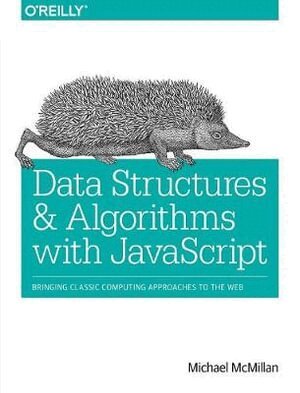
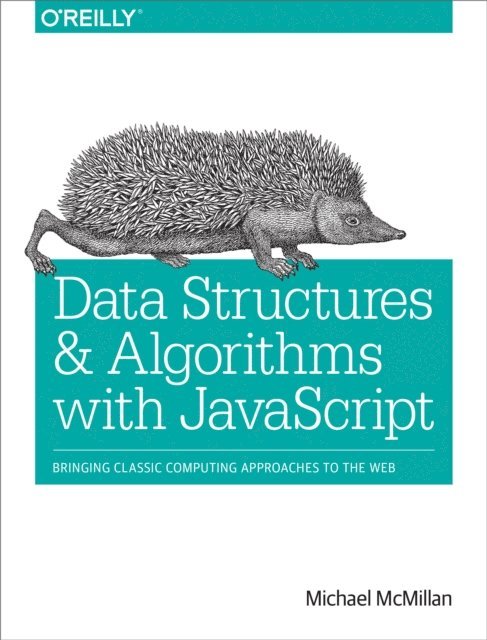
As an experienced JavaScript developer moving to server-side programming, you need to implement classic data structures and algorithms associated with conventional object-oriented languages like C# and Java. This practical guide shows you how to work hands-on with a variety of storage mechanisms—including linked lists, stacks, queues, and graphs—within the constraints of the JavaScript environment.
Determine which data structures and algorithms are most appropriate for the problems you’re trying to solve, and understand the tradeoffs when using them in a JavaScript program. An overview of the JavaScript features used throughout the book is also included.
This book covers:
Arrays and lists: the most common data structuresStacks and queues: more complex list-like data structuresLinked lists: how they overcome the shortcomings of arraysDictionaries: storing data as key-value pairsHashing: good for quick insertion and retrievalSets: useful for storing unique elements that appear only onceBinary Trees: storing data in a hierarchical mannerGraphs and graph algorithms: ideal for modeling networksAlgorithms: including those that help you sort or search dataAdvanced algorithms: dynamic programming and greedy algorithms362 kr
Läs direkt efter köp
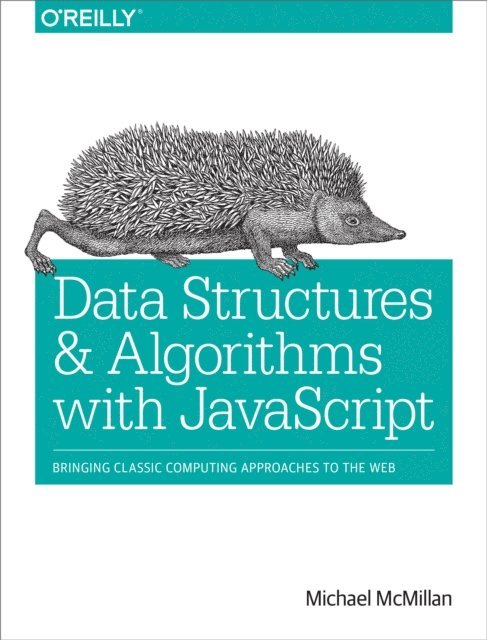
As an experienced JavaScript developer moving to server-side programming, you need to implement classic data structures and algorithms associated with conventional object-oriented languages like C# and Java. This practical guide shows you how to work hands-on with a variety of storage mechanisms—including linked lists, stacks, queues, and graphs—within the constraints of the JavaScript environment.
Determine which data structures and algorithms are most appropriate for the problems you’re trying to solve, and understand the tradeoffs when using them in a JavaScript program. An overview of the JavaScript features used throughout the book is also included.
This book covers:
Arrays and lists: the most common data structuresStacks and queues: more complex list-like data structuresLinked lists: how they overcome the shortcomings of arraysDictionaries: storing data as key-value pairsHashing: good for quick insertion and retrievalSets: useful for storing unique elements that appear only onceBinary Trees: storing data in a hierarchical mannerGraphs and graph algorithms: ideal for modeling networksAlgorithms: including those that help you sort or search dataAdvanced algorithms: dynamic programming and greedy algorithms375 kr
Skickas
372 kr
Skickas inom 5-8 vardagar
820 kr
Tillfälligt slut
2 258 kr
Tillfälligt slut
`It is an honour to be asked to write a foreword for this new book by Michael McMillan. I have been excited about this book ever since I read early drafts of its first two chapters some time ago at the birth of the project. At different times thereafter I have read other parts and my consistent impression has been that this is an author who has both a sophisticated academic understanding of the material and a great skill in communicating that widely. Those two qualities do not often go together!
The book is about change. After a first chapter in which the author introduces us to the person-centred concept of the person, chapter two is devoted to the change process within the client, including a very accessible description of Rogers' process model. Chapter three goes on to explore why and how change occurs in the human being, while chapter four introduces the most up-to-date person-centred theory in relation to the nature of the self concept and its changing process. Chapters five and six explore why change occurs in therapy and the conditions that facilitate that change, while chapter seven looks beyond the core conditions to focus on the particular quality of presence, begging the question as to whether this is a transpersonal/transcendental quality or an intense experiencing of the core conditions themselves.
This is an intensely modern book particularly in its postmodern emphasis. Rogers is sometimes characterised as coming from modernist times but he can also be seen as one of the early post modernists in his emphasis on process more than outcome and relationship more than personal striving. The modern nature of the book is also emphasised by a superb analysis of the relationship between focussing and person-centred therapy in Chapter five, linking also with Polanyi's notion of indwelling in this and other chapters. In suggesting that in both focussing and person-centred therapy the therapist is inviting the client to 'indwell' himself or herself, the author provides a framework for considering many modern perceptions of the approach including notions such as 'presence' and ' relational depth'. Also, the link with focussing is modern in the sense that the present World Association for the approach covers a fairly broad family including traditional person-centred therapists, experiential therapists, focussing-oriented therapists and process-guiding therapists. Important in this development is the kind of dialogue encouraged by the present book' - Dave Mearns, Strathclyde University
The belief that change occurs during the therapeutic process is central to all counselling and psychotherapy. The Person-Centred Approach to Therapeutic Change examines how change can be facilitated by the counsellor offering empathy, unconditional positive regard and congruence.
The Person-Centred Approach to Therapeutic Change outlines the main theoretical cornerstones of the person-centred approach and then, applying these, describes why change occurs as a result of a person-centred therapeutic encounter. The author explores the counselling relationship as an environment in which clients can open themselves up to experiences they have previously found difficult to acknowledge and to move forward.
Integral to the person-centred approach is Carl Rogers' radical view that change should be seen as an ongoing process rather than an alteration from one fixed state to another. In Rogers' view psychological health is best achieved by the person who is able to remain in a state of continual change. Such a person is open to all experiences and is therefore able to assimilate and adapt to new experiences, whether 'good' or 'bad'.
By focusing explicitly on how change is theorized and facilitated in counselling, this book goes to the heart of person-centred theory and practice, making it essential reading for trainees and practitioners alike.
Investments Set (Book + Workbook)
1 309 kr
Tillfälligt slut
262 kr
Tillfälligt slut