Michael Ortiz – författare
Visar alla böcker från författaren Michael Ortiz. Handla med fri frakt och snabb leverans.
6 produkter
6 produkter
1 245 kr
Skickas inom 10-15 vardagar
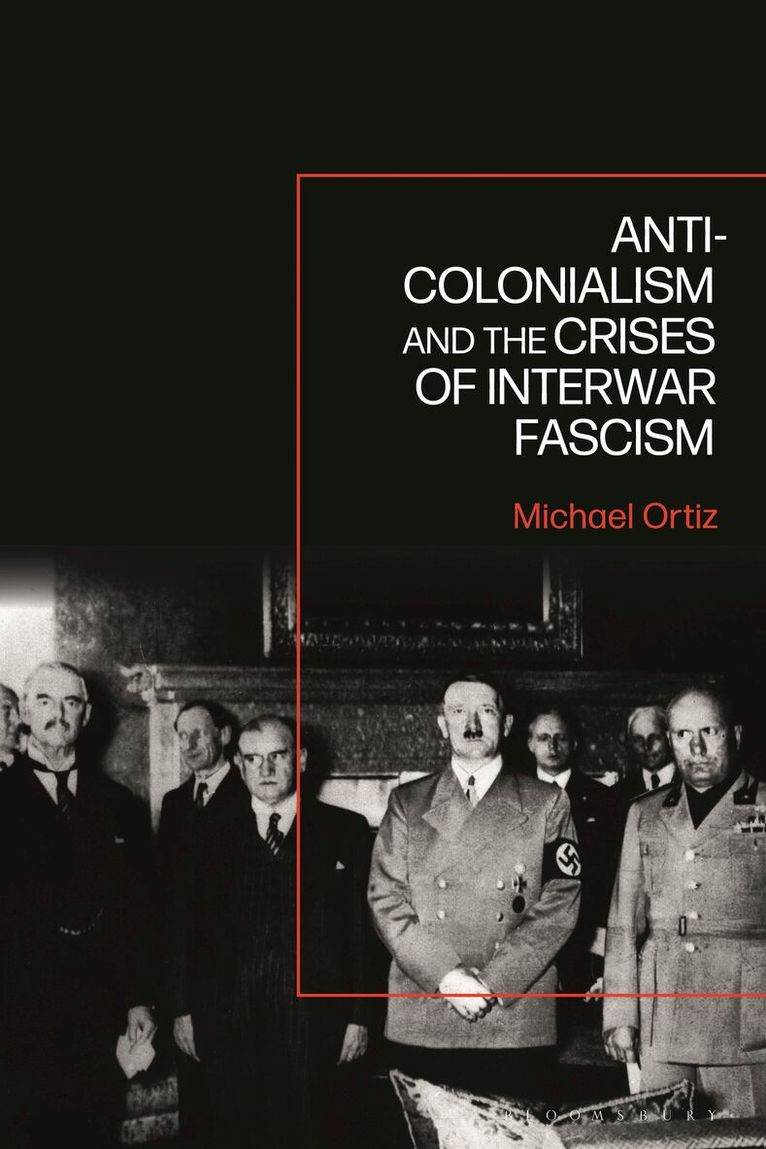
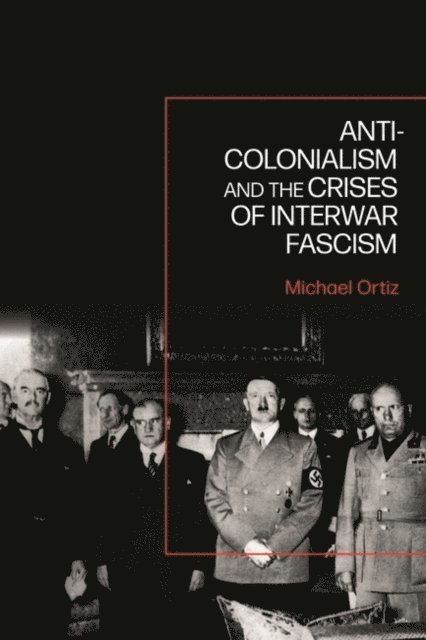
What is fascism? Is it an anomaly in the history of modern Europe? Or its culmination? In Anti-Colonialism and the Crises of Interwar Fascism, Michael Ortiz makes the case that fascism should be understood, in part, as an imperial phenomenon. He contends that the Age of Appeasement (1935-1939) was not a titanic clash between rival socio-political systems (fascism and democracy), but rather an imperial contest between satisfied and unsatisfied empires.Historians have long debated the extent to which Western imperialisms served as ideological and intellectual precursors to European fascisms. To date, this scholarship has largely employed an “inside-out” methodology that examines the imperial discourses that pushed fascist regimes outward, into Africa, Asia, and the Americas. While effective, such approaches tend to ignore the ways in which these places and their inhabitants understood European fascisms. Addressing this imbalance, Anti-Colonialism adopts an “outside-in” approach that analyses fascist expansion from the perspective of Indian anti-colonialists such as Jawaharlal Nehru, Subhas Bose, and Mohandas Gandhi. Seen from India, the crises of Interwar fascism—the Second Italo-Ethiopian War, Spanish Civil War, Second Sino-Japanese War, Munich Agreement, and the outbreak of the Second World War—were yet another eruption of imperial expansion analogous (although not identical) to the Scramble for Africa and the Treaty of Versailles. Whether fascist, democratic, or imperialist, Europe’s great powers collectively negotiated the fate of smaller nations.
420 kr
Skickas inom 10-15 vardagar
What is fascism? Is it an anomaly in the history of modern Europe? Or its culmination? In Anti-Colonialism and the Crises of Interwar Fascism, Michael Ortiz makes the case that fascism should be understood, in part, as an imperial phenomenon. He contends that the Age of Appeasement (1935-1939) was not a titanic clash between rival socio-political systems (fascism and democracy), but rather an imperial contest between satisfied and unsatisfied empires.Historians have long debated the extent to which Western imperialisms served as ideological and intellectual precursors to European fascisms. To date, this scholarship has largely employed an “inside-out” methodology that examines the imperial discourses that pushed fascist regimes outward, into Africa, Asia, and the Americas. While effective, such approaches tend to ignore the ways in which these places and their inhabitants understood European fascisms. Addressing this imbalance, Anti-Colonialism adopts an “outside-in” approach that analyses fascist expansion from the perspective of Indian anti-colonialists such as Jawaharlal Nehru, Subhas Bose, and Mohandas Gandhi. Seen from India, the crises of Interwar fascism—the Second Italo-Ethiopian War, Spanish Civil War, Second Sino-Japanese War, Munich Agreement, and the outbreak of the Second World War—were yet another eruption of imperial expansion analogous (although not identical) to the Scramble for Africa and the Treaty of Versailles. Whether fascist, democratic, or imperialist, Europe’s great powers collectively negotiated the fate of smaller nations.
513 kr
Skickas inom 7-10 vardagar
This book investigates the governance structures and mechanisms of knowledge and technology transfer in the context of innovation and production systems in six regions of Europe. For that purpose, the author develops a new and innovative heuristic governance model of knowledge transfer systems. Against the assumption of far-reaching institutional coherence and homogeneity of national systems in existing scholarship, Michael Ortiz demonstrates that national innovation and production systems are regionally variegated. With analyses of strengths and weaknesses, barriers, shortcomings, and dilemmas of regional innovation and knowledge transfer systems, the book ultimately identifies best practice models and policy recommendations for the investigated regions.
Kontrollverlust und Technologieakzeptanz in der (digitalen) Transformation
Akzeptanz- und Gestaltungsfaktoren eines heuristischen Modells
Häftad, Tyska, 2022
549 kr
Skickas inom 10-15 vardagar
Im Kontext der (digitalen) Transformation von Wirtschaft und Gesellschaft wird die Technologieakzeptanz der Bevölkerung zunehmend durch einen wahrgenommenen Kontrollverlust durch neue Technologien beeinflusst.
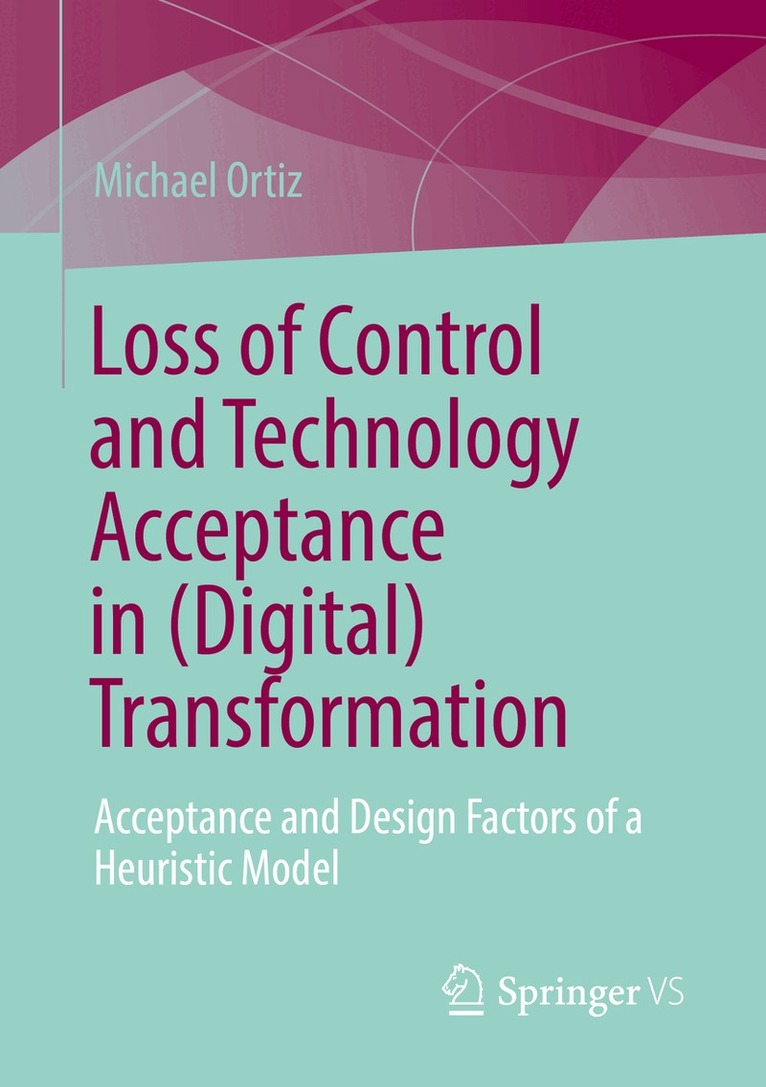
Loss of Control and Technology Acceptance in (Digital) Transformation
Acceptance and Design Factors of a Heuristic Model
Häftad, Engelska, 2023
851 kr
Skickas inom 10-15 vardagar
In the context of the (digital) transformation of economy and society, the technology acceptance of the population is increasingly influenced by a perceived loss of control through new technologies.
Loss of Control and Technology Acceptance in (Digital) Transformation : Acceptance and Design Factors of a Heuristic Model
Engelska, 2023
613 kr
Skickas inom 5-8 vardagar