Michael Pincombe – författare
Visar alla böcker från författaren . Handla med fri frakt och snabb leverans.
4 produkter
4 produkter
Häftad, Engelska, 2001
959 kr
Skickas inom 10-15 vardagar
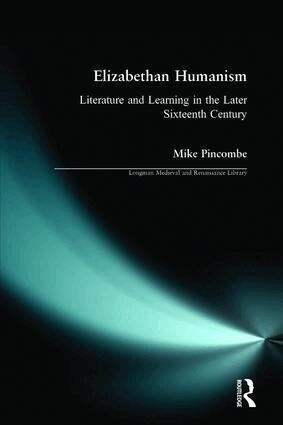
The term 'humanist' originally referred to a scholar of Classical literature. In the Renaissance and particularly in the Elizabethan age, European intellectuals devoted themselves to the rediscovery and study of Roman and Greek literature and culture. This trend of Renaissance thought became known in the 19th century as 'humanism'. Often a difficult concept to understand, the term Elizabethan Humanism is introduced in Part One and explained in a number of different contexts. Part Two illustrates how knowledge of humanism allows a clearer understanding of Elizabethan literature, by looking closely at major texts of the Elizabethan period which include Spenser's, 'The Shepherd's Calendar'; Marlowe's 'Faustus' and Shakespeare's 'Hamlet'.
Inbunden, Engelska, 2018
2 765 kr
Skickas inom 10-15 vardagar
The term 'humanist' originally referred to a scholar of Classical literature. In the Renaissance and particularly in the Elizabethan age, European intellectuals devoted themselves to the rediscovery and study of Roman and Greek literature and culture. This trend of Renaissance thought became known in the 19th century as 'humanism'. Often a difficult concept to understand, the term Elizabethan Humanism is introduced in Part One and explained in a number of different contexts. Part Two illustrates how knowledge of humanism allows a clearer understanding of Elizabethan literature, by looking closely at major texts of the Elizabethan period which include Spenser's, 'The Shepherd's Calendar'; Marlowe's 'Faustus' and Shakespeare's 'Hamlet'.
E-bok
Engelska, 20161 141 kr
Läs direkt efter köp
The term ''humanist'' originally referred to a scholar of Classical literature. In the Renaissance and particularly in the Elizabethan age, European intellectuals devoted themselves to the rediscovery and study of Roman and Greek literature and culture. This trend of Renaissance thought became known in the 19th century as ''humanism''. Often a difficult concept to understand, the term Elizabethan Humanism is introduced in Part One and explained in a number of different contexts. Part Two illustrates how knowledge of humanism allows a clearer understanding of Elizabethan literature, by looking closely at major texts of the Elizabethan period which include Spenser''s, ''The Shepherd''s Calendar''; Marlowe''s ''Faustus'' and Shakespeare''s ''Hamlet''.
E-bok
PDF, Engelska, 20161 141 kr
Läs direkt efter köp
The term ''humanist'' originally referred to a scholar of Classical literature. In the Renaissance and particularly in the Elizabethan age, European intellectuals devoted themselves to the rediscovery and study of Roman and Greek literature and culture. This trend of Renaissance thought became known in the 19th century as ''humanism''. Often a difficult concept to understand, the term Elizabethan Humanism is introduced in Part One and explained in a number of different contexts. Part Two illustrates how knowledge of humanism allows a clearer understanding of Elizabethan literature, by looking closely at major texts of the Elizabethan period which include Spenser''s, ''The Shepherd''s Calendar''; Marlowe''s ''Faustus'' and Shakespeare''s ''Hamlet''.