Michael R. Trimble - Böcker
Visar alla böcker från författaren Michael R. Trimble. Handla med fri frakt och snabb leverans.
6 produkter
6 produkter
1 243 kr
Skickas inom 5-8 vardagar
Biological psychiatry has dominated psychiatric thinking for the past 40 years, but the knowledge base of the discipline has increased substantially more recently, particularly with advances in genetics and neuroimaging. The third edition of Biological Psychiatry has been thoroughly updated taking into account these developments. As in the earlier editions of the book, there are comprehensive reviews and explanations of the latest advances in neurochemistry, neuroanatomy, genetics and brain imaging— descriptions not only of methodologies but also of the application of these in clinical settings. It is within this context that there is a considerable emphasis in the book on brain–behaviour relationships both within and without the clinical setting. This edition has been enhanced by the inclusion of new chapters, one on anxiety and another on motivation and the addictions. The chapter that relates to treatments has been extended to include the latest information on brain stimulation techniques. The overall book is well illustrated in order to help with an understanding of the text.For the third edition, Professor Michael Trimble has been joined by Professor Mark George as co-author. These are two of the world's leading biological psychiatrists who both have considerable clinical as well as research experience which they have brought to the book. Unlike multiauthored texts, it has a continuity running through it which aids understanding and prevents repetition.This book is strongly recommended for all practising psychiatrists and trainees wishing for an up-to-date, authoritative, easy to digest and acessible review of the latest advances and conceptualizations in the field. It will also appeal to neurologists interested in neuropsychiatry and biological psychiatry or the psychiatric aspects of neurological disorders, as well as other practising clinicians (psychologists, social workers, nurses) in the mental health field.
1 394 kr
Skickas inom 7-10 vardagar
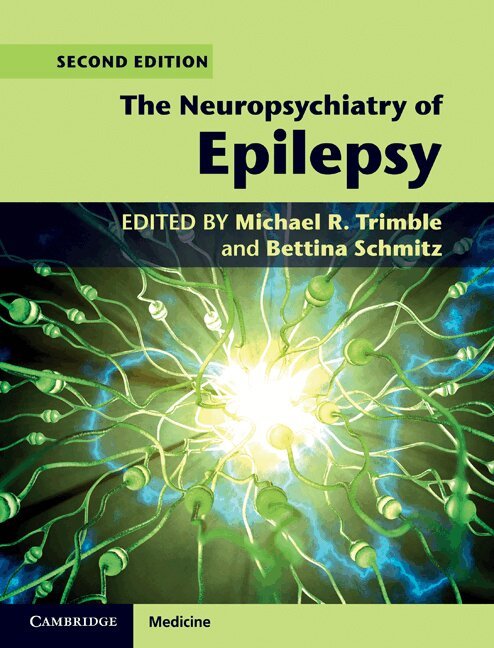
Research into the neuropsychiatry of epilepsy has become a central focus of interest in the last five years. Comorbidity of epilepsy with behavioral problems is now recognized widely, and the neuroscientific basis for such comorbidity is an active area of investigation. With an expanded international team of authors, this fully revised new edition builds on the strengths of its predecessor, examining in detail the subtleties of behavioral changes in patients with seizure disorders and offering both a diagnostic and a management perspective. New chapters cover genetic disorders, the effects of epilepsy on social behavior as viewed through theory of mind, a discussion of the precuneus, the importance and nature of peri-ictal psychiatric symptoms, depression and the interictal dysphoric disorder, and the relationship between antiepileptic drugs and suicide. This new edition is a must for anyone involved in diagnosing or managing epilepsy.
455 kr
Skickas
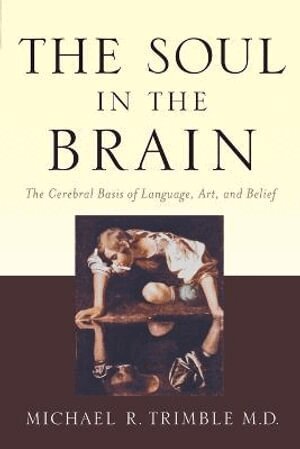
In this provocative study, Michael R. Trimble, M.D., tackles the interrelationship between brain function, language, art-especially music and poetry-and religion. By examining the breakdown of language in several neuropsychiatric disorders, neuroscientists have identified brain circuits that are involved with metaphor, poetry, music, and religious experiences. Drawing on this body of evidence, Trimble argues that religious experiences and beliefs are explicable biologically and relate to brain function, especially of the nondominant hemisphere. Inspired by the writings and reflections of his patients-many of whom have epilepsy, psychosis, or affective disorders-Trimble asks how the human species, so enamored of its own logic and critical facilities, has held from the dawn of civilization strong religious beliefs and a reverence for the arts. He explores topics such as the phenomena of hypergraphia and hyper-religiosity, how religious experiences and poetic expression are neurologically linked with our capacity to respond to music, and how neuropsychiatric disorders influence behaviors related to artistic expression and religiosity by disturbing brain function.With the sensitivity of a dedicated doctor and the curiosity of an accomplished scholar, Trimble offers an insightful analysis of how the study of people with paradigmatical neuropsychiatric conditions can be the cornerstone to unraveling some of the mysteries of the cerebral representations of our highest cultural experiences.
373 kr
Skickas inom 7-10 vardagar
In this provocative study, Michael R. Trimble, M.D., tackles the interrelationship between brain function, language, art-especially music and poetry-and religion. By examining the breakdown of language in several neuropsychiatric disorders, he identifies brain circuits that are involved with metaphor, poetry, music, and religious experiences. Drawing on this body of evidence, Trimble argues that religious experiences and beliefs are explicable biologically and relate to brain function, especially of the nondominant hemisphere. Inspired by the writings and reflections of his patients-many of whom have epilepsy, psychosis, or affective disorders-Trimble asks how the human species, so enamored of its own logic and critical facilities, has held from the dawn of civilization strong religious beliefs and a reverence for the arts. He explores topics such as the phenomena of hypergraphia and hyper-religiosity, how religious experiences and poetic expression are neurologically linked with our capacity to respond to music, and how neuropsychiatric disorders influence behaviors related to artistic expression and religiosity by disturbing brain function.With the sensitivity of a dedicated doctor and the curiosity of an accomplished scholar, Trimble offers an insightful analysis of how the study of people with paradigmatical neuropsychiatric conditions can be the cornerstone to unraveling some of the mysteries of the cerebral representations of our highest cultural experiences.
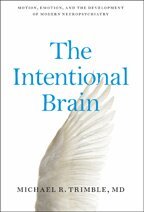
Intentional Brain
Motion, Emotion, and the Development of Modern Neuropsychiatry
Inbunden, Engelska, 2016
302 kr
Tillfälligt slut
Neuropsychiatry has a distinguished history, yet its ideals and principles fell out of fashion in the early twentieth century as neurology and psychiatry diverged into separate disciplines. Later, neuropsychiatry reemerged as the two disciplines moved closer again, accelerated by advances in neuroanatomy, neurochemistry, and drugs that alter the functioning of the central nervous system. But as neuropsychiatrist Michael R. Trimble explains in The Intentional Brain, the new neuropsychiatry has its own identity and is more than simply a borderland between two disparate clinical disciplines. Looking at neuropsychiatry in the context of major cultural and artistic achievements, Trimble explores changing views of the human brain and its relation to behavior and cognition over 2,500 years of Western civilization. Beginning with the early Greek physicians and moving through the Middle Ages, the Enlightenment, the romantic era, the World Wars, and up to the present day, he explores understandings about the brain's integral role in determining movement, motivation, and mood.Persuasively arguing that storytelling forms the backbone of human culture and individuality, Trimble describes the dawn and development of artistic creativity and traces the conflicts between differing philosophical views of our world and our position in it. A sweeping history of the branch of medicine concerned with both psychic and organic aspects of mental disorder, the book reveals what scientists have learned about movement and emotion by studying people with such diseases as epilepsy, syphilis, hysteria, psychosis, movement disorders, and melancholia. The Intentional Brain is a marvelous and interdisciplinary look at the clinical interface between the mind and the brain.
731 kr
Skickas inom 5-8 vardagar
This third edition has been updated to account for the development of new techniques in brain imaging; improvement in electrophysiological methods to better detect epilepsy and sleep disorders; and a growing list of blood and spinal fluid biomarkers that have revolutionized diagnostic capability.