Michael Rast - Böcker
Visar alla böcker från författaren Michael Rast. Handla med fri frakt och snabb leverans.
4 produkter
4 produkter
1 064 kr
Skickas inom 10-15 vardagar
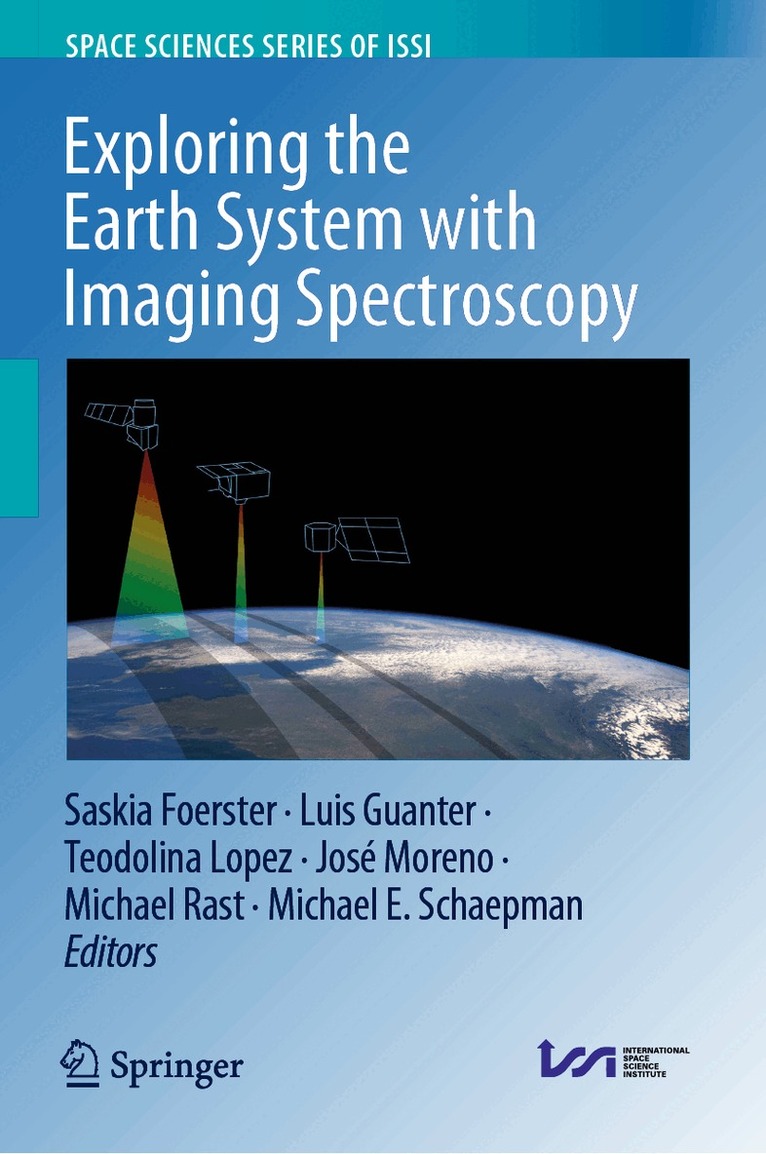
This volume presents a broad overview of the requirements, capabilities, challenges and future directions of spaceborne imaging spectroscopy to explore the Earth’s surface for a range of application domains. These include mine exploration, soil mapping, vegetation monitoring, mapping of pollution and hazardous materials, inland and coastal water monitoring, urban applications and others. Imaging spectroscopy, also often termed hyperspectral remote sensing, for terrestrial Earth observation dates back to the 1980s, when the first spectrometers observing in the visible to shortwave infrared wavelength range were deployed on airborne platforms. From the end of the 1990s onwards, spaceborne hyperspectral missions have demonstrated the capability to provide information on the composition and biochemical and physical characteristics of the Earth’s surface. Today, several hyperspectral spaceborne missions are under development to be launched within the next few years. It can be expectedthat future global and frequent coverage of the Earth’s surface with spaceborne imaging spectroscopy data will bring a major advance in the information depth that future Earth system models and monitoring service developments can be based on. Previously published in Surveys in Geophysics, Volume 40, Issue 3, 2019The chapters "Imaging Spectrometry of Inland and Coastal Waters: State of the Art, Achievements and Perspectives", "Imaging Spectroscopy for the Detection, Assessment and Monitoring of Natural and Anthropogenic Hazards", "Assessing Vegetation Function with Imaging Spectroscopy", "Spaceborne Imaging Spectroscopy for Sustainable Agriculture: Contributions and Challenges" are available as open access articles under a CC BY 4.0 license at link.springer.com.
1 064 kr
Skickas inom 10-15 vardagar
This volume presents a broad overview of the requirements, capabilities, challenges and future directions of spaceborne imaging spectroscopy to explore the Earth’s surface for a range of application domains. These include mine exploration, soil mapping, vegetation monitoring, mapping of pollution and hazardous materials, inland and coastal water monitoring, urban applications and others. Imaging spectroscopy, also often termed hyperspectral remote sensing, for terrestrial Earth observation dates back to the 1980s, when the first spectrometers observing in the visible to shortwave infrared wavelength range were deployed on airborne platforms. From the end of the 1990s onwards, spaceborne hyperspectral missions have demonstrated the capability to provide information on the composition and biochemical and physical characteristics of the Earth’s surface. Today, several hyperspectral spaceborne missions are under development to be launched within the next few years. It can be expectedthat future global and frequent coverage of the Earth’s surface with spaceborne imaging spectroscopy data will bring a major advance in the information depth that future Earth system models and monitoring service developments can be based on. Previously published in Surveys in Geophysics, Volume 40, Issue 3, 2019The chapters "Imaging Spectrometry of Inland and Coastal Waters: State of the Art, Achievements and Perspectives", "Imaging Spectroscopy for the Detection, Assessment and Monitoring of Natural and Anthropogenic Hazards", "Assessing Vegetation Function with Imaging Spectroscopy", "Spaceborne Imaging Spectroscopy for Sustainable Agriculture: Contributions and Challenges" are available as open access articles under a CC BY 4.0 license at link.springer.com.
Del 93 - Space Sciences Series of ISSI
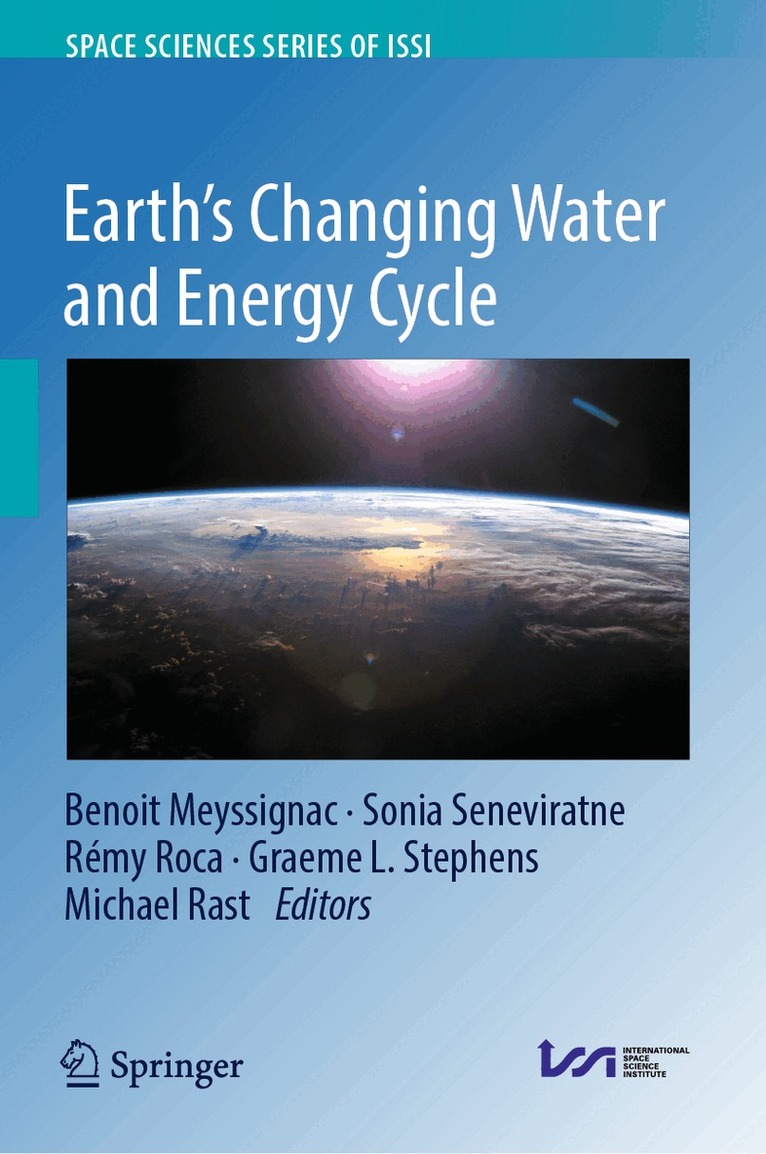
Earth's Changing Water and Energy Cycle
Inbunden, Engelska, 2025
536 kr
Skickas inom 10-15 vardagar
The book deepens our understanding of the role of clouds in the energy cycle, focusing particularly on tropical clouds and their responses to surface warming patterns, which influence global warming.
Del 94 - Space Sciences Series of ISSI
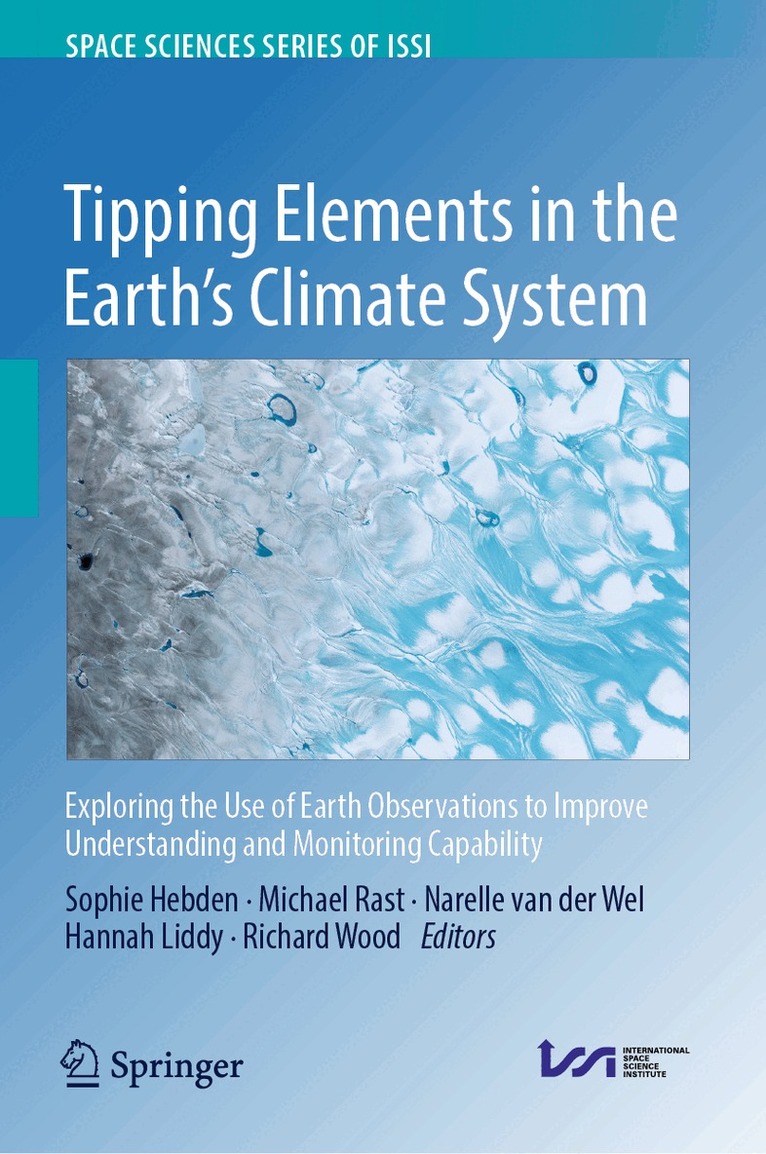
Tipping Elements in the Earth's Climate System
Exploring the Use of Earth Observations to Improve Understanding and Monitoring Capability
Inbunden, Engelska, 2025
536 kr
Skickas inom 7-10 vardagar
This book addresses the growing scientific concern surrounding climate tipping points—abrupt and potentially irreversible shifts in the Earth system that may occur even under moderate global warming. It explores key examples, including the melting of the Greenland and West Antarctic ice sheets, disruption of the Atlantic Meridional Overturning Circulation, and greenhouse gas release from thawing permafrost. Over the past three decades, Earth observation satellites have become vital for detecting and tracking such changes by measuring essential climate variables. Building on insights from the 2022 ISSI Workshop in Bern, the volume presents current perspectives on how satellite data can advance the science of tipping points and support efforts to assess and manage associated risks.Reprinted from Surveys in Geophysics, Special Issue: Tipping Elements in the Earth's Climate System, Vol. 46, Issue 2, 2025.