Michael Saffle – författare
673 kr
Skickas inom 10-15 vardagar
864 kr
Skickas inom 10-15 vardagar
2 477 kr
Skickas inom 10-15 vardagar
2 404 kr
Skickas inom 10-15 vardagar
2 250 kr
Skickas inom 10-15 vardagar
2 250 kr
Skickas inom 10-15 vardagar
901 kr
Läs direkt efter köp
901 kr
Läs direkt efter köp
883 kr
Läs direkt efter köp
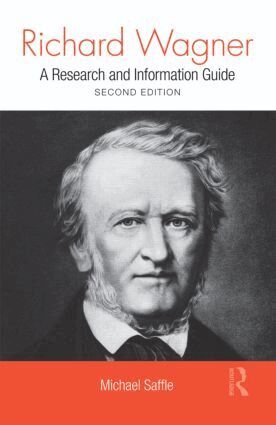
Richard Wagner: A Research and Information Guide is an annotated bibliography concerning both the nature of primary sources related to the composer and the scope and significance of the secondary sources which deal with him, his compositions, and his influence as a composer and performer.
883 kr
Läs direkt efter köp
Richard Wagner: A Research and Information Guide is an annotated bibliography concerning both the nature of primary sources related to the composer and the scope and significance of the secondary sources which deal with him, his compositions, and his influence as a composer and performer.
1 022 kr
Läs direkt efter köp
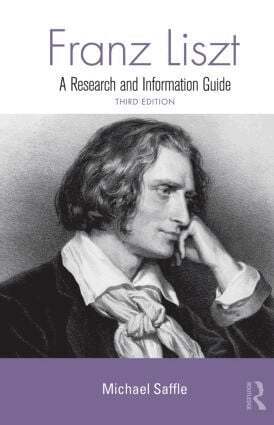
Franz Liszt: A Research and Information Guide is an annotated bibliography concerning both the nature of primary sources related to the composer and the scope and significance of the secondary sources which deal with him, his compositions, and his influence as a composer and performer. The second edition includes research published since the publication of the first edition and provide electronic resources. Franz Liszt was born on 22 October 1811 at Raiding, today located in Austria’s Burgenland. He received his first piano lessons from his father, Adam Liszt, an employee of the celebrated Eszterházy family. Young Franz was quickly acclaimed a prodigy, and in 1820 a group of Hungarian magnates offered to underwrite his musical education. Shortly thereafter the Liszts moved to Vienna, where Franz studied piano and composition with Carl Czerny and Anton Salieri. Performances there earned Liszt local fame; even Beethoven expressed interest in him.
1 022 kr
Läs direkt efter köp
Franz Liszt: A Research and Information Guide is an annotated bibliography concerning both the nature of primary sources related to the composer and the scope and significance of the secondary sources which deal with him, his compositions, and his influence as a composer and performer. The second edition includes research published since the publication of the first edition and provide electronic resources. Franz Liszt was born on 22 October 1811 at Raiding, today located in Austria’s Burgenland. He received his first piano lessons from his father, Adam Liszt, an employee of the celebrated Eszterházy family. Young Franz was quickly acclaimed a prodigy, and in 1820 a group of Hungarian magnates offered to underwrite his musical education. Shortly thereafter the Liszts moved to Vienna, where Franz studied piano and composition with Carl Czerny and Anton Salieri. Performances there earned Liszt local fame; even Beethoven expressed interest in him.
797 kr
Läs direkt efter köp
797 kr
Läs direkt efter köp
748 kr
Skickas inom 10-15 vardagar
762 kr
Skickas inom 10-15 vardagar
797 kr
Läs direkt efter köp
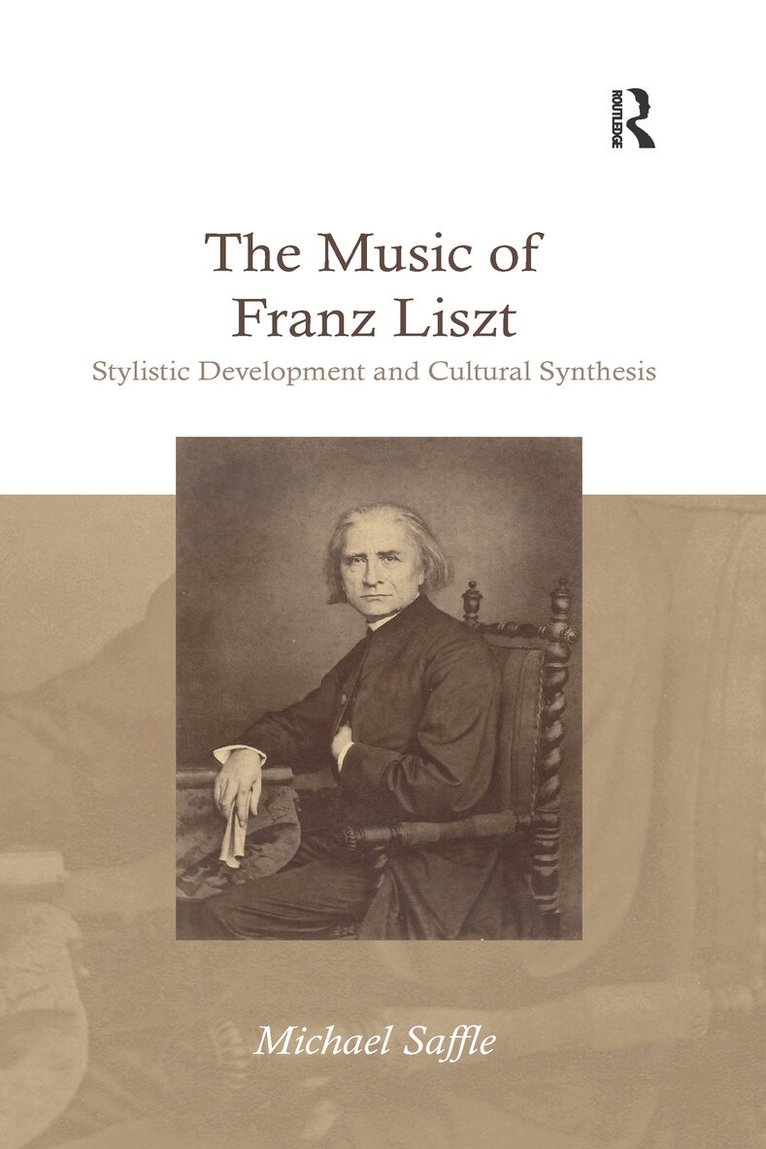
Much of Franz Liszt''s musical legacy has often been dismissed as ''trivial’ or ''merely showy,'' more or less peripheral contributions to nineteenth-century European culture. But Liszt was a mainstream composer in ways most of his critics have failed to acknowledge; he was also an incessant and often extremely successful innovator. Liszt''s mastery of fantasy and sonata traditions, his painstaking settings of texts ranging from erotic verse to portions of the Catholic liturgy, and the remarkable self-awareness he demonstrated even in many of his most ''entertaining'' pieces: all these things stamp him not only as a master of Romanticism and an early Impressionist, but as a precursor of Postmodern ''pop.'' Liszt''s Music places Liszt in historical and cultural focus. At the same time, it examines his principal contributions to musical literature -- from his earliest operatic paraphrases to his final explorations of harmonic and formal possibilities. Liszt''s compositional methods, including his penchant for revision, problems associated with early editions of some of his works, and certain aspects of class and gender issues are also discussed. The first book-length assessment of Liszt as composer since Humphrey Searle’s 1956 volume, Liszt''s Music is illustrated with well over 100 musical examples.
797 kr
Läs direkt efter köp
Much of Franz Liszt''s musical legacy has often been dismissed as ''trivial’ or ''merely showy,'' more or less peripheral contributions to nineteenth-century European culture. But Liszt was a mainstream composer in ways most of his critics have failed to acknowledge; he was also an incessant and often extremely successful innovator. Liszt''s mastery of fantasy and sonata traditions, his painstaking settings of texts ranging from erotic verse to portions of the Catholic liturgy, and the remarkable self-awareness he demonstrated even in many of his most ''entertaining'' pieces: all these things stamp him not only as a master of Romanticism and an early Impressionist, but as a precursor of Postmodern ''pop.'' Liszt''s Music places Liszt in historical and cultural focus. At the same time, it examines his principal contributions to musical literature -- from his earliest operatic paraphrases to his final explorations of harmonic and formal possibilities. Liszt''s compositional methods, including his penchant for revision, problems associated with early editions of some of his works, and certain aspects of class and gender issues are also discussed. The first book-length assessment of Liszt as composer since Humphrey Searle’s 1956 volume, Liszt''s Music is illustrated with well over 100 musical examples.
2 404 kr
Skickas inom 10-15 vardagar
727 kr
Skickas inom 10-15 vardagar
1 004 kr
Skickas inom 10-15 vardagar
896 kr
Läs direkt efter köp
Performing Music History offers a unique perspective on music history and performance through a series of conversations with women and men intimately associated with music performance, history, and practice: the musicians themselves. Fifty-five celebrated artists—singers, pianists, violinists, cellists, flutists, horn players, oboists, composers, conductors, and jazz greats—provide interviews that encompass most of Western music history, from the Middle Ages to contemporary classical music, avant-garde innovations, and Broadway musicals.
The book covers music history through lenses that include “authentic” performance, original instrumentation, and social context. Moreover, the musicians interviewed all bring to bear upon their respective subjects three outstanding qualities: 1) their high esteem in the music world as immediately recognizable names among musicians and public alike; 2) their energy and devotion to scholarship and the recovery of endangered musical heritages; and 3) their considerable skills, media savvy, and showmanship as communicators. Introductory essays to each chapter provide brief synopses of historical eras and topics. Combining careful scholarship and lively conversation, Performing Music History explores historical contexts for a host of fascinating issues.