Michael T. Bardo - Böcker
Visar alla böcker från författaren . Handla med fri frakt och snabb leverans.
3 produkter
3 produkter
Nebraska Symposium on Motivation, Volume 50
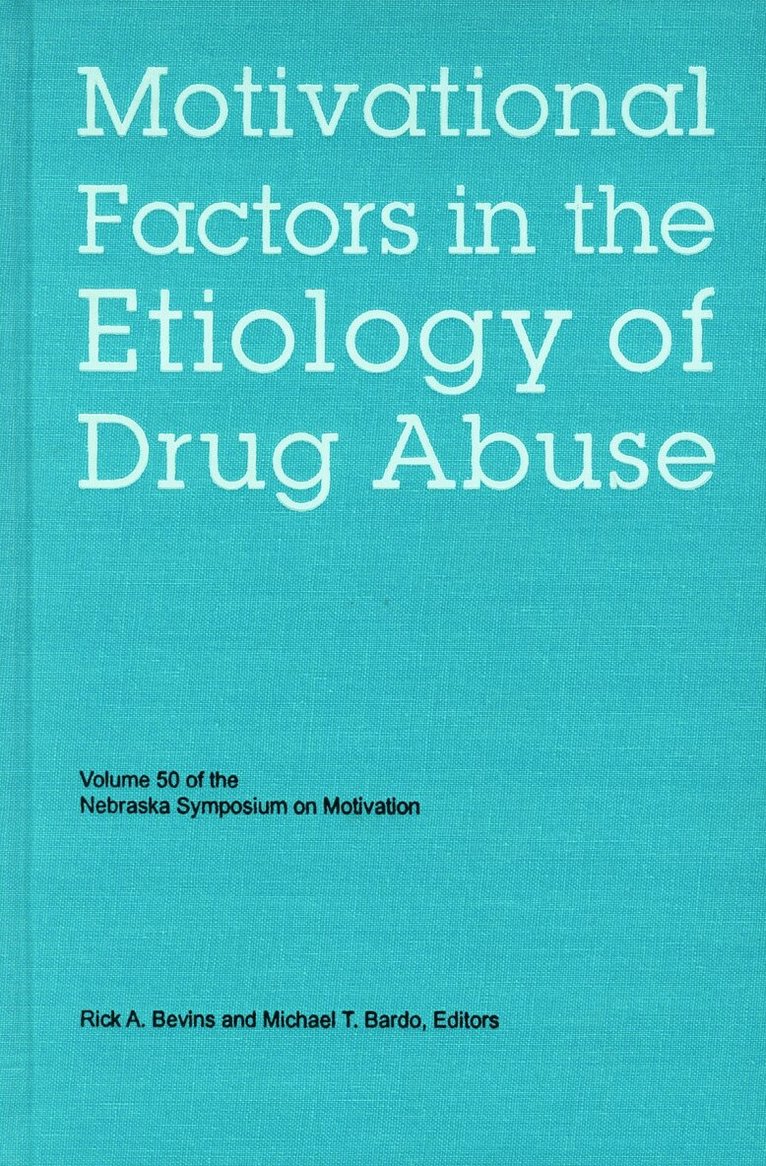
Motivational Factors in the Etiology of Drug Abuse
Inbunden, Engelska, 2004
527 kr
Skickas inom 10-15 vardagar
This volume marks the fiftieth anniversary of the Nebraska Symposium on Motivation, the longest continuously running symposium in the field of psychology. The motivational processes involved in drug abuse, the largest health problem in the United States, are the subject of eight thought-provoking essays that probe behavioral, cognitive, evolutionary, and physiological perspectives. George F. Koob discusses the implications of an allostatic view of motivation in psychopathology. Harriet de Witt considers the dual determinants of drug use in humans, reward and impulsivity, while R. D. Spealman and his research team assess the triggers of relapse in nonhuman primates. Jaak Panksepp and associates elucidate the role of emotional systems in addiction via a neuroethological perspective, while Michael T. Bardo and Linda Dwoskin describe the biological connection between novelty and drug-seeking motivational systems. Drive, incentive, and reinforcement, along with factors controlling the reinitiation of drug seeking and the environmental sources of motivation round out the remaining discussions by Roy A. Wise, Jane Stewart, and M. Vogel-Sprott.
1 637 kr
Skickas inom 10-15 vardagar
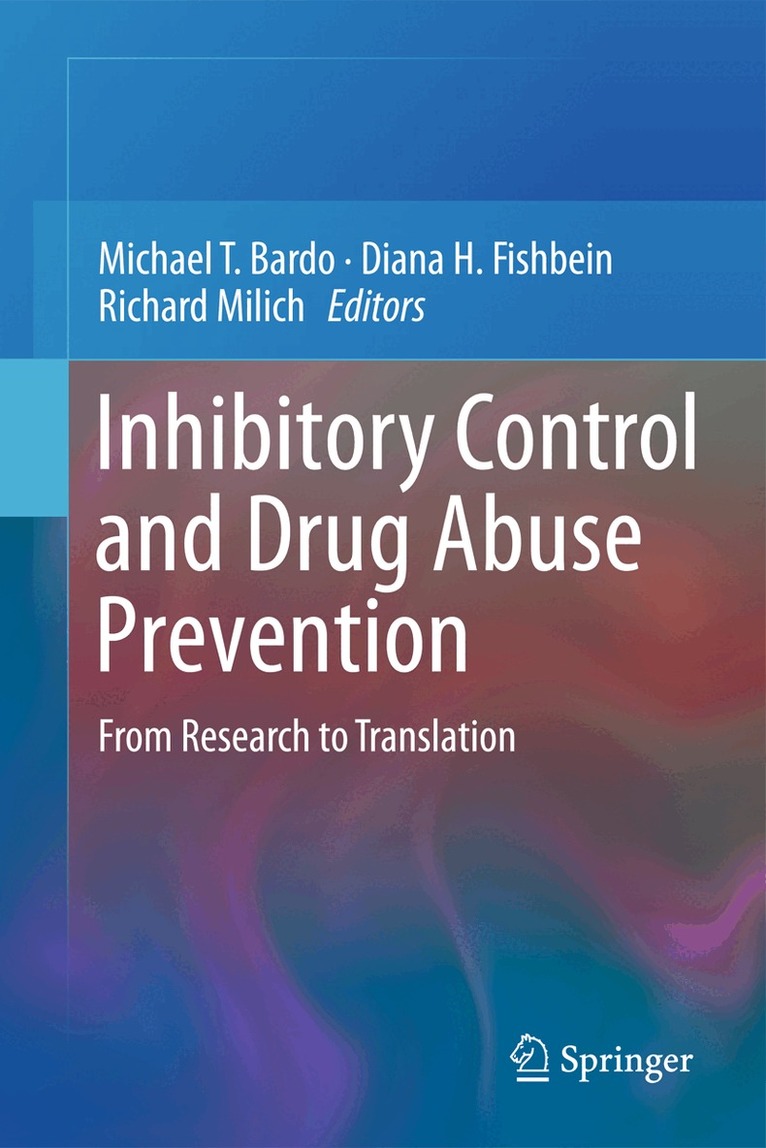
The purpose of this book is to review our state of knowledge about the neurobehavioral and psychosocial processes involved in behavioral inhibitory processes and to provide an insight into how these basic research findings may be translated into the practice of drug abuse prevention interventions. Over the last decade, there has been a wealth of information indicating that substance use disorders do not simply reflect an exaggeration of reward seeking behavior, but that they also represent a dysfunction of behavioral inhibitory processes that are critical in exercising self-control. A number of studies have determined that individuals with substance use disorders have poor inhibitory control compared to non-abusing individuals. In addition, the fact that the adolescent period is often characterized by a lack of inhibitory control may be one important reason for the heightened vulnerability for the initiation of drug use during this time. Controlled experiments utilizing neuroscience techniques in laboratory animals or neuroimaging techniques in humans have revealed that individual differences in prefrontal cortical regions may underlie, at least in part, these differences in inhibitory control. Although a few excellent journal reviews have been published on the role of inhibitory deficits in drug abuse, there has been relatively little attention paid to the potential applications of this work for drug abuse prevention. The current book will provide both basic and applied researchers with an overview of this important health-relevant topic. Since translational research cuts across multiple disciplines and most readers are not familiar with all of these disciplines, the reading level will be geared to be accessible to graduate students, as well as to faculty and researchers in the field. The book will be organized around three general themes, encased within introductory and concluding chapters. The first theme will review basic neurobehavioral research findings on inhibition and drug abuse. Chapters in this theme will emphasize laboratory studies using human volunteers or laboratory animals that document the latest research implicating a relation between inhibition and drug abuse at both the neural and behavioral levels of analysis. The second theme will move the topic to at-risk populations that have impulse control problems, including children, adolescents and young adults. The third theme will concentrate on prevention science as it relates to inhibitory control. Chapters in this theme will be written by experts attempting to develop and improve prevention interventions by integrating evidence-based knowledge about inhibitory control processes. In all of the chapters, writers will be asked to speculate about innovative approaches that may be useful for the practice of prevention.
1 637 kr
Skickas inom 10-15 vardagar
The purpose of this book is to review our state of knowledge about the neurobehavioral and psychosocial processes involved in behavioral inhibitory processes and to provide an insight into how these basic research findings may be translated into the practice of drug abuse prevention interventions. Over the last decade, there has been a wealth of information indicating that substance use disorders do not simply reflect an exaggeration of reward seeking behavior, but that they also represent a dysfunction of behavioral inhibitory processes that are critical in exercising self-control. A number of studies have determined that individuals with substance use disorders have poor inhibitory control compared to non-abusing individuals. In addition, the fact that the adolescent period is often characterized by a lack of inhibitory control may be one important reason for the heightened vulnerability for the initiation of drug use during this time. Controlled experiments utilizing neuroscience techniques in laboratory animals or neuroimaging techniques in humans have revealed that individual differences in prefrontal cortical regions may underlie, at least in part, these differences in inhibitory control. Although a few excellent journal reviews have been published on the role of inhibitory deficits in drug abuse, there has been relatively little attention paid to the potential applications of this work for drug abuse prevention. The current book will provide both basic and applied researchers with an overview of this important health-relevant topic. Since translational research cuts across multiple disciplines and most readers are not familiar with all of these disciplines, the reading level will be geared to be accessible to graduate students, as well as to faculty and researchers in the field. The book will be organized around three general themes, encased within introductory and concluding chapters. The first theme will review basic neurobehavioral research findings on inhibition and drug abuse. Chapters in this theme will emphasize laboratory studies using human volunteers or laboratory animals that document the latest research implicating a relation between inhibition and drug abuse at both the neural and behavioral levels of analysis. The second theme will move the topic to at-risk populations that have impulse control problems, including children, adolescents and young adults. The third theme will concentrate on prevention science as it relates to inhibitory control. Chapters in this theme will be written by experts attempting to develop and improve prevention interventions by integrating evidence-based knowledge about inhibitory control processes. In all of the chapters, writers will be asked to speculate about innovative approaches that may be useful for the practice of prevention.