Michał Nowosielski – författare
Visar alla böcker från författaren Michał Nowosielski. Handla med fri frakt och snabb leverans.
4 produkter
4 produkter
Polish Immigrant Organizations in Germany
The Transnational Opportunity Structure
Inbunden, Engelska, 2023
2 200 kr
Skickas inom 10-15 vardagar
Polish Immigrant Organizations in Germany examines the situation of Polish immigrant organizations in Germany. Based on in-depth, mixed-method research consisting of surveys, case studies, and interviews with immigrants, representatives of institutions involved in the implementation of integration strategy and those responsible for Polish diaspora policy, it develops the notion of the transnational opportunity structure, which analyses the major factors shaping the situation of immigrant organizations.With attention to the characteristics of the migration process and the immigrant community, the country of residence, the country of origin, and bilateral relations between the two countries—which are in turn moderated by both global factors and micro factors—this book offers a multi-faceted analysis of diverse processes of developing diaspora groups and their organizations. It will therefore appeal to scholars of sociology, political science, security studies, and public policy with interests in migration and Diaspora studies, as well as intra-European mobility.
Polish Immigrant Organizations in Germany
The Transnational Opportunity Structure
Häftad, Engelska, 2025
658 kr
Skickas inom 10-15 vardagar
Polish Immigrant Organizations in Germany examines the situation of Polish immigrant organizations in Germany. Based on in-depth, mixed-method research consisting of surveys, case studies, and interviews with immigrants, representatives of institutions involved in the implementation of integration strategy and those responsible for Polish diaspora policy, it develops the notion of the transnational opportunity structure, which analyses the major factors shaping the situation of immigrant organizations.With attention to the characteristics of the migration process and the immigrant community, the country of residence, the country of origin, and bilateral relations between the two countries—which are in turn moderated by both global factors and micro factors—this book offers a multi-faceted analysis of diverse processes of developing diaspora groups and their organizations. It will therefore appeal to scholars of sociology, political science, security studies, and public policy with interests in migration and Diaspora studies, as well as intra-European mobility.
850 kr
Kommande
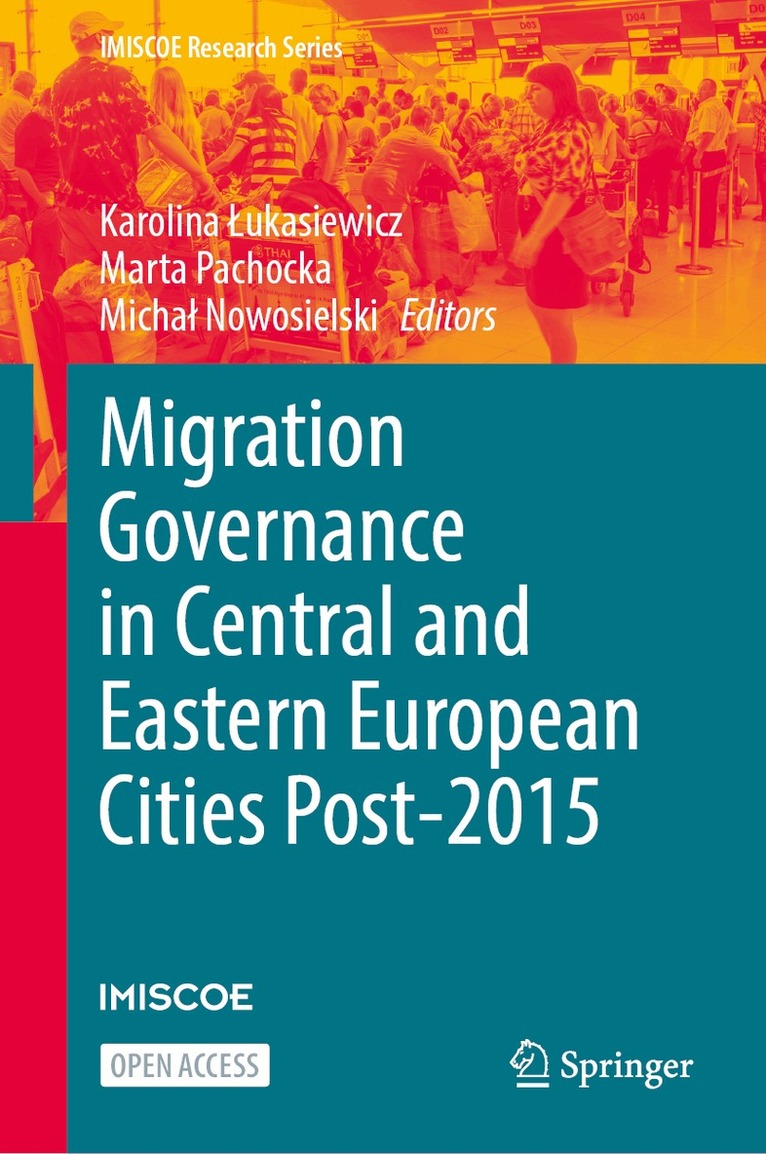
This open-access book provides a thorough overview of migration trends and governance in Central and Eastern European (CEE) cities since 2015. For decades, CEE cities were primarily shaped by emigration. However, more than a decade of unprecedented change—from the 2015 European refugee reception crisis to the 2022 full-scale Russian invasion of Ukraine, which triggered the largest forced displacement in Europe since World War II—has transformed the region into one of Europe’s most dynamic new immigrant destinations. This volume offers the first comprehensive account of how nine diverse CEE cities across Poland, Czechia, Hungary, and Romania are navigating this new reality. Moving beyond traditional Western-centric models, the book explores the ‘local turn’ in migration studies through the experiences of capital cities such as Warsaw, Prague, and Budapest. It also examines rapidly diversifying second-tier cities like Kraków and Brno, as well as border and shrinking cities including Lublin, Oradea, Płock, and Łomża. Readers are introduced to the innovative CEE Local Migrant Governance Index (CEELMiG), a novel tool designed to measure and compare local policies across CEE cities—capturing integration strategies, coordination mechanisms, migrant participation, research on diversity, and the funding schemes of inclusive measures. From ‘mainstreaming by accident’ to the rise of grassroots solidarity, the book highlights how local administrators, activists, and residents are bridging service gaps and redefining urban citizenship in contexts marked by crisis and illiberal pressures. Migration Governance in CEE Cities Post-2015 is essential reading for scholars and students across disciplines, as well as for policymakers, urban planners, migration practitioners, and anyone interested in how cities respond to—and shape—evolving migration dynamics in Europe.
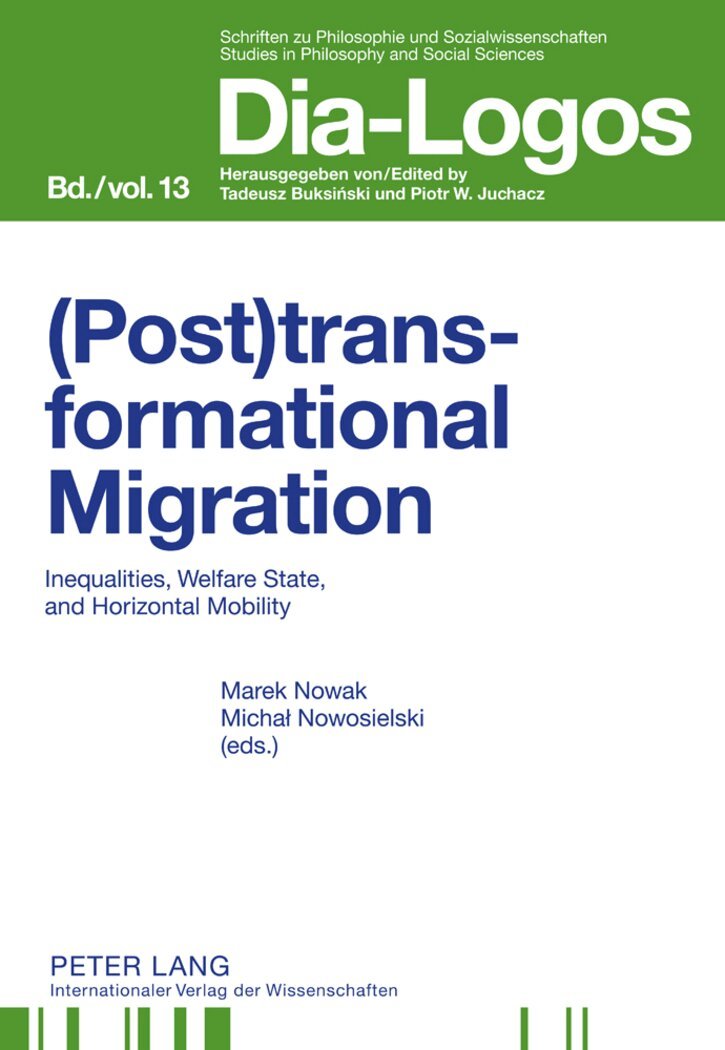
Del 13 - DIA-LOGOS
(Post)transformational Migration
Inequalities, Welfare State, and Horizontal Mobility
Inbunden, Engelska, 2011
493 kr
Tillfälligt slut
Perceived inequalities, such as the lack of a proper job or bad living conditions, can play the role of push factors that make people migrate. Apart from this, there are studies which focus more on relative deprivation, exacerbated by inequality, as a basic determinant of people’s mobility, and also some are focused on the influence of income inequality on migration. Such «structural conditions» are only a part of the story of migration, particularly because differences and inequalities are social facts, elements of the universal shape of modern open societies. Ultimately inequality, as more general departure point, can’t be merely an element of explanation, and it is important to remember that not only do «objective» social differences and the inequalities caused by them foster migration behaviour, but so do their social perceptions.