Michalle Gal - Böcker
Visar alla böcker från författaren Michalle Gal. Handla med fri frakt och snabb leverans.
5 produkter
5 produkter
2 021 kr
Skickas inom 10-15 vardagar
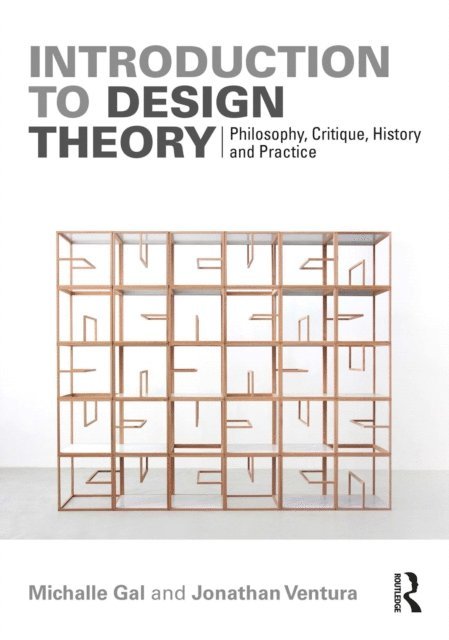
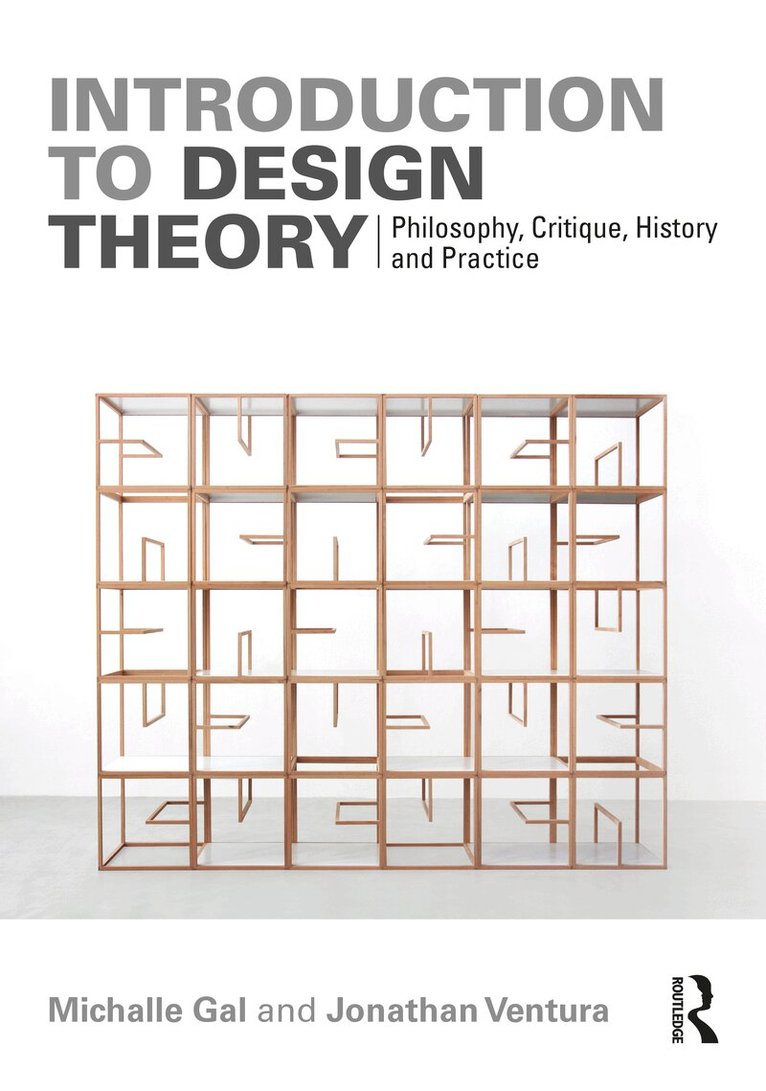
Introduction to Design Theory introduces a comprehensive, systematic, and didactic outline of the discourse of design. Designed both as a course book and a source for research, this textbook methodically covers the central concepts of design theory, definitions of design, its historical milestones, and its relations to culture, industry, body, ecology, language, society, gender and ideology.Demonstrated by a shift towards the importance of the sociocultural context in which products are manufactured and embedded, this book showcases design theory as an emerging sub-discipline of design, unique in its practice-based approach and its broad perception of design. It offers an in-depth understanding of the central concepts, such as "form" and "function", "theory" and "practice", through a discussion of key case studies and historical examples, such as the advent of the view of design in antiquity, the introduction of mass production to modernist design or the ideological shifts in design in the mid-twentieth century, as well as analytical tools for further dissection and learning in practice. With a focus on a combination of several theoretical knowledge foundations — aesthetics and philosophy, critical theories, cultural studies, design history and design anthropology — the reader is enabled to approach design as a central pivot around which contemporary culture revolves, reflecting, reaffirming or challenging social and cultural structures.Aimed towards undergraduate and postgraduate students, as well as teachers and scholars, from across the design disciplines, Introduction to Design Theory invites readers to engage with design from an interdisciplinary perspective, departing from the traditional academic compartmentalisation of practice, history and philosophy.
554 kr
Introduction to Design Theory introduces a comprehensive, systematic, and didactic outline of the discourse of design. Designed both as a course book and a source for research, this textbook methodically covers the central concepts of design theory, definitions of design, its historical milestones, and its relations to culture, industry, body, ecology, language, society, gender and ideology.Demonstrated by a shift towards the importance of the sociocultural context in which products are manufactured and embedded, this book showcases design theory as an emerging sub-discipline of design, unique in its practice-based approach and its broad perception of design. It offers an in-depth understanding of the central concepts, such as "form" and "function", "theory" and "practice", through a discussion of key case studies and historical examples, such as the advent of the view of design in antiquity, the introduction of mass production to modernist design or the ideological shifts in design in the mid-twentieth century, as well as analytical tools for further dissection and learning in practice. With a focus on a combination of several theoretical knowledge foundations — aesthetics and philosophy, critical theories, cultural studies, design history and design anthropology — the reader is enabled to approach design as a central pivot around which contemporary culture revolves, reflecting, reaffirming or challenging social and cultural structures.Aimed towards undergraduate and postgraduate students, as well as teachers and scholars, from across the design disciplines, Introduction to Design Theory invites readers to engage with design from an interdisciplinary perspective, departing from the traditional academic compartmentalisation of practice, history and philosophy.
1 276 kr
Skickas inom 10-15 vardagar
This book offers a new definition of metaphor—as an ontological and visual construction, whose roots are external visual forms, and its motivation is our attachment to forms. This definition, which Michalle Gal names “visualist,” challenges the ruling conceptualist theory of metaphors and places a new emphasis on how we experience rather than understand metaphors. In doing so, she responds to the visual turn that is taking place in literature and the media, demanding that the visual become a site of philosophical analysis.This focus on the external visual world allows Gal to employ visual theories to capture the essence of metaphor. She looks beyond conceptual or semantic mechanism, and returns to theories of Arnheim and Gombrich and the current evolution of ideas about the visual or material and embodied cognition. Proposing to see visual metaphors in their basic form, she uses a new externalist terminology of ontology, visuality, composition, affordance, construction, and emergence.Setting out a new theory that takes into account that humans are visual no less than cognitive creatures, Visual Metaphors and Aesthetics lays the foundation for a new vocabulary to talk about metaphors.
420 kr
Skickas inom 10-15 vardagar
This book offers a new definition of metaphor—as an ontological and visual construction, whose roots are external visual forms, and its motivation is our attachment to forms. This definition, which Michalle Gal names “visualist,” challenges the ruling conceptualist theory of metaphors and places a new emphasis on how we experience rather than understand metaphors. In doing so, she responds to the visual turn that is taking place in literature and the media, demanding that the visual become a site of philosophical analysis.This focus on the external visual world allows Gal to employ visual theories to capture the essence of metaphor. She looks beyond conceptual or semantic mechanism, and returns to theories of Arnheim and Gombrich and the current evolution of ideas about the visual or material and embodied cognition. Proposing to see visual metaphors in their basic form, she uses a new externalist terminology of ontology, visuality, composition, affordance, construction, and emergence.Setting out a new theory that takes into account that humans are visual no less than cognitive creatures, Visual Metaphors and Aesthetics lays the foundation for a new vocabulary to talk about metaphors.
Del 12 - Natur, Wissenschaft und die Kuenste / Nature, Science and the Arts / Nature, Science et les Arts
Aestheticism
Deep Formalism and the Emergence of Modernist Aesthetics
Häftad, Engelska, 2015
522 kr
Tillfälligt slut
This book offers, for the first time in aesthetics, a comprehensive account of aestheticism of the 19th century as a philosophical theory of its own right. Taking philosophical and art-historical viewpoints, this cross-disciplinary book presents aestheticism as the foundational movement of modernist aesthetics of the 20th century. Emerging in the writings of the foremost aestheticists – Oscar Wilde, Walter Pater, James Whistler, and their formalist successors such as Clive Bell, Roger Fry, and Clement Greenberg – aestheticism offers a uniquely synthetic definition of art. It captures the artwork’s relations between form and content, art’s independent ontology and autonomy, art’s internal completeness, criticism, immunity to recruitment, the uniqueness of each medium, and musicality, as well as the logical-theoretical affiliation of art for art’s sake to epistemology, ethics and philosophy of language.Those are used by Michalle Gal to formulate a definition of art in terms of a theory of Deep Formalism, setting aestheticism, which aspires to preserve the artistic medium, as a critique of the current linguistic-conceptual aesthetics that developed after the linguistic turn of aesthetics.