Michel Bauwens – författare
Visar alla böcker från författaren Michel Bauwens. Handla med fri frakt och snabb leverans.
3 produkter
3 produkter
Häftad, Engelska, 2023
564 kr
Skickas inom 5-8 vardagar
E-bok
Engelska, 2025327 kr
Läs direkt efter köp
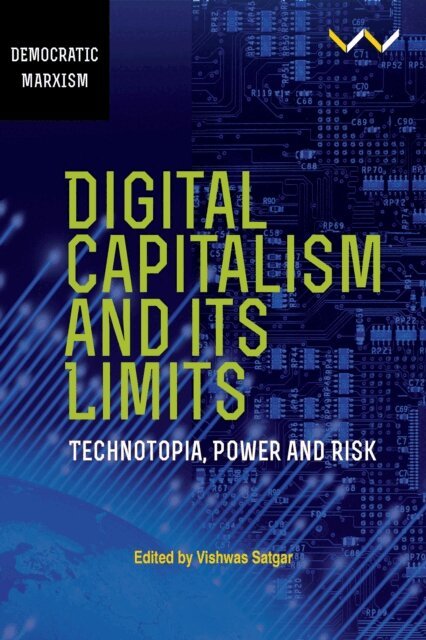
The Fourth Industrial Revolution (4IR) has been described as the next big leap in digital capitalism. Digital technologies such as artificial intelligence, quantum computing, 3D printing and robotisation, we are led to believe, will bring more progress, growth and development while also helping us to resolve the deep and multiple crises the world is in. Billions are being invested in these technologies, accompanied by sharp geopolitical rivalries to secure an edge in the control over them. Volume 8 in the Democratic Marxism series invites readers to think more deeply and critically about digital capitalism and its limits. While most governments in the world, including South Africa, have accepted a techno-nationalist narrative and have deliberated on the risks for the planet and humanity, the volume interrogates the effects and consequences of advances in artificial intelligence and heightened technological innovation and industrialisation on employment, democracy and the climate. Viewing the grand social engineering of 4IR through a Marxist lens, the volume contributors engage critically with the class project of digital monopoly capitalism and its powerful totalitarian tendencies. They question the dangerous technotopian imaginary shaping this digital techno-shift, the implications of algorithmic data extractivism, the securitisation of already weak market democracies, the social consequences of digital learning, lack of regulation, and the power dynamics in the labour process. Anchored in techno-realism, the interdisciplinary perspective captured in this volume puts forward alternatives for democratisation and a just transition to protect human and non-human life.
Häftad, Engelska, 2019
243 kr
Skickas inom 5-8 vardagar
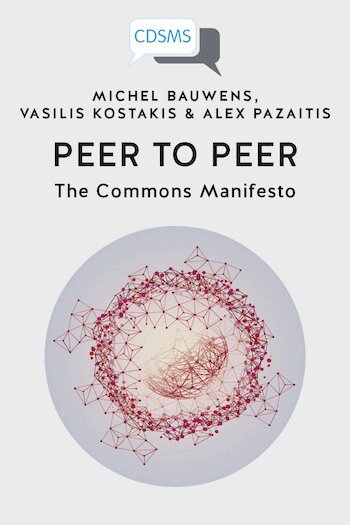
Not since Marx identified the manufacturing plants of Manchester as the blueprint for the new capitalist society has there been a more profound transformation of the fundamentals of our social life. As capitalism faces a series of structural crises, a new social, political and economic dynamic is emerging: peer to peer.What is peer to peer? Why is it essential for building a commons-centric future? How could this happen? These are the questions this book tries to answer. Peer to peer is a type of social relations in human networks, as well as a technological infrastructure that makes the generalization and scaling up of such relations possible. Thus, peer to peer enables a new mode of production and creates the potential for a transition to a commons-oriented economy.