
Michel Duquette – författare
Visar alla böcker från författaren Michel Duquette. Handla med fri frakt och snabb leverans.
3 produkter
3 produkter
Häftad, Engelska, 1999
359 kr
Skickas inom 10-15 vardagar
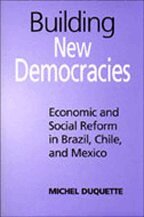
In Building New Democracies Michel Duquette analyses the main public policies of Brazil, Chile, and Mexico to explore examples of how countries make the transition from an authoritarian regime to a democratic society. The main objective of the book is to follow the process of policy formation in very young democracies. Duquette isolates the specific problems that surround decision-making in a transitional government, showing how legislating structural change does not guarantee democratic success. He offers a general model of domestic and international policy-making as a response to the problems of achieving fundamental political reform. The effectiveness of public policies depends on factors including competing ideologies, inexperienced political leaders, rising political organizations, rule by coalition parties, and the influence of local politicians and technocrats. It is with the alliance of grassroots organizations and autonomous institutions, Duquette believes, that social and economic exclusion will be overcome on a national level. Building New Democracies is primarily theoretical in its analysis, but integrates many recent empirical findings from a wide body of international and Latin American research, including the author's own field work.The methodology Duquette employs is genuinely comparative and not merely a juxtaposition of case studies. His approach and conclusions can be applied to a number of disciplines, including political science, economics, sociology, and Latin American studies.
E-bok
PDF, Engelska, 1999962 kr
Läs direkt efter köp
In Building New Democracies Michel Duquette analyses the main public policies of Brazil, Chile, and Mexico to explore examples of how countries make the transition from an authoritarian regime to a democratic society. The main objective of the book is to follow the process of policy formation in very young democracies. Duquette isolates the specific problems that surround decision-making in a transitional government, showing how legislating structural change does not guarantee democratic success. He offers a general model of domestic and international policy-making as a response to the problems of achieving fundamental political reform. The effectiveness of public policies depends on factors including competing ideologies, inexperienced political leaders, rising political organizations, rule by coalition parties, and the influence of local politicians and technocrats. It is with the alliance of grassroots organizations and autonomous institutions, Duquette believes, that social and economic exclusion will be overcome on a national level. Building New Democracies is primarily theoretical in its analysis, but integrates many recent empirical findings from a wide body of international and Latin American research, including the author's own field work.The methodology Duquette employs is genuinely comparative and not merely a juxtaposition of case studies. His approach and conclusions can be applied to a number of disciplines, including political science, economics, sociology, and Latin American studies.
E-bok
PDF, Engelska, 2005940 kr
Läs direkt efter köp
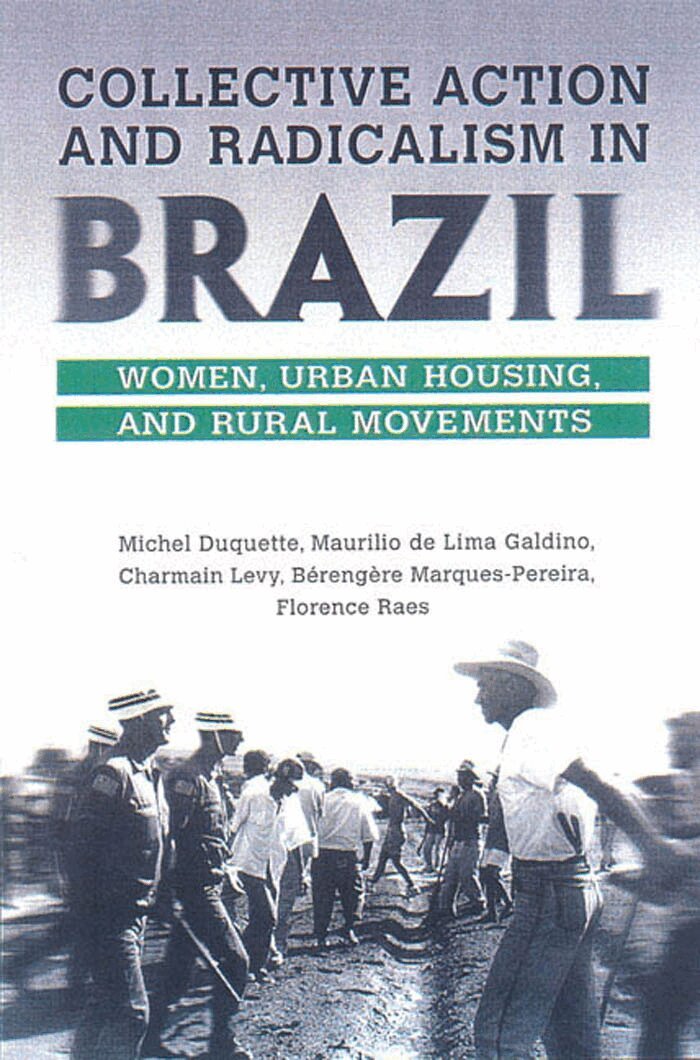
In the past decade, Brazil has undergone a long series of political changes, culminating in the recent election of President Lula da Silva and his Workers' Party. These changes have come about through a landslide of social activism that is unprecedented in the country's history. The central topic of this book is an examination of three major recent movements within Brazil's civil society: the women's movement, the urban housing movement, and the landless peasant movement. All three are representative of a more general trend toward public protest and collectively indicate a shift in the internal dynamics of group identity within Brazil. The authors propose that the practices of power in Brazil are influenced by the expressions of a civil society now reorganized into a social movement and mobilized within a 'cycle of protest' that attains the level of a political alternative and that the present cycle of collective action is fuelled by the pitfalls of market reforms.