Michel Grave – författare
Visar alla böcker från författaren Michel Grave. Handla med fri frakt och snabb leverans.
8 produkter
Visualization in Scientific Computing ’97
Proceedings of the Eurographics Workshop in Boulogne-sur-Mer France, April 28–30, 1997
Av Wilfrid Lefer, Michel Grave
Häftad, 1997
552 kr
Lägg i varukorg
Visualization is now recognized as a powerful approach to get insight in large datasets produced by scientific experimentations and simulations. The contributions to this book cover technical aspects as well as concreteapplications of visualization in various domains such as finance, physics, …
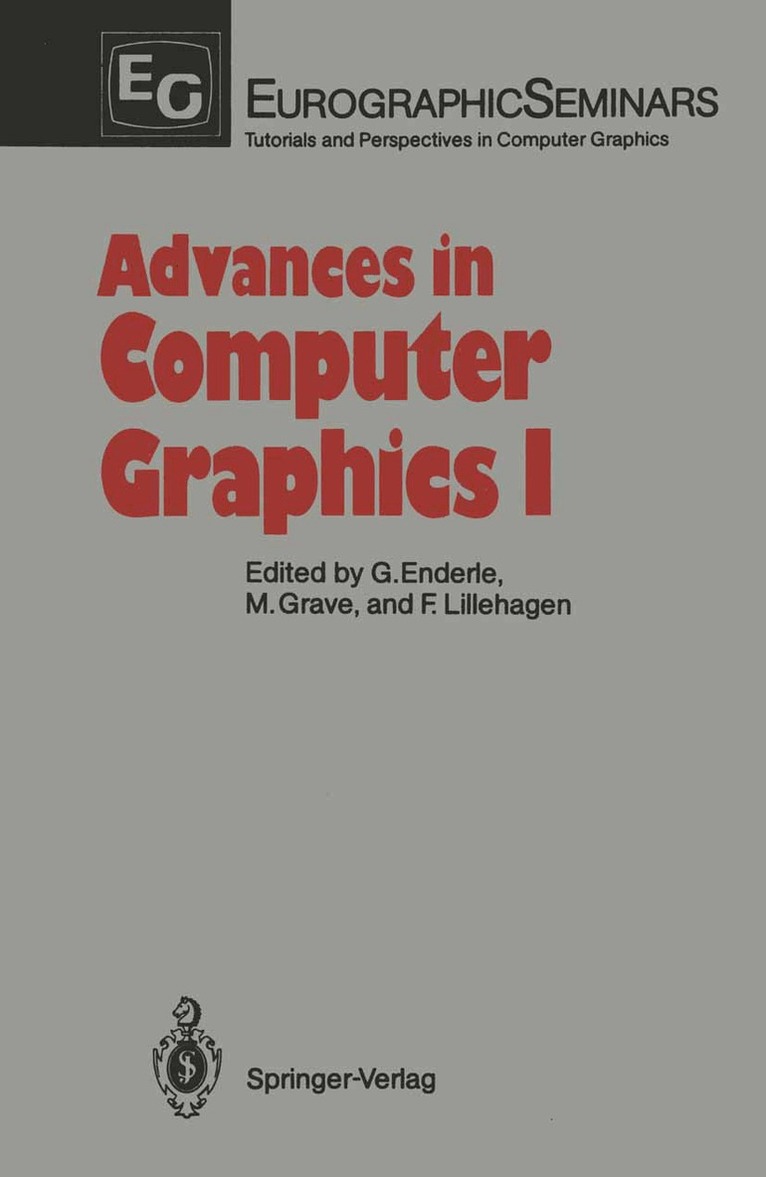
Advances in Computer Graphics I
Av Günter Enderle, Michel Grave m. fl.
Häftad, 1986
568 kr
Lägg i varukorg
This book is the sixth issue in the EurographicSeminars Series. This series has been set up by Eurographics, the European Association for Computer Graphics, in order to disseminate surveys and research results out of the field of Computer Graphics. Computer Graphics constitute a powerful and …
Advances in Computer Graphics I
Av Frank Lillehagen, Michel Grave m. fl.
E-bok, 2013
739 kr
Lägg i varukorg
This book is the sixth issue in the EurographicSeminars Series. This series has been set up by Eurographics, the European Association for Computer Graphics, in order to disseminate surveys and research results out of the field of Computer Graphics. Computer Graphics constitute a powerful and …
Visualization in Scientific Computing
Av W.Terry Hewitt, Yvon Le Lous m. fl.
E-bok, 2012
1427 kr
Lägg i varukorg
Visualization in scientific computing is getting more and more attention from many people. Especially in relation with the fast increase of com puting power, graphic tools are required in many cases for interpreting and presenting the results of various simulations, or for analyzing physical …
Visualization in Scientific Computing
Av Michel Grave, Yvon Le Lous m. fl.
Häftad, 2011
1096 kr
Lägg i varukorg
Visualization in scientific computing is getting more and more attention from many people. Especially in relation with the fast increase of com puting power, graphic tools are required in many cases for interpreting and presenting the results of various simulations, or for analyzing physical …
Advances in Computer Graphics IV
Av Michel Roch, Michel Grave m. fl.
E-bok, 2012
1459 kr
Lägg i varukorg
This fourth volume of Advances in Computer Graphics gathers together a selection of the tutorials presented at the EUROGRAPHICS annual conference in Nice, France, Septem ber 1988. The six contributions cover various disciplines in Computer Graphics, giving either an in-depth view of a specific …
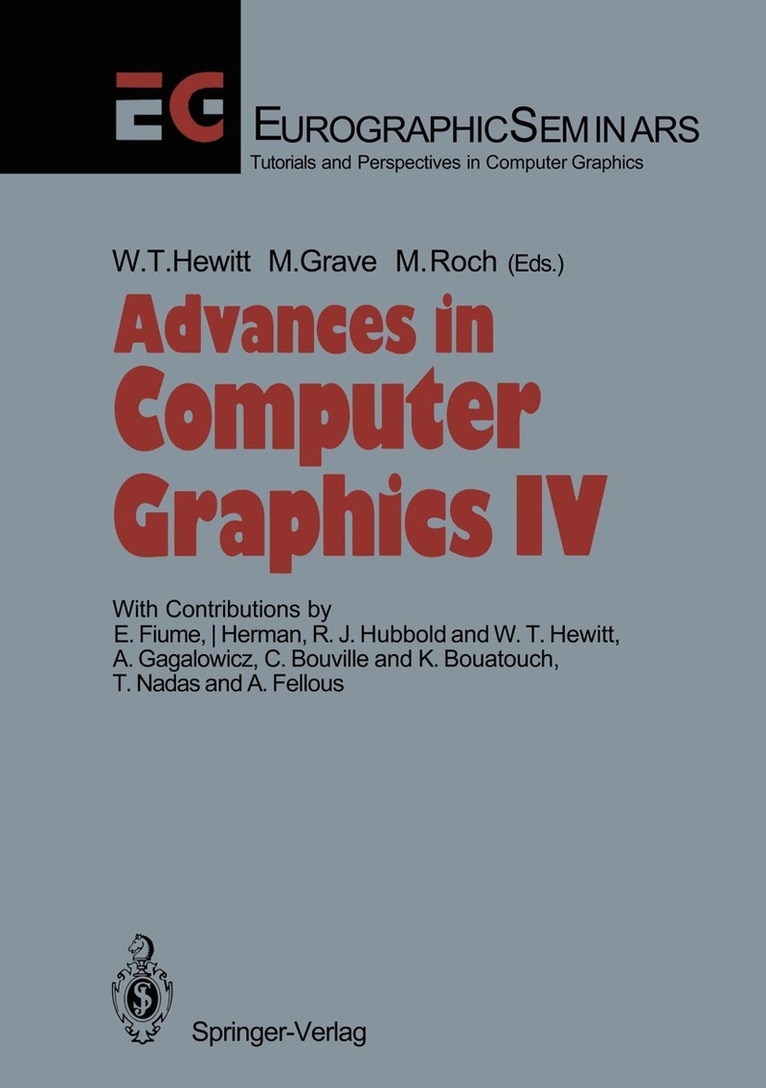
Advances in Computer Graphics IV
Av W.T. Hewitt, Michel Grave m. fl.
Häftad, 2012
1096 kr
Lägg i varukorg
This fourth volume of Advances in Computer Graphics gathers together a selection of the tutorials presented at the EUROGRAPHICS annual conference in Nice, France, Septem ber 1988. The six contributions cover various disciplines in Computer Graphics, giving either an in-depth view of a specific …
Visualization in Scientific Computing '97
Proceedings of the Eurographics Workshop in Boulogne-sur-Mer France, April 28–30, 1997
Av Michel Grave, Wilfrid Lefer
E-bok, 2013
755 kr
Lägg i varukorg
Visualization is now recognized as a powerful approach to get insight in large datasets produced by scientific experimentations and simulations. The contributions to this book cover technical aspects as well as concreteapplications of visualization in various domains such as finance, physics, …