Michel Kinnaert - Böcker
Visar alla böcker från författaren Michel Kinnaert. Handla med fri frakt och snabb leverans.
3 produkter
3 produkter
1 475 kr
Skickas inom 10-15 vardagar
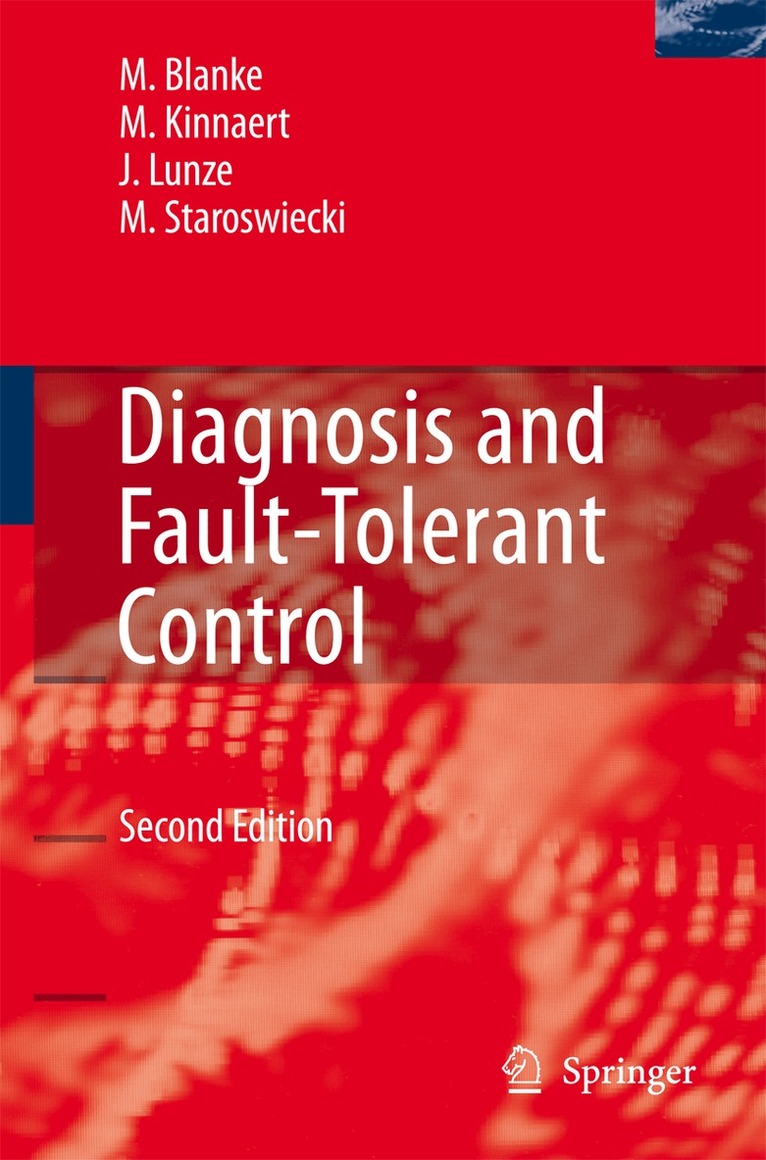
Fault-tolerant control aims at a graceful degradation of the behaviour of automated systems in case of faults. It satisfies the industrial demand for enhanced availability and safety, in contrast to traditional reactions to faults that bring about sudden shutdowns and loss of availability.The book presents effective model-based analysis and design methods for fault diagnosis and fault-tolerant control. Architectural and structural models are used to analyse the propagation of the fault throught the process, to test the fault detectability and to find the redundancies in the process that can be used to ensure fault tolerance. Design methods for diagnostic systems and fault-tolerant controllers are presented for processes that are described by analytical models, by discrete-event models or that can be dealt with as quantised systems. Five case studies on pilot processes show the applicability of the presented methods. The theoretical results are illustrated by two running examples used throughout the book.The second edition includes new material about reconfigurable control, diagnosis of nonlinear systems, and remote diagnosis. The application examples are extended by a steering-by-wire system and the air path of a diesel engine, both of which include experimental results. The bibliographical notes at the end of all chapters have been up-dated. The chapters end with exercises to be used in lectures.
1 276 kr
Skickas inom 10-15 vardagar
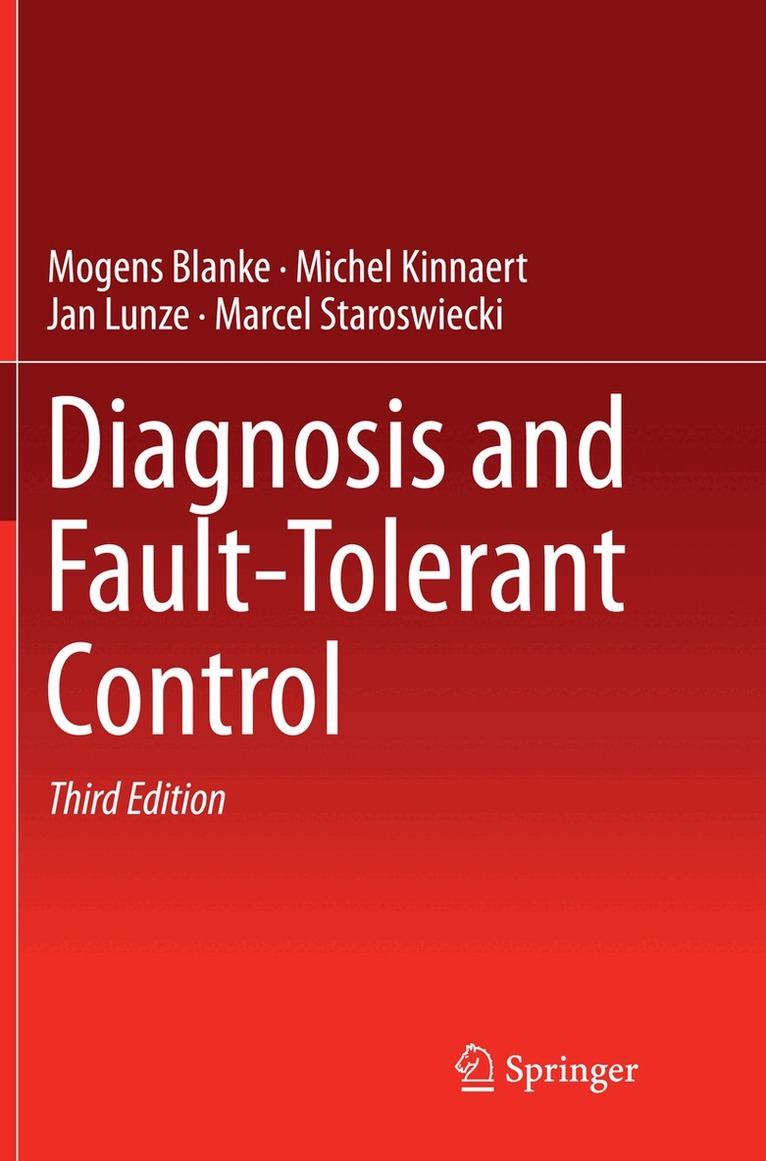
Fault-tolerant control aims at a gradual shutdown response in automated systems when faults occur. It satisfies the industrial demand for enhanced availability and safety, in contrast to traditional reactions to faults, which bring about sudden shutdowns and loss of availability.The book presents effective model-based analysis and design methods for fault diagnosis and fault-tolerant control. Architectural and structural models are used to analyse the propagation of the fault through the process, to test the fault detectability and to find the redundancies in the process that can be used to ensure fault tolerance. It also introduces design methods suitable for diagnostic systems and fault-tolerant controllers for continuous processes that are described by analytical models of discrete-event systems represented by automata. The book is suitable for engineering students, engineers in industry and researchers who wish to get an overview of thevariety of approaches to process diagnosis and fault-tolerant control.The authors have extensive teaching experience with graduate and PhD students, as well as with industrial experts. Parts of this book have been used in courses for this audience. The authors give a comprehensive introduction to the main ideas of diagnosis and fault-tolerant control and present some of their most recent research achievements obtained together with their research groups in a close cooperation with European research projects.The third edition resulted from a major re-structuring and re-writing of the former edition, which has been used for a decade by numerous research groups. New material includes distributed diagnosis of continuous and discrete-event systems, methods for reconfigurability analysis, and extensions of the structural methods towards fault-tolerant control. The bibliographical notes at the end of all chapters have been up-dated. The chapters end with exercises to be used in lectures.
906 kr
Skickas inom 10-15 vardagar
Fault-tolerant control aims at a gradual shutdown response in automated systems when faults occur. It satisfies the industrial demand for enhanced availability and safety, in contrast to traditional reactions to faults, which bring about sudden shutdowns and loss of availability.The book presents effective model-based analysis and design methods for fault diagnosis and fault-tolerant control. Architectural and structural models are used to analyse the propagation of the fault through the process, to test the fault detectability and to find the redundancies in the process that can be used to ensure fault tolerance. It also introduces design methods suitable for diagnostic systems and fault-tolerant controllers for continuous processes that are described by analytical models of discrete-event systems represented by automata. The book is suitable for engineering students, engineers in industry and researchers who wish to get an overview of thevariety of approaches to process diagnosis and fault-tolerant control.The authors have extensive teaching experience with graduate and PhD students, as well as with industrial experts. Parts of this book have been used in courses for this audience. The authors give a comprehensive introduction to the main ideas of diagnosis and fault-tolerant control and present some of their most recent research achievements obtained together with their research groups in a close cooperation with European research projects.The third edition resulted from a major re-structuring and re-writing of the former edition, which has been used for a decade by numerous research groups. New material includes distributed diagnosis of continuous and discrete-event systems, methods for reconfigurability analysis, and extensions of the structural methods towards fault-tolerant control. The bibliographical notes at the end of all chapters have been up-dated. The chapters end with exercises to be used in lectures.