Michel Odent - Böcker
Visar alla böcker från författaren Michel Odent. Handla med fri frakt och snabb leverans.
17 produkter
17 produkter
141 kr
Skickas
What is the future of the human capacity to give birth? What is the future of underused physiological functions? Should we expect an evolution of Homo sapiens in relation to the way babies are born? Can fast-developing scientific disciplines induce a new awareness? In this wide-ranging, interdisciplinary look at the future of birth, renowned obstetrician Michel Odent takes the question ‘Do we need midwives?’ as a starting point. If a paradigm shift occurs, what kind of midwives shall we need? For how long can we go on neutralizing the laws of natural selection? Are human beings able to raise vital questions before it is too late? Unprecedented situations should first and foremost inspire appropriate questions.
141 kr
Skickas
Since the middle of the twentieth century, the development of plastics has been one of the main factors influencing the history of medicine. For example, an anaesthesiologist was formerly an expert in delivering drugs by inhalation. Today, this expert delivers drugs through plastic catheters, in particular via intravenous and epidural routes. Traditionally, the scalpel was the symbol of surgery. Today, surgeons operate on internal organs with flexible plastic endoscopes - without cutting the skin. A typical modern woman in labour has one of her arms connected to a plastic bag through a plastic tube, while a plastic catheter is inserted in the epidural space in her spine. Focusing on obstetrics, this first book about the history of medicine in relation to the plastic revolution asks vital questions about childbirth today - and tomorrow - and demonstrates that the current turning point in the history of childbirth is also a turning point in the history of humanity. Introduced as a medical student to the surgical unit of a Paris hospital in 1949, and still involved in several fields of medicine, Michel Odent has the authority to study contemporary history from this new perspective.
146 kr
Skickas inom 7-10 vardagar
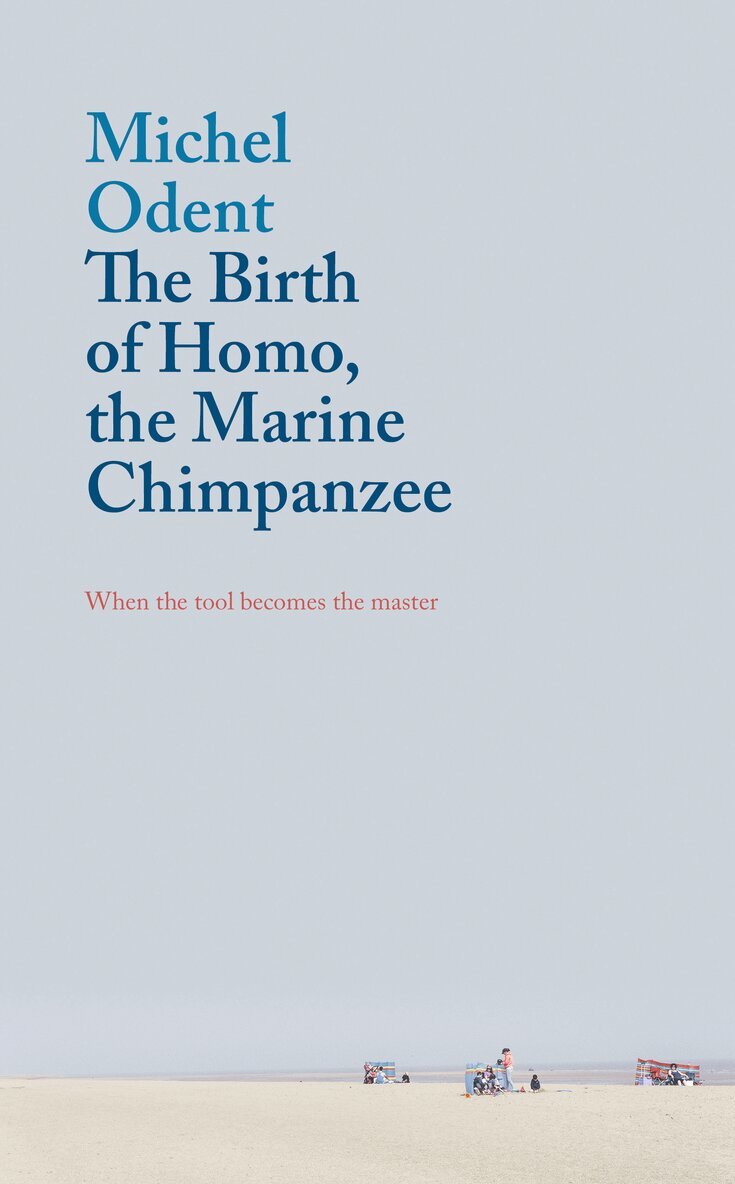
Drawing on a diversity of fast-developing disciplines including genetics, physiology, pathology as well as the history of canoeing and studies of the fluctuation of sea levels, revolutionary thinker and birth pioneer Michel Odent examines the case for viewing the genus Homo as a ‘marine chimpanzee’ – particularly adapted to coastal areas. By exploring the practical implications of this vision of our species, including in the period surrounding birth, the author raises questions about the very survival of humanity. At a time in history when human domination of Nature is more profound than ever before, are we on the cusp of a ‘symbiotic revolution’?With his characteristic ability to look at the ‘big picture’ and ask questions that challenge conventional thinking, Michel Odent once again manages to persuade readers to view themselves, and their species, in a new light.
148 kr
Skickas
Since the advent of agriculture and animal husbandry, the human population has multiplied by about one thousand in a ‘demographic explosion’. However, in recent years, global fertility rates have begun to decrease significantly, and this is one reason to make a case for humans being becoming an endangered species.Many of the possible interpretations of this dramatic U-turn in the history of mankind may be found in modern ways of being born. For example, where caesarean rates are high, the average number of babies born per woman is very low. During the ultimate phase of the history of socialised birth, the hormonal dance that was previously essential is altered or eliminated. Today childbirth needs to be highly medicalised, after thousands of years of misunderstanding of the physiological processes involved.In a renewed scientific context, it may still be possible to rediscover the basic needs of labouring women and to try to ensure the future of our species. Is it too late to reach such a utopia?Michel Odent re-evaluates the comparative importance of recently acquired insights, to suggest links between data and ways of thinking from a great diversity of highly specialised disciplines.
301 kr
Skickas inom 7-10 vardagar
255 kr
Skickas inom 5-8 vardagar
Love has been the realm of poets, artists and philosophers throughout history until recently, where it has been studied from a number of scientific perspectives. What the scientists are missing, argues Odent, is that love is vital as a strategy for the survival of the human race. Aggression and domination are no longer what we need to have an evolutionary advantage - what we need is the capacity to love. With a foreword by Miriam Stoppard, the author weaves together data from a multitude of disciplines and is able to offer a number of insightful and exciting explanations and makes the case for the adoption of radical new strategies for human survival. With maternal love as the prototype for all types of love, Odent examines the short, but critical time just after birth which has long-term consequences for our future capacity to love. The author looks at love holistically and in terms of the hormones which affect it in different parts of life, helping us to understand the conflict between civilisation and the natural state of the human race.Originally published in 1999, revised in 2001, and now re-released in paperback for 2014, this controversial and fascinating book by the world renowned Michel Odent is still truly groundbreaking.
262 kr
Skickas inom 7-10 vardagar
How did a magnificent rescue operation become such a common way of giving birth? And how safe is it really? Why do some countries have 10 per cent of caesarian births, and some more than 50 per cent? Why have risky procedures, such as forceps deliveries, not been eliminated by the C-section? What is the birthing pool test? What are the very first microbes met by a caesarean-born baby? Is it easy to breastfeed after a caesarean? Why are different approaches taken to scheduled C-sections, C-sections during labour, and emergency C-sections? What do mother and baby miss out on by not sharing a vaginal birth? What do we know about the long-term consequences of being born by caesarean? What do we know about the long-term consequences of giving birth by caesarean? What is the future of the 'a la carte'C-section? What is the future of a civilisation born by caesarean? Having been involved in half a century of the history of the caesarean, Dr Michel Odent is uniquely and authoritatively equipped to deal with these vital and urgent questions.
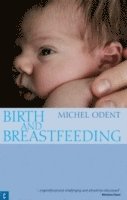
Birth and Breastfeeding
Rediscovering the Needs of Women During Pregnancy and Childbirth
Häftad, Engelska, 2007
117 kr
Skickas
Humanity, argues Michel Odent, stands at a crossroads in the history of childbirth - and the direction we choose to take will have critical consequences. Until recently a woman could not have had a baby without releasing a complex cocktail of 'love hormones'. In many societies today, most women give birth without relying on the release of such a flow of hormones. Some give birth via caesarean section, while others use drugs that not only block the release of these natural substances, but do not have their beneficial behavioural effects. 'This unprecedented situation must be considered in terms of civilization', says Odent, and gives us urgent new reasons to rediscover the basic needs of women in labour. At a time when pleas for the 'humanization' of childbirth are fashionable, the author suggests, rather, that we should first accept our 'mammalian' condition and give priority to the woman's need for privacy and to feel secure. The activity of the intellect, the use of language, and many cultural beliefs and rituals - which are all special to humans - are handicaps in the period surrounding birth. Says Odent: 'To give birth to her baby, the mother needs privacy.She needs to feel unobserved. The newborn baby needs the skin of the mother, the smell of the mother, her breast. These are all needs that we hold in common with the other mammals, but which humans have learned to neglect, to ignore or even deny.' Expectant parents, midwives, doulas, childbirth educators, those involved in public health, and all those interested in the future of humanity, will find this a provocative and visionary book.
Primal Health
Understanding the Critical Period Between Conception and the First Birthday
Häftad, Engelska, 2007
131 kr
Skickas
Michel Odent, the leading pioneer for natural childbirth, indicates that the period between conception and a child's first birthday is critical to life-long health. In this prophetic book - first published in 1986 and reproduced here in its original form - he argues that different parts of the 'primal adaptive system' develop, regulate and adjust themselves during foetal life and the time around birth and infancy. 'Everything which happens during this period of dependence on the mother has an influence on this basic state of health, this primal health.' He suggests that the later well-being of adults, their ability to withstand the 'diseases of civilization' such as hypertension, cancer, alcoholism and failures of the immune system resulting in AIDS, allergies and viral diseases, can all be traced back to society's ignorance of the vital importance of the primal period. Since the first edition of this groundbreaking work, research has continued apace, offering further evidence to substantiate Odent's ideas. In the important new "Introduction and Postscript", the author reviews recent developments and relates them to the central themes of Primal Health.This book is essential reading for all who care about the health of our children and the ongoing health of society as a whole.
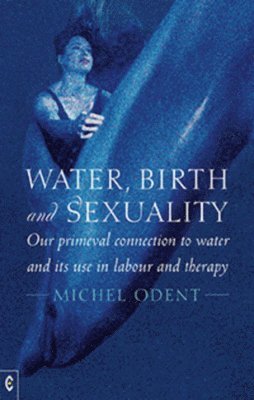
Water, Birth and Sexuality
Our Primeval Connection to Water, and its Use in Labour and Therapy
Häftad, Engelska, 2014
121 kr
Skickas
'After the historic student revolt in France a period of audacious creativity resulted. The watchword was: "It is forbidden to forbid". We took advantage of this transient cultural folly to do what would have been impossible ten years before or ten years after, introducing in the maternity unit of a state hospital an inflatable outdoor pool as a way to replace drugs during birth.' - from the Introduction In this groundbreaking book, Dr Odent takes as his starting point the world-famous work on childbirth at Pithiviers, where he first noticed the strong attraction to water that many women have during labour. As well as discovering the practical advantages of water during the birthing process, he began to consider the meaning and importance of water as a symbol. Water, Birth and Sexuality examines the living power of water and its erotic connotations. Odent evaluates what water meant in different cultures throughout history, through myths and legends, and what it means for us today: from an advertiser's tool to a metaphor for aspects of the psyche. He also studies humanity's special relationship to dolphins, and the related 'aquatic ape' theory.A practical section on the use of water during birth and in various therapies, particularly sex therapy, is included.This edition of this classic work features a new Introduction.
138 kr
Skickas
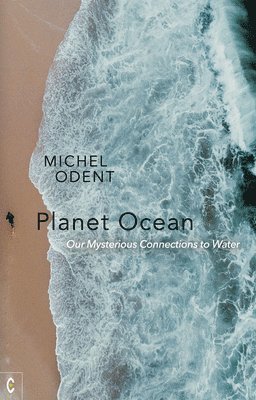
After introducing the concept of the birthing pool in the 1970s, Michel Odent has continuously expanded his interest in the mysterious connections between humans and water. In Planet Ocean he shows that the evolution of the oceans - particularly the fluctuations of sea levels - and the evolution of humans are inseparable. The oceans are the givers and sustainers of life, holding ninety-five per cent of the planet's habitable space within their immense depths.Odent steers us towards a radically new vision of human nature. Our defining feature - a supersized brain - becomes a leitmotif that enables links between topics as diverse as our nutritional needs, our relationship with sea mammals, and the way members of our species give birth. He relates 'transcendent emotional states' with what the French writer Romain Rolland referred to as 'the oceanic feeling' - both suggesting the absence of limits. Access to such states can be associated with, for example, a 'foetus ejection reflex'. This leads to the extraordinary conclusion that swimming - as learnt behaviour among humans - the birth process and access to transcendence are interrelated topics for students of human nature.Planet Ocean is a fascinating interdisciplinary study that demonstrates our manifold connections to water and suggests their relevance to everyday life.
156 kr
Skickas inom 3-6 vardagar
269 kr
Skickas inom 3-6 vardagar
240 kr
Skickas inom 3-6 vardagar
312 kr
Skickas inom 3-6 vardagar
1 132 kr
Skickas inom 5-8 vardagar
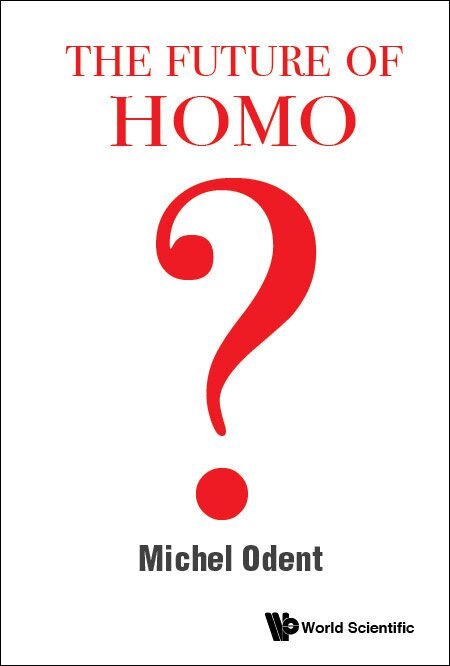
At a global scale, love hormones are now redundant in the critical period surrounding birth ... reasons for questions?Between 1970 and 1990, in many parts of the world, the rates of caesareans escalated from roughly 5% to roughly 25%. During this short phase of history, the father's participation became routine. Is there a link between these facts?Health care systems are on the way to collapsing. Should we go on focusing on the preventive and curative treatments of particular diseases or should we give a greater importance to the way our basic adaptive systems, involved in what we commonly call health, reach a high degree of maturity?These examples are sufficient to illustrate the "neo-Socratic attitude" of the author. Our contemporaries are constantly dealing with unprecedented situations. Question marks, therefore, can symbolise the current phase of our history. Throughout this book, radically new situations are analysed, before appropriate questions are phrased.At a time when people commonly debate on the long-term effects of human activities without considering the probable transformations of Homo, one cannot avoid a preliminary question: How to reach an audience made up of female and male open-minded people who are turned towards the future but have not yet realised that the important period surrounding birth has been radically transformed during the past decades?In the age of cultural blindness related to overspecialization, The Future of Homo is also a training tool to think across boundaries.
318 kr
Skickas inom 5-8 vardagar
At a global scale, love hormones are now redundant in the critical period surrounding birth ... reasons for questions?Between 1970 and 1990, in many parts of the world, the rates of caesareans escalated from roughly 5% to roughly 25%. During this short phase of history, the father's participation became routine. Is there a link between these facts?Health care systems are on the way to collapsing. Should we go on focusing on the preventive and curative treatments of particular diseases or should we give a greater importance to the way our basic adaptive systems, involved in what we commonly call health, reach a high degree of maturity?These examples are sufficient to illustrate the "neo-Socratic attitude" of the author. Our contemporaries are constantly dealing with unprecedented situations. Question marks, therefore, can symbolise the current phase of our history. Throughout this book, radically new situations are analysed, before appropriate questions are phrased.At a time when people commonly debate on the long-term effects of human activities without considering the probable transformations of Homo, one cannot avoid a preliminary question: How to reach an audience made up of female and male open-minded people who are turned towards the future but have not yet realised that the important period surrounding birth has been radically transformed during the past decades?In the age of cultural blindness related to overspecialization, The Future of Homo is also a training tool to think across boundaries.