201 kr
Michel Serres – författare
- Häftad, Engelska, 2007Influential philosopher Michel Serres’s foundational work uses fable to explore how human relations are identical to that of the parasite to the host body. Among Serres’s arguments is that by being pests, minor groups can become major players in public dialogue-creating diversity and complexity vital to human life and thought. Michel Serres is professor in history of science at the Sorbonne, professor of Romance languages at Stanford University, and author of several books, including Genesis. Lawrence R. Schehr is professor of French at the University of Illinois, Urbana-Champaign. Cary Wolfe is Bruce and Elizabeth Dunlevie Professor of English at Rice University. His books include Zoontologies: The Question of the Animal (Minnesota, 2003).
- Häftad, Engelska, 2016
339 kr
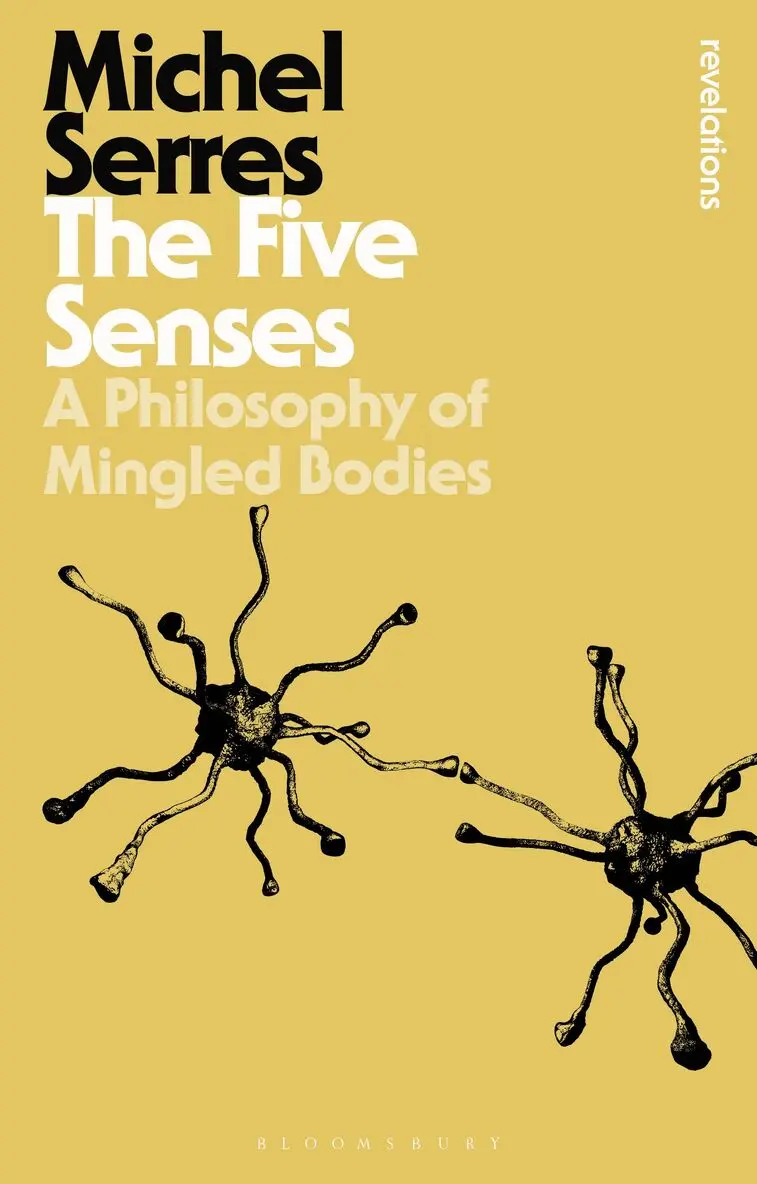
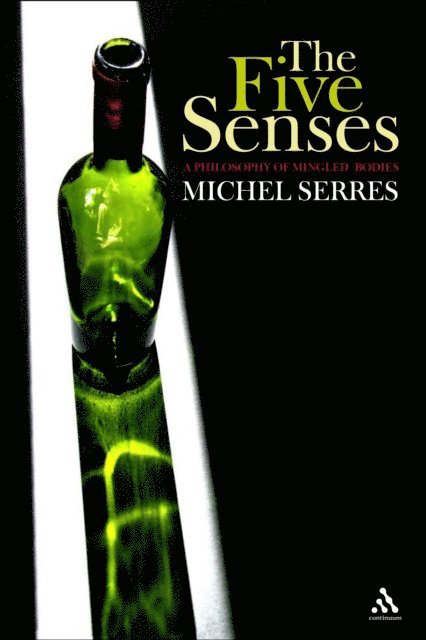
Marginalized by the scientific age the lessons of the senses have been overtaken by the dominance of language and the information revolution. With The Five Senses Serres traces a topology of human perception, writing against the Cartesian tradition and in praise of empiricism, he demonstrates repeatedly, and lyrically, the sterility of systems of knowledge divorced from bodily experience. The fragile empirical world, long resistant to our attempts to contain and catalog it, is disappearing beneath the relentless accumulations of late capitalist society and information technology. Data has replaced sensory pleasure, we are less interested in the taste of a fine wine than in the description on the bottle's label. What are we, and what do we really know, when we have forgotten that our senses can describe a taste more accurately than language ever could? The book won the inaugural Prix Médicis Essai in 1985. The Revelations edition includes an introduction by Steven Connor. - Häftad, Engelska, 1997
257 kr
Skickas inom 5-8 vardagar
This English translation of Michel Serres' 1982 book Genèse captures in lucid prose the startling breadth and depth of his thinking, as he probes the relations between order, disorder, knowledge, anxiety, and violence. Written in a unique blend of scientific discourse and lyrical outburst, classical philosophical idiom and conversational intimacy, by turns angry, playful, refined or discordant, Genesis is an attempt to think outside of metaphysical categories of unity or rational order and to make us hear--through both its content and form--the "noise," the "sound and the fury," that are the background of life and thought.Serres draws on a vast knowledge of such diverse disciplines as anthropology, classical history, music, theology, art history, information theory, physics, biology, dance and athletics, and Western metaphysics, and a range of cultural material that includes the writings of Plato, Kant, August Comte, Balzac, and Shakespeare, to name a few. He argues that although philosophy has been instrumental in the past in establishing laws of logic and rationality that have been crucial to our understanding of ourselves and our universe, one of the most pressing tasks of thought today is to recognize that such pockets of unity are islands of order in a sea of multiplicity--a sea which cannot really be conceived, but which perhaps can still be sensed, felt, and heard raging in chaos beneath the momentary crests of order imposed by human civilization.Philosophy of science or prose poetry, a classical meditation on metaphysics or a stream-of-consciousness polemic and veiled invective, Serres mounts a quirky, at times rhapsodical, but above all a "noisy" critique of traditional and current models in social theory, historiography, and aesthetics. The result is a work that is at once provocative, poetic, deeply personal, and ultimately religious--an apocalyptic call for the rebirth of philosophy as the art of thinking the unthinkable.About the Book:"An intensely beautiful and rigourous meditation on the birth of forms amid chaos and multiplicity from a major philosopher who is also an exquisite craftsman of the written word." --William Paulson, University of Michigan "Serres exhibits a rare, raw tendentiousness refreshing in its vitriol . . . it's the sort of light-hearted, perverse, and basically liberal tirade one hears too infrequently of late." --Word - Inbunden, Engelska, 2008
2 433 kr
Skickas inom 10-15 vardagar
Available for the first time in English! Winner of the Prix Medicis Essai! Marginalized by the scientific age with its metaphysical and philosophical systems, the lessons of the senses have been overtaken by the dominance of language and the information revolution. Exploring the deleterious effects of the systematic downgrading of the senses in Western philosophy, Michel Serres - a member of the Academie Francaise and one of France's leading philosophers - traces a topology of human perception. Writing against the Cartesian tradition and in praise of empiricism, he demonstrates repeatedly, and lyrically, the sterility of systems of knowledge divorced from bodily experience. The fragile empirical world, long resistant to our attempts to contain and catalog it, is disappearing beneath the relentless accumulations of late capitalist society and information technology. Data has replaced sensory pleasure, we are less interested in the taste of a fine wine than in the description on the bottle's label. What are we, and what do we really know, when we have forgotten that our senses can describe a taste more accurately than language ever could? - Inbunden, Engelska, 2017
506 kr
Skickas inom 10-15 vardagar
In this third installment of his classic 'Foundations' trilogy, Michel Serres takes on the history of geometry and mathematics. Even more broadly, Geometry is the beginnings of things and also how these beginnings have shaped how we continue to think philosophically and critically. Serres rejects a traditional history of mathematics which unfolds in a linear manner, and argues for the need to delve into the past of maths and identify a series of ruptures which can help shed light on how this discipline has developed and how, in turn, the way we think has been shaped and formed.This meticulous and lyrical translation marks the first ever English translation of this key text in the history of ideas. - Häftad, Engelska, 2012
241 kr
Skickas inom 5-8 vardagar
World-renowned philosopher, Michel Serres writes a text in praise of the body and movement, in praise of teachers of physical education, coaches, mountain guides, athletes, dancers, mimes, clowns, artisans, and artists. This work describes the variations, the admirable metamorphoses that the body can accomplish. While animals lack such a variety of gestures, postures, and movements, the fluidity of the human body mimics the leisure of living beings and things; what’s more, it creates signs. Already here, within its movements and metamorphoses, the mind is born. The five senses are not the only source of knowledge: it emerges, in large part, from the imitations the plasticity of the body allows. In it, with it, by it knowledge begins. - Häftad, Engelska, 1995
316 kr
Skickas inom 5-8 vardagar
Although elected to the prestigious French Academy in 1990, Michel Serres has long been considered a maverick--a provocative thinker whose prolific writings on culture, science and philosophy have often baffled more than they have enlightened. In these five lively interviews with sociologist Bruno Latour, this increasingly important cultural figure sheds light on the ideas that inspire his highly original, challenging, and transdisciplinary essays.Serres begins by discussing the intellectual context and historical events-- including the impact of World War II and Hiroshima, which for him marked the beginning of science's ascendancy over the humanities--that shaped his own philosophical outlook and led him to his lifelong mission of bringing together the texts of the humanities and the conceptual revolutions of modern science. He then confronts the major difficulties encountered by his readers: his methodology, his mathematician's fondness for "shortcuts" in argument, and his criteria for juxtaposing disparate elements from different epochs and cultures in extraordinary combinations. Finally, he discusses his ethic for the modern age--a time when scientific advances have replaced the natural necessities of disease and disaster with humankind's frightening new responsibility for vital things formerly beyond its control.In the course of these conversations Serres revisits and illuminates many of his themes: the chaotic nature of knowledge, the need for connections between science and the humanities, the futility of traditional criticism, and what he calls his "philosophy of prepositions"--an argument for considering prepositions, rather than the conventionally emphasized verbs and substantives, as the linguistic keys to understanding human interactions. For readers familiar with Serres's works as well as for the uninitiated, Conversations on a Life in Philosophy provides fascinating insights into the mind of this appealing, innovative and ardent thinker.Michel Serres has taught at Clermont-Ferrand, at the University of Paris VIII (Vincennes) and at the Sorbonne. He has served as visiting professor at Johns Hopkins University and has been on the faculty of Stanford University since 1984. Bruno Latour, a philosopher and anthropologist, is Professor of Sociology, L'Ecole Nationale Supérieure des Mines in Paris. He has written several books and numerous articles on the ties between the sciences and the rest of culture and society.Roxanne Lapidus is Managing Editor of SubStance: A Review of Theory and Literary Criticism. Conversations on a Life in Philosophy was originally published in France as Eclaircissements. - Häftad, Engelska, 1995
312 kr
Global environmental change, argues Michel Serres, has forced us to reconsider our relationship to nature. In this translation of his influential 1990 book Le Contrat Naturel, Serres calls for a natural contract to be negotiated between Earth and its inhabitants.World history is often referred to as the story of human conflict. Those struggles that are seen as our history must now include the uncontrolled violence that humanity perpetrates upon the earth, and the uncontrollable menace to human life posed by the earth in reaction to this violence. Just as a social contract once brought order to human relations, Serres believes that we must now sign a "natural contract" with the earth to bring balance and reciprocity to our relations with the planet that gives us life. Our survival depends on the extent to which humans join together and act globally, on an earth now conceived as an entity. Tracing the ancient beginnings of modernity, Serres examines the origins and possibilities of a natural contract through an extended meditation on the contractual foundations of law and science. By invoking a nonhuman, physical world, Serres asserts, science frees us from the oppressive confines of a purely social existence, but threatens to become a totalitarian order in its own right. The new legislator of the natural contract must bring science and law into balance.Serres ends his meditation by retelling the story of the natural contract as a series of parables. He sees humanity as a spacecraft that with the help of science and technology has cast off from familiar moorings. In place of the ties that modernity and analytic reason have severed, we find a network of relations both stranger and stronger than any we once knew, binding us to one another and to the world. The philosopher's harrowing and joyous task, Serres tells us, is that of comprehending and experiencing the bonds of violence and love that unite us in our spacewalk to the spaceship Mother Earth. "Wise, rich and poetic . . . not simply a philosophical study of the Environment, or an ecological questioning of Philosophy . . . Nature is acknowledged as an inside force which breaks [the philosopher's] discourse, and opens it up to a vigilant poetic meditation."--Substance: A Review of Theory and Literary Criticism - Häftad, Engelska, 1997
316 kr
Skickas inom 5-8 vardagar
What do we do when we raise a child, teach a student, or educate a person as a member of society? For the French philosopher Michel Serres, all of these forms of pedagogy require painful yet exhilarating departures from home and encounters with Otherness. Like a swimmer who plunges into the river's current to reach the opposite bank, the person who wishes to learn must risk a voyage from the familiar to the strange. True education, Serres writes, takes place in the fluid middle of this crossing. To be educated is to become a harlequin, a crossbreed, a hybrid of our origins--like a newborn child, complexly produced as a mixture of maternal and paternal genes, yet an independent existence, separated from the familiar and determined.In this wide-ranging meditation on learning and difference, Serres--the scientist turned epistemologist, philosopher turned moralist, reveler of being a half-breed from every point of view--explores numerous pathways in philosophy, science, and literature to argue that the best contemporary education requires knowledge of both science's general truths and literature's singular stories. He heralds a new pedagogy which claims that from the crossbreeding of the humanities and the sciences a new educational ideal can be born: the troubadour of knowledge.With his agile and poetic voice, Serres has created a meditation of precisely this pluralistic creation, deftly recognizing it as a third party bred not of orderly dialectics but of the destabilizing multiplicity of the present age. Those who know the enormous range and clarity of this thinker will welcome this latest volume translated into English by Sheila Glaser with the assistance of William Paulson.Michel Serres has taught at Clermont-Ferrand, the University of Paris VIII [Vincennes], the Sorbonne, and Stanford University, and has served as visiting professor at Johns Hopkins University. Other works of his available in English translation include Conversations on Science, Culture, and Time (with Bruno Latour), Genesis, and The Natural Contract, also published by The University of Michigan Press.Sheila Glaser is Reviews Editor of Artforum magazine. William Paulson is Professor of French and Chair of the Department of Romance Languages and Literatures at the University of Michigan. - Häftad, Engelska, 2026
172 kr
Skickas inom 5-8 vardagar
- Häftad, Engelska, 2010
215 kr
Skickas inom 10-15 vardagar
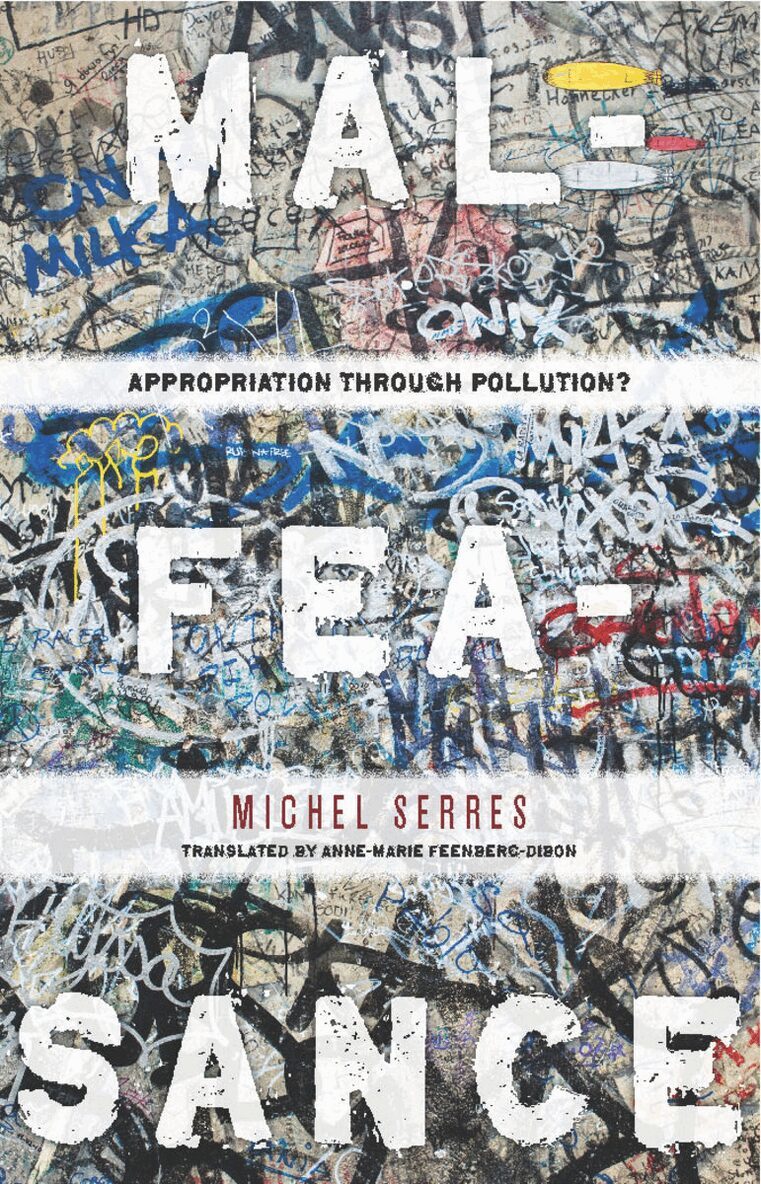
In this highly original and provocative book, Michel Serres reflects on the relation between nature and culture and analyzes the origins of the world's contemporary environmental problems. He does so through the surprising proposition that our cleanliness is our dirt. While all living beings pollute to lay claim to their habitat, humans have multiplied pollution's effects catastrophically since the Industrial Revolution through the economic system's mode of appropriation and its emphasis on mindless growth. He warns that while we can measure what he calls "hard pollution"—the poisoning of the Earth—we ignore at our peril the disastrous impact of the "soft pollution" created by sound and images on our psyches. Sounding the alarm that the planet is heading for disaster, Serres proposes that humanity should stop trying to "own" the world and become "renters." Building on his earlier work, especially that on hominization, he urges us to establish a "natural contract" with nature.Published with the assistance of the Edgar M. Kahn Memorial Fund. - Inbunden, Engelska, 2023
1 339 kr
Skickas inom 10-15 vardagar
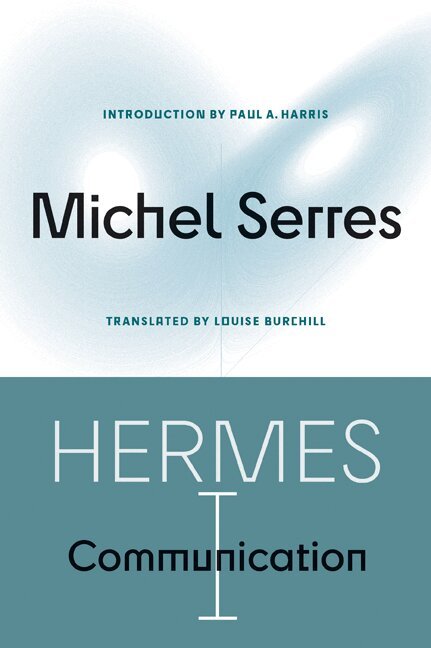
For the first time in English, the introductory volume in a major French philosopher’s groundbreaking series of poetic transdisciplinary worksMichel Serres is recognized as one of the giants of postwar French philosophy of knowledge, along with Gilles Deleuze, Jacques Derrida, Michel Foucault, and Gilbert Simondon. His early five-volume series Hermes, which appeared in the 1960s and 1970s, was an intellectual supernova in its proposition that culture and science shared the same mythic and narrative structures. Hermes I: Communication marks the start of a major publishing endeavor to introduce this foundational series into English. Building on the figure of the Greek god Hermes, who presides over the realms of communication and interpretation, Hermes I embarks on a reflection concerning the history of mathematics via Descartes and Leibniz and culminates by way of a Bachelardian logoanalytic reading of Homer, Dumas, MoliÈre, Verne, and the story of Cinderella. We observe a singular poetic philosopher seeking to bridge the gap between the liberal arts and the sciences through a profound mathematical and poetic fable regarding information theory, history, and art, establishing a new way to think about the production of knowledge during the late twentieth century. In these pages, students and scholars of philosophy will discover an extraordinary project of thought as vital to critical reflection today as it was fifty years ago. - Häftad, Engelska, 2023
321 kr
Skickas inom 5-8 vardagar
For the first time in English, the introductory volume in a major French philosopher’s groundbreaking series of poetic transdisciplinary worksMichel Serres is recognized as one of the giants of postwar French philosophy of knowledge, along with Gilles Deleuze, Jacques Derrida, Michel Foucault, and Gilbert Simondon. His early five-volume series Hermes, which appeared in the 1960s and 1970s, was an intellectual supernova in its proposition that culture and science shared the same mythic and narrative structures. Hermes I: Communication marks the start of a major publishing endeavor to introduce this foundational series into English. Building on the figure of the Greek god Hermes, who presides over the realms of communication and interpretation, Hermes I embarks on a reflection concerning the history of mathematics via Descartes and Leibniz and culminates by way of a Bachelardian logoanalytic reading of Homer, Dumas, MoliÈre, Verne, and the story of Cinderella. We observe a singular poetic philosopher seeking to bridge the gap between the liberal arts and the sciences through a profound mathematical and poetic fable regarding information theory, history, and art, establishing a new way to think about the production of knowledge during the late twentieth century. In these pages, students and scholars of philosophy will discover an extraordinary project of thought as vital to critical reflection today as it was fifty years ago. - Inbunden, Engelska, 2025
1 214 kr
Skickas inom 10-15 vardagar
Unveiling the hidden connections in the network of knowledgeHermes II: Interference is the second in a series of works by philosopher Michel Serres using Hermes, god of communication, as an archetypal symbolic figure for reflecting on philosophy and the arts and sciences. Serres delves into the concept of interreferentiality, proposing that every node-whether it be knowledge, objects, or people-exists within a network where it both receives and transmits information. He argues against the existence of a dominant center or pole within these networks, emphasizing that each node can temporarily serve as a focal point depending on context. Serres presents unique insights into topics such as the nature of knowledge, the world of objects, intersubjectivity, the origins of geometry, the interplay of music and background noise, and empiricism. By identifying parallel structures across these areas, Serres unifies them into a comprehensive theoretical framework, revealing hidden connections and potential future influences. Additionally, this work includes a critique of Gaston Bachelard’s The Formation of the Scientific Mind and concludes with an analysis of communication in HergÉ’s The Castafiore Emerald. Hermes II is a unique blend of ancient and modern perspectives, combining rigorous analysis with an optimistic outlook and highlighting the interconnectedness of knowledge and its implications for fostering peaceful relations within the network of life. - Häftad, Engelska, 2025
294 kr
Skickas inom 5-8 vardagar
Unveiling the hidden connections in the network of knowledgeHermes II: Interference is the second in a series of works by philosopher Michel Serres using Hermes, god of communication, as an archetypal symbolic figure for reflecting on philosophy and the arts and sciences. Serres delves into the concept of interreferentiality, proposing that every node-whether it be knowledge, objects, or people-exists within a network where it both receives and transmits information. He argues against the existence of a dominant center or pole within these networks, emphasizing that each node can temporarily serve as a focal point depending on context. Serres presents unique insights into topics such as the nature of knowledge, the world of objects, intersubjectivity, the origins of geometry, the interplay of music and background noise, and empiricism. By identifying parallel structures across these areas, Serres unifies them into a comprehensive theoretical framework, revealing hidden connections and potential future influences. Additionally, this work includes a critique of Gaston Bachelard’s The Formation of the Scientific Mind and concludes with an analysis of communication in HergÉ’s The Castafiore Emerald. Hermes II is a unique blend of ancient and modern perspectives, combining rigorous analysis with an optimistic outlook and highlighting the interconnectedness of knowledge and its implications for fostering peaceful relations within the network of life. - Inbunden, Engelska, 2026
1 279 kr
Skickas inom 5-8 vardagar
Unlocking the hidden patterns of knowledge - where science, art, and philosophy speak a common languageHermes III: Translation is the third volume in Michel Serres's renowned Hermes series, an ambitious exploration of the deep interconnections among disparate fields of knowledge. While Hermes II: Interference traced the overlapping echoes of ideas across realms, Hermes III moves to translate the structural logics of one field - be it genetics, painting, or philosophy - into the language of another. Revealing how the humanities, science, and art share hidden combinatory architectures, Serres exposes the underlying unity of knowledge systems typically thought distinct.Through an array of examples—from Monod's Chance and Necessity to works by Descartes, Leibniz, Comte, Turner, and Roumain—Serres shows how translation uncovers informational and mathematical patterns that shape both ancient and modern thought. This illuminating methodology leads Serres to issue a stark warning: when knowledge is detached from its guiding purpose, it becomes vulnerable to appropriation by destructive political forces.Yet Serres's vision remains ultimately hopeful. By tracing knowledge systems back to their mythic and structural roots, Hermes III: Translation gestures toward more harmonious relationships between fields. A rare synthesis of philosophy, science, art, and literature, this work will engage readers interested in the interdependence of disciplines and the possibilities for a more unified, humane understanding of knowledge. - Häftad, Engelska, 2008
573 kr
Skickas inom 10-15 vardagar
Marginalized by the scientific age with its metaphysical and philosophical systems, the lessons of the senses have been overtaken by the dominance of language and the information revolution. Exploring the deleterious effects of the systematic downgrading of the senses in Western philosophy, Michel Serres member of the Acad mie franaise and one of France's leading philosophers traces a topology of human perception. Writing against the Cartesian tradition and in praise of empiricism, he demonstrates repeatedly, and lyrically, the sterility of systems of knowledge divorced from bodily experience. The fragile empirical world, long resistant to our attempts to contain and catalogue it, is disappearing beneath the relentless accumulations of late capitalist society and information technology. Data has replaced sensory pleasure, we are less interested in the taste of a fine wine than in the description on the bottle's label. What are we, and what do we really know, when we have forgotten that our senses can describe a taste more accurately than language ever could. - E-bokPDF, Engelska, 2008
634 kr
Läs direkt efter köp
Available for the first time in English!Winner of the Prix Médicis Essai! Marginalized by the scientific age with its metaphysical and philosophical systems, the lessons of the senses have been overtaken by the dominance of language and the information revolution. Exploring the deleterious effects of the systematic downgrading of the senses in Western philosophy, Michel Serres - a member of the Académie Française and one of France's leading philosophers - traces a topology of human perception. Writing against the Cartesian tradition and in praise of empiricism, he demonstrates repeatedly, and lyrically, the sterility of systems of knowledge divorced from bodily experience. The fragile empirical world, long resistant to our attempts to contain and catalog it, is disappearing beneath the relentless accumulations of late capitalist society and information technology. Data has replaced sensory pleasure, we are less interested in the taste of a fine wine than in the description on the bottle's label. What are we, and what do we really know, when we have forgotten that our senses can describe a taste more accurately than language ever could? - E-bokEngelska, 2014
803 kr
Läs direkt efter köp
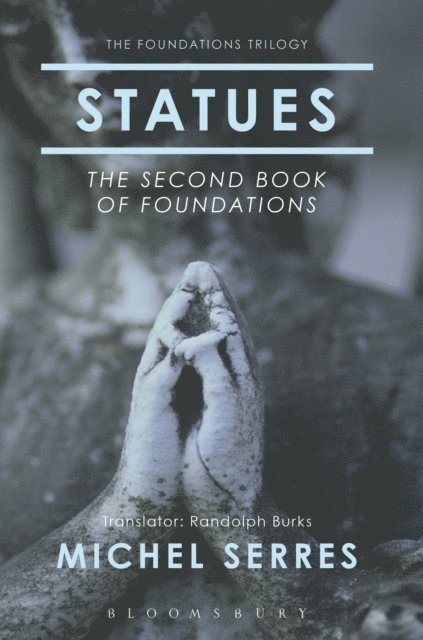
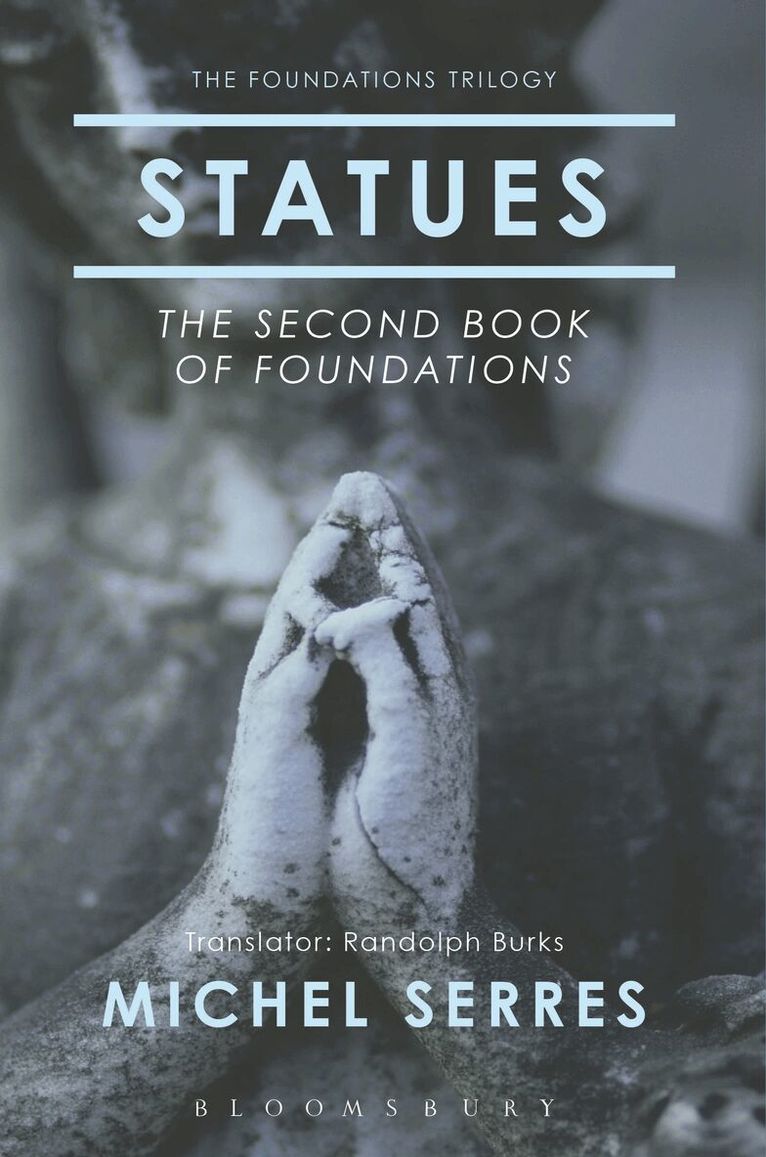
In this first English translation of one of his most important works, Michel Serres presents the statue as more than a static entity: for Serres it is the basis for knowledge, society, the subject and object, the world and experience. Serres demonstrates how sacrificial art founded and still persists in society and reflects on the centrality of death and the statufied dead body to the human condition.Each section covers a different time period and statuary topic, ranging from four thousand years ago to 1986; from Baal, the paintings of Carpaccio, and the Eiffel Tower, to Rodin''s The Gates of Hell, the Challenger disaster and the literature of Maupassant, La Fontaine and Jules Verne. Expository, lyrical, fictionalized and hallucinatory, Statues plays with time and place, history and story in order to provoke us into thinking in entirely new ways.Through mythic and poetic meditations on various kinds of descent into the underworld and new insights into the relation of the subject and object and their foundation in death, Statues contains great treasures and provocations for philosophers, literary critics, art historians and sociologists. - E-bokPDF, Engelska, 2014
830 kr
Läs direkt efter köp
In this first English translation of one of his most important works, Michel Serres presents the statue as more than a static entity: for Serres it is the basis for knowledge, society, the subject and object, the world and experience. Serres demonstrates how sacrificial art founded and still persists in society and reflects on the centrality of death and the statufied dead body to the human condition.Each section covers a different time period and statuary topic, ranging from four thousand years ago to 1986; from Baal, the paintings of Carpaccio, and the Eiffel Tower, to Rodin''s The Gates of Hell, the Challenger disaster and the literature of Maupassant, La Fontaine and Jules Verne. Expository, lyrical, fictionalized and hallucinatory, Statues plays with time and place, history and story in order to provoke us into thinking in entirely new ways.Through mythic and poetic meditations on various kinds of descent into the underworld and new insights into the relation of the subject and object and their foundation in death, Statues contains great treasures and provocations for philosophers, literary critics, art historians and sociologists. - Inbunden, Engelska, 2014
770 kr
Skickas inom 10-15 vardagar
In this first English translation of one of his most important works, Michel Serres presents the statue as more than a static entity: for Serres it is the basis for knowledge, society, the subject and object, the world and experience. Serres demonstrates how sacrificial art founded and still persists in society and reflects on the centrality of death and the statufied dead body to the human condition.Each section covers a different time period and statuary topic, ranging from four thousand years ago to 1986; from Baal, the paintings of Carpaccio, and the Eiffel Tower, to Rodin's The Gates of Hell, the Challenger disaster and the literature of Maupassant, La Fontaine and Jules Verne. Expository, lyrical, fictionalized and hallucinatory, Statues plays with time and place, history and story in order to provoke us into thinking in entirely new ways.Through mythic and poetic meditations on various kinds of descent into the underworld and new insights into the relation of the subject and object and their foundation in death, Statues contains great treasures and provocations for philosophers, literary critics, art historians and sociologists. - Inbunden, Engelska, 2015
645 kr
Skickas inom 10-15 vardagar
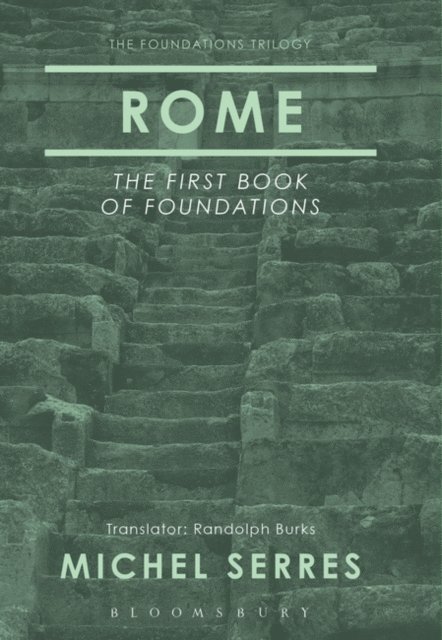
Michel Serres first book in his 'foundations trilogy' is all about beginnings. The beginning of Rome but also about the beginning of society, knowledge and culture. Rome is an examination of the very foundations upon which contemporary society has been built.With characteristic breadth and lyricism, Serres leads the reader on a journey from a meditation the roots of scientific knowledge to set theory and aesthetics. He explores the themes of violence, murder, sacrifice and hospitality in order to urge us to avoid the repetitive violence of founding. Rome also provides an alternative and creative reading of Livy's Ab urbe condita which sheds light on the problems of history, repetition and imitation.First published in English in 1991, re-translated and introduced in this new edition, Michel Serres' Rome is a contemporary classic which shows us how we came to live the way we do. - E-bokEngelska, 2015
702 kr
Läs direkt efter köp
Michel Serres first book in his ''foundations trilogy'' is all about beginnings. The beginning of Rome but also about the beginning of society, knowledge and culture. Rome is an examination of the very foundations upon which contemporary society has been built.With characteristic breadth and lyricism, Serres leads the reader on a journey from a meditation the roots of scientific knowledge to set theory and aesthetics. He explores the themes of violence, murder, sacrifice and hospitality in order to urge us to avoid the repetitive violence of founding. Rome also provides an alternative and creative reading of Livy''s Ab urbe condita which sheds light on the problems of history, repetition and imitation.First published in English in 1991, re-translated and introduced in this new edition, Michel Serres'' Rome is a contemporary classic which shows us how we came to live the way we do. - E-bokPDF, Engelska, 2015
694 kr
Läs direkt efter köp
Michel Serres first book in his ''foundations trilogy'' is all about beginnings. The beginning of Rome but also about the beginning of society, knowledge and culture. Rome is an examination of the very foundations upon which contemporary society has been built.With characteristic breadth and lyricism, Serres leads the reader on a journey from a meditation the roots of scientific knowledge to set theory and aesthetics. He explores the themes of violence, murder, sacrifice and hospitality in order to urge us to avoid the repetitive violence of founding. Rome also provides an alternative and creative reading of Livy''s Ab urbe condita which sheds light on the problems of history, repetition and imitation.First published in English in 1991, re-translated and introduced in this new edition, Michel Serres'' Rome is a contemporary classic which shows us how we came to live the way we do. - Häftad, Engelska, 2019
381 kr
Skickas inom 10-15 vardagar
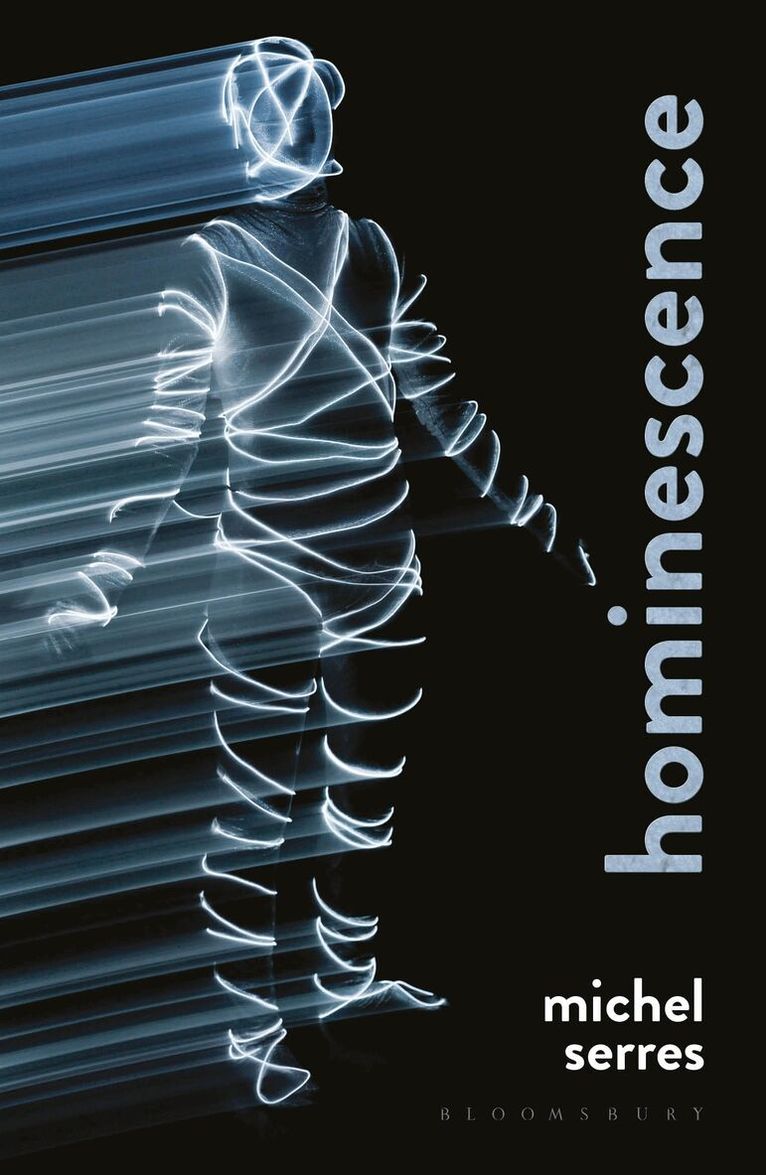
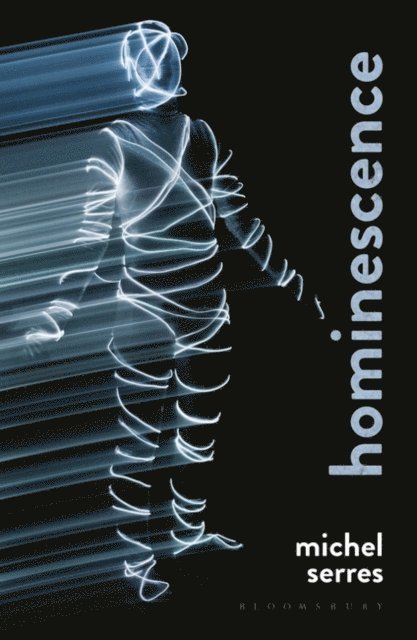
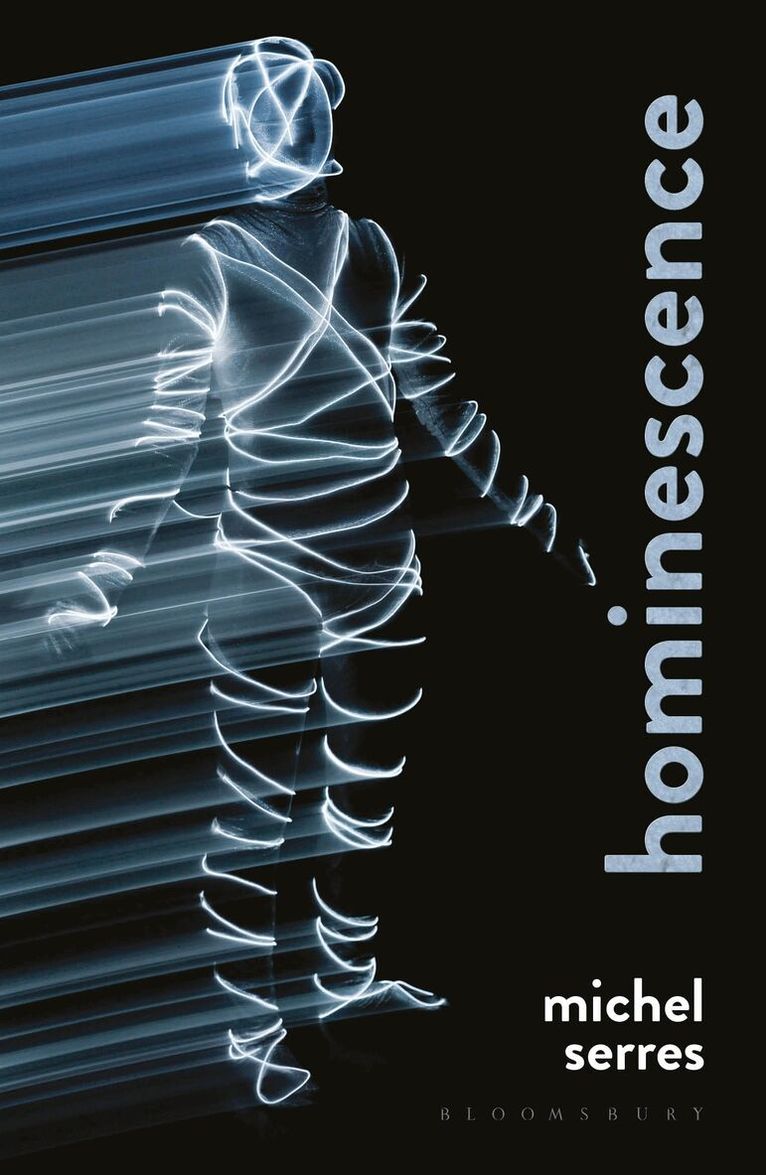
According to Michel Serres, a process of 'hominescence' has taken place throughout human history. Hominescence can be described as a type of adolescence; humanity in a state of growing, a state of constant change, on the threshold of something unpredictable. We are destined never to be the same again but what does the future hold?In this innovative and passionately original work of philosophy, Serres describes the future of man as an adolescence, transitioning from childhood to adulthood, or luminescence, when a dark body becomes light. After considering the radical changes that humanity has experienced over the last fifty years, Serres analyzes the new relationship that man has with diverse concepts, like the dead, his own body, agriculture, and new communication networks. He alerts us to the consequences of these changes, particularly on the danger of growing inequalities between rich and poor countries. Should we rejoice in the future, ignore it, or even dread it? Unlike other philosophies that preach doom and gloom, Hominescence calls for us to anticipate the uncertain light of the future. - E-bokPDF, Engelska, 2019
408 kr
Läs direkt efter köp
According to Michel Serres, a process of ''hominescence'' has taken place throughout human history. Hominescence can be described as a type of adolescence; humanity in a state of growing, a state of constant change, on the threshold of something unpredictable. We are destined never to be the same again but what does the future hold? In this innovative and passionately original work of philosophy, Serres describes the future of man as an adolescence, transitioning from childhood to adulthood, or luminescence, when a dark body becomes light. After considering the radical changes that humanity has experienced over the last fifty years, Serres analyzes the new relationship that man has with diverse concepts, like the dead, his own body, agriculture, and new communication networks. He alerts us to the consequences of these changes, particularly on the danger of growing inequalities between rich and poor countries. Should we rejoice in the future, ignore it, or even dread it? Unlike other philosophies that preach doom and gloom, Hominescence calls for us to anticipate the uncertain light of the future. - E-bokEngelska, 2019
409 kr
Läs direkt efter köp
According to Michel Serres, a process of ''hominescence'' has taken place throughout human history. Hominescence can be described as a type of adolescence; humanity in a state of growing, a state of constant change, on the threshold of something unpredictable. We are destined never to be the same again but what does the future hold? In this innovative and passionately original work of philosophy, Serres describes the future of man as an adolescence, transitioning from childhood to adulthood, or luminescence, when a dark body becomes light. After considering the radical changes that humanity has experienced over the last fifty years, Serres analyzes the new relationship that man has with diverse concepts, like the dead, his own body, agriculture, and new communication networks. He alerts us to the consequences of these changes, particularly on the danger of growing inequalities between rich and poor countries. Should we rejoice in the future, ignore it, or even dread it? Unlike other philosophies that preach doom and gloom, Hominescence calls for us to anticipate the uncertain light of the future. - Inbunden, Engelska, 2019
1 186 kr
Skickas inom 10-15 vardagar
According to Michel Serres, a process of 'hominescence' has taken place throughout human history. Hominescence can be described as a type of adolescence; humanity in a state of growing, a state of constant change, on the threshold of something unpredictable. We are destined never to be the same again but what does the future hold?In this innovative and passionately original work of philosophy, Serres describes the future of man as an adolescence, transitioning from childhood to adulthood, or luminescence, when a dark body becomes light. After considering the radical changes that humanity has experienced over the last fifty years, Serres analyzes the new relationship that man has with diverse concepts, like the dead, his own body, agriculture, and new communication networks. He alerts us to the consequences of these changes, particularly on the danger of growing inequalities between rich and poor countries. Should we rejoice in the future, ignore it, or even dread it? Unlike other philosophies that preach doom and gloom, Hominescence calls for us to anticipate the uncertain light of the future. - E-bokPDF, Engelska, 2017
549 kr
Läs direkt efter köp
In this third installment of his classic ''Foundations'' trilogy, Michel Serres takes on the history of geometry and mathematics. Even more broadly, Geometry is the beginnings of things and also how these beginnings have shaped how we continue to think philosophically and critically. Serres rejects a traditional history of mathematics which unfolds in a linear manner, and argues for the need to delve into the past of maths and identify a series of ruptures which can help shed light on how this discipline has developed and how, in turn, the way we think has been shaped and formed.This meticulous and lyrical translation marks the first ever English translation of this key text in the history of ideas. - E-bokEngelska, 2017
544 kr
Läs direkt efter köp
In this third installment of his classic ''Foundations'' trilogy, Michel Serres takes on the history of geometry and mathematics. Even more broadly, Geometry is the beginnings of things and also how these beginnings have shaped how we continue to think philosophically and critically. Serres rejects a traditional history of mathematics which unfolds in a linear manner, and argues for the need to delve into the past of maths and identify a series of ruptures which can help shed light on how this discipline has developed and how, in turn, the way we think has been shaped and formed.This meticulous and lyrical translation marks the first ever English translation of this key text in the history of ideas.