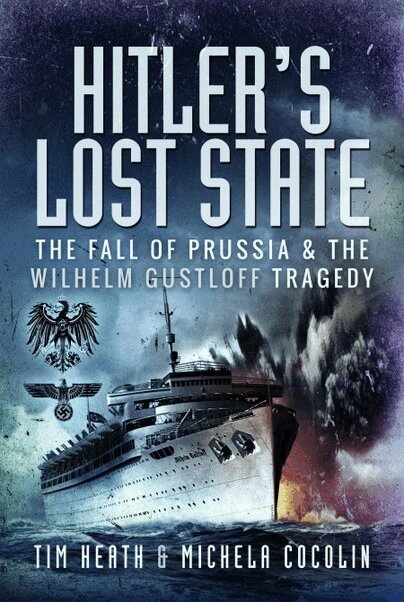
Seen as an agricultural utopia within Hitler's Germany, it is often the view that both East and West Prussia had remained relatively untouched during the Second World War. Yet the violence, prejudice and murder associated with the National Socialist regime that brought most of Europe to ruin were widespread throughout Prussia during its brief existence.When the MV _Wilhelm Gustloff_ was sunk by a Russian submarine just after 9pm on 30 January 1945, 9,343 passengers - 5,000 of them children - would perish. It was the worst loss of life in maritime history, six times greater than the one of the RMS Titanic.Launched by Adolf Hitler on 5 May 1937 and the KdF (Kraft durch Freude = Strength through Joy) as a recreational and propaganda tool, the MV _Wilhelm Gustloff_ would suffer the same fate as the nation it once represented. Yet 75 years later, her tragic story is still unknown to many.Combining existing material and new findings, this book tells the story of Prussia's rise and fall as a military power, the attempts by brave civilians as well as military personnel determined to overturn the evil regime they had made an oath to serve and the desperate evacuation of refugees to the West in one of the greatest exodus ever seen, told by those who were there.
This WWII history chronicles the rise and fall of Nazi Prussia as well as the ill-fated exodus of its civilian refugees in 1945.Seen as an agricultural utopia within Hitler''s Germany, Prussia is thought to have gone untouched during the Second World War. Yet the violence of the National Socialist regime was widespread throughout the German state.As the Red Army advanced on its borders in 1945, nearly ten thousand civilians evacuated the region aboard the MV Wilhelm Gustloff—only to perish when the ship was sunk by a Soviet submarine. It was the worst loss of life in maritime history, six times greater than that of the RMS Titanic.Combining existing material and new findings, this book tells the story of Prussia''s rise and fall as a military power. It chronicles the attempts made by brave civilians and military personnel to overturn the Nazi regime, as well as the desperate evacuation of refugees in one of the greatest exoduses ever seen, told by those who were there.
Seen as an agricultural utopia within Hitler's Germany, it is often the view that both East and West Prussia had remained relatively untouched during the Second World War. Yet the violence, prejudice and murder associated with the National Socialist regime that brought most of Europe to ruin were widespread throughout Prussia during its brief existence.When the MV _Wilhelm Gustloff_ was sunk by a Russian submarine just after 9pm on 30 January 1945, 9,343 passengers - 5,000 of them children - would perish. It was the worst loss of life in maritime history, six times greater than the one of the RMS Titanic.Launched by Adolf Hitler on 5 May 1937 and the KdF (Kraft durch Freude = Strength through Joy) as a recreational and propaganda tool, the MV _Wilhelm Gustloff_ would suffer the same fate as the nation it once represented. Yet 75 years later, her tragic story is still unknown to many.Combining existing material and new findings, this book tells the story of Prussia's rise and fall as a military power, the attempts by brave civilians as well as military personnel determined to overturn the evil regime they had made an oath to serve and the desperate evacuation of refugees to the West in one of the greatest exodus ever seen, told by those who were there.
This WWII history chronicles the rise and fall of Nazi Prussia as well as the ill-fated exodus of its civilian refugees in 1945.Seen as an agricultural utopia within Hitler''s Germany, Prussia is thought to have gone untouched during the Second World War. Yet the violence of the National Socialist regime was widespread throughout the German state.As the Red Army advanced on its borders in 1945, nearly ten thousand civilians evacuated the region aboard the MV Wilhelm Gustloff—only to perish when the ship was sunk by a Soviet submarine. It was the worst loss of life in maritime history, six times greater than that of the RMS Titanic.Combining existing material and new findings, this book tells the story of Prussia''s rise and fall as a military power. It chronicles the attempts made by brave civilians and military personnel to overturn the Nazi regime, as well as the desperate evacuation of refugees in one of the greatest exoduses ever seen, told by those who were there.