Michelguglielmo Torri – författare
Visar alla böcker från författaren Michelguglielmo Torri. Handla med fri frakt och snabb leverans.
4 produkter
4 produkter
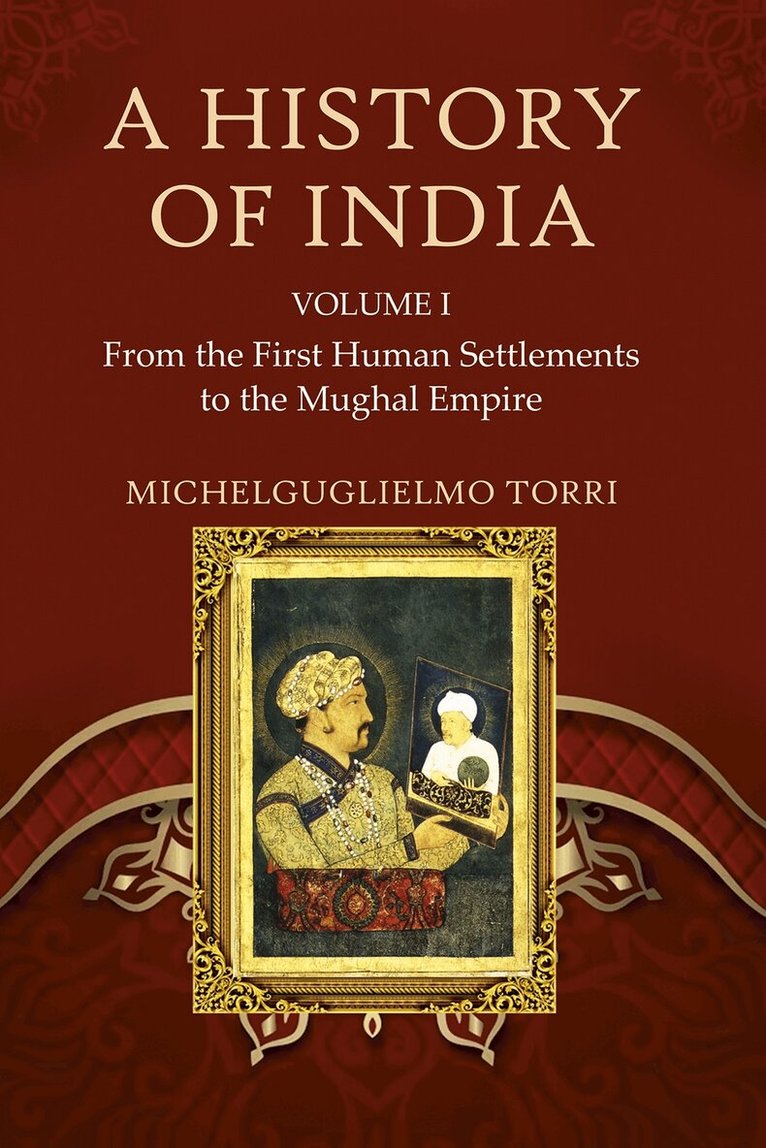
History of India Volume 1
From the First Human Settlements to the Mughal Empire
Inbunden, Engelska, 2025
1 448 kr
Skickas inom 7-10 vardagar
Comprehensive and in-depth exploration of one of the oldest civilisations in the world, revealing the dynamic changes of its society, the links to the rest of the world and the underlying forces that led to its significant role on the global stage. This is the first of a three-volume history of India, characterized by three main arguments: (a) Indian history has been crucially conditioned by the connections linking the Indian subcontinent to the remainder of the world; (b) Indian society was never static, but always crisscrossed by powerful currents of change; (c) colonialism caused both the crystallization of a 'traditional' society - which, in that shape, had never really existed before - and, at the same time, the rise of modernity. This volume examines the history of India from the first human settlements in the subcontinent up to the death of Emperor Aurangzeb in 1717. The political, military, economic and social developments are analysed against the backdrop represented by the rise, decline, fall and renaissance of flourishing urban civilizations. While the economy remained mainly agrarian, long-distance trade and pre-modern, but quite sophisticated, manufacturing and service activities rose, declined and rose again. This caused the parallel rise, decline and resurgence of intermediate social strata, later resulting in the formation of a modern bourgeoisie. While the existing religious and cultural strands are analysed, a particular emphasis is placed on the relations between the two main religious traditions, Hinduism and Islam. This volume demonstrates that, despite exceptions, an essentially harmonious coexistence prevailed, which often resulted in cooperation. This coexistence came into being as a result of both Realpolitik and the presence, within both Hinduism and Islam, of surprisingly similar mystical movements extremely influential both at the mass level and at the level of the ruling classes.
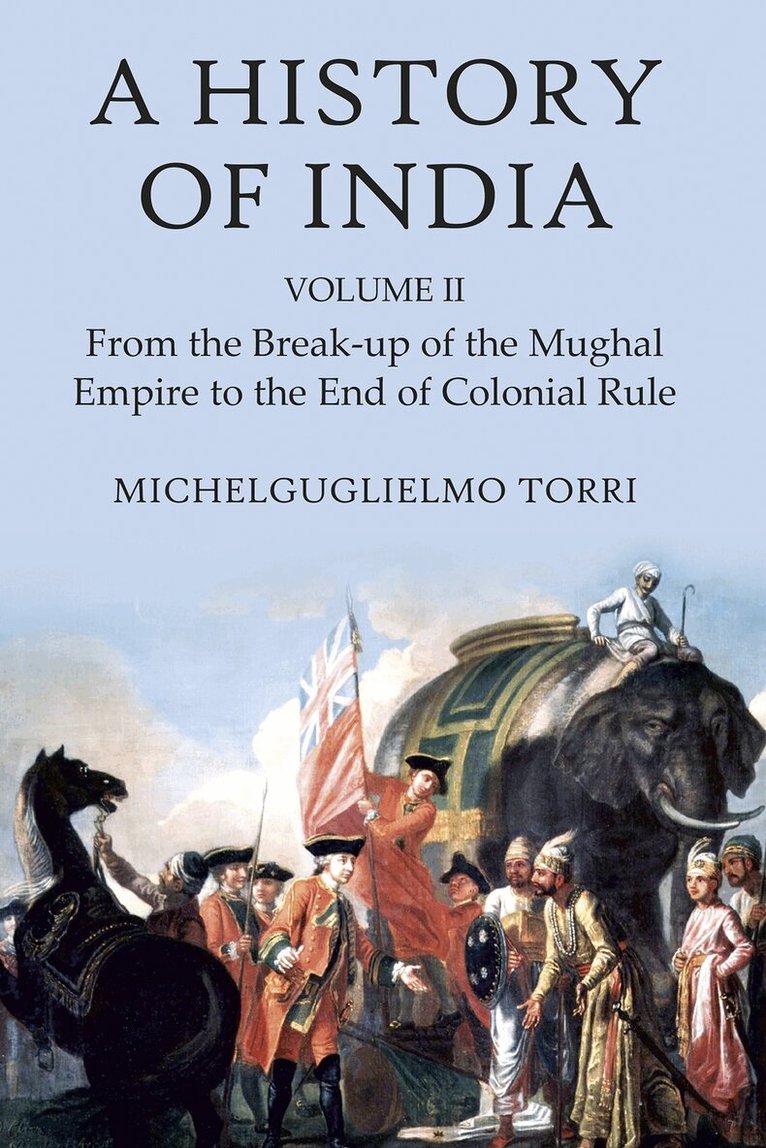
History of India Volume 2
From the Break-up of the Mughal Empire to the End of Colonial Rule
Inbunden, Engelska, 2025
1 448 kr
Skickas inom 7-10 vardagar
Comprehensive and in-depth exploration of one of the oldest civilisations in the world, revealing the dynamic changes of its society, the links to the rest of the world and the underlying forces that led to India's significant role on today's global stage. This is the second of a three-volume history of India, characterized by three main arguments: (a) Indian history has been crucially conditioned by the manifold and two-way connections linking the Indian subcontinent to the remainder of the world; (b) Indian society was never static, but always crisscrossed by powerful currents of change; (c) colonialism caused both the crystallization of a 'traditional' society - which, in that shape, had never really existed before - and, at the same time, the rise of modernity.This volume examines the history of India from the collapse of the Mughal Empire to the end of colonialism in 1947. It analyses the features of the most important pre-colonial Indian states and the role played by the British colonialism in their destruction or reduction to political irrelevance. Second, the volume highlights the contradictory role of the colonial order in freezing a previously evolving society, causing the coming into being of a 'traditional India' and, at the same time, somewhat unwittingly, triggering the rise of a new modern India. Furthermore, the volume analyses the role of India in supporting the British Empire both economically and militarily, and how the implementation of the liberal economic policy by the colonial rulers resulted in the loss of millions of Indian lives. Finally, the volume closely examines the rise and evolution of Indian nationalism, the reasons that forced the British to end their rule, and, last but not least, the causes of partition and the responsibilities of the parties and political leaders involved.
4 367 kr
Skickas inom 7-10 vardagar
Comprehensive and in-depth exploration of one of the oldest civilisations in the world, revealing the dynamic changes of its society, the links to the rest of the world and the underlying forces that led to India's significant role on today's global stage.This three-volume history of India explores the dynamics at play in the subcontinent from the first human settlements to the 2014 general election.The first volume examines the history of India from the first human settlements in the subcontinent up to the death of Emperor Aurangzeb in 1717. The political, military, economic and social developments are analysed against the backdrop represented by the rise, decline, fall and renaissance of flourishing urban civilizations. The book also demonstrates that, despite exceptions, an essentially harmonious coexistence prevailed between Hinduism and Islam, which often resulted in cooperation.The second volume covers the collapse of the Mughal Empire to the end of colonialism in 1947. It analyses the features of the most important pre-colonial Indian states and the role played by British colonialism. Finally, the volume closely examines the rise and evolution of Indian nationalism, the reasons that forced the British to end their rule, and the causes of partition.The third volume examines the political, economic and social evolution of India from independence to the 2014 general election. It argues that the period is subdivided into two main phases. The main features of the first phase were a secular democracy, a dominant-party system, and an economy where the state played a crucially important economic role. The second Neoliberal Age, was characterized by the eclipse of the dominant party system and the implementation of neoliberal economic policies, which sped up development but widened social and economic disparities, and also saw the rise of Hindutva.
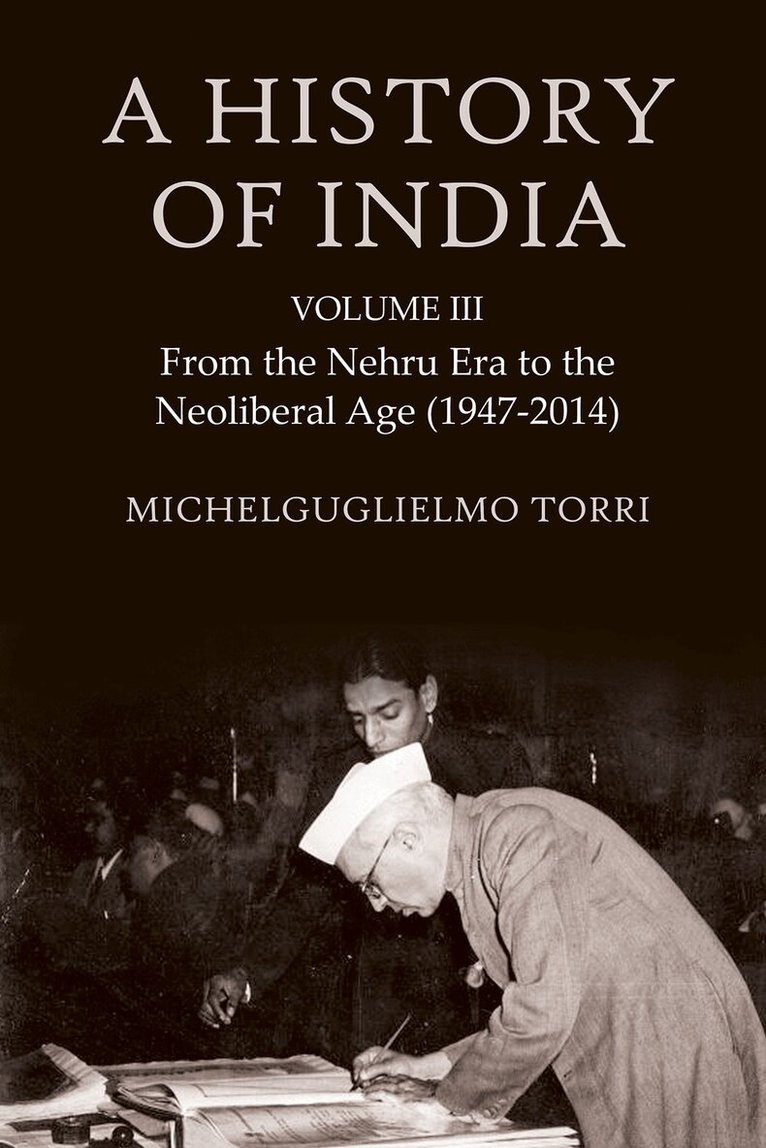
History of India Volume 3
From the Nehru Era to the Neoliberal Age (1947-2014)
Inbunden, Engelska, 2025
1 448 kr
Skickas inom 7-10 vardagar
Comprehensive and in-depth exploration of one of the oldest civilisations in the world, revealing the dynamic changes of its society, the links to the rest of the world and the underlying forces that led to India's significant role on today's global stage.This is the third of a three-volume history of India, characterized by three main arguments: (a) Indian history has been crucially conditioned by the connections linking the Indian subcontinent to the remainder of the world; (b) Indian society was never static, but always crisscrossed by powerful currents of change; (c) colonialism caused both the crystallization of a 'traditional' society - which, in that shape, had never really existed before - and, at the same time, the rise of modernity.This volume examines the political, economic and social evolution of India from independence to the 2014 general election. It argues that the period is subdivided into two main phases; the Longer Nehruvian Era, which extended well after Nehru's death in 1964, and the Neoliberal Age. The book shows that the Longer Nehruvian Era was articulated in two stages. In the first, which ended with Nehru's death, the features which characterized India until the late 1980s and early 1990s came into being. The main ones were a secular democracy, a dominant-party system, and an economy where the state played a crucially important economic role. The second stage of the longer Nehruvian era was characterized by the decline of these characterizing features, which, however, were still in place at the end of the 1980s. The years 1989-1991 - here examined in depth - saw the tumultuous transition to a new historical phase. This new phase, the Neoliberal Age, was characterized by the eclipse of the dominant party system and the implementation of neoliberal economic policies. The neoliberal policies sped up development but, in spite of some governmental efforts to protect the lower social strata, widened social and economic disparities.The Neoliberal Age was also characterized by the rise of Hindutva. Already in power in the years 1999-2004, it made a comeback in the 2014 general election, whose detailed analysis concludes this volume.