Micheliny Verunschk – författare
Visar alla böcker från författaren . Handla med fri frakt och snabb leverans.
3 produkter
3 produkter
Inbunden, Engelska, 2025
303 kr
Skickas inom 5-8 vardagar
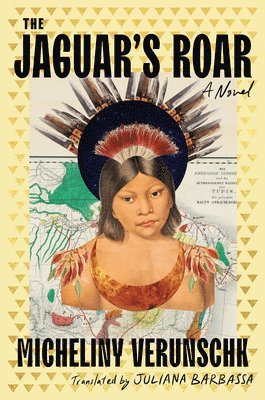
In 1817, two German scientists traveled across Brazil and into the Amazon gathering flora and fauna to study and display in Europe. Among the collection they brought to the Bavarian court were two Indigenous children.The children’s images became widespread, satisfying European curiosity about the distant land they came from. But little was known about the children themselves. Despite the scientists’ detailed records about many of the plant and animal specimens, they only noted the children’s tribes: the girl was a Miranha, and the boy, a Juri. After a few months, the children died in Germany, far from anyone who knew their names.The Jaguar’s Roar, a spellbinding poetic novel told in many voices, imagines the children’s journey and a modern Brazilian woman’s effort to counter their disappearance from history.In her award-winning fifth novel, Micheliny Verunschk inhabits the fictional perspective of the Miranha girl, of the jaguar she conjures for protection, of the German scientists who determine her fate, and of the two rivers that frame her life. Intertwined in this narrative is a story of Brazil’s suppression of its Indigenous history, and of a young woman named Josefa, a newcomer unmoored in the megacity of São Paulo, who identifies with the girl after seeing her image in an exhibit and tries to recover the child’s voice and story.In Juliana Barbassa’s vivid translation, Verunshuk’s lyrical sentences carry the reader through a powerful exploration of memory, colonialism, and belonging, and make a lasting contribution to world literature.
Häftad, Engelska, 2026
272 kr
Kommande
In 1817, two German scientists traveled across Brazil and into the Amazon gathering flora and fauna to study and display in Europe. Among the collection they brought to the Bavarian court were two Indigenous children.The children’s images became widespread, satisfying European curiosity about the distant land they came from. But little was known about the children themselves. Despite the scientists’ detailed records about many of the plant and animal specimens, they only noted the children’s tribes: the girl was a Miranha, and the boy, a Juri. After a few months, the children died in Germany, far from anyone who knew their names.The Jaguar’s Roar, a spellbinding poetic novel told in many voices, imagines the children’s journey and a modern Brazilian woman’s effort to counter their disappearance from history.In her award-winning fifth novel, Micheliny Verunschk inhabits the fictional perspective of the Miranha girl, of the jaguar she conjures for protection, of the German scientists who determine her fate, and of the two rivers that frame her life. Intertwined in this narrative is a story of Brazil’s suppression of its Indigenous history, and of a young woman named Josefa, a newcomer unmoored in the megacity of São Paulo, who identifies with the girl after seeing her image in an exhibit and tries to recover the child’s voice and story.In Juliana Barbassa’s vivid translation, Verunshuk’s lyrical sentences carry the reader through a powerful exploration of memory, colonialism, and belonging, and make a lasting contribution to world literature.
Häftad, Engelska, 2026
153 kr
Skickas inom 5-8 vardagar
In 1817, two German scientists travelled across Brazil and into the Amazon gathering flora and fauna to study and display in Europe. Among the collection they brought to the Bavarian court were two Indigenous children. The children's images became widespread, but little was known about the children themselves. Despite the scientists' detailed records about many of the plant and animal specimens, they only noted the children's tribes: the girl was a Miranha, and the boy, a Juri. After a few months, the children died in Germany, far from anyone who knew their names. Dancing delicately between history and legend, The Jaguar's Roar weaves together the perspectives of all those tied up in the Miranha girl's fate, from her German captors, to the mythic jaguar she conjures for protection, to the anguished modern day bystander who stumbles across her sketch in a museum. This incandescent novel explores the impact of colonialism on memory and belonging, forcing readers to confront Brazil's suppression of its Indigenous history. Juliana Barbassa's vivid translation of Verunchuk's poetic novel makes a lasting contribution to world literature.