Michelle E. Alvarez - Böcker
Visar alla böcker från författaren Michelle E. Alvarez. Handla med fri frakt och snabb leverans.
3 produkter
3 produkter
659 kr
Skickas inom 5-8 vardagar
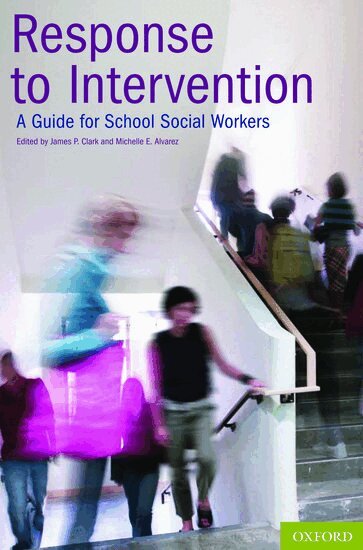
Response to Intervention (RtI) is at the heart of evidence-based practice in schools. Though written into federal special education legislation, it is a general education process consisting of a three-tiered framework for organizing a comprehensive and differentiated system designed to ensure educational success for all students. The focus in this book is on meeting the social, emotional, and behavioral needs of students. School social workers are key stakeholders who need to be skilled in designing, monitoring, and evaluating the effectiveness of school-wide universal supports, targeted group interventions, and intensive individual interventions in objective and measurable terms.Designed as both a training manual and a practical reference, with contributions by seasoned academics and practitioners with extensive experience developing and practicing in RtI systems, this one-of-a-kind guide operationalizes this crucial service delivery framework. It highlights the importance of data-based decision making and offers concrete guidelines for collecting, analyzing, and displaying data. Detailed case examples that illustrate real-world program implementation, practical guidance in selecting empirically supported practices, sample assessment worksheets, and strategies for supporting the adoption and sustainability of RtI systems make this a handy tool for school social workers seeking a more active role in using decision-making processes to improve their school's system of support for all students.
376 kr
Skickas inom 5-8 vardagar
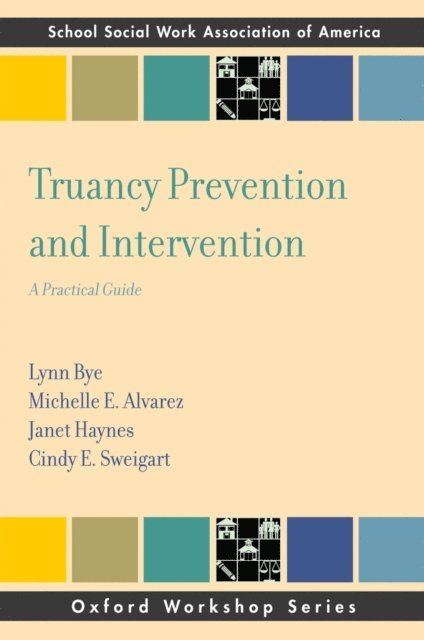
Research has shown that truancy is frequently associated with juvenile crime and dropping out of school altogether. With the high dropout rate in the U.S. and the No Child Left Behind Act holding schools accountable for their dropout rates, it is essential for school social workers to contribute to their schools' improvement plan in meeting annual yearly progress benchmarks. This book, by well respected researchers and practitioners who have extensive experience with truancy, covers best practices in truancy at the community, school, and student/family levels of interventions. It provides an essential everyday reference guide to research-based programs and truancy program implementation. Beginning with an introduction to the essentials of truancy, its causes and consequences, and state and federal legislation, the authors then give readers a snapshot of what research has shown to work so far and what adaptations might look like in various school settings. Richly detailed case examples illustrate multiple levels of intervention, from the school-wide prevention and general policy levels to remedial interventions, including culturally competent approaches. Eminently practical and easily accessible, with sample forms, methods of measuring outcomes, ideas for funding, take-away points, and digestible research summaries, this will be a trusted toolkit for school professionals seeking to reduce their schools' dropout rates and improve students' engagement with school. School-based practitioners and student trainees alike will find a wealth of reliable information about what is seemingly an intractable problem. They can immediately begin implementing the proven and promising practices presented in this practical guide.
413 kr
Skickas inom 5-8 vardagar
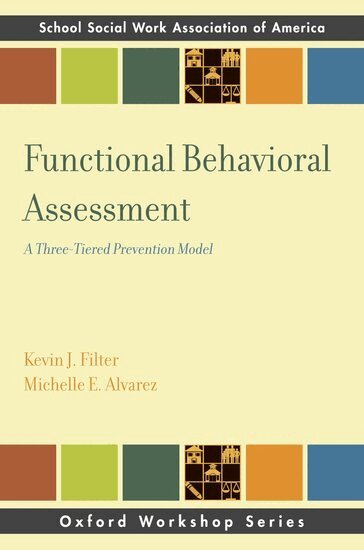
Functional behavioral assessment (FBA) is an important element in developing effective behavior interventions in schools. By understanding how the environment predicts and maintains problem behavior, school social workers can change those environmental conditions and facilitate positive behavior. Although FBA is traditionally applied within the context of special education, it is relevant to supporting behavior of all students in a school. In this book, the authors explore how FBA can be applied in a three-tiered model of prevention and provide tools and case examples to facilitate application. This process is described as occurring within a team context wherein the school social worker serves as a facilitator and contributor with behavioral expertise.In Tier 1, FBA is applied to the behavior of all students in a school and leads to the development of school-wide behavior interventions that are intended to prevent students from developing more serious patterns of problem behavior. In Tier-2 FBAs, the behavior of at-risk students is assessed in an efficient manner to determine which available evidence-based interventions will be effective in improving their behavior. In Tier 3, FBAs involve extensive individual assessments of the conditions that maintain the problem behavior students with significant behavior problems.This book provides detailed information about conducting FBAs at each tier of prevention and reviews the process of developing interventions from the FBA information at each tier. As initiatives encouraging positive behavior support in schools proliferate, this book will help school social workers develop the skill set necessary to maintain their role as important contributors to student outcomes.