Michelle Holder – författare
Visar alla böcker från författaren Michelle Holder. Handla med fri frakt och snabb leverans.
6 produkter
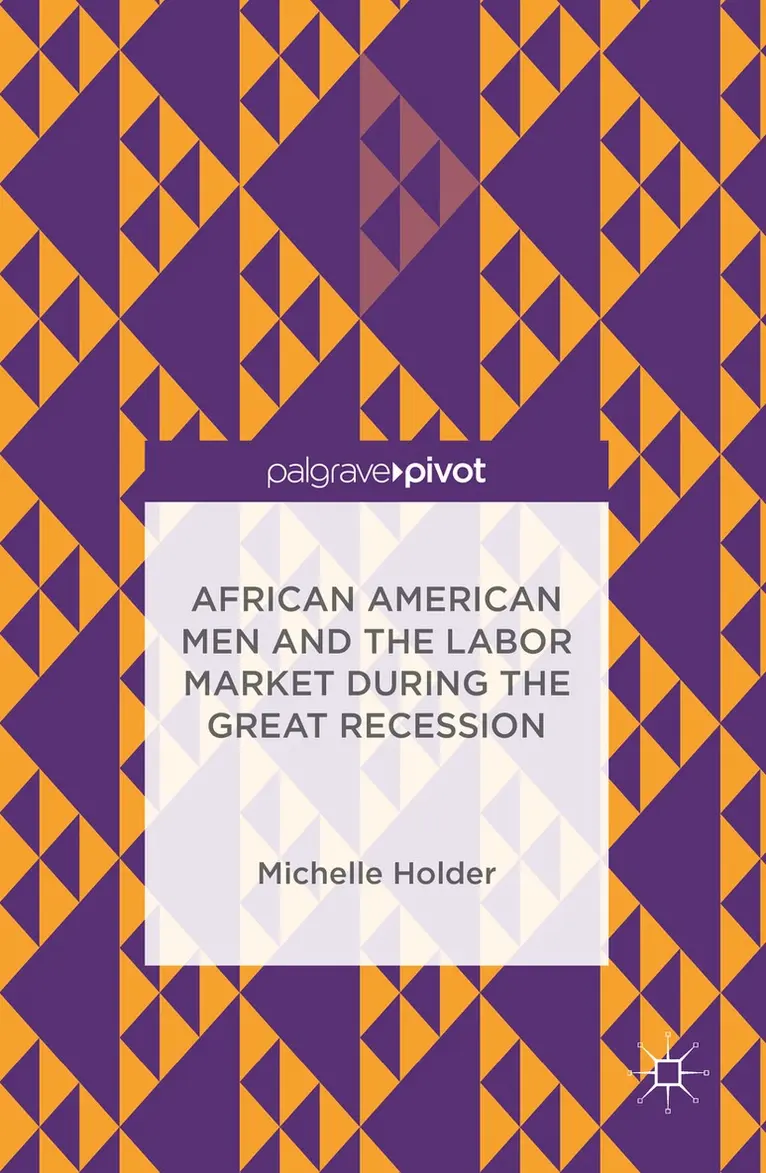
African American Men and the Labor Market during the Great Recession
Inbunden, 2016
713 kr
Lägg i varukorg
This book analyzes the status and position of African American men in the U.S. labor market prior to, during, and after the Great Recession. Using a model of occupational crowding, the book outlines how the representation of African American men in major occupational categories almost universally …
African American Men and the Labor Market during the Great Recession
E-bok, 2016
953 kr
Lägg i varukorg
This book analyzes the status and position of African American men in the U.S. labor market prior to, during, and after the Great Recession. Using a model of occupational crowding, the book outlines how the representation of African American men in major occupational categories almost universally …
Afro-Latinos in the U.S. Economy
Av Michelle Holder, Alan A. Aja
Häftad, 2023
458 kr
Lägg i varukorg
Afro-Latinos in the U.S. Economy outlines the current position and status of Afro-Latinxs in the economy of the United States. Very little research has thus far been disseminated in the field of economics on the contributions of Afro-Latinxs regarding income and wealth, labor market status, …
Political Economy of Racism
The Persistence of Anti-Blackness in the United States
Av Michelle Holder, Jeannette Wicks-Lim
Inbunden, 2025
845 kr
Lägg i varukorg
Why does racial inequality in America persist? In this important textbook, Michelle Holder and Jeannette Wicks-Lim answer this question by introducing readers to the innovative field of stratification economics.Stratification economics offers an antidote to conventional economics’ hyper-focus on …
Political Economy of Racism
The Persistence of Anti-Blackness in the United States
Av Michelle Holder, Jeannette Wicks-Lim
Häftad, 2025
272 kr
Lägg i varukorg
Why does racial inequality in America persist? In this important textbook, Michelle Holder and Jeannette Wicks-Lim answer this question by introducing readers to the innovative field of stratification economics.Stratification economics offers an antidote to conventional economics’ hyper-focus on …
Political Economy of Racism
The Persistence of Anti-Blackness in the United States
Av Jeannette Wicks-Lim, Michelle Holder
E-bok, 2026
319 kr
Lägg i varukorg
Why does racial inequality in America persist? In this important textbook, Michelle Holder and Jeannette Wicks-Lim answer this question by introducing readers to the innovative field of stratification economics.Stratification economics offers an antidote to conventional economics hyper-focus on …