Miguel A. Goberna – författare
Visar alla böcker från författaren Miguel A. Goberna. Handla med fri frakt och snabb leverans.
10 produkter
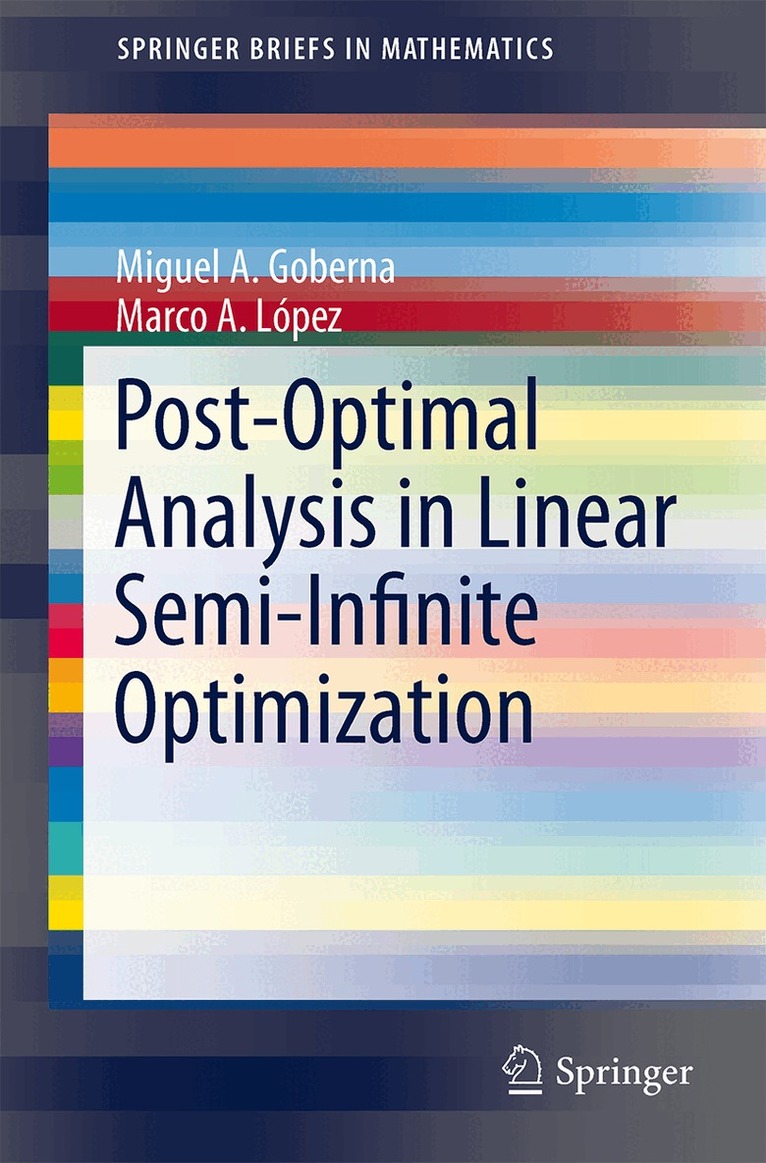
Post-Optimal Analysis in Linear Semi-Infinite Optimization
Av Miguel A. Goberna, Marco A. López
Häftad, 2014
569 kr
Lägg i varukorg
Post-Optimal Analysis in Linear Semi-Infinite Optimization examines the following topics in regards to linear semi-infinite optimization: modeling uncertainty, qualitative stability analysis, quantitative stability analysis and sensitivity analysis. Linear semi-infinite optimization (LSIO) deals …
Post-Optimal Analysis in Linear Semi-Infinite Optimization
Av Marco A. Lopez, Miguel A. Goberna
E-bok, 2014
755 kr
Lägg i varukorg
Post-Optimal Analysis in Linear Semi-Infinite Optimization examines the following topics in regards to linear semi-infinite optimization: modeling uncertainty, qualitative stability analysis, quantitative stability analysis and sensitivity analysis. Linear semi-infinite optimization (LSIO) deals …
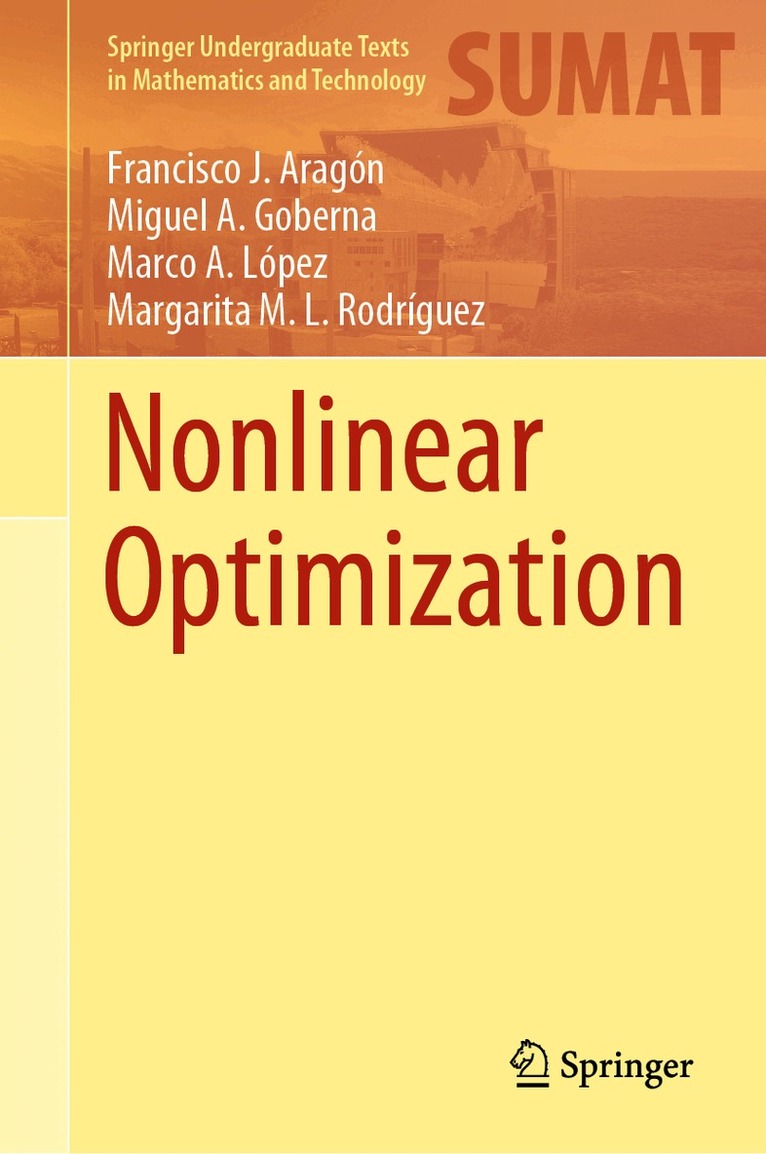
Nonlinear Optimization
Av Francisco J. Aragón, Miguel A. Goberna m. fl.
Inbunden, 2019
716 kr
Lägg i varukorg
This textbook on nonlinear optimization focuses on model building, real world problems, and applications of optimization models to natural and social sciences. Organized into two parts, this book may be used as a primary text for courses on convex optimization and non-convex optimization. …
Nonlinear Optimization
Av Margarita M.L. Rodriguez, Marco A. Lopez m. fl.
E-bok, 2019
877 kr
Lägg i varukorg
This textbook on nonlinear optimization focuses on model building, real world problems, and applications of optimization models to natural and social sciences. Organized into two parts, this book may be used as a primary text for courses on convex optimization and non-convex optimization. …
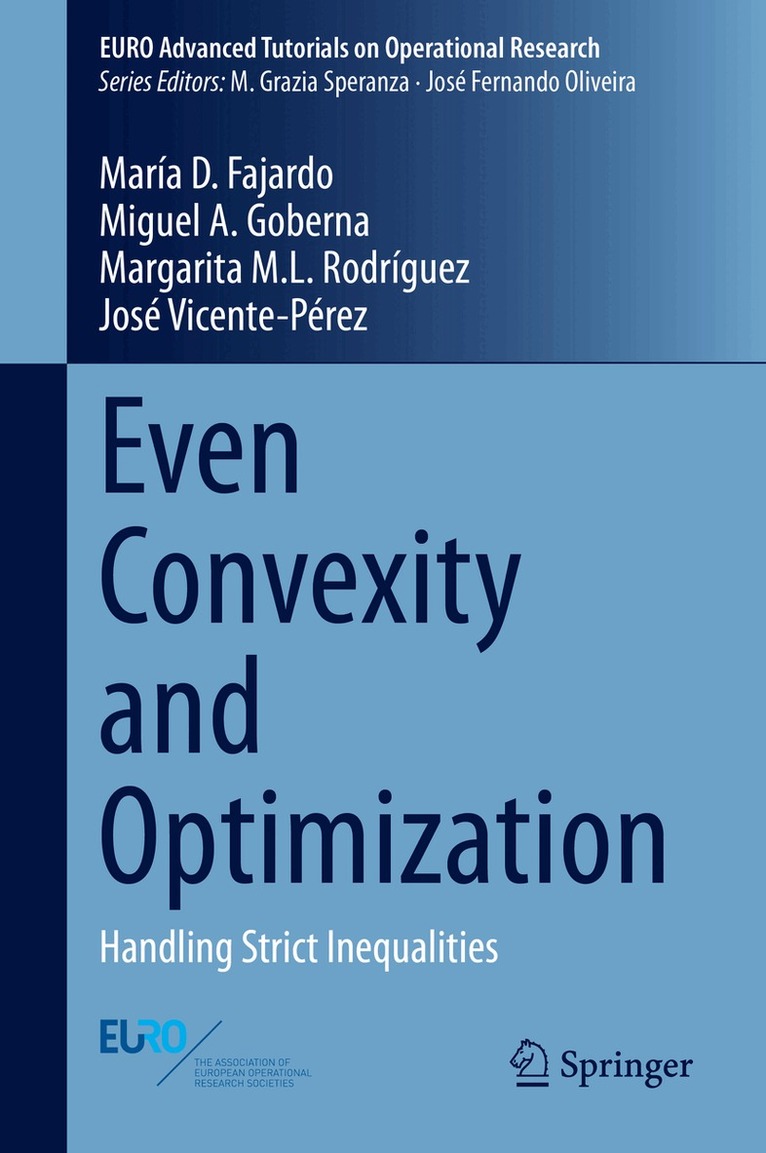
Even Convexity and Optimization
Handling Strict Inequalities
Av María D. Fajardo, Miguel A. Goberna m. fl.
Inbunden, 2020
551 kr
Lägg i varukorg
This tutorial is the first comprehensive introduction to (possibly infinite) linear systems containing strict inequalities and evenly convex sets. The book introduces their application to convex optimization. Particular attention is paid to evenly convex polyhedra and finite linear systems …
Even Convexity and Optimization
Handling Strict Inequalities
Av Jose Vicente-Perez, Margarita M.L. Rodriguez m. fl.
E-bok, 2020
734 kr
Lägg i varukorg
This tutorial is the first comprehensive introduction to (possibly infinite) linear systems containing strict inequalities and evenly convex sets. The book introduces their application to convex optimization. Particular attention is paid to evenly convex polyhedra and finite linear systems …
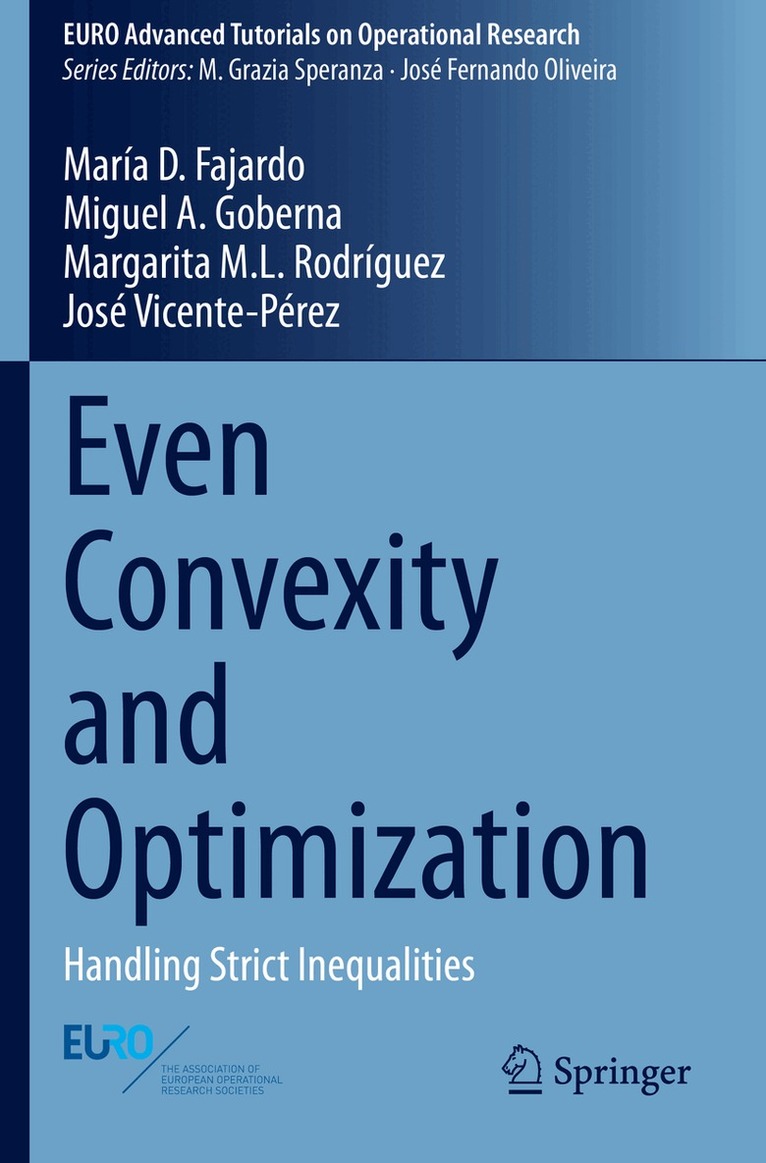
Even Convexity and Optimization
Handling Strict Inequalities
Av María D. Fajardo, Miguel A. Goberna m. fl.
Häftad, 2021
551 kr
Lägg i varukorg
This tutorial is the first comprehensive introduction to (possibly infinite) linear systems containing strict inequalities and evenly convex sets. The book introduces their application to convex optimization. Particular attention is paid to evenly convex polyhedra and finite linear systems …
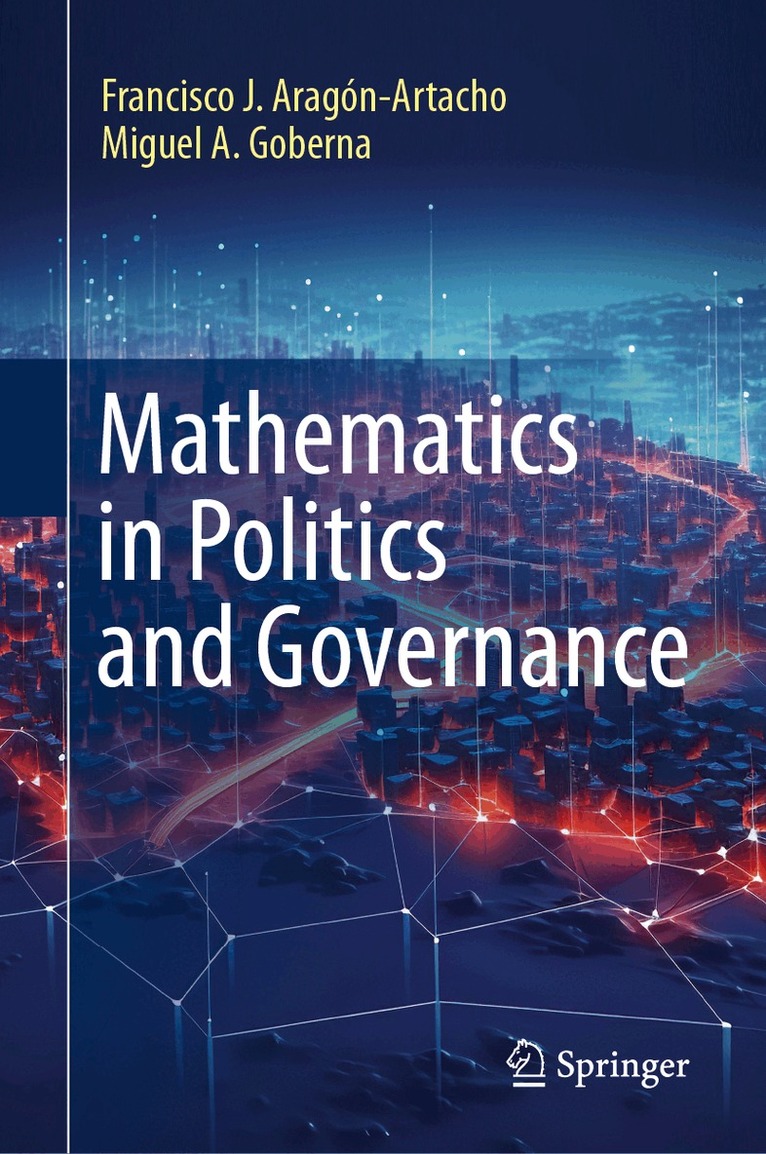
Mathematics in Politics and Governance
Av Francisco J. Aragón-Artacho, Miguel A. Goberna
Inbunden, 2024
497 kr
Lägg i varukorg
This book presents the mathematical tools that politicians use to make rational decisions about health, education, culture, economy, finance, transportation, and national defense for their citizens. The selection of topics addressed is based on the experiences of four veteran politicians who have …
Mathematics in Politics and Governance
Av Miguel A. Goberna, Francisco J. Aragon-Artacho
E-bok, 2024
652 kr
Lägg i varukorg
This book presents the mathematical tools that politicians use to make rational decisions about health, education, culture, economy, finance, transportation, and national defense for their citizens. The selection of topics addressed is based on the experiences of four veteran politicians who have …
Mathematics in Politics and Governance
Av Francisco J. Aragón-Artacho, Miguel A. Goberna
Häftad, 2025
497 kr
Lägg i varukorg
This book presents the mathematical tools that politicians use to make rational decisions about health, education, culture, economy, finance, transportation, and national defense for their citizens. The selection of topics addressed is based on the experiences of four veteran politicians who have …