Miguel Angel Martínez Martínez – författare
Visar alla böcker från författaren Miguel Angel Martínez Martínez. Handla med fri frakt och snabb leverans.
3 produkter
3 produkter
578 kr
Skickas inom 10-15 vardagar
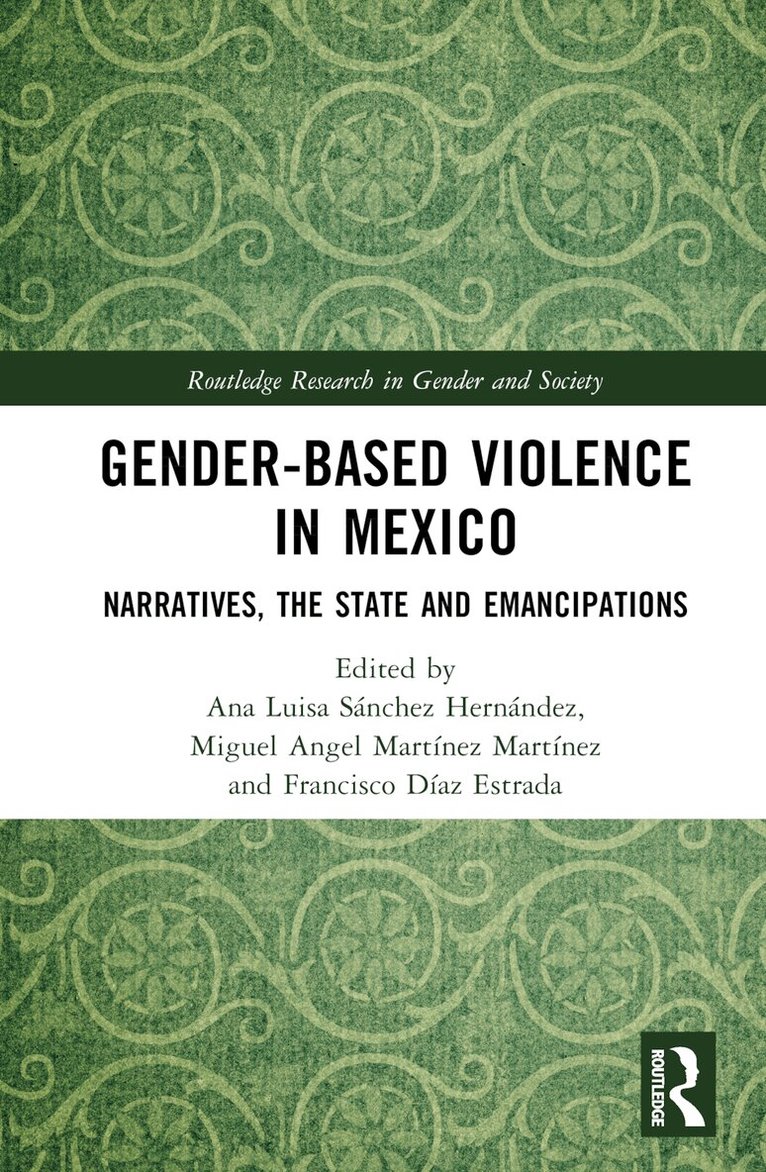
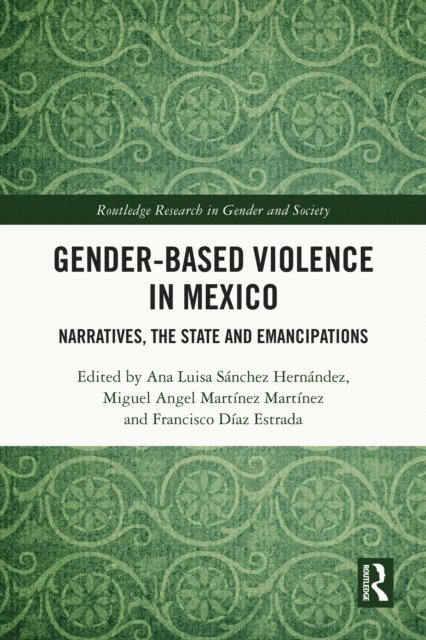
This book examines the roots of systemic aggression against women in contemporary Mexico, and the connection between social practices and the institutional permissiveness of the Mexican State with regard to gendered violence. Since the democratic transition at the end of the 1990s, Mexico has registered an increase in the intensity and types of violence that have made life in some regions almost unsustainable. The chapters in this volume consider that capitalism, colonialism and patriarchy are interrelated processes that employ the technologies of gender and race as a continuation of the symbolic hegemony that treats feminized and racialized bodies as disposable. Against this background, it becomes necessary to understand from different dimensions the systemic violence against women as well as the processes of articulation between social practices and the permissiveness of the State in the face of aggression. Gender-Based Violence in Mexico mobilizes a dialogue between writings, fields of knowledge, causes and situations as essential tools for the struggle against gender violence. As a situated work that underlines the systematic roots of the violence that keeps women in subaltern positions, the text seeks an insurrection, an uprising of the bodies that invite naming the abject, peripheral and unseen populations of the project of globalized life, woven by the obsession of success and prestige. It presents a counter-conclusion in the manner of a beginning in the desire to elaborate counter-political and counter-pedagogical strategies of non-coercive experiences, where questions and debates are not a sign of belligerence but of vitality and care for the body-territories.Gender-Based Violence in Mexico will appeal to scholars of sociology, criminology, gender and Latin American studies with interests in gendered violence and injustice.
2 113 kr
Skickas inom 10-15 vardagar
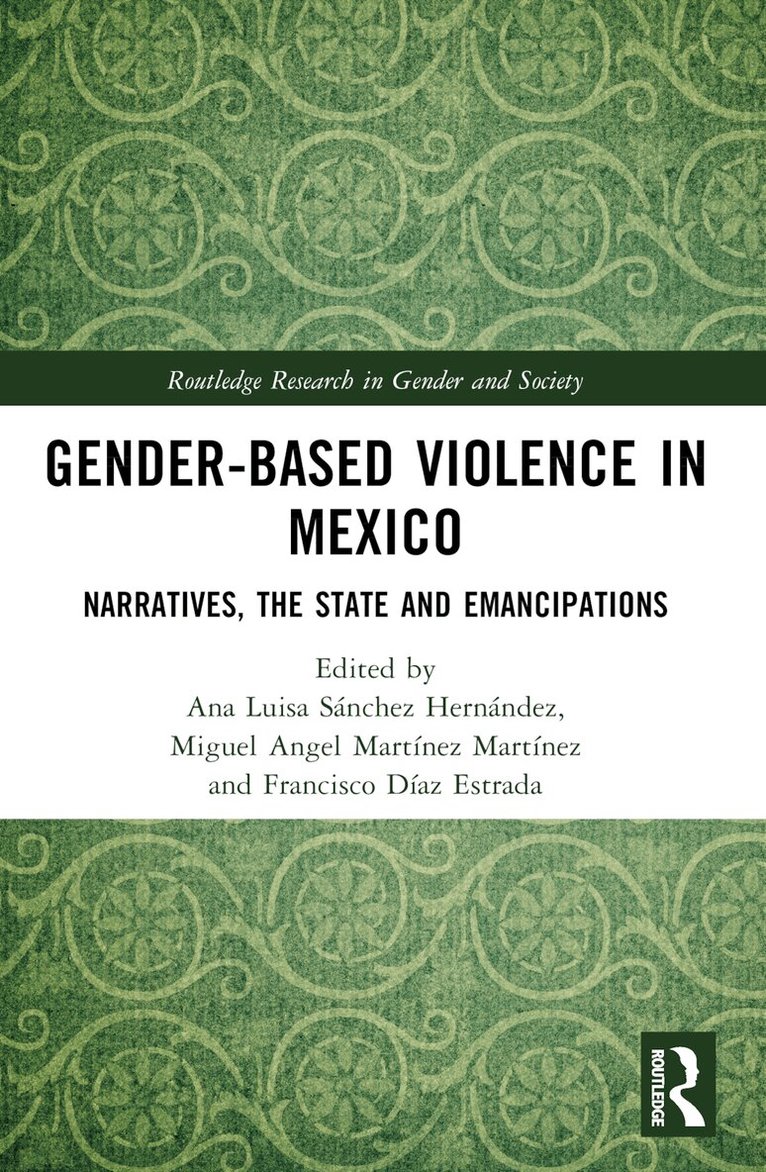
This book examines the roots of systemic aggression against women in contemporary Mexico, and the connection between social practices and the institutional permissiveness of the Mexican State with regard to gendered violence. Since the democratic transition at the end of the 1990s, Mexico has registered an increase in the intensity and types of violence that have made life in some regions almost unsustainable. The chapters in this volume consider that capitalism, colonialism and patriarchy are interrelated processes that employ the technologies of gender and race as a continuation of the symbolic hegemony that treats feminized and racialized bodies as disposable. Against this background, it becomes necessary to understand from different dimensions the systemic violence against women as well as the processes of articulation between social practices and the permissiveness of the State in the face of aggression. Gender-Based Violence in Mexico mobilizes a dialogue between writings, fields of knowledge, causes and situations as essential tools for the struggle against gender violence. As a situated work that underlines the systematic roots of the violence that keeps women in subaltern positions, the text seeks an insurrection, an uprising of the bodies that invite naming the abject, peripheral and unseen populations of the project of globalized life, woven by the obsession of success and prestige. It presents a counter-conclusion in the manner of a beginning in the desire to elaborate counter-political and counter-pedagogical strategies of non-coercive experiences, where questions and debates are not a sign of belligerence but of vitality and care for the body-territories.Gender-Based Violence in Mexico will appeal to scholars of sociology, criminology, gender and Latin American studies with interests in gendered violence and injustice.
482 kr
Skickas inom 10-15 vardagar
This book seeks to contribute to the analysis of the serious violations of human rights in Mexico during the processes of democratic transition and the "War on Drugs" by taking bodies and territories as archives of the crimes committed by the Mexican State in the last decades. The text presents an analysis of the disappearance of persons, forced internal displacement, and gender violence as systematic expressions of State violence. These fields of research allow us to point out tensions between social practices and the institutional fragility that systematically denies human rights violations while at the same time ratifies and celebrates them.The thematic knotting between bodies and territories is anchored in the processes of shaping a memory that expresses State violence and presents the silenced resistances of minority social groups that elude the traditional forms of registration, control and collection of data. From these coordinates, body-territories are approached as scenarios where intersectionally-knotted violences unfold. The theoretical approaches considered are mobilized through a critical approach to capitalism, colonialism and patriarchy in order to analyze public policies and narratives related to the protection of bodies-territories, as well as the responses to the needs, interests and preferences of different groups and individuals whose lives are marked by the experience of serious human rights violations. Finally, this approach also considers the new ways in which crimes against humanity unfold in situations of democratic transition, as well as the forms of symbolic exchanges in the transmission of meaning and community bonding. Bodies, Territories and Serious Violations of Human Rights in Mexico will be of interest to academic researchers and graduate students in different fields of knowledge, such as criminology, sociology, history, anthropology, philosophy, psychology and the interdisciplinary field of humanrights studies.