Miguel de la Guardia – författare
Green Analytical Chemistry
Theory and Practice
2 499 kr
Skickas inom 10-15 vardagar
This book provides basic coverage of the fundamentals and principles of green chemistry as it applies to chemical analysis. The main goal of Green Analytical Chemistry is to avoid or reduce the undesirable environmental side effects of chemical analysis, while preserving the classic analytical parameters of accuracy, sensitivity, selectivity, and precision. The authors review the main strategies for greening analytical methods, concentrating on minimizing sample preparation and handling, reducing solvent and reagent consumption, reducing energy consumption, minimizing of waste, operator safety and the economic savings that this approach offers.
Suggestions are made to educators and editors to standardize terminology in order to facilitate the identification of analytical studies on green alternatives in the literature because there is not a wide and generalized use of a common term that can group efforts to prevent waste, avoid the use of potentially toxic reagents or solvents and those involving the decontamination of wastes.
provides environmentally-friendly alternatives to established analytical practice focuses on the cost-saving opportunities offered emphasis on laboratory personnel safety2 519 kr
Läs direkt efter köp
The Quality of Air
2 337 kr
Skickas inom 10-15 vardagar
The Quality of Air discusses the topic from both the environmental and human health points-of-view. As today's policymakers, academic, government, industrial researchers, and the general public are all concerned about air pollution in both indoor and outdoor scenarios, this book presents the advances in the analytical tools available for air quality control within social, political, and legal frameworks.
With its multi-author approach, there is a wide range of expertise in tackling the topic.
Addresses real scenarios of polluted sites Presents updates of the available methodologies for the quality control of indoor and outdoor air Includes evaluations of working scenarios in different fields as mandated by regulations1 941 kr
Skickas inom 5-8 vardagar
3 845 kr
Läs direkt efter köp
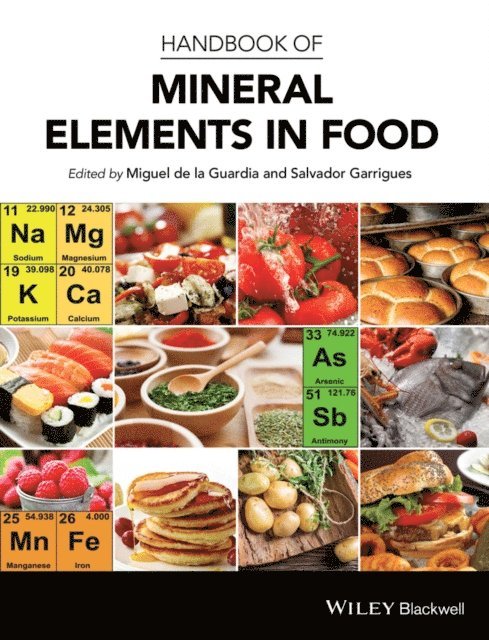
Mineral elements are found in foods and drink of all different types, from drinking water through to mothers’ milk. The search for mineral elements has shown that many trace and ultratrace-level elements presented in food are required for a healthy life. By identifying and analysing these elements, it is possible to evaluate them for their specific health-giving properties, and conversely, to isolate their less desirable properties with a view to reducing or removing them altogether from some foods. The analysis of mineral elements requires a number of different techniques – some methods may be suitable for one food type yet completely unsuited to another.
The Handbook of Mineral Elements in Food is the first book to bring together the analytical techniques, the regulatory and legislative framework, and the widest possible range of food types into one comprehensive handbook for food scientists and technologists. Much of the book is based on the authors’ own data, most of which is previously unpublished, making the Handbook of Mineral Elements in Food a vital and up-to-the-minute reference for food scientists in industry and academia alike. Analytical chemists, nutritionists and food policy makers will also find it an invaluable resource.
Showcasing contributions from international researchers, and constituting a major resource for our future understanding of the topic, the Handbook of Mineral Elements in Food is an essential reference and should be found wherever food science and technology are researched and taught.
3 845 kr
Läs direkt efter köp
Mineral elements are found in foods and drink of all different types, from drinking water through to mothers’ milk. The search for mineral elements has shown that many trace and ultratrace-level elements presented in food are required for a healthy life. By identifying and analysing these elements, it is possible to evaluate them for their specific health-giving properties, and conversely, to isolate their less desirable properties with a view to reducing or removing them altogether from some foods. The analysis of mineral elements requires a number of different techniques – some methods may be suitable for one food type yet completely unsuited to another.
The Handbook of Mineral Elements in Food is the first book to bring together the analytical techniques, the regulatory and legislative framework, and the widest possible range of food types into one comprehensive handbook for food scientists and technologists. Much of the book is based on the authors’ own data, most of which is previously unpublished, making the Handbook of Mineral Elements in Food a vital and up-to-the-minute reference for food scientists in industry and academia alike. Analytical chemists, nutritionists and food policy makers will also find it an invaluable resource.
Showcasing contributions from international researchers, and constituting a major resource for our future understanding of the topic, the Handbook of Mineral Elements in Food is an essential reference and should be found wherever food science and technology are researched and taught.
3 271 kr
Skickas inom 11-20 vardagar
4 004 kr
Läs direkt efter köp
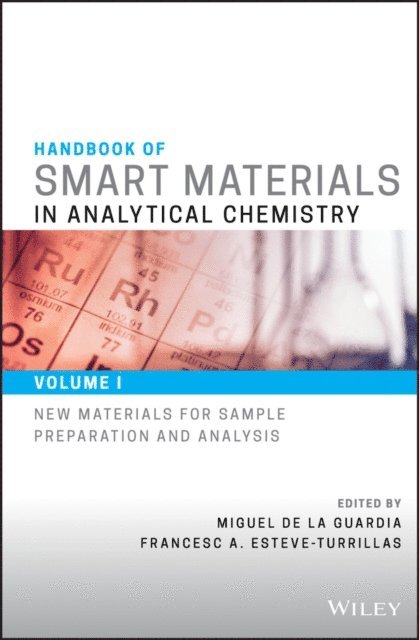
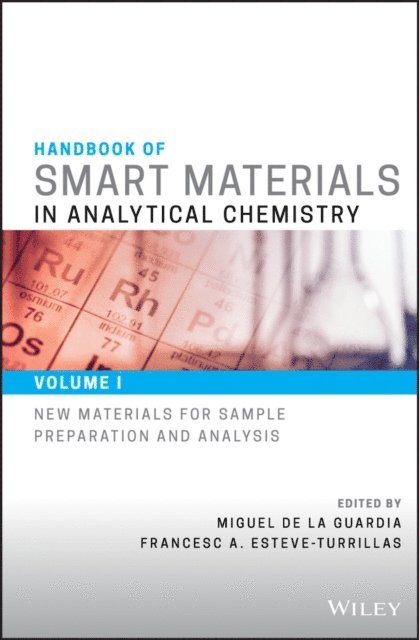
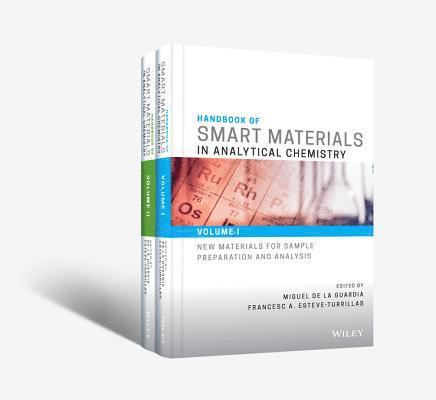
A comprehensive guide to smart materials and how they are used in sample preparation, analytical processes, and applications
This comprehensive, two-volume handbook provides detailed information on the present state of new materials tailored for selective sample preparation and the legal frame and environmental side effects of the use of smart materials for sample preparation in analytical chemistry, as well as their use in the analytical processes and applications. It covers both methodological and applied analytical aspects, relating to the development and application of new materials for solid-phase extraction (SPE) and solid-phase microextraction (SPME), their use in the different steps and techniques of the analytical process, and their application in specific fields such as water, food, air, pharmaceuticals, clinical sciences and forensics.
Every chapter in Handbook of Smart Materials in Analytical Chemistry is written by experts in the field to provide a comprehensive picture of the present state of this key area of analytical sciences and to summarize current applications and research literature in a critical way. Volume 1 covers New Materials for Sample Preparation and Analysis. Volume 2 handles Analytical Processes and Applications.
Focuses on the development and applications of smart materials in analytical chemistry Covers both, methodological and applied analytical aspects, for the development of new materials and their use in the different steps and techniques of the analytical process and their application in specific fields Features applications in key areas including water, air, environment, pharma, food, forensic, and clinical Presents the available tools for the use of new materials suitable to aid recognition process to the sample preparation and analysis A key resource for analytical chemists, applied laboratories, and instrument companiesHandbook of Smart Materials in Analytical Chemistry, 2V Set is an excellent reference book for specialists and advanced students in the areas of analytical chemistry, including both research and application environments.
4 113 kr
Läs direkt efter köp
A comprehensive guide to smart materials and how they are used in sample preparation, analytical processes, and applications
This comprehensive, two-volume handbook provides detailed information on the present state of new materials tailored for selective sample preparation and the legal frame and environmental side effects of the use of smart materials for sample preparation in analytical chemistry, as well as their use in the analytical processes and applications. It covers both methodological and applied analytical aspects, relating to the development and application of new materials for solid-phase extraction (SPE) and solid-phase microextraction (SPME), their use in the different steps and techniques of the analytical process, and their application in specific fields such as water, food, air, pharmaceuticals, clinical sciences and forensics.
Every chapter in Handbook of Smart Materials in Analytical Chemistry is written by experts in the field to provide a comprehensive picture of the present state of this key area of analytical sciences and to summarize current applications and research literature in a critical way. Volume 1 covers New Materials for Sample Preparation and Analysis. Volume 2 handles Analytical Processes and Applications.
Focuses on the development and applications of smart materials in analytical chemistry Covers both, methodological and applied analytical aspects, for the development of new materials and their use in the different steps and techniques of the analytical process and their application in specific fields Features applications in key areas including water, air, environment, pharma, food, forensic, and clinical Presents the available tools for the use of new materials suitable to aid recognition process to the sample preparation and analysis A key resource for analytical chemists, applied laboratories, and instrument companiesHandbook of Smart Materials in Analytical Chemistry, 2V Set is an excellent reference book for specialists and advanced students in the areas of analytical chemistry, including both research and application environments.
3 373 kr
Skickas inom 11-20 vardagar
2 246 kr
Läs direkt efter köp
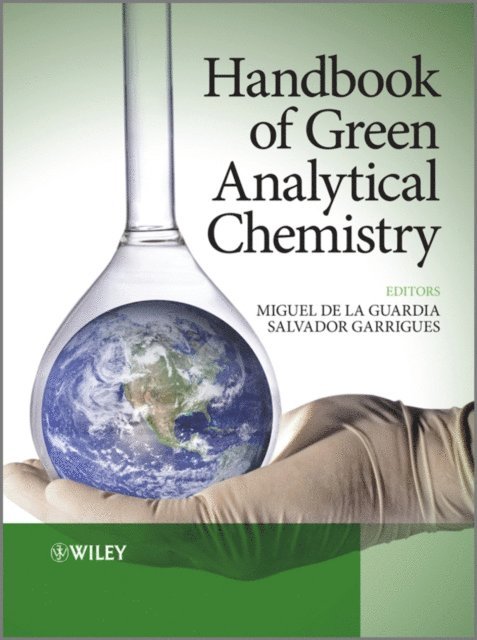
The emerging field of green analytical chemistry is concerned with the development of analytical procedures that minimize consumption of hazardous reagents and solvents, and maximize safety for operators and the environment. In recent years there have been significant developments in methodological and technological tools to prevent and reduce the deleterious effects of analytical activities; key strategies include recycling, replacement, reduction and detoxification of reagents and solvents.
The Handbook of Green Analytical Chemistry provides a comprehensive overview of the present state and recent developments in green chemical analysis. A series of detailed chapters, written by international specialists in the field, discuss the fundamental principles of green analytical chemistry and present a catalogue of tools for developing environmentally friendly analytical techniques.
Topics covered include:
Concepts: Fundamental principles, education, laboratory experiments and publication in green analytical chemistry. The Analytical Process: Green sampling techniques and sample preparation, direct analysis of samples, green methods for capillary electrophoresis, chromatography, atomic spectroscopy, solid phase molecular spectroscopy, derivative molecular spectroscopy and electroanalytical methods. Strategies: Energy saving, automation, miniaturization and photocatalytic treatment of laboratory wastes. Fields of Application: Green bioanalytical chemistry, biodiagnostics, environmental analysis and industrial analysis.This advanced handbook is a practical resource for experienced analytical chemists who are interested in implementing green approaches in their work.
2 167 kr
Läs direkt efter köp
The emerging field of green analytical chemistry is concerned with the development of analytical procedures that minimize consumption of hazardous reagents and solvents, and maximize safety for operators and the environment. In recent years there have been significant developments in methodological and technological tools to prevent and reduce the deleterious effects of analytical activities; key strategies include recycling, replacement, reduction and detoxification of reagents and solvents.
The Handbook of Green Analytical Chemistry provides a comprehensive overview of the present state and recent developments in green chemical analysis. A series of detailed chapters, written by international specialists in the field, discuss the fundamental principles of green analytical chemistry and present a catalogue of tools for developing environmentally friendly analytical techniques.
Topics covered include:
Concepts: Fundamental principles, education, laboratory experiments and publication in green analytical chemistry. The Analytical Process: Green sampling techniques and sample preparation, direct analysis of samples, green methods for capillary electrophoresis, chromatography, atomic spectroscopy, solid phase molecular spectroscopy, derivative molecular spectroscopy and electroanalytical methods. Strategies: Energy saving, automation, miniaturization and photocatalytic treatment of laboratory wastes. Fields of Application: Green bioanalytical chemistry, biodiagnostics, environmental analysis and industrial analysis.This advanced handbook is a practical resource for experienced analytical chemists who are interested in implementing green approaches in their work.
2 911 kr
Skickas inom 5-8 vardagar
2 674 kr
Läs direkt efter köp
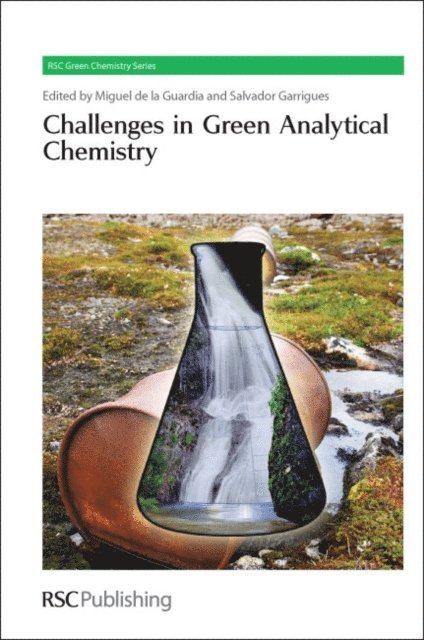
Analytical techniques are employed every day in both, industry and academia. The concept of green analytical chemistry involves making analytical chemistry safer for operators, more sustainable for the environment and more economical. Improvements in the availability of renewable feedstocks, miniaturization, automated technology, and chemical recycling, make this a vibrant field of research.
This new edition of Challenges in Green Analytical Chemistry presents an overview of the latest tools and techniques for improving safety and sustainability in analytical chemistry. Covering topics including solvent selection, miniaturization and metrics for the evaluation of greenness, this book is a useful resource for researchers and application laboratories interested in reducing the risks and environmental impacts of analytical methods.
2 674 kr
Läs direkt efter köp
Analytical techniques are employed every day in both, industry and academia. The concept of green analytical chemistry involves making analytical chemistry safer for operators, more sustainable for the environment and more economical. Improvements in the availability of renewable feedstocks, miniaturization, automated technology, and chemical recycling, make this a vibrant field of research.
This new edition of Challenges in Green Analytical Chemistry presents an overview of the latest tools and techniques for improving safety and sustainability in analytical chemistry. Covering topics including solvent selection, miniaturization and metrics for the evaluation of greenness, this book is a useful resource for researchers and application laboratories interested in reducing the risks and environmental impacts of analytical methods.
2 129 kr
Skickas inom 5-8 vardagar
1 863 kr
Läs direkt efter köp
Concerns about environmental pollution, global climate change and hazards to human health have increased dramatically. This has led to a call for change in chemical processes including those that are part of chemical analysis. The development of analytical chemistry continues and every new discovery in chemistry, physics, molecular biology, and materials science brings new opportunities and challenges. Yet, contemporary analytical chemistry does not consume resources optimally. Indeed, the usage of toxic chemical compounds is at the highest rate ever. All this makes the emerging field of green chemistry a “hot topic” in industrial, governmental laboratories as well as in academia. This book starts by introducing the twelve principles of green chemistry. It then goes on to discuss how the principles of green chemistry can be used to assess the ‘greenness’ of analytical methodologies. The ‘green profile’ proposed by the ACS Green Chemistry Institute is also presented. A chapter on “Greening” sample preparation describes approaches to minimizing toxic solvent use, using non-toxic alternatives, and saving energy. The chapter on instrumental methods describes existing analytical approaches that are inherently green and making non-green methods greener. The final chapter on signal acquisition describes how quantitative structure-property relationship (QSPR) ideas could reduce experimental work thus making analysis greener. The book concludes with a discussion of how green chemistry is both possible and necessary. Green Analytical Chemistry is aimed at managers of analytical laboratories but will also interest teachers of analytical chemistry and green public policy makers.