Miguel Hernando de Larramendi - Böcker
Visar alla böcker från författaren Miguel Hernando de Larramendi. Handla med fri frakt och snabb leverans.
3 produkter
3 produkter
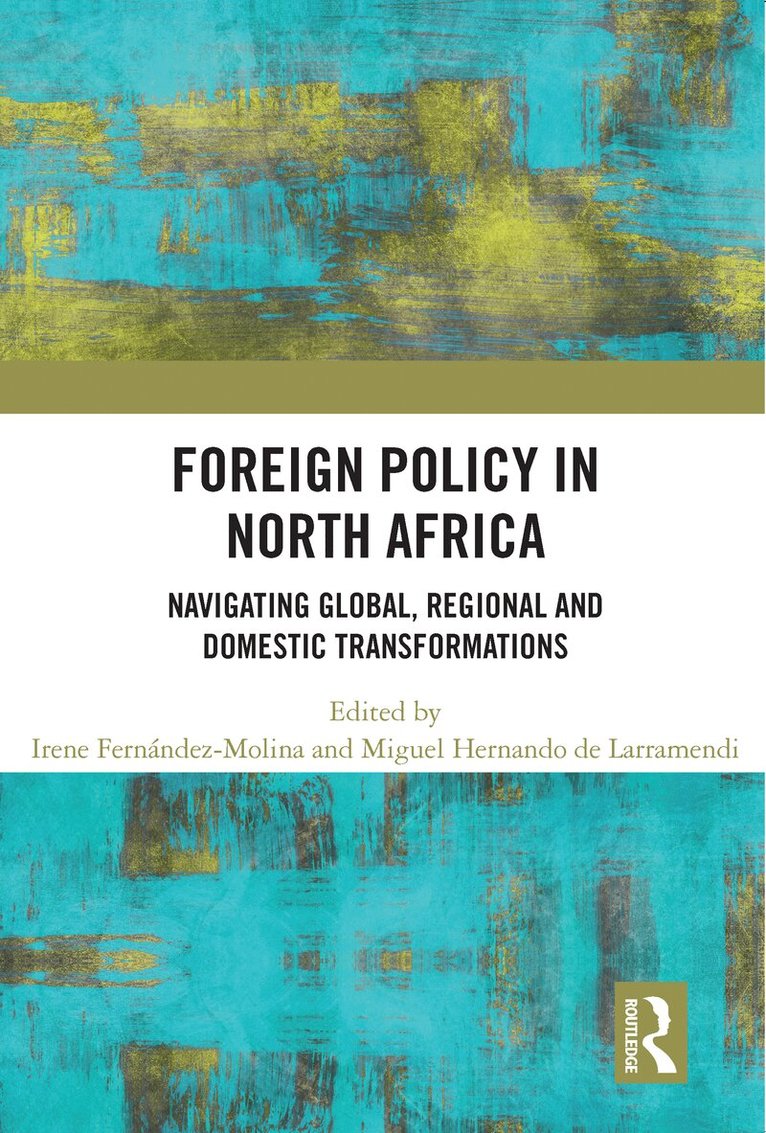
Foreign Policy in North Africa
Navigating Global, Regional and Domestic Transformations
Häftad, Engelska, 2022
618 kr
Skickas inom 10-15 vardagar
Foreign Policy in North Africa explores how the foreign policies of North African states, which occupy a peripheral and subaltern position within the global system, have actively responded to the constraints and opportunities stemming from multi-level transformations in the 2010s.What has been the extent of continuity and change in each country’s foreign policy-making and behaviour under such conditions? Which structural and agential factors explain the variations observed, or the lack thereof? Building on scholarship on foreign policy in the Global South and the Middle East and North Africa (MENA) as well as the international impact of the 2011 Arab uprisings, case studies on six different countries focus on a specific level of analysis for each. These range from the global (Tunisia’s financial predicaments and foreign debt negotiations) through the (sub)regional (Egypt’s relationship of necessity with Saudi Arabia, Algeria’s half-hearted policies towards the conflicts in Libya and Mali) to the domestic sphere (Morocco’s power balance between the monarchy and the Islamist-led government, Libya’s extreme state weakness and internal competition among proliferating actors), reaching also the deeper non-state societal level in the case of Mauritania. The volume concludes by examining post-2011 developments in the longstanding Algerian–Moroccan rivalry which hinders regional integration in the Maghreb.Foreign Policy in North Africa will be of great interest to scholars of North African politics and international relations, Middle Eastern and North African studies, foreign policy and global international relations. The chapters were originally published as a special issue of The Journal of North African Studies.
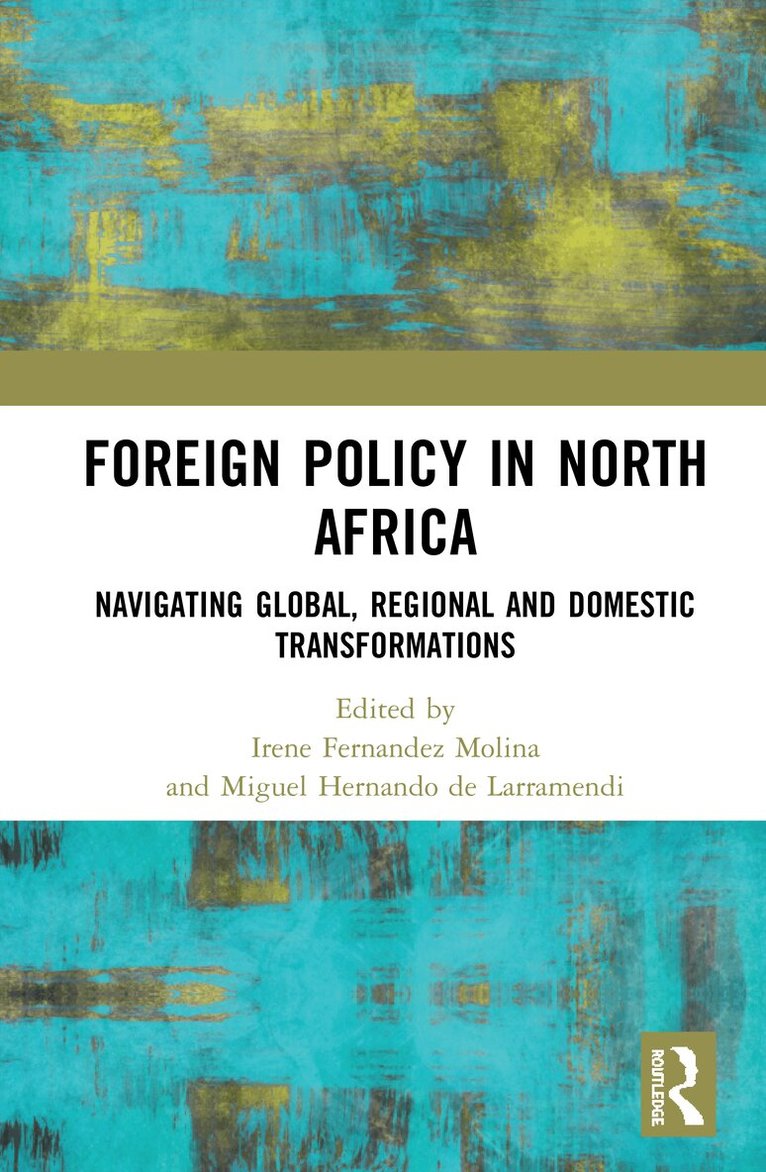
Foreign Policy in North Africa
Navigating Global, Regional and Domestic Transformations
Inbunden, Engelska, 2020
2 113 kr
Skickas inom 10-15 vardagar
Foreign Policy in North Africa explores how the foreign policies of North African states, which occupy a peripheral and subaltern position within the global system, have actively responded to the constraints and opportunities stemming from multi-level transformations in the 2010s.What has been the extent of continuity and change in each country’s foreign policy-making and behaviour under such conditions? Which structural and agential factors explain the variations observed, or the lack thereof? Building on scholarship on foreign policy in the Global South and the Middle East and North Africa (MENA) as well as the international impact of the 2011 Arab uprisings, case studies on six different countries focus on a specific level of analysis for each. These range from the global (Tunisia’s financial predicaments and foreign debt negotiations) through the (sub)regional (Egypt’s relationship of necessity with Saudi Arabia, Algeria’s half-hearted policies towards the conflicts in Libya and Mali) to the domestic sphere (Morocco’s power balance between the monarchy and the Islamist-led government, Libya’s extreme state weakness and internal competition among proliferating actors), reaching also the deeper non-state societal level in the case of Mauritania. The volume concludes by examining post-2011 developments in the longstanding Algerian–Moroccan rivalry which hinders regional integration in the Maghreb.Foreign Policy in North Africa will be of great interest to scholars of North African politics and international relations, Middle Eastern and North African studies, foreign policy and global international relations. The chapters were originally published as a special issue of The Journal of North African Studies.
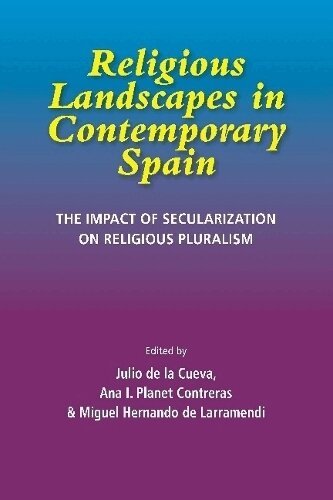
Religious Landscapes in Contemporary Spain
The Impact of Secularization on Religious Pluralism
Häftad, Engelska, 2022
646 kr
Skickas inom 7-10 vardagar
Spain is no longer exclusively identified with Catholicism. This book sets out to understand the social dynamics of twenty-first century Spain through the perspective of religion and religious pluralism. Divided into three parts, Part I, Secularization in Spain, frames the analysis of this secularization process throughout the twentieth century and beyond, with particular attention to the process during the Second Republic and the quiet secularization of society that began under Franco's regime. Part II, Religious Change in Spain, establishes the broad framework of the process, addressing the changes that have taken place within Catholicism and the reaction of the Protestant minority as social mores became increasingly fast moving. Part III, Islam in Spain, addresses both its history (including colonial management) and current dynamics (how Islam is viewed by other religions; the impact of the March 11, 2004, attacks; and Islamophobic discourse). Religious Landscapes in Contemporary Spain is essential reading for scholars and students in History and Contemporary Affairs.