
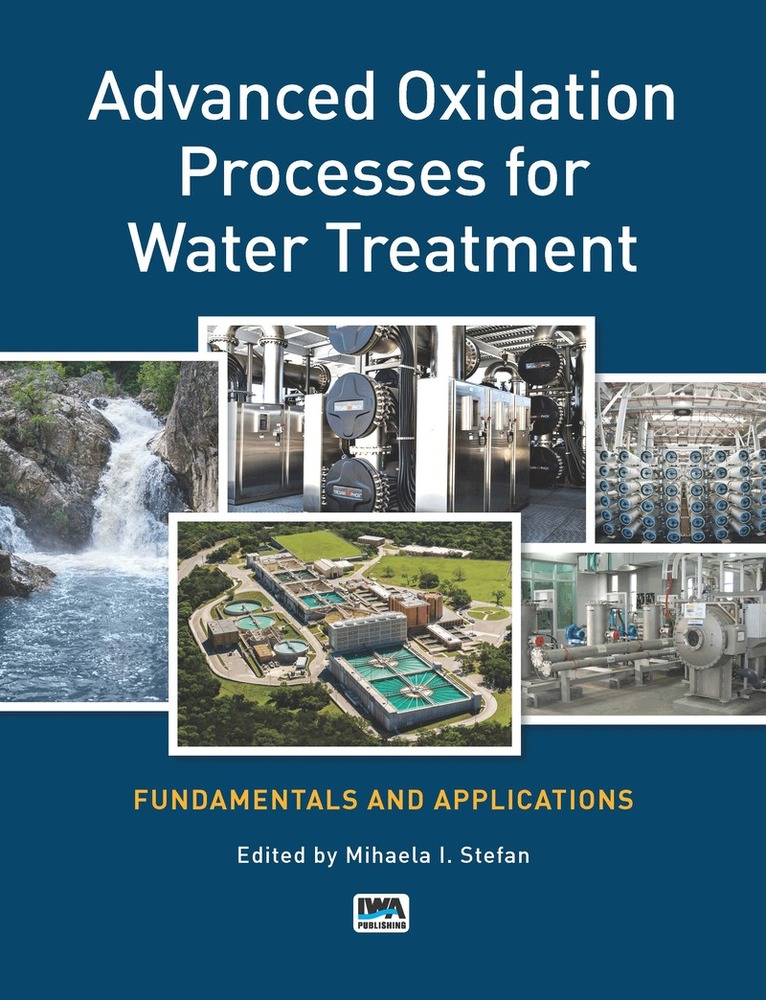
Advanced Oxidation Processes (AOPs) rely on the efficient generation of reactive radical species and are increasingly attractive options for water remediation from a wide variety of organic micropollutants of human health and/or environmental concern.Advanced Oxidation Processes for Water Treatment covers the key advanced oxidation processes developed for chemical contaminant destruction in polluted water sources, some of which have been implemented successfully at water treatment plants around the world.The book is structured in two sections; the first part is dedicated to the most relevant AOPs, whereas the topics covered in the second section include the photochemistry of chemical contaminants in the aquatic environment, advanced water treatment for water reuse, implementation of advanced treatment processes for drinking water production at a state-of-the art water treatment plant in Europe, advanced treatment of municipal and industrial wastewater, and green technologies for water remediation.The advanced oxidation processes discussed in the book cover the following aspects:- Process principles including the most recent scientific findings and interpretation.- Classes of compounds suitable to AOP treatment and examples of reaction mechanisms.- Chemical and photochemical degradation kinetics and modelling.- Water quality impact on process performance and practical considerations on process parameter selection criteria.- Process limitations and byproduct formation and strategies to mitigate any potential adverse effects on the treated water quality.- AOP equipment design and economics considerations.- Research studies and outcomes.- Case studies relevant to process implementation to water treatment.- Commercial applications.- Future research needs.Advanced Oxidation Processes for Water Treatment presents the most recent scientific and technological achievements in process understanding and implementation, and addresses to anyone interested in water remediation, including water industry professionals, consulting engineers, regulators, academics, students. Editor: Mihaela I. Stefan - Trojan Technologies - Canada
Recent regulations are now requiring lower chlorinated disinfection by-products (DBPs) and inactivation of chlorine resistant pathogens such as Cryptosporidium parvum. Ultraviolet light is now considered a compliance technology for primary disinfection of surface waters in the Stage 2 Rules. The objectives to this project were to:? evaluate the efficacy of three different UV technologies for treatment of organic contaminants in waters of varying quality;? evaluate the UV technologies with additions of hydrogen peroxide (H2O2) to promote advanced oxidation (AOP) for treatment of the contaminants;? determine the extent of disinfection by-product (DBP) formation including aldehydes, carboxylic acids, and post-chlorination DBPs, following UV treatment;? pilot test two UV technologies alone and under AOP conditions at two utility field sites for contaminant treatment to develop operational experience and preliminary cost and design data.
Advanced Oxidation Processes (AOPs) rely on the efficient generation of reactive radical species and are increasingly attractive options for water remediation from a wide variety of organic micropollutants of human health and/or environmental concern.Advanced Oxidation Processes for Water Treatment covers the key advanced oxidation processes developed for chemical contaminant destruction in polluted water sources, some of which have been implemented successfully at water treatment plants around the world.The book is structured in two sections; the first part is dedicated to the most relevant AOPs, whereas the topics covered in the second section include the photochemistry of chemical contaminants in the aquatic environment, advanced water treatment for water reuse, implementation of advanced treatment processes for drinking water production at a state-of-the art water treatment plant in Europe, advanced treatment of municipal and industrial wastewater, and green technologies for water remediation.The advanced oxidation processes discussed in the book cover the following aspects:- Process principles including the most recent scientific findings and interpretation.- Classes of compounds suitable to AOP treatment and examples of reaction mechanisms.- Chemical and photochemical degradation kinetics and modelling.- Water quality impact on process performance and practical considerations on process parameter selection criteria.- Process limitations and byproduct formation and strategies to mitigate any potential adverse effects on the treated water quality.- AOP equipment design and economics considerations.- Research studies and outcomes.- Case studies relevant to process implementation to water treatment.- Commercial applications.- Future research needs.Advanced Oxidation Processes for Water Treatment presents the most recent scientific and technological achievements in process understanding and implementation, and addresses to anyone interested in water remediation, including water industry professionals, consulting engineers, regulators, academics, students. Editor: Mihaela I. Stefan - Trojan Technologies - Canada
Recent regulations are now requiring lower chlorinated disinfection by-products (DBPs) and inactivation of chlorine resistant pathogens such as Cryptosporidium parvum. Ultraviolet light is now considered a compliance technology for primary disinfection of surface waters in the Stage 2 Rules. The objectives to this project were to:? evaluate the efficacy of three different UV technologies for treatment of organic contaminants in waters of varying quality;? evaluate the UV technologies with additions of hydrogen peroxide (H2O2) to promote advanced oxidation (AOP) for treatment of the contaminants;? determine the extent of disinfection by-product (DBP) formation including aldehydes, carboxylic acids, and post-chlorination DBPs, following UV treatment;? pilot test two UV technologies alone and under AOP conditions at two utility field sites for contaminant treatment to develop operational experience and preliminary cost and design data.