Mike Adcock – författare
Visar alla böcker från författaren Mike Adcock. Handla med fri frakt och snabb leverans.
2 produkter
2 produkter
Häftad, Engelska, 2025
465 kr
Skickas
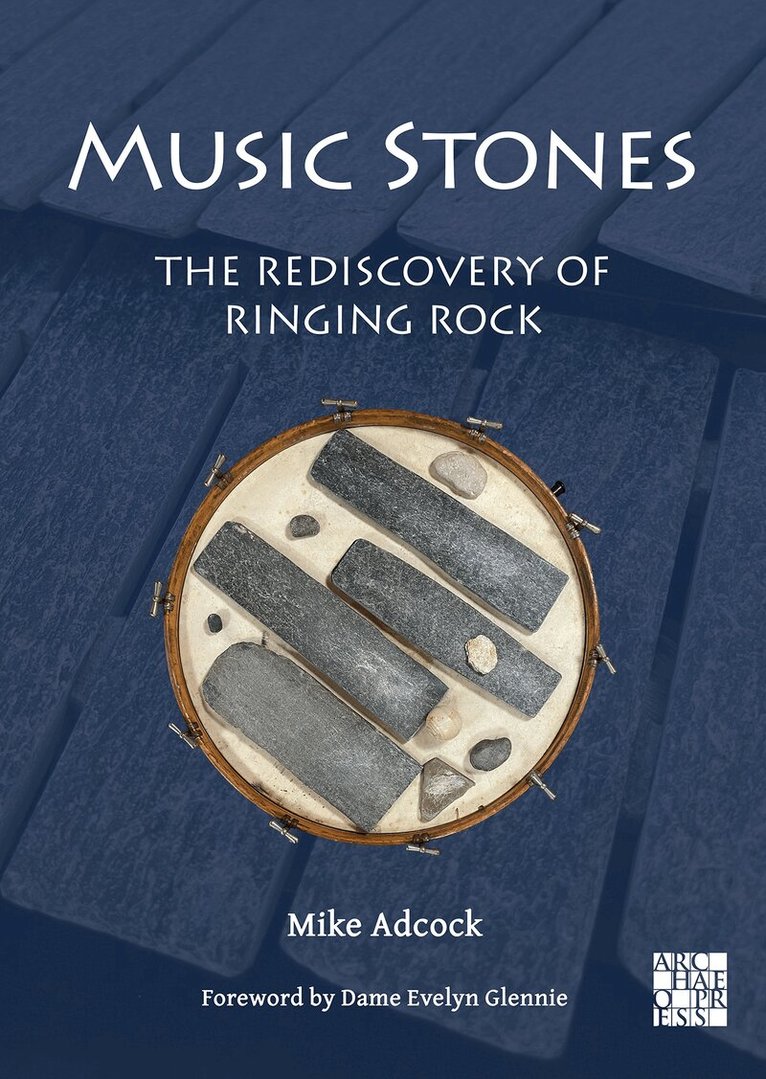
Music Stones is a fascinating account of the surprising and little-known ways in which stone has been used to create music. The use of stone instruments (lithophones) is thought to date back to prehistoric times, but here the focus is on a more recent interest being shown in the sound of stone. This all began in 1785, when Peter Crosthwaite, from Keswick in England’s Lake District, assembled his set of Music Stones, collected from the foot of Mount Skiddaw.From the 1840s onwards a succession of so-called rock bands from Keswick were inspired to produce bigger and better instruments and perform widely on them, including, in one case, playing at Buckingham Palace for Queen Victoria. The story continues into the twentieth century when, in 1949, the unearthing of an ancient set of tuned stone slabs in Vietnam, led to a revival of interest in lithophones in that country.A connection is also made between the sound of stone and the process of stone-carving, with particular reference to the work of Barbara Hepworth, as well as other sculptors such as Pinuccio Sciola, who was to become known internationally for his sound sculptures. Another focus is on the world of experimental music, in which some musicians and composers, keen to challenge ideas of what might constitute a musical instrument, have explored a range of geological possibilities, from vast rocky landscapes through to tiny pebbles. In the final chapter, a selection of contemporary practitioners write about their own musical involvement with the sound of stone.
E-bok
PDF, Engelska, 20062 686 kr
Läs direkt efter köp
This authoritative new work analyses European plant intellectual property rights. Whilst the focus of the work is on Europe, and in particular the European Patent Convention, the Council Regulation on Community Plant Variety Rights and the EU Directive on the Legal Protection of Biotechnological Inventions, these provisions are discussed within the context of international legislation, including the Agreement on Trade-Related Aspects of Intellectual Property Rights (TRIPs) and the Convention on Biological Diversity. It is the first book to look at the impact of plant intellectual property rights on the European plant breeding industry and assess whether recent developments, such as the Novartis decision, will assist plant breeders, from all sectors of plant breeding activities, in the production of new plant products. In addition to a thorough discussion of the legislation, the book includes unique empirical research results obtained by the authors as part of a two-year research project funded by the European Union, which surveyed attitudes towards, and use of, plant intellectual property rights within the European plant breeding community.