Mike Ananny – författare
477 kr
Läs direkt efter köp
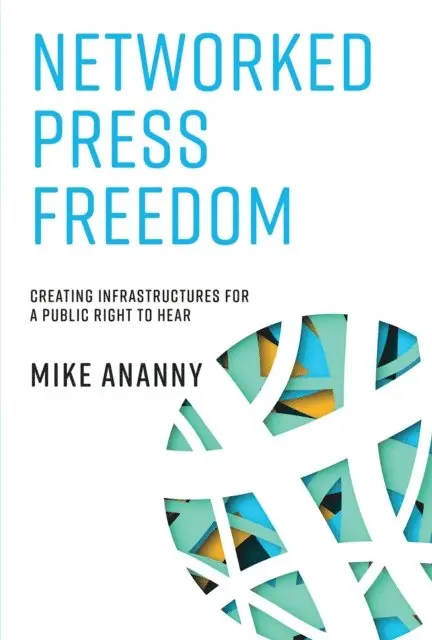
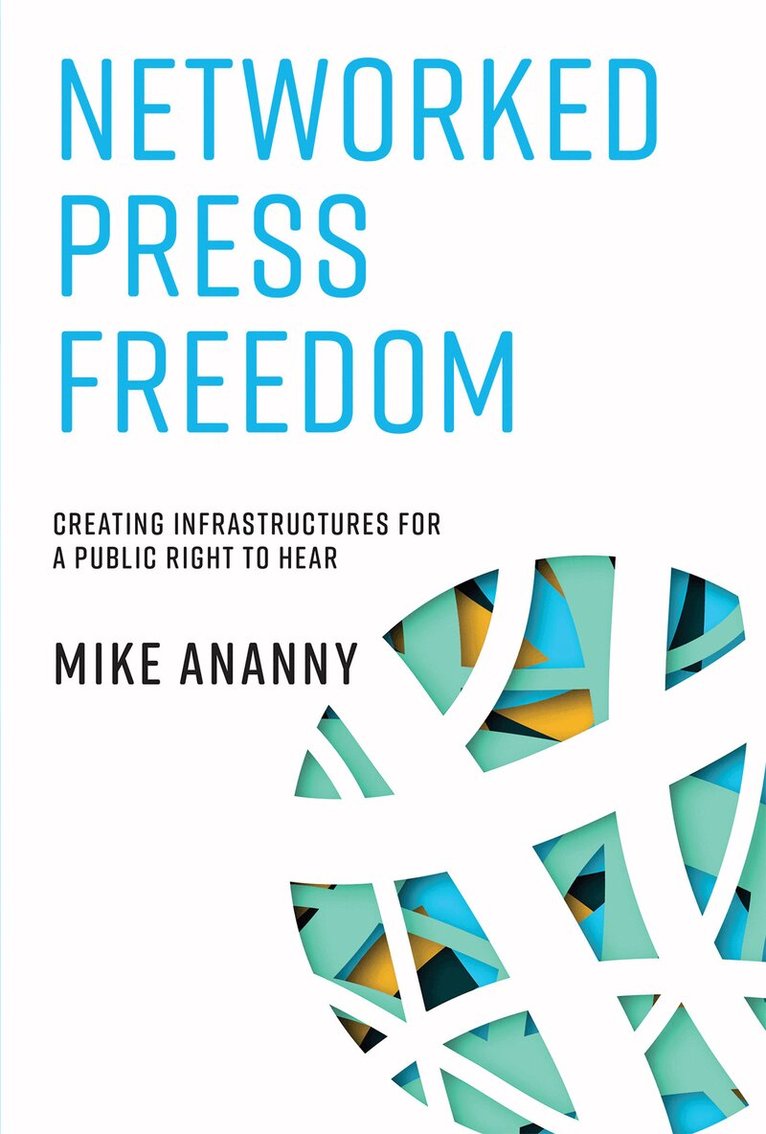
Reimagining press freedom in a networked era: not just a journalist''s right to speak but also a public''s right to hear.
In Networked Press Freedom, Mike Ananny offers a new way to think about freedom of the press in a time when media systems are in fundamental flux. Ananny challenges the idea that press freedom comes only from heroic, lone journalists who speak truth to power. Instead, drawing on journalism studies, institutional sociology, political theory, science and technology studies, and an analysis of ten years of journalism discourse about news and technology, he argues that press freedom emerges from social, technological, institutional, and normative forces that vie for power and fight for visions of democratic life. He shows how dominant, historical ideals of professionalized press freedom often mistook journalistic freedom from constraints for the public''s freedom to encounter the rich mix of people and ideas that self-governance requires. Ananny''s notion of press freedom ensures not only an individual right to speak, but also a public right to hear.
Seeing press freedom as essential for democratic self-governance, Ananny explores what publics need, what kind of free press they should demand, and how today''s press freedom emerges from intertwined collections of humans and machines. If someone says, “The public needs a free press,” Ananny urges us to ask in response, “What kind of public, what kind of freedom, and what kind of press?” Answering these questions shows what robust, self-governing publics need to demand of technologists and journalists alike.
424 kr
Läs direkt efter köp
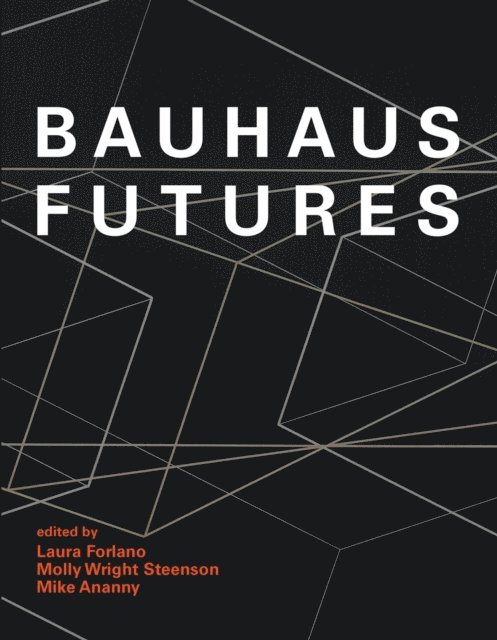
Essays, photo-essays, interviews, manifestos, diagrams, and a play explore the varied legacies, influences, and futures of the Bauhaus.
What would keep the Bauhaus up at night if it were practicing today? A century after its founding by Walter Gropius in Weimar, Germany, as an “experimental laboratory of the future,” who are the pioneering experimentalists who reinscribe or resist Bauhaus traditions? This book explores the varied legacies, influences, and futures of the Bauhaus.
Many of the animating issues of the Bauhaus—its integration of research, teaching, and practice; its experimentation with materials; its democratization of design; its open-minded, heterogeneous approach to ideas, theories, methods, and styles—remain relevant. The contributors to Bauhaus Futures address these but go further, considering issues that design has largely ignored for the last hundred years: gender, race, ethnicity, class, sexuality, and disability. Their contributions take the form of essays, photo-essays, interviews, manifestos, diagrams, and even a play. They discuss, among other things, the Bauhaus curriculum and its contemporary offshoots; Bauhaus legacies at the MIT Media Lab, Black Mountain College, and elsewhere; the conflict between the Bauhaus ideal of humanist universalism and current approaches to design concerned with race and justice; designed objects, from the iconic to the precarious; textile and weaving work by women in the Bauhaus and the present day; and design and technology.
ContributorsAlice Arnold, Jeffrey Bardzell, Shaowen Bardzell, Karen Kornblum Berntsen, Marshall Brown, Stuart Candy, Jessica Charlesworth, Elizabeth J. Chin, Taeyoon Choi, B. Coleman, Carl DiSalvo, Michael J. Golec, Kate Hennessy, Matthew Hockenberry, Joi Ito, Denisa Kera, N. Adriana Knouf, Silvia Lindtner, Shannon Mattern, Ramia Mazé, V. Mitch McEwen, Oliver Neumann, Paul Pangaro, Tim Parsons, Nassim Parvin, Joanne Pouzenc, Luiza Prado de O. Martin, Daniela K. Rosner, Natalie Saltiel, Trudi Lynn Smith, Carol Strohecker, Alex Taylor, Martin Thaler, Fred Turner, Andre Uhl, Jeff Watson, Robert Wiesenberger
575 kr
Skickas inom 5-8 vardagar
348 kr
Tillfälligt slut