Mike Chappell – författare
Visar alla böcker från författaren Mike Chappell. Handla med fri frakt och snabb leverans.
18 produkter
18 produkter
155 kr
Skickas inom 10-15 vardagar
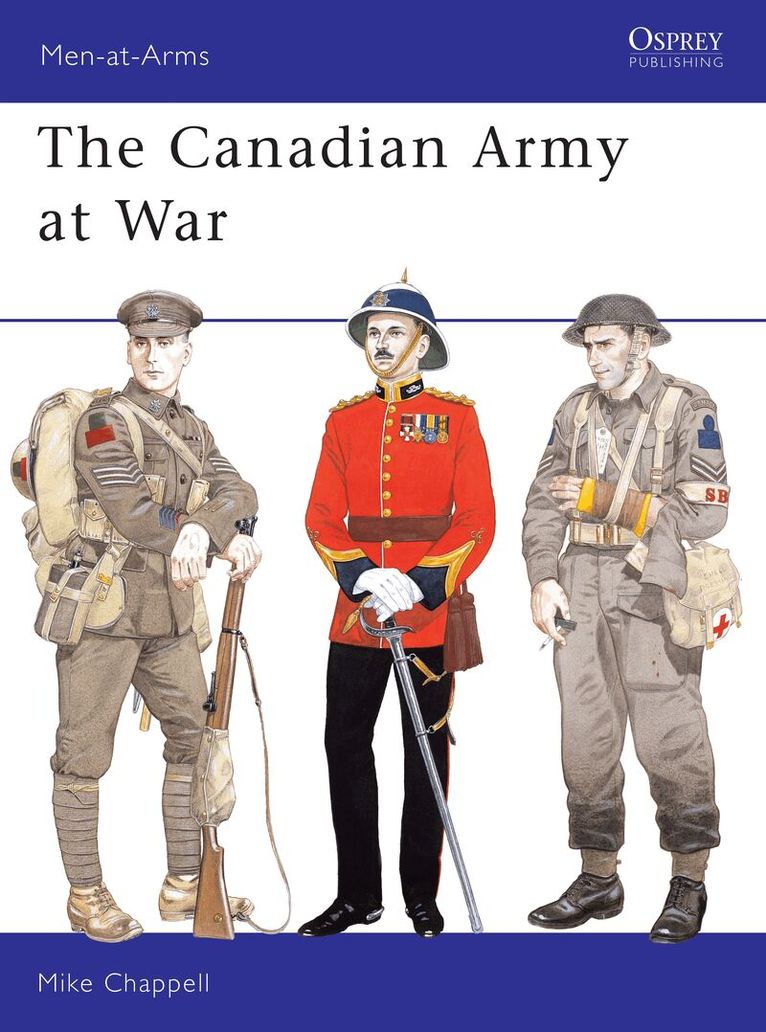
Throughout the twentieth century, Canadian armies participated in the world's major conflicts, from the Boer War at the dawn of the century, to the Korean War in the 1950s. As part of the British empire, Canada supported Britain in South Africa, and came to the aid of the Allies in both world wars. This book chronicles the development of the Canadian Army and the legendary achievements of a nation which might have justifiably stayed aloof from the quarrels of others.As both author and illustrator, Mike Chappell paints an engaging picture of the history, equipment and uniforms of the Canadian Army.
150 kr
Skickas inom 10-15 vardagar
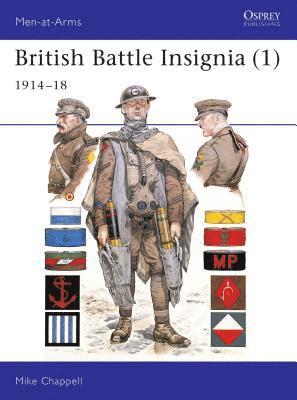
The British soldiers who marched off to war in 1914 wore only regimental insignia, yet by the time of the armistice in November 1918, insignia in the British Army had undergone a considerable change.Now visible was a bewildering display of coloured devices on uniforms, helmets, vehicles, guns, signboards and flags. Regimental badges remained but were joined by divisional insignia. These were rarely seen in the front line. Instead the 'battle patch' had appeared for combat use.In this beautifully illustrated book, Mike Chappell looks at the colourful variety of insignia used by the British Army during the Great War.
150 kr
Skickas inom 10-15 vardagar
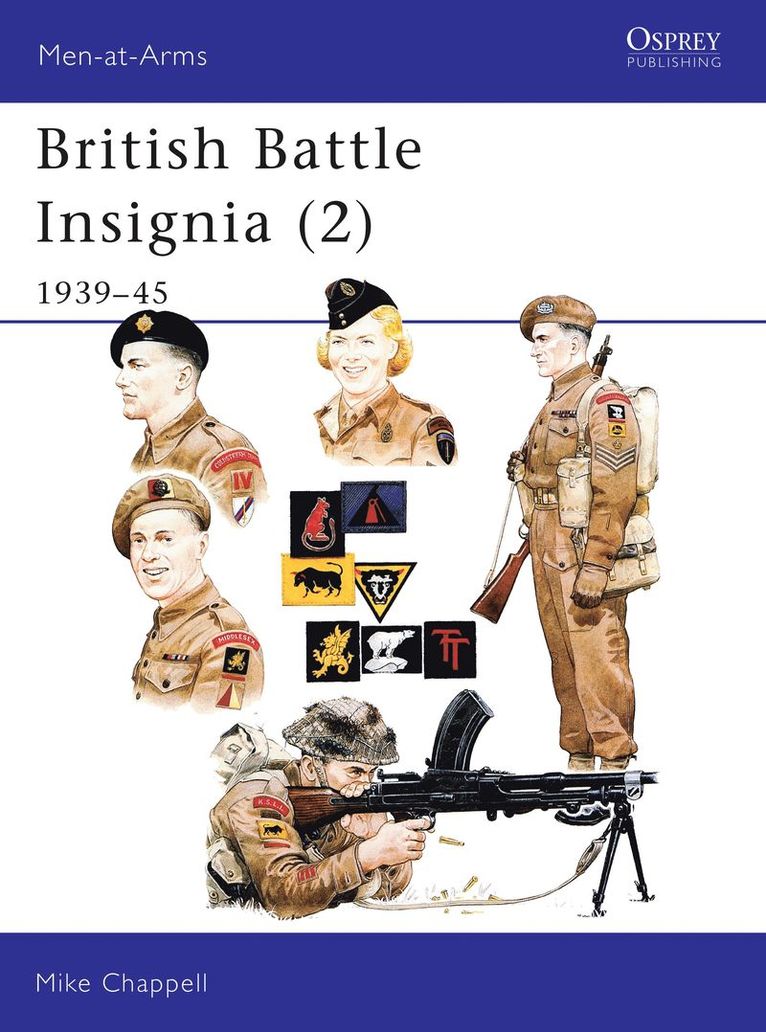
By the New Year of 1940 the War Office had agreed in principle to three things.These were (a) the enhancement of officers' badges of rank with cloth in the colour of the arm-of-service; (b) strips of cloth in the same colours to be worn at the top of the sleeves by all ranks; and (c) the wearing of regimental flashes on Battledress. And so the rules for the wearing of battle insignia throughout the British Army were established.How far they were obeyed and how often they were ignored will become obvious to anyone reading Mike Chappell's splendid companion work to Men-At-Arms 182.
178 kr
Skickas inom 10-15 vardagar
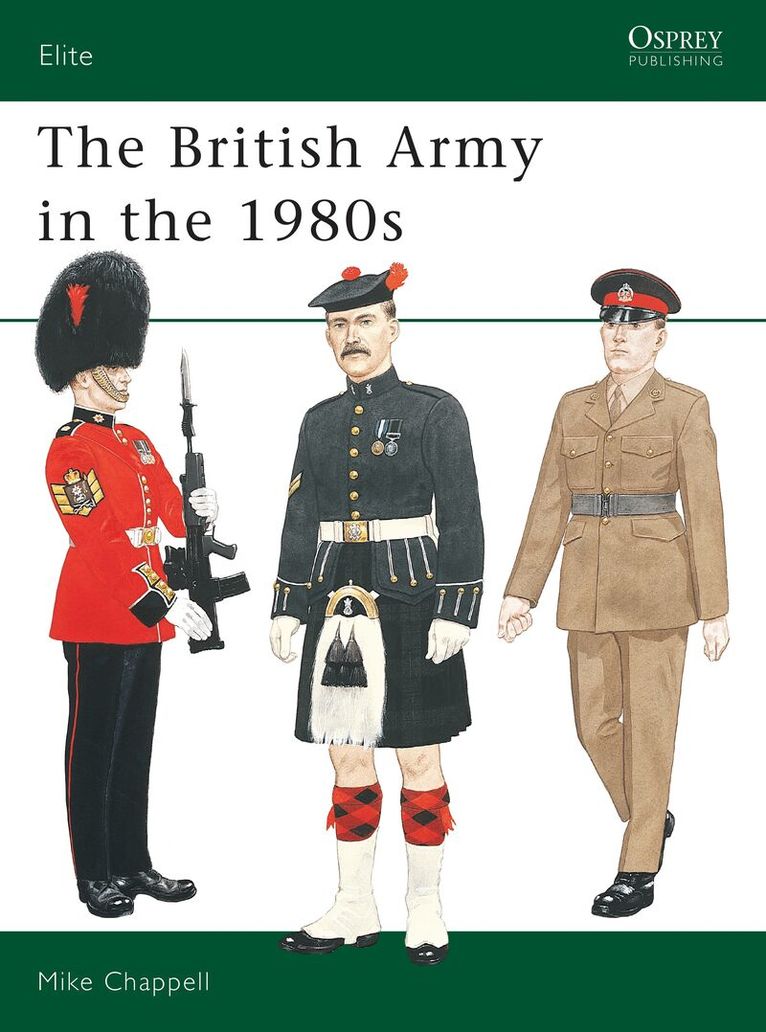
Published in 1987, this illustrated study provides a unique insight into the British Army of the time. Composed entirely of volunteers, its morale sustained by its curious and little-understood attitudes towards tradition, the British Army of the 1980s, with its reputation as one of the best in the world, attracted respect and admiration from the military expert and the layman alike. Written and illustrated by a former British Army infantryman with 22 years' experience, this book details the Army's history, organization, uniforms and distinctions. The text is backed by numerous illustrations including photographs and detailed colour figure artworks.
155 kr
Skickas inom 10-15 vardagar
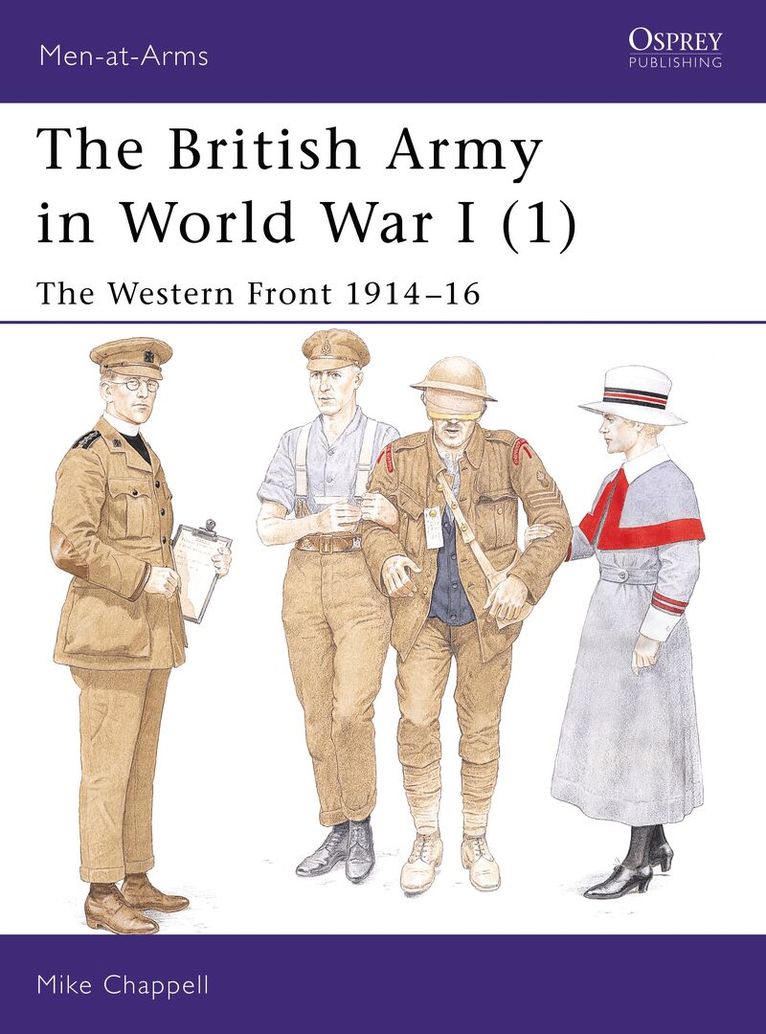
At the outbreak of World War I in August 1914 the British Army was unique: it was a small force raised entirely by voluntary recruitment.The first campaigns of the British Expeditionary Force brought admiration from the enemy, but by the end of 1914 it had been virtually eliminated. Kitchener’s call for new volunteers drew such a patriotic response that by mid-1916 the BEF had grown to 55 divisions.This book explains and illustrates the uniform, equipment and organization of the British Army up to the end of the battle of the Somme.
155 kr
Skickas inom 10-15 vardagar
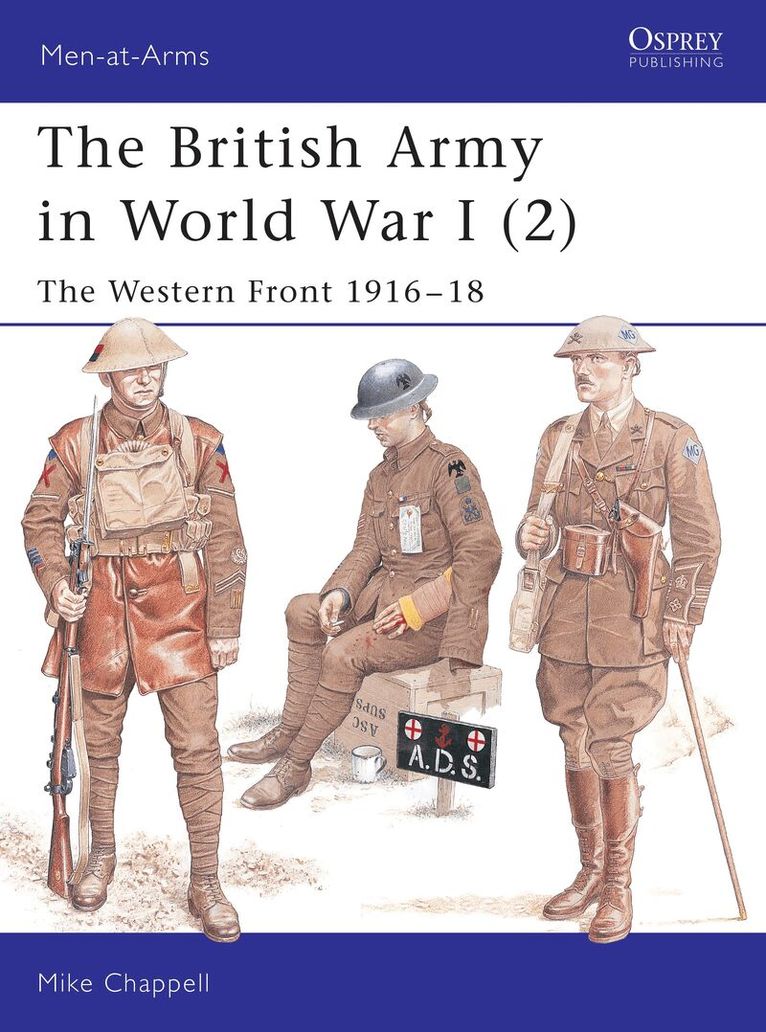
In 1916, Britain was finally forced to introduce universal conscription to replace the terrible casualties suffered by the pre-war Regulars, the Territorials and the eager but unprepared volunteers of the 'New Armies'.In 1917 and 1918, the vastly expanded British Expeditionary Force became the most effective of all the combatant armies in France, its improved weapons and tactics forged in the furnaces of the Somme and the Ypres Salient. Shaken but resilient under Germany's last desperate offensive in spring 1918, it swept forward to final victory.This second of three titles charts its changing appearance in colourful detail.
155 kr
Skickas inom 10-15 vardagar
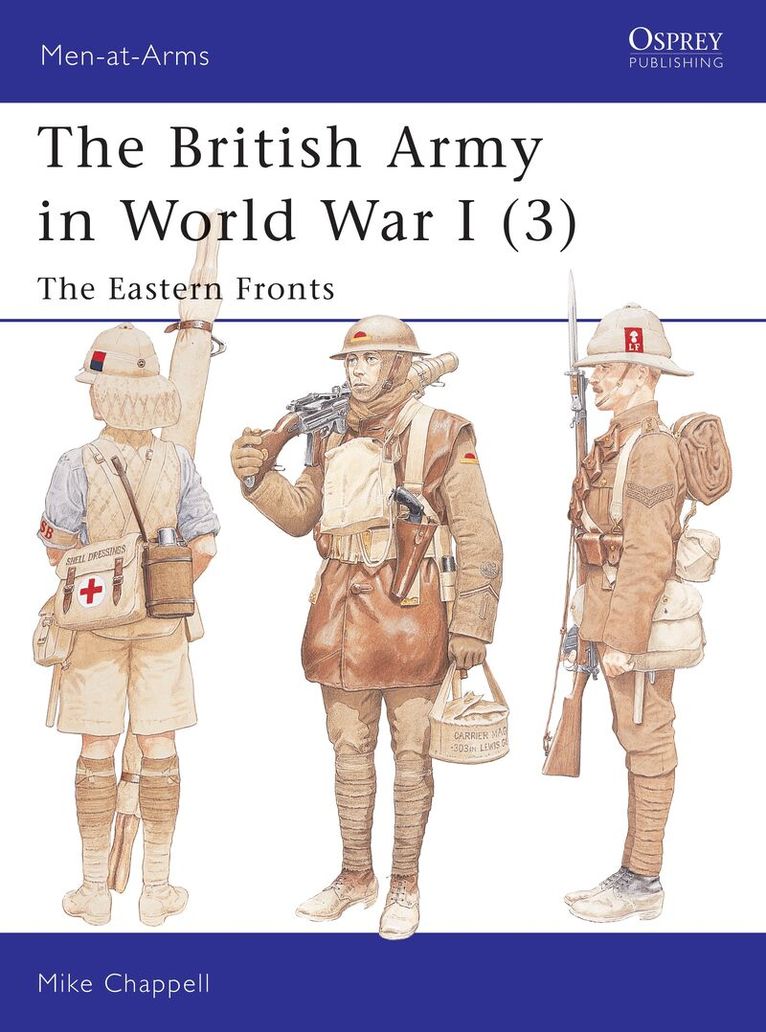
Although Britain's greatest commitment of land forces was on the Western Front, British, Empire and Dominion troops also fought in other theatres of operations – and in some cases continued to fight there after the Armistice had ended hostilities in the West.This last of our series of three titles describes these far-flung campaigns, in Italy, the Balkans, the Middle East, several parts of Africa, Russia, China, and even the North-West Frontier of India. The text is illustrated with contemporary photographs, and with meticulous colour plates of British, African, Indian and Australian troops, in the uniforms and equipment used on battle fronts from the desert sands to the snows of north Russia.
155 kr
Skickas inom 10-15 vardagar
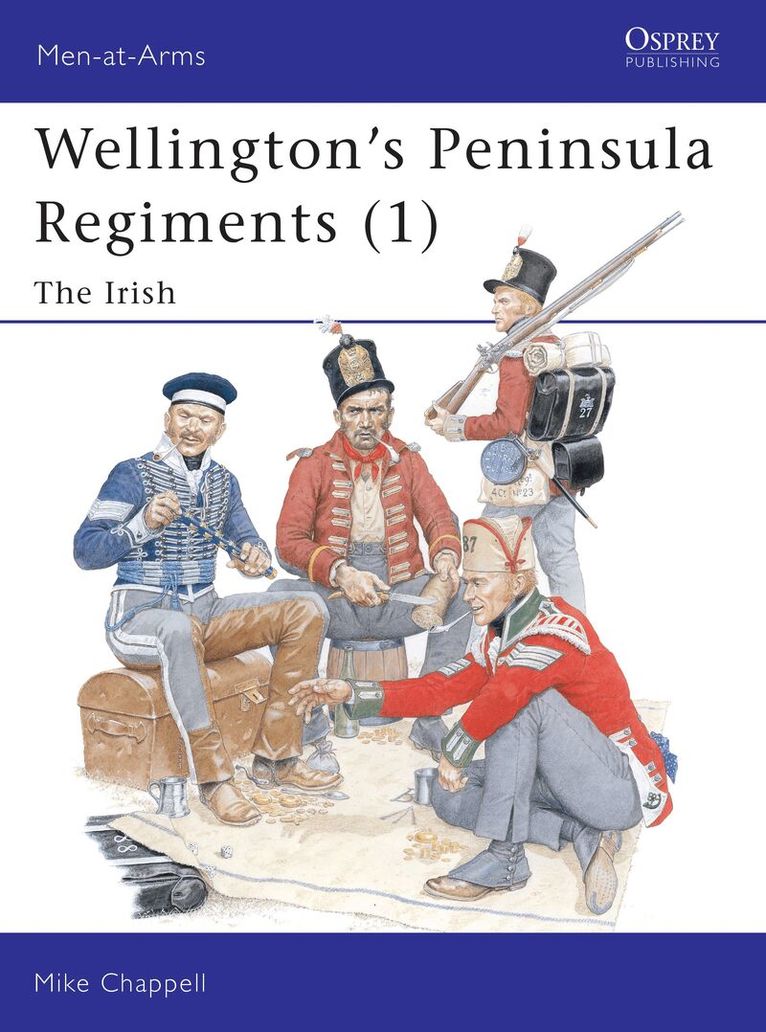
The forces which Wellington led in Portugal and Spain and up into southern France between 1808 and 1814 achieved a consistent record of victory perhaps unmatched in the history of the British Army.Some 40 per cent of this volunteer army were Irishmen – a remarkable figure, given the recent unrest and bloodshed in Ireland. This book details the record, and illustrates the uniforms and equipment, of the two cavalry and three infantry units boasting formal Irish identity: the 4th (Royal Irish) Dragoon Guards, 18th Hussars, 27th (Enniskillen), 87th (Prince of Wales's Own Irish), and 88th (Connaught Rangers) Regiments of Foot.
155 kr
Skickas inom 10-15 vardagar
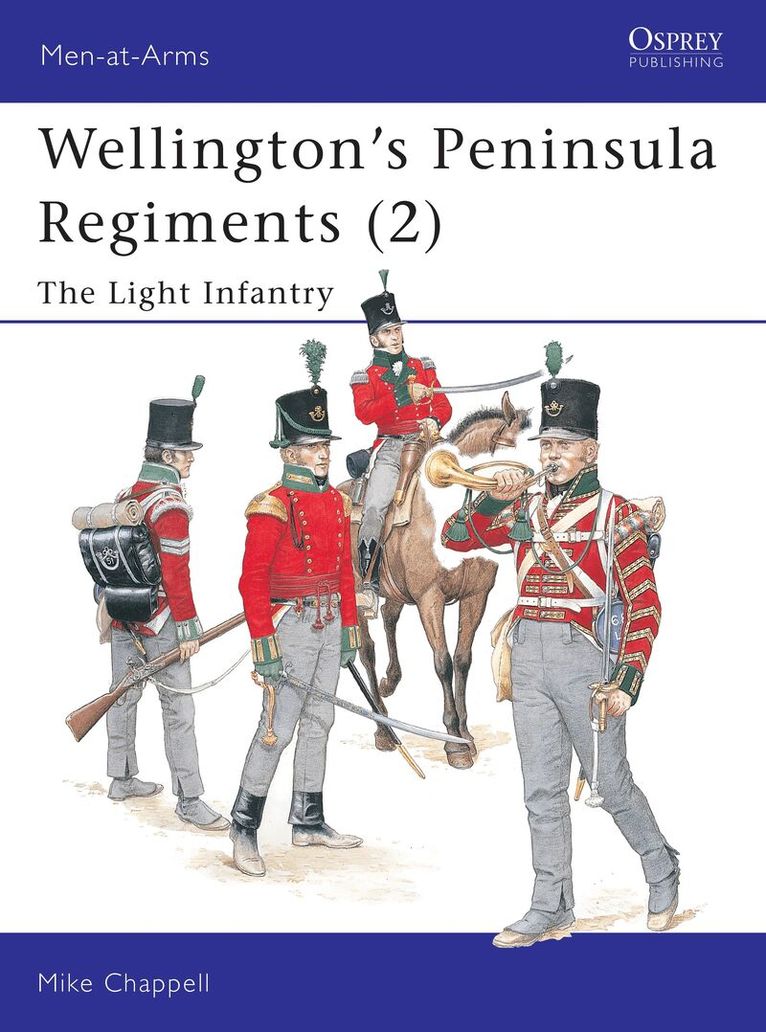
The forces which Wellington led in Portugal and Spain and up into southern France between 1808 and 1814 achieved a record of victory perhaps unmatched in the history of the British Army.Among his infantry the regiments of the Light Division were self-consciously an élite, trained to fight with initiative and independence on the exposed edges of the marching army. This book explains their evolution and tactics, details the campaigns in which they fought and illustrates the uniforms and equipment of the Light Infantry regiments: the 43rd (Monmouthshire), 52nd (Oxfordshire), 51st (2nd Yorkshire), 68th (Durham) and 85th (Bucks Volunteers).
155 kr
Skickas inom 10-15 vardagar
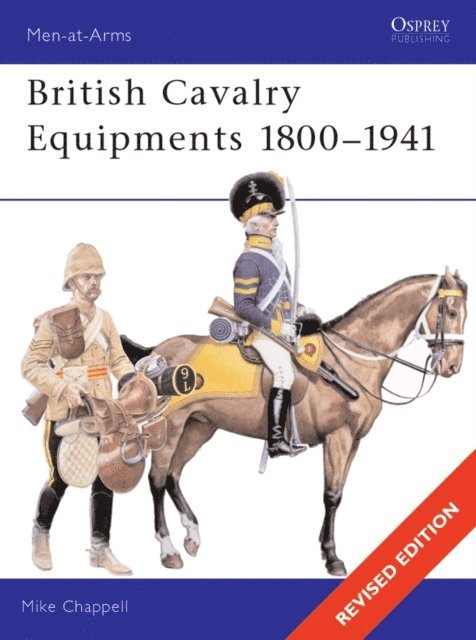
This revised edition of Mike Chappell's original Men-at-Arms 138 represents nearly 20 years' new research.It covers the saddlery, horse furniture, and personal equipment of the British horsed cavalryman from the early stages of the Napoleonic Wars until the final disappearance of the mounted arm during World War II. Such details are essential for an understanding of how cavalry fought in the 19th and early 20th centuries, since the design of equipment was intimately connected with cavalry tactics in any particular period.Students of campaign history, and particularly modellers, will find here a mass of specific information, illustrated with photographs, diagrams, drawings and full colour plates.
178 kr
Skickas inom 10-15 vardagar
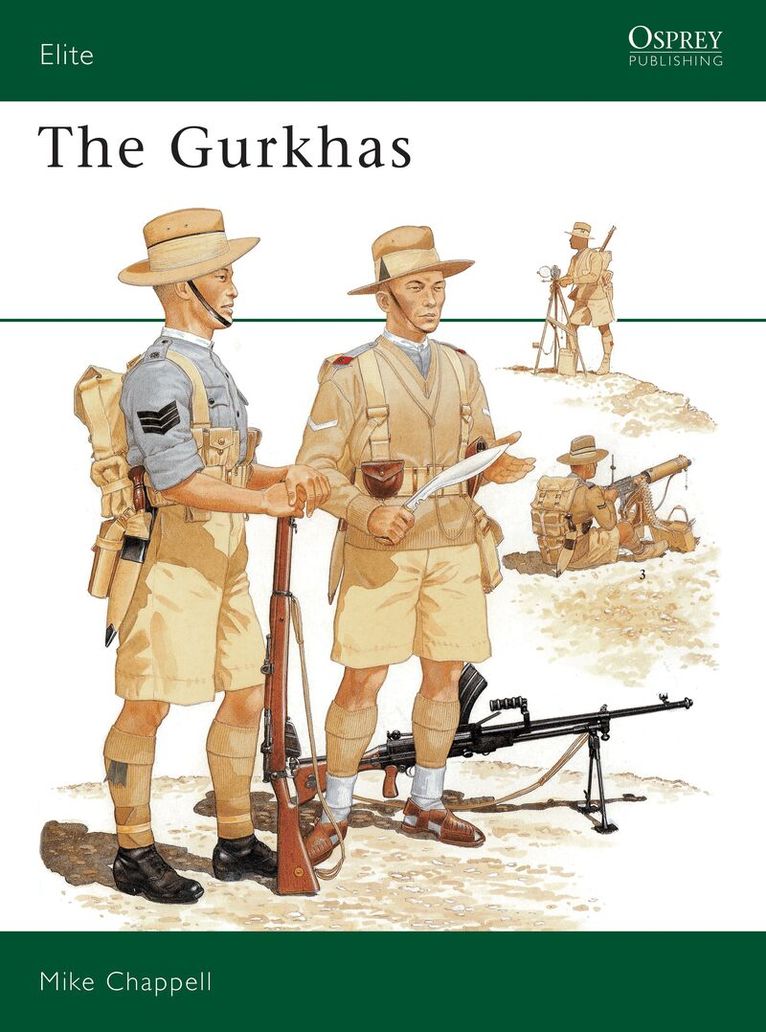
The origins of the Gurkhas date back to 1815, when one of the most skilled and determined opponents that the British soldier had to overcome in battle was the Nepalese warrior.The British were so impressed with the military skills of these fighters that they began recruiting units exclusively from Nepal. From this beginning grew the now famous Gurkha units. This volume examines the development of the Gurkhas through the various wars and confrontations of the 19th century, through the First World War, Second World War and the various postwar conflicts including Malaya, Borneo and the Falklands.
178 kr
Skickas inom 10-15 vardagar
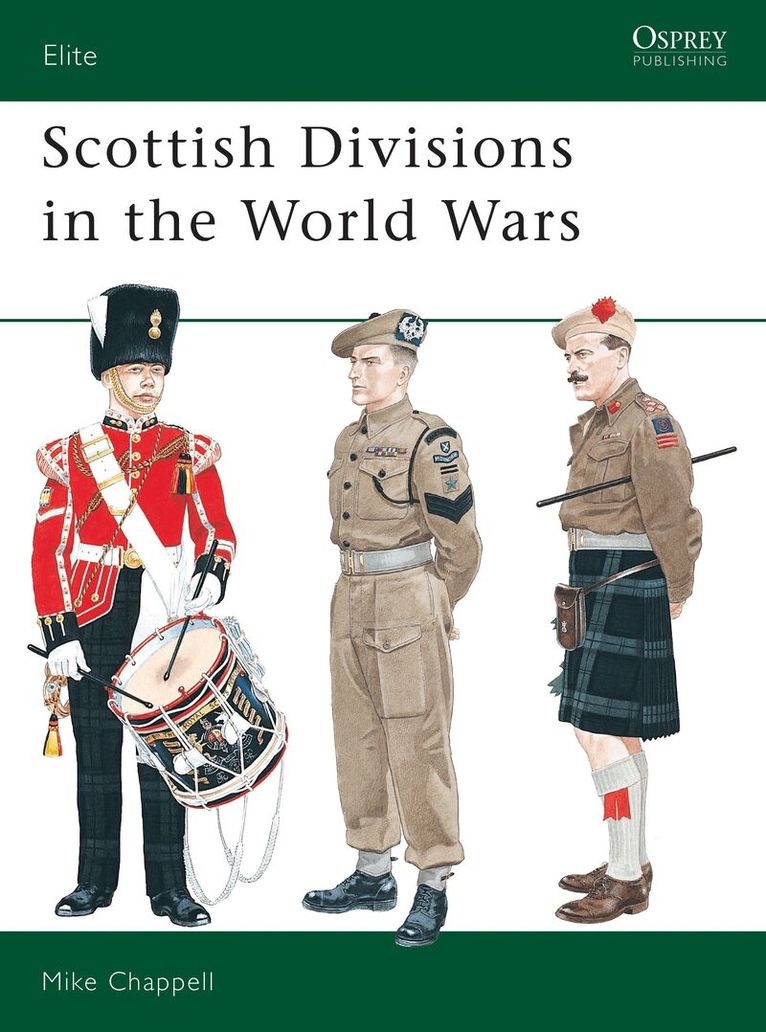
Over the centuries of their existence the Scottish regiments of the British Army have gained a reputation in war that is the envy of all and which can be matched, or surpassed, by very few.The very description 'Scottish soldier' conjures up images ranging from the 'thin red streak tipped with a line of steel' of the 93rd Highlanders at Balaclava, and the charge of the Scots greys at Waterloo, to the more recent deeds of Scottish regiments in the Falkland Islands and the Persian Gulf.Mike Chappell chronicles the remarkable history of the Scottish units which fought in the two world wars.
172 kr
Skickas inom 10-15 vardagar
The best example, and perhaps the only body of elite troops who have maintained their role as guardians of a royal household for over three centuries while building a reputation in war that is the envy of all, is Britain's household troops, the Guards.Over the years they have maintained the highest standards in peace and war, and have served as an example to the rest of the British Army, a benchmark in all matters military from drill and 'turnout' to leadership in battle.Veteran Osprey author Mike Chappell describes the history and uniform of the Guards Divisions from 1914-45.
172 kr
Skickas inom 10-15 vardagar
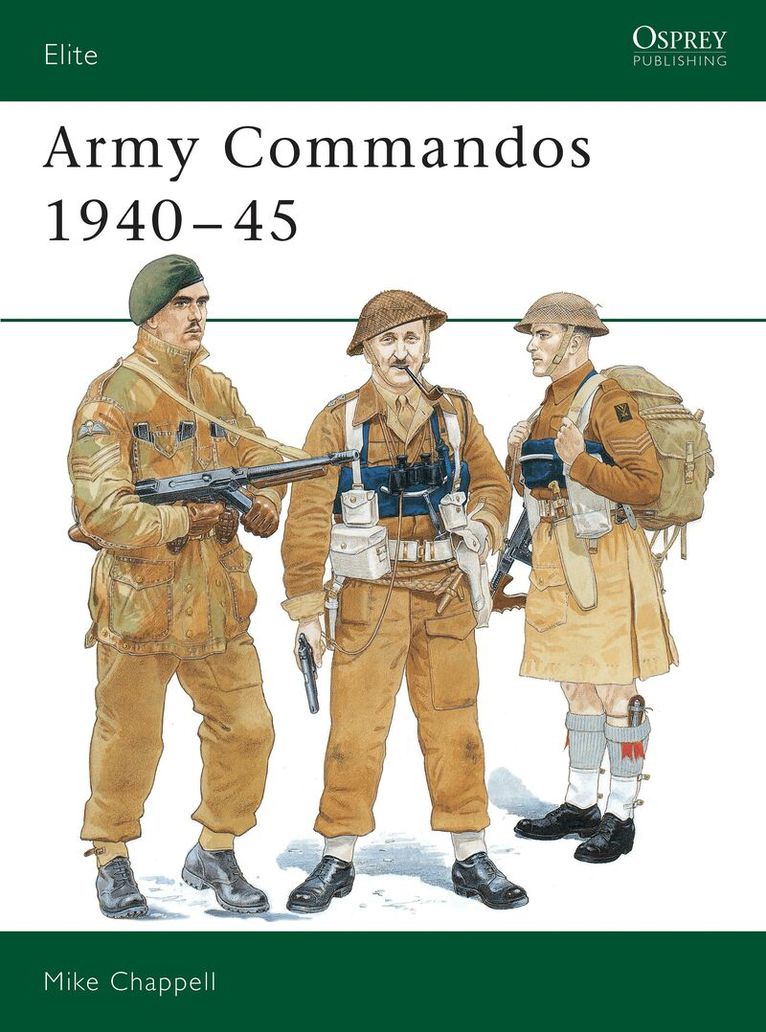
The period from early 1940 to the end of 1942 was a time of gloom and uncertainty for the British, who stood alone against the assembled might of the Axis powers.They badly needed a champion, and were to find this in a small force of soldiers who inspired them with a series of daring raids against the coasts of 'occupied Europe', becoming the heroes of the British public and of the British Prime Minister who had created them.This title explores the wartime history of the British Army Commandos whose bravery did so much to raise the morale of the British public.
155 kr
Skickas inom 10-15 vardagar
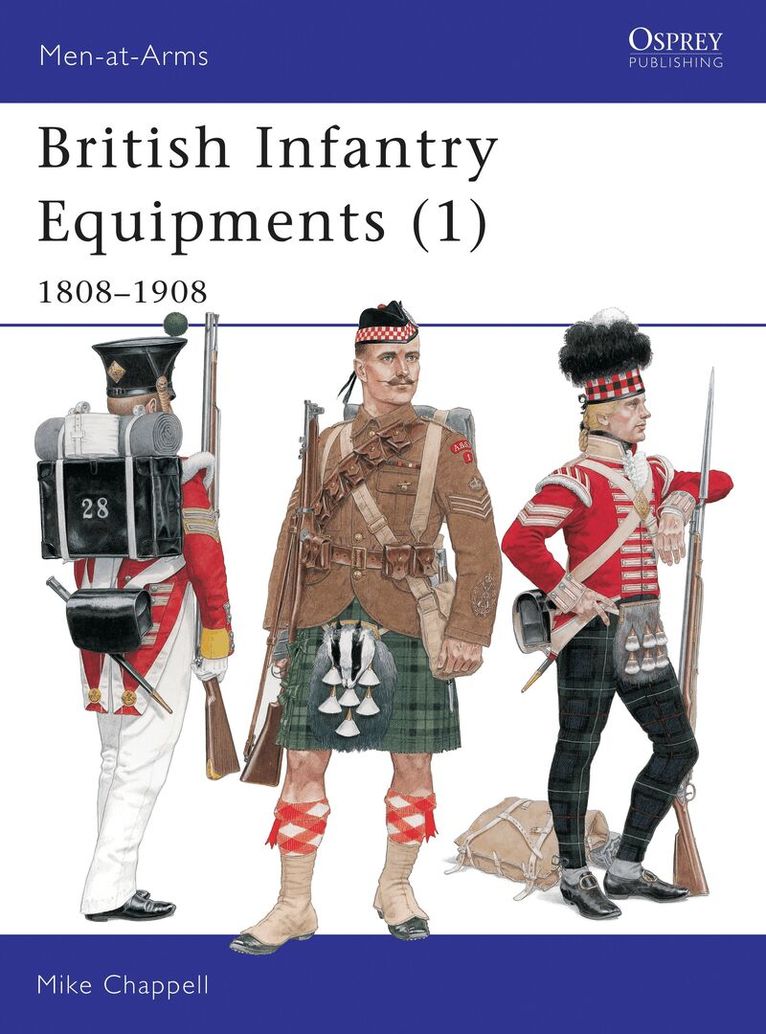
An in-depth study of British infantry equipments from 1808-1908. The period covered by this book begins with the British infantryman entering the Peninsular War wearing the lethal knapsack equipment of the day, and ends with the introduction of the first equipment set made entirely of woven cotton webbing [the 1908 pattern described in the accompanying Men-at-Arms 108: British Infantry Equipments 1908-80].Detailed text is complemented by plenty of illustrations and photographs, including eight full page colour plates by the author himself.
150 kr
Skickas inom 10-15 vardagar
The conflict in South Africa from 1899 to 1902 gave the British military establishment reason to effect swift reforms in the period which followed the end of the hostilities.The humiliating defeats suffered at the hands of a comparatively small number of Boer citizen-soldiers in the opening months of the war showed up deficiencies in leadership, training and equipment. In a companion volume to Men-at-Arms 107: British Infantry Equipments 1808-1908, Mike Chappell examines the period from 1908-2000 in a text complemented by numerous illustrations including eight full page colour plates by the author himself.
155 kr
Skickas inom 10-15 vardagar
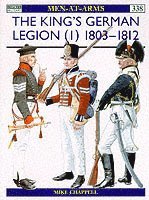
The formation of the King's German Legion resulted from the occupation of Hanover, their homeland, by the French in 1803.After assorted expeditions including Copenhagen in 1807 and Moore's retreat to Corunna, the Legion joined Sir Arthur Wellesley in the Peninsula. It was here that they were to earn undying renown as the crack corps of Wellington's army. The Legion represented about 20% of Wellington's fighting strength and distinguished itself in all the major actions, including their famous charge at Garcia Hernandez during the Salamanca campaign.
155 kr
Skickas inom 10-15 vardagar
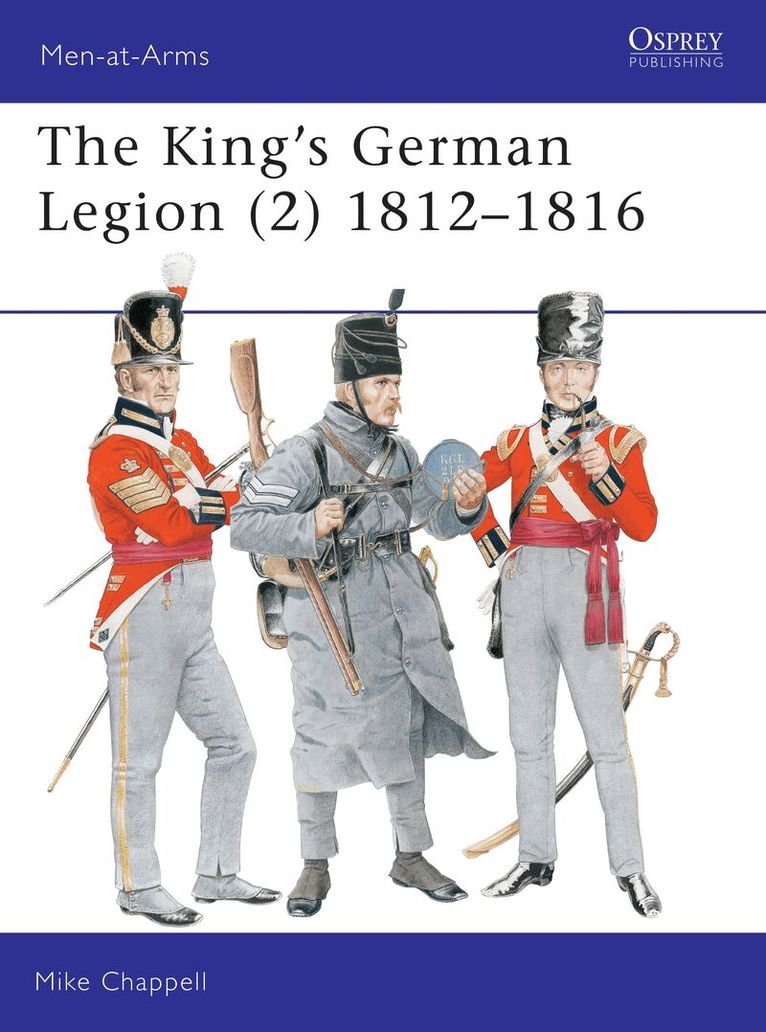
The completion of a two-part study of the King's German Legion – the largest and most respected of the foreign corps which fought as integrated elements of the British Army during the Napoleonic Wars.The light and heavy cavalry, light and line infantry, and horse and foot artillery of the KGL made major contributions to Wellington's victories in the latter part of the Peninsular War, and several units covered themselves with glory at Waterloo. Drawing upon new research in British and Hanoverian archival sources, Mike Chappell's detailed text and meticulous illustrations offer unprecedented details of this impressive fighting organisation.