Mike K.S. Chan - Böcker
Visar alla böcker från författaren Mike K.S. Chan. Handla med fri frakt och snabb leverans.
4 produkter
4 produkter
784 kr
Skickas
Multiple sclerosis (MS) is a progressive neurological disease that affects millions of people worldwide. Currently, the causes of MS are still unclear and the cure remains symptomatic, while the effectiveness of treatment varies widely among individuals. The clinical features and neurological defects derived from this progressive neurological disease are diverse since MS may affect the human central nervous system (CNS)) at all levels from the brain to the end of the spinal cord. Immunopathogenesis of MS involves many steps, including activation of peripheral leucocytes against putative CNS antigens, activated leucocytes with inflamed cerebral endothelial cells, the migration of activated lymphocytes and macrophages through the endothelium to the CNS environment, and further propagation of a massive immune response within the CNS. Such large-scale immune activation leads to loss of the myelin-oligodendrocyte complex. Various types of immune cells and mediators of the immune-inflammatory response actively contribute to MS pathogenesis. Genetic factors are also thought to play a central role in the development of most forms of MS. Axonal degeneration and neuronal loss are the core components of irreversible and permanent CNS atrophy and disability in MS.This book provides a comprehensive overview of the current MS situation as researchers try to understand the process and develop treatments that can slow or stop the disease, possibly repair the damage, alleviate specified symptoms, and improve the abilities of MS patients to function in everyday life. Various biological holistic approaches have been shown to slow disease progression in some patients, and the recovery rate of cellular mechanisms in the brain and spinal cord has been accelerated, increasing the possibility of achieving complete balance of the disease state.The panel reviews the background, focusing on novel strategies that are most likely to understand the biological mechanisms of recovery and translate findings into alternative comprehensive approach to the MS management. The modality of such complementary therapies adds a new dimension, geared to further improvement in the management and sustain the acquired long-term results of MS. This book will be necessary to researchers, research funders, healthcare advocates of MS research and treatment, and interested patients and their families.
1 974 kr
Skickas inom 11-20 vardagar
Stem cell therapy, otherwise known as the regenerative medicine, promotes the regrow, repair or replacement of the diseased, dysfunctional or damaged tissues using stem cells. The Dawn of New Medicine expresses stem cells therapy as the new hope in modern medicine. This book explores the holistic dimension of stem cells therapy, from the basics of stem cell therapy to the possibilities it may bring to modern medicine.Chronic diseases have stolen joy from a lot of people when, as a patient ourselves or when someone close to us was diagnosed with an illness for which there was no solution to. While symptoms of these diseases are often managed by medication and medicinal services, stem cells therapy go beyond the conventional management to discover therapies that support to body to repair, regenerate and restore. This book wishes to enlighten readers that there might be hope in managing diseases such as Down Syndrome, Autism Spectrum, Cerebral Palsy and global developmental delay as mentioned in this book.Professor Dato’ Sri Dr. Mike KS Chan is a scientist, senior researcher, educator and expert in anti-aging owning 26 medical wellness centers including hospitals Germany), clinics (Lugano, Switzerland), medical centers (Athens, Greece), and wellness clinics (Switzerland, Bangkok, Hong Kong, China, Malaysia-Kuala Lumpur, and Kota Kinabalu, Manila, Mexico, Ecuador, Frankfurt, Germany, Switzerland, Cambodia, Bangladesh, etc.). His precious experience and findings he gathered in his 36 years of advancing this field, he shares it here.
Stem Cells, Peptides & Immunotherapy
Handbook on Regenerative Medicine for Animals
Häftad, Engelska, 2024
1 249 kr
Skickas inom 11-20 vardagar
Like a blank slate, stem cells can develop into any cell type. As a result of this property, stem cells offer the promise of regenerating tissue where disease has damaged it and caused it to lose function. For decades, researchers have promoted stem cells as a potential treatment for multiple types of illness. Doctors already use stem cells to treat human patients with lymphoma, leukaemia and other solid malignant tumours. We believe that pets can also get benefit from stem cell treatments for injuries to bones, joints, tendons, ligaments, and the spinal cord; and diseases such as osteoarthritis.Early research has shown that that stem cell treatment might successfully treat stomatitis (a severe and painful oral disease) in cats and dry eye in dogs. The process is as follows: stem cells are injected by a veterinarian into the affected tissue, such as a knee joint damaged by osteoarthritis. The stem cells move to the damaged or inflamed tissue, cause new tissue to grow, reduce the inflammation and relieve pain. This new tissue closely resembles the original tissue, in fact more so than the scar tissue that would typically grow in an untreated inflamed area.
1 249 kr
Skickas inom 11-20 vardagar
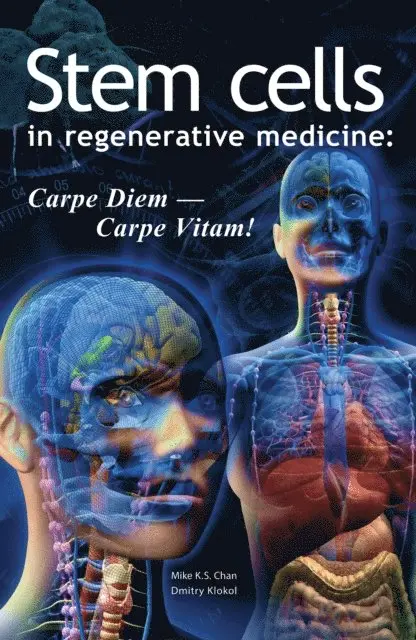
In most of the doctors’ perception the term ‘regenerative medicine’ is associated with tissue reconstruction after severe injuries, burns or trauma. And that is absolutely correct except the fact that tissues and organs deteriorate and lose their function not only due to mechanical or physical damage, but as a result of chronic diseases, inflammation, age-related degeneration as well as genetic abnormalities and cellular dysfunction. The profound understanding of tissue morphology on the cellular level and studying of the ontogenesis open magnificent opportunities to restoration of structural and functional integrity of human organism. Throughout centuries scientists and healthcare practitioners were in a constant pursuit of longevity—from Avicenna and Paracelsus to Brown-Sequad, Serge Voronoff and Paul Niehans. Not so long ago, in 1990’s, when the term regenerative medicine was tailored by Dr. Leland Kaiser and propagated by William Haseltine it was considered to be a medicine of the Future, «a new branch of medicine will develop that attempts to change the course of chronic disease and in many instances will regenerate tired and failing organ systems», as Dr. Leland Kaiser described it. A new hope spurred up that almost any condition can be at least improved if not cured by means of regenerative medicine, including those cases where conventional medicine is powerless or ineffective. The Future Dr. Kaiser was talking about is certainly a Present today. Though relatively small amount of practitioners are aware of today’s regenerative medicine capabilities and many still consider it more like science fiction. This book reveals concepts and protocols of successful approach to regenerative medicine by means of stem cell therapy. It also highlights important aspects of manufacturing and culturing of cell therapy products and administration of different types of stem cells in various systemic disorders.