Mike Reading - Böcker
Visar alla böcker från författaren Mike Reading. Handla med fri frakt och snabb leverans.
4 produkter
4 produkter
694 kr
Skickas inom 10-15 vardagar
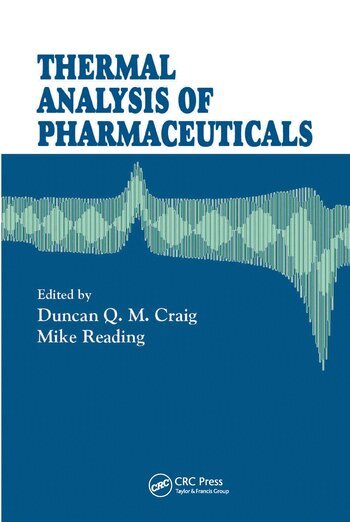
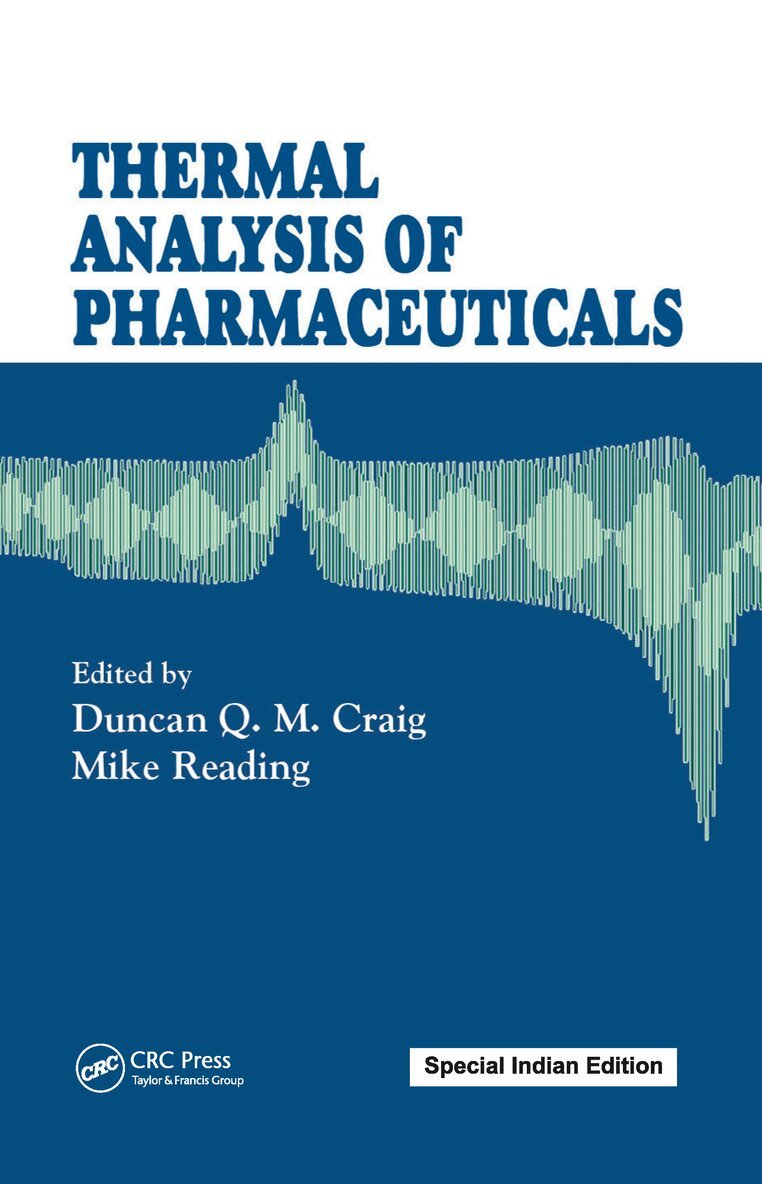
As a result of the Process Analytical Technologies (PAT) initiative launched by the U.S. Food and Drug Administration (FDA), analytical development is receiving more attention within the pharmaceutical industry. Illustrating the importance of analytical methodologies, Thermal Analysis of Pharmaceuticals presents reliable and versatile characterization tools for the successful development of pharmaceutical products. It draws attention to the most widely applicable methods and demonstrates how to interpret the associated data.The book opens with the first three chapters devoted to differential scanning calorimetry (DSC), the most commonly used thermal method. These chapters cover the principles, optimal use, and pharmaceutical applications of the method. Subsequent chapters explore modulated temperature DSC, thermogravimetric analysis, thermal microscopy, microcalorimetry, high sensitivity DSC, dynamic mechanical analysis, and thermally stimulated current, all of which have attracted great interest within the pharmaceutical field. The chapters include theoretical background, measurement optimization, and pharmaceutical applications of each technique. Exploring important techniques for characterizing the physical structure and properties of pharmaceutical materials, Thermal Analysis of Pharmaceuticals achieves an ideal balance in the depth, relevance, and accessibility of topics presented. The book provides an excellent overview of this key area in pharmaceutical development.
2 185 kr
Tillfälligt slut
As a result of the Process Analytical Technologies (PAT) initiative launched by the U.S. Food and Drug Administration (FDA), analytical development is receiving more attention within the pharmaceutical industry. Illustrating the importance of analytical methodologies, Thermal Analysis of Pharmaceuticals presents reliable and versatile characterization tools for the successful development of pharmaceutical products. It draws attention to the most widely applicable methods and demonstrates how to interpret the associated data.The book opens with the first three chapters devoted to differential scanning calorimetry (DSC), the most commonly used thermal method. These chapters cover the principles, optimal use, and pharmaceutical applications of the method. Subsequent chapters explore modulated temperature DSC, thermogravimetric analysis, thermal microscopy, microcalorimetry, high sensitivity DSC, dynamic mechanical analysis, and thermally stimulated current, all of which have attracted great interest within the pharmaceutical field. The chapters include theoretical background, measurement optimization, and pharmaceutical applications of each technique. Exploring important techniques for characterizing the physical structure and properties of pharmaceutical materials, Thermal Analysis of Pharmaceuticals achieves an ideal balance in the depth, relevance, and accessibility of topics presented. The book provides an excellent overview of this key area in pharmaceutical development.
Modulated Temperature Differential Scanning Calorimetry
Theoretical and Practical Applications in Polymer Characterisation
Inbunden, Engelska, 2006
2 432 kr
Skickas inom 10-15 vardagar
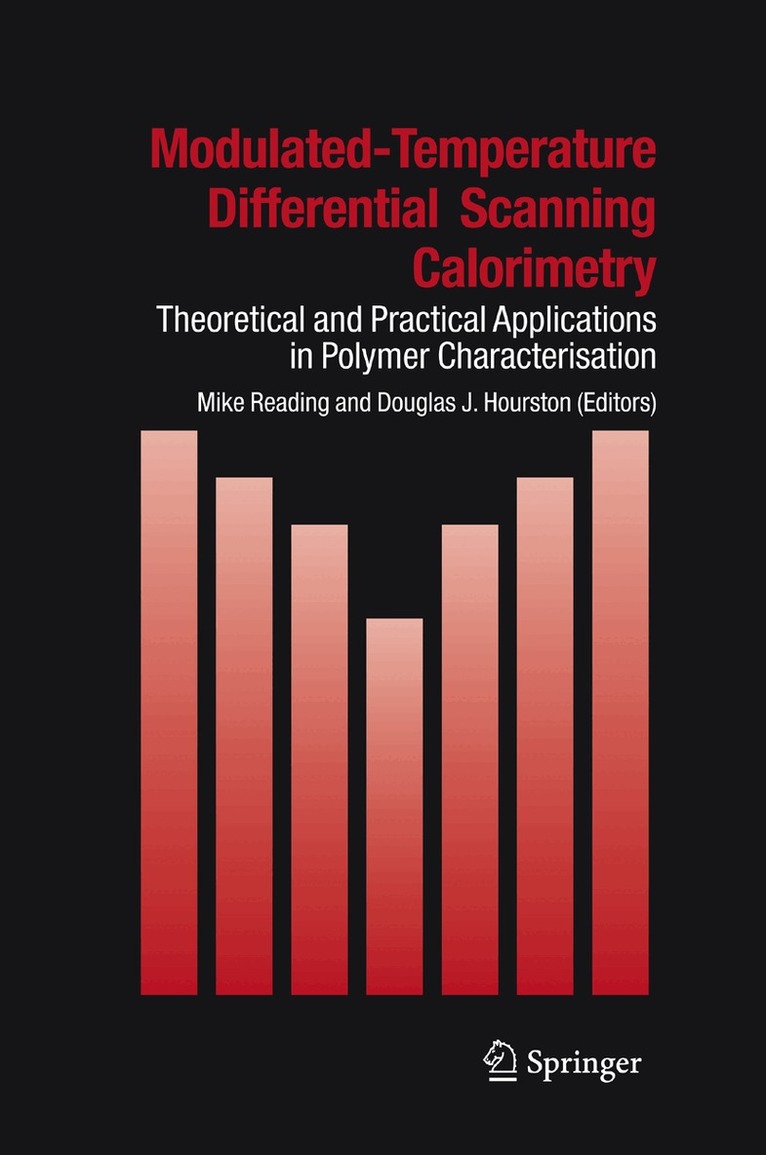
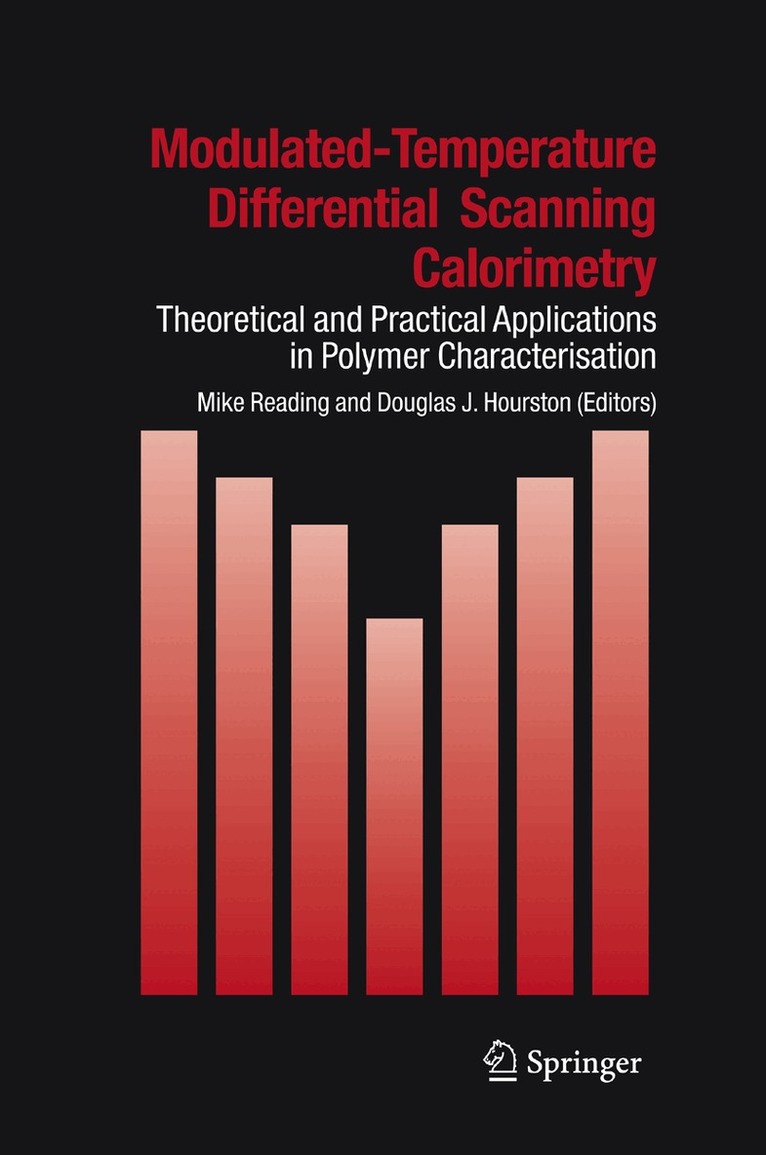
MTDSC provides a step-change increase in the power of calorimetry to characterize virtually all polymer systems including curing systems, blends and semicrystalline polymers. It enables hidden transitions to be revealed, miscibility to be accurately assessed, and phases and interfaces in complex blends to be quantified. It also enables crystallinity in complex systems to be measured and provides new insights into melting behaviour. All of this is achieved by a simple modification of conventional DSC.In 1992 a new calorimetric technique was introduced that superimposed a small modulation on top of the conventional linear temperature program typically used in differential scanning calorimetry. This was combined with a method of data analysis that enabled the sample’s response to the linear component of the temperature program to be separated from its response to the periodic component. In this way, for the first time, a signal equivalent to that of conventional DSC was obtained simultaneously with a measure of the sample’s heat capacity from the modulation. The new information this provided sparked a revolution in scanning calorimetry by enabling new insights to be gained into almost all aspects of polymer characteristics.This book provides both a basic and advanced treatment of the theory of the technique followed by a detailed exposition of its application to reacting systems, blends and semicrystalline polymers by the leaders in all of these fields. It is an essential text for anybody interested in calorimetry or polymer characterization, especially if they have found that conventional DSC cannot help them with their problems.
Modulated Temperature Differential Scanning Calorimetry
Theoretical and Practical Applications in Polymer Characterisation
Häftad, Engelska, 2010
2 089 kr
Skickas inom 5-8 vardagar
MTDSC provides a step-change increase in the power of calorimetry to characterize virtually all polymer systems including curing systems, blends and semicrystalline polymers. It enables hidden transitions to be revealed, miscibility to be accurately assessed, and phases and interfaces in complex blends to be quantified. It also enables crystallinity in complex systems to be measured and provides new insights into melting behaviour. All of this is achieved by a simple modification of conventional DSC.In 1992 a new calorimetric technique was introduced that superimposed a small modulation on top of the conventional linear temperature program typically used in differential scanning calorimetry. This was combined with a method of data analysis that enabled the sample’s response to the linear component of the temperature program to be separated from its response to the periodic component. In this way, for the first time, a signal equivalent to that of conventional DSC was obtained simultaneously with a measure of the sample’s heat capacity from the modulation. The new information this provided sparked a revolution in scanning calorimetry by enabling new insights to be gained into almost all aspects of polymer characteristics.This book provides both a basic and advanced treatment of the theory of the technique followed by a detailed exposition of its application to reacting systems, blends and semicrystalline polymers by the leaders in all of these fields. It is an essential text for anybody interested in calorimetry or polymer characterization, especially if they have found that conventional DSC cannot help them with their problems.